L'edition Printemps
Les Couleurs du Monde Magazine -Travel, Taste and Discovery. Discover our editions. Contact: info@lescouleursdumonde.com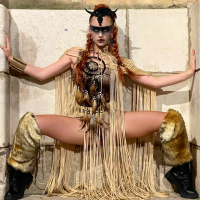
Art & Culture @artandculture
A City Shaped by Music and Art
Vienna's cultural identity is closely connected to classical music, influential art movements and a coffeehouse tradition that has played an important role in the city's intellectual and artistic life.
A European Centre of Music
Vienna became a major centre of European classical music during the eighteenth and nineteenth centuries. Composers including Mozart, Beethoven, Schubert and Brahms lived and worked in the city, contributing to its international reputation.
The Vienna State Opera remains an important institution for opera and ballet, while the Musikverein is internationally recognised for its acoustics and its association with the Vienna Philharmonic.
Classical music continues to be part of Vienna's cultural programme, with performances ranging from major orchestral productions to chamber concerts in smaller venues.
The Vienna Secession and Modern Art
At the end of the nineteenth century, Vienna became an important centre for artistic innovation.
In 1897, Gustav Klimt and other artists founded the Vienna Secession, challenging the conservative exhibition practices of the established art institutions.
The movement promoted greater artistic independence and encouraged connections between painting, architecture and decorative arts.
Today, visitors can explore this period through Klimt's Beethoven Frieze at the Secession building and his painting The Kiss at the Belvedere.
The Cultural Importance of Vienna's Coffeehouses
Vienna's traditional coffeehouses developed into meeting places for writers, artists, journalists and intellectuals.
Figures such as Stefan Zweig, Arthur Schnitzler and Peter Altenberg were associated with the city's literary café culture.
Café Central and Café Museum remain well-known examples of this tradition, combining historic interiors with a continuing role in Vienna's social life.
In 2011, Viennese coffeehouse culture was included in Austria's national inventory of intangible cultural heritage.
Discover More of Vienna
Explore Vienna's musical heritage, historic coffeehouses, architecture and cultural attractions in the second edition of Les Couleurs du Monde Magazine.
Read Music, Coffee & Imperial Charm in Vienna →
#Vienna #Austria #ArtAndCulture #ViennaSecession #ClassicalMusic #EuropeanArt #CulturalHeritage #LesCouleursDuMonde
Art & Culture @artandculture
Costume design combines fashion, performance and artistic direction. In theatre, dance and live entertainment, costumes are developed to support a production's concept while meeting the practical demands of performing on stage.
From Creative Concept to Costume
The design process usually begins with the artistic direction of a production. Costume designers work with choreographers, directors and production teams to establish how performers should look and how their clothing will function within the performance.
Materials are selected not only for their appearance but also for their flexibility, durability and behaviour under stage lighting. A costume designed for an energetic dance routine requires different construction techniques from one intended for a theatrical character.
Fittings and rehearsals are essential. Designers must consider movement, quick costume changes and the practical requirements of repeated performances.
The Relationship Between Costume and Stage Design
Costumes are developed alongside lighting, choreography and scenography. These disciplines influence one another throughout the production process.
Lighting can significantly change the appearance of fabrics and colours. Reflective materials, sequins and metallic finishes react differently under spotlights, while costume silhouettes need to remain recognisable from different positions in the audience.
For productions involving several performers, costume design also helps establish visual coordination without necessarily making every outfit identical.
Mouv’Event | Bringing Performance Elements Together
Live entertainment productions bring together several creative and technical disciplines. Artistic direction determines how costumes, performers, music and staging contribute to the overall concept.
Mouv’Event, featured in the second edition of Les Couleurs du Monde Magazine, provides an opportunity to explore the creative world of live performance and event entertainment.
Discover the feature and learn more about the people and ideas behind the production of live entertainment.
Explore Mouv’Event in Les Couleurs du Monde Magazine →
#CostumeDesign #PerformingArts #StageDesign #LivePerformance #CreativeDirection #ArtAndCulture #LesCouleursDuMonde
Art & Culture @artandculture
From Acrobatics to Creative Direction
Thomas Hubener's career connects professional acrobatics with filmmaking and creative direction. Having performed with Cirque du Soleil, he brings first-hand knowledge of movement, timing and physical performance to his work behind the camera.
Working as an acrobat requires an understanding of choreography, spatial awareness and the precision needed to execute complex movements. These are also important considerations when filming performers and athletes, where camera positioning, timing and coordination determine how an action is captured.
Hubener's transition into photography and film has allowed him to apply this experience in a different creative role. His projects cover sport, travel and lifestyle, combining an understanding of physical performance with the technical and artistic decisions involved in visual production.
His work also demonstrates how experience in one creative discipline can become relevant in another. A background in live performance provides practical insight into working with performers, understanding their movements and translating an action into a sequence of images.
An additional chapter in his career is his involvement in the Opening Ceremony of the Milano Cortina 2026 Paralympic Games. Large-scale ceremonies bring together performance, choreography, music and production design, making collaboration between different creative disciplines essential.
Les Couleurs du Monde has featured Thomas Hubener in two magazine editions, offering readers an opportunity to discover both his photography and film projects and his involvement in an international performance production.
Explore the magazine features
Thomas Hubener | Photography, Film & Creative Work →
Thomas Hubener | Milano Cortina 2026 Paralympic Games →
#ThomasHubener #ArtAndCulture #CreativeDirection #CirqueDuSoleil #PerformingArts #Filmmaking #MilanoCortina2026 #LesCouleursDuMonde