Home & Design @atelierdumonde
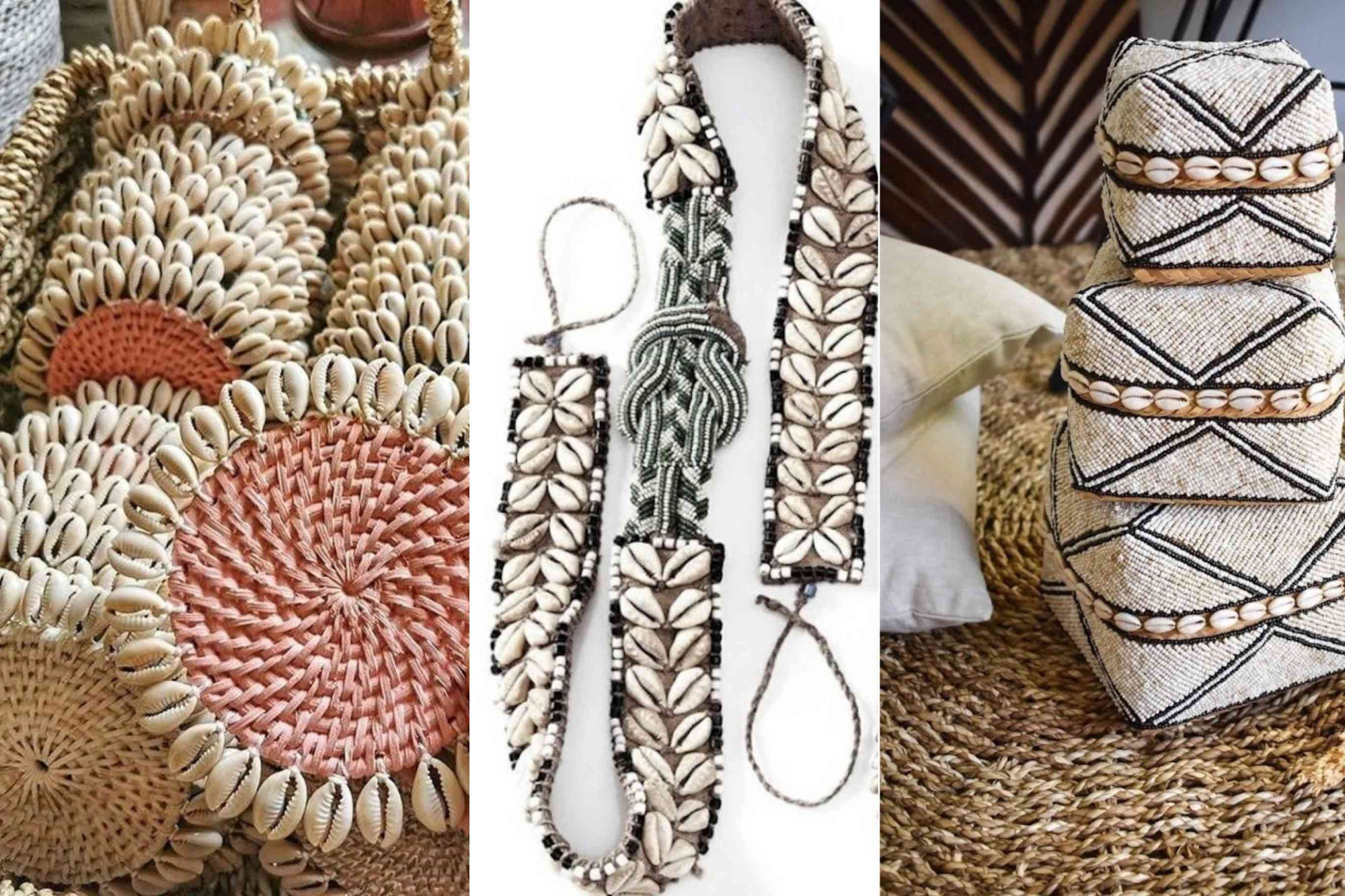
Cowrie shells have a distinctive shape that works across jewellery, accessories and interiors. Used individually they create a small decorative detail, while repeated in rows they can completely define the surface of an object.
In jewellery and fashion accessories, repetition is particularly effective. Cowrie shells can be stitched along woven belts, necklaces and straps, following the shape of the textile underneath. Combined with beads, macramé and braided fibres, they introduce a natural material without dominating the entire design.
The contrast between shells and darker woven patterns also creates definition. Cream-coloured cowries stand out against black, charcoal and earthy textiles, making relatively simple geometric designs more visible.
The same technique appears in decorative objects for the home. Boxes covered with small beads can be finished with a row of cowrie shells around the edge, creating a border between different patterns and surfaces.
Woven baskets and wall pieces provide another application. Shells can follow the outer edge of a circular form, highlight a central section or create repeated bands across the surface.
Because shells have their own shape and texture, they work particularly well with materials that retain a handmade character: raffia, rattan, jute, cotton, wood, beads and handwoven textiles.
This also makes cowrie detailing an interesting connection between fashion and interiors. A technique used on a belt or necklace can reappear on a decorative box, basket or wall object, allowing the same material language to move between what we wear and how we decorate our homes.
Inspired to use shells for a special celebration?
Discover Shell Details for a Coastal Wedding →
#CowrieShells #ShellDesign #WovenDesign #FashionAndInteriors #AtelierDuMonde