Home & Design @atelierdumonde
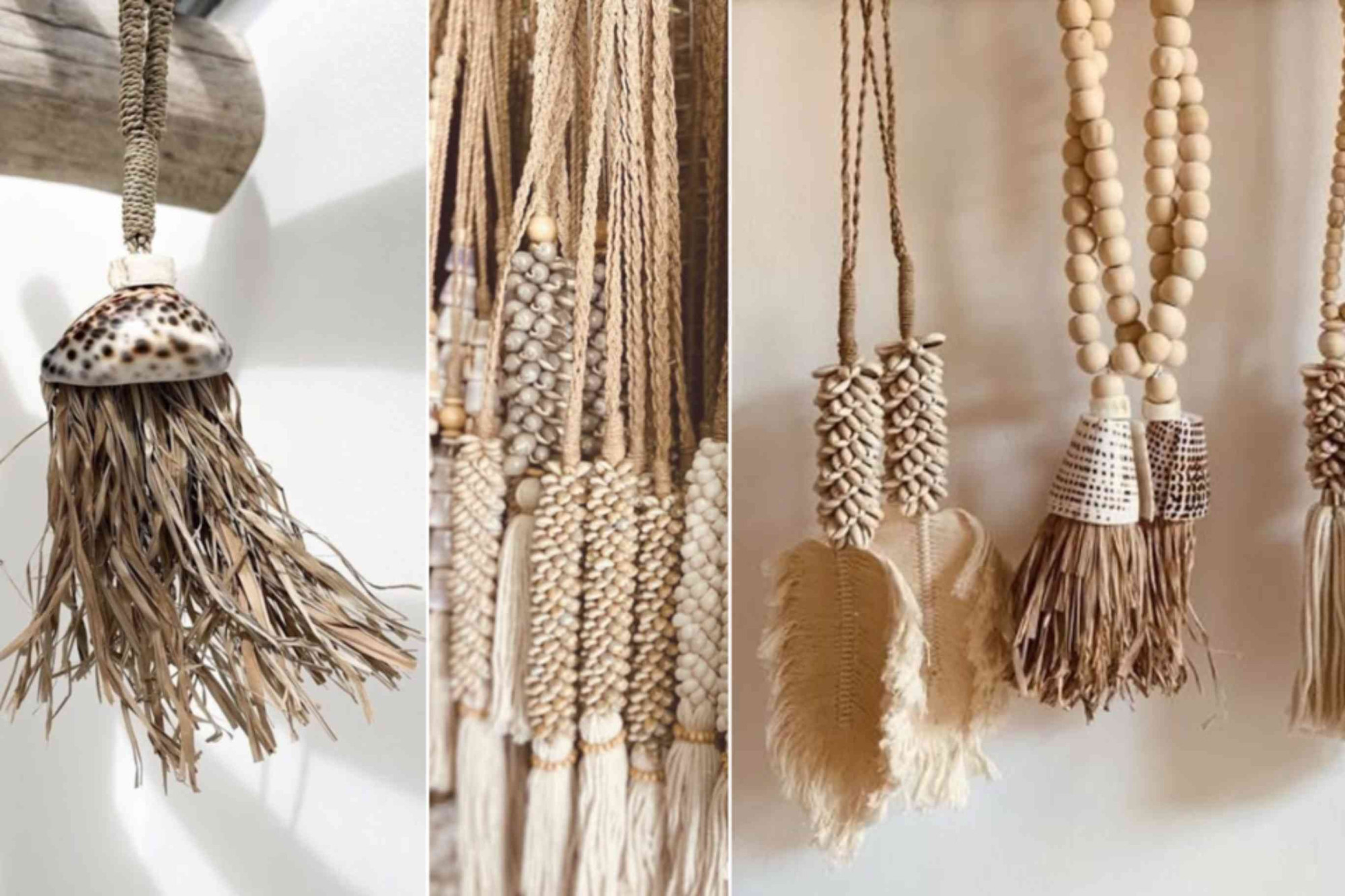
Shells, raffia, rope and wooden beads can be combined to create decorative tassels with a distinctly coastal character. The materials already provide plenty of texture, so the construction can remain relatively simple.
A large shell can form the top of a tassel. Cowrie and other rounded shells work particularly well because they provide a natural transition between the hanging cord and the fibres underneath. Raffia can be gathered into a bundle, folded in half and secured tightly before the shell is positioned above it.
For longer decorative pieces, several materials can be layered. Braided cord can form the main length, while wooden beads, shells and woven sections introduce changes in shape and texture. The tassel at the bottom can be made from raffia, cotton or jute.
Wooden beads create a more structured version. Threading them onto cord produces a long decorative strand that can end in one or two substantial tassels. Keeping the wood unfinished works particularly well with neutral fibres and natural shells.
Small woven or macramé elements can also be incorporated between the beads and tassels. These details make it possible to create different designs using essentially the same group of materials.
The finished pieces have several uses around the home. They can hang from door handles, cupboard knobs, bedposts or baskets, or simply be grouped together as wall decoration.
Smaller versions can move into fashion and accessories. A shell and raffia tassel can become a bag charm, while beaded strands can be adapted for belts, necklaces or decorative details on woven bags.
Working within a limited palette of sand, cream, natural wood and shell tones keeps the focus on the differences between the materials rather than on colour alone.
Inspired by shells, beads and natural materials?
Discover Travel Jewellery →
#ShellTassels #NaturalFibres #CoastalStyle #HandmadeDesign #AtelierDuMonde