Home & Design @coastalliving
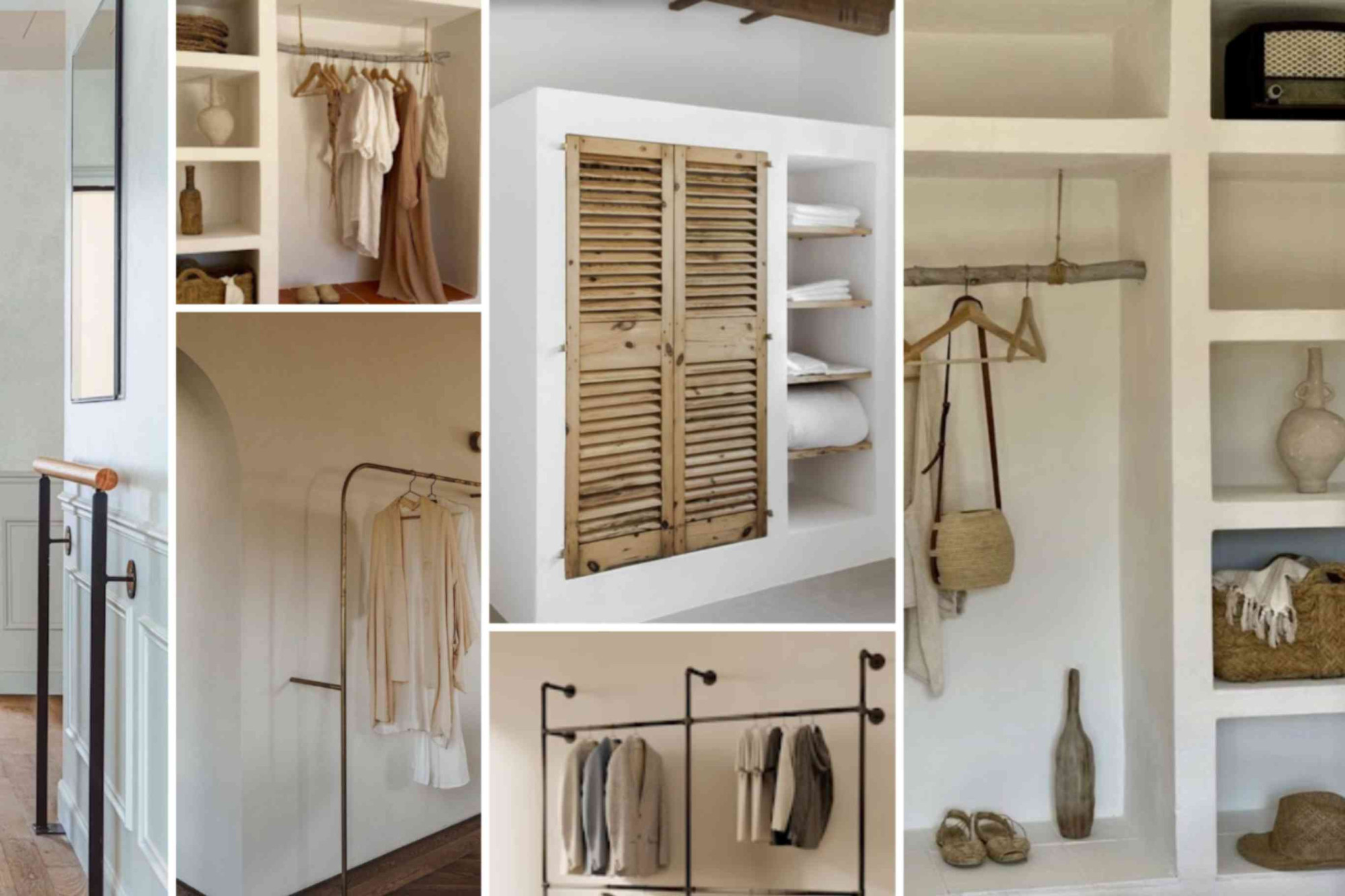
An alcove can provide enough space for a wardrobe without requiring a separate piece of furniture. Even a relatively shallow opening can accommodate a rail, shelves and storage for everyday clothes.
A hanging rail is usually the simplest starting point. It can run across the full width of the alcove or occupy only one section, leaving room beside it for shelves.
The height of the space can also be used. Shelves above the rail are useful for baskets, folded linen or items that are not needed every day. Lower shelves can hold shoes or folded clothing.
Not every wardrobe needs to be completely enclosed. Leaving the alcove open keeps everything accessible and works particularly well for a smaller selection of clothes.
When some concealment is preferred, there are several alternatives to conventional wardrobe doors. A curtain requires very little space, while shutters can close only part of the storage and leave adjacent shelves open.
An existing architectural niche can work in the same way. Adding a simple rail and a few hooks may be enough to turn an empty section of wall into useful clothing storage.
The important part is to design the storage around what actually needs to fit inside it. A wardrobe for shirts and dresses requires a different arrangement from one mainly used for folded clothes, shoes and accessories.
Using the dimensions that are already available can make an alcove surprisingly useful without adding another large cabinet to the room.
What else can you do with an alcove?
Discover Using Alcoves to Create a Separate Space →
#WardrobeIdeas #AlcoveStorage #BedroomStorage #StorageIdeas #RivieraDuMonde