Home & Design @interiorsanddesign
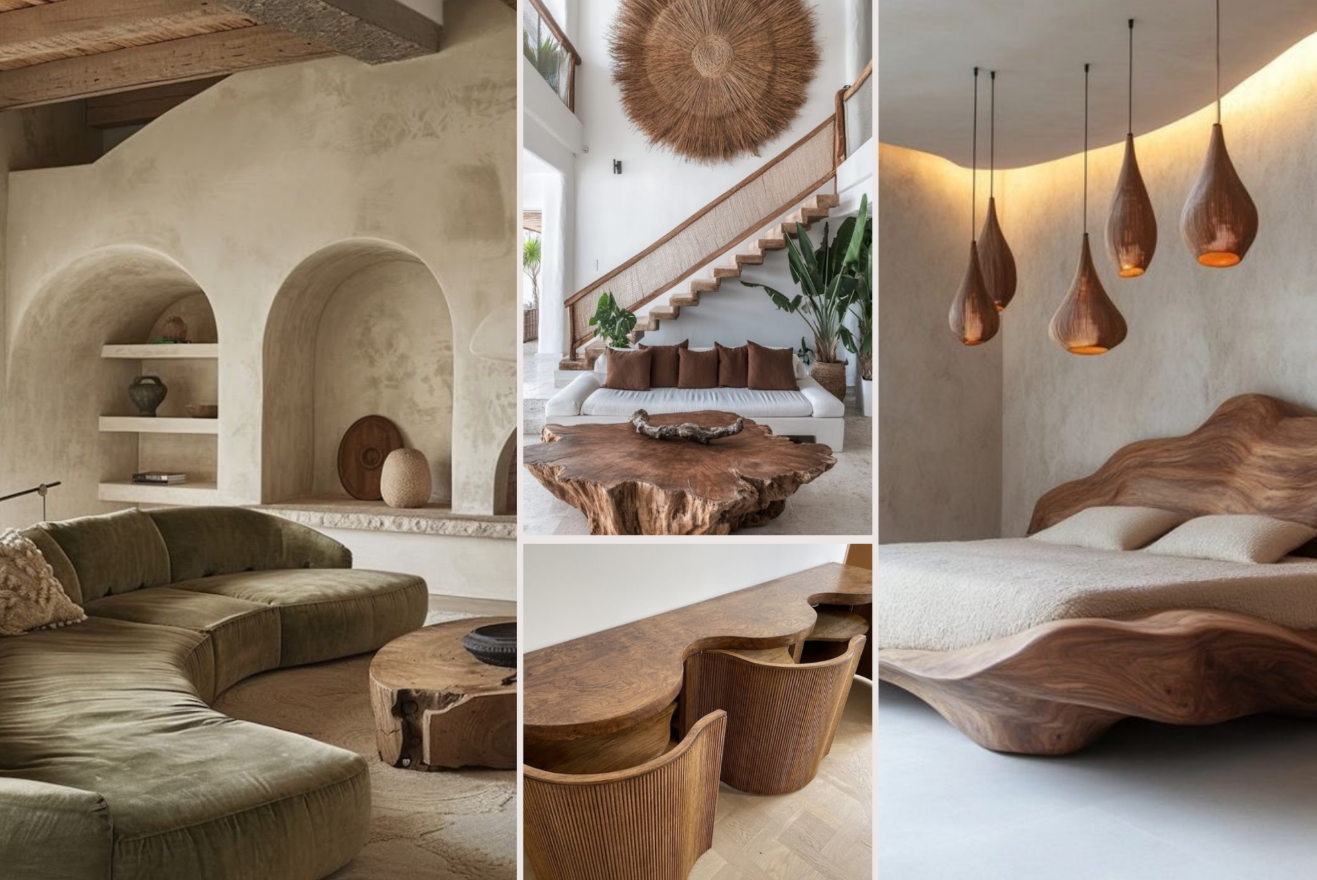
Built-in elements can replace separate pieces of furniture by making the architecture itself part of how a room is used. Niches, benches, platforms, shelving and even bed frames can be formed directly from walls and floors, creating spaces with fewer individual objects.
Wall niches are one of the simplest examples. Recesses can provide space for ceramics, books or lighting without adding shelving to the surface of the wall. Larger arched niches can define different functions within an open room while maintaining a visual connection between spaces.
Built-in seating follows the same principle. A bench formed along a wall needs no separate frame and can be adapted precisely to the dimensions of a room. Cushions and upholstery provide the comfort, while the underlying structure remains relatively permanent.
Beds can also become architectural elements. Raised platforms and sculpted bases create a defined sleeping area without a conventional bed frame. Timber, plaster or mineral finishes can connect the bed visually to the walls and floor around it.
This approach is particularly useful when a room has irregular dimensions. Instead of searching for furniture that fits an awkward corner or curved wall, a built-in element can be designed around the available space.
Material choice determines how strongly these additions stand out. When a niche or bench receives the same plaster finish as the surrounding walls, it appears almost carved from the room itself. Timber creates a stronger distinction and can introduce warmth against pale mineral surfaces.
Built-in furniture can also reduce the number of visible legs, frames and separate structures within an interior. This leaves more attention for the shapes of the architecture and for a smaller selection of movable pieces such as tables, chairs, textiles and lighting.
The permanent nature of built-in design does require careful planning. The dimensions of a bench, shelf or bed platform are difficult to change later, so height, depth, circulation and intended use need to be considered before construction.
In rooms where these elements are planned well, architecture and furniture begin to perform the same function. A wall provides storage, a platform becomes a bed and a continuous surface can move from seating to shelving without adding another object to the room.
From Interiors to City Architecture
Design can shape the way we experience a single room, but also the identity of an entire destination. In Dubai, architecture moves from interiors to hotels, museums, towers and waterfront developments across the city.
Discover Dubai Through the Eyes of Nicky Worldwide in our first edition →
#BuiltInDesign #InteriorArchitecture #BuiltInFurniture #InteriorDesign #NomadesDuMonde