Weddings & Events @lalaland
The silhouette is one of the first things that gives a wedding dress its character. A full skirt creates a very different impression from a fitted gown, even when both dresses use the same colour and relatively simple fabrics.
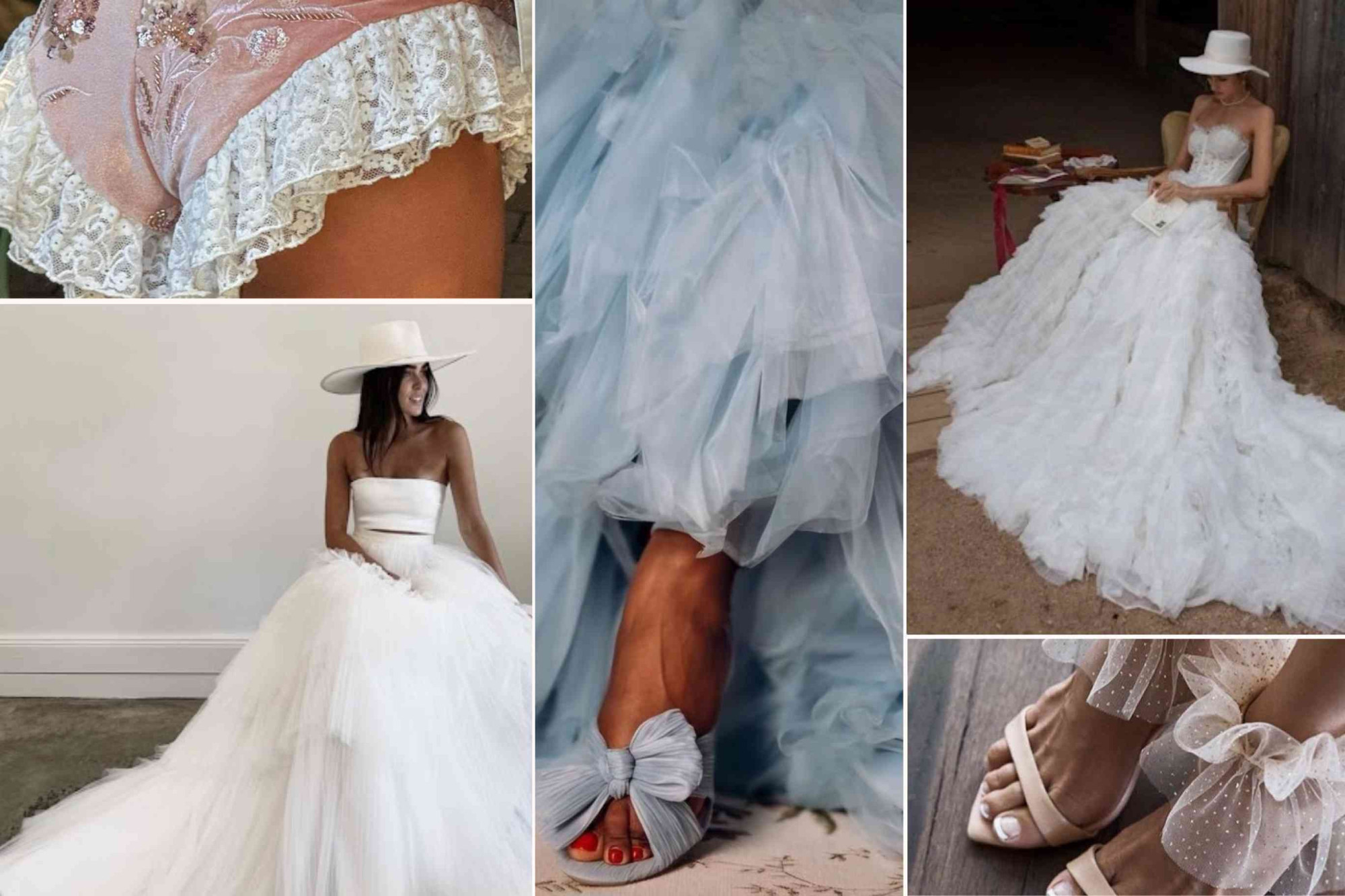
Volume is perhaps the most recognisable example. Layers of tulle or organza can create a large, flowing skirt while keeping the upper part of the dress surprisingly simple. Strapless bodices and clean necklines work particularly well with this contrast.
A fitted silhouette follows the body more closely and places greater emphasis on the cut of the dress. Lace, embroidery and subtle embellishment can add detail without changing its overall shape.
Between these two are softer A-line dresses. They have movement and volume but remain less structured than a traditional ball gown, making them suitable for many different styles of wedding.
Length can change a silhouette too. A shorter front, split skirt or removable layer reveals the legs and shoes while maintaining the effect of a longer gown from other angles.
Sleeves, necklines and trains add another dimension. A dramatic skirt can be combined with a very minimal top, while a simpler silhouette leaves room for lace sleeves, bows or other details.
Accessories can then work with the proportions of the dress. A wide-brimmed hat creates a strong addition to a clean gown, while delicate shoes can appear briefly beneath layers of tulle as the bride moves.
There is no single bridal silhouette that defines a particular type of wedding. Full skirts can work in contemporary spaces and simple dresses can look equally at home in grand historic settings. The interest lies in how shape, fabric and detail come together in one design.
Inspired by the volume of a full skirt?
Discover The Full Skirt →
#BridalFashion #WeddingDresses #BridalStyle #WeddingFashion #BridalDesign #Lalaland