Become Part of Les Couleurs du Monde
Share your brand through our magazine, destinations, shop and creator community. Contact: info@lescouleursdumonde.com
Marrakech @lescouleursdemarrakech
Lakeside Living at Lalla Takerkoust
Less than an hour from Marrakech, Lake Lalla Takerkoust offers a different setting from the busy streets of the medina. With views towards the Atlas Mountains, waterfront terraces and small hotels, the area is an attractive destination for a relaxed stay outside the city.
A Different Side of Marrakech
Created during the French Protectorate in the 1930s, the Lalla Takerkoust reservoir has become a popular destination for visitors looking to spend time outside Marrakech.
The surrounding landscape combines open hills, mountain views and lakeside restaurants. Visitors can enjoy lunch overlooking the water, explore the surrounding countryside or use the area as a starting point for excursions towards the Atlas Mountains and Agafay.
The lake is particularly appealing for travellers who want to combine a visit to Marrakech with a quieter stay in the countryside.
Stay Inspiration: Le Petit Hôtel du Flouka
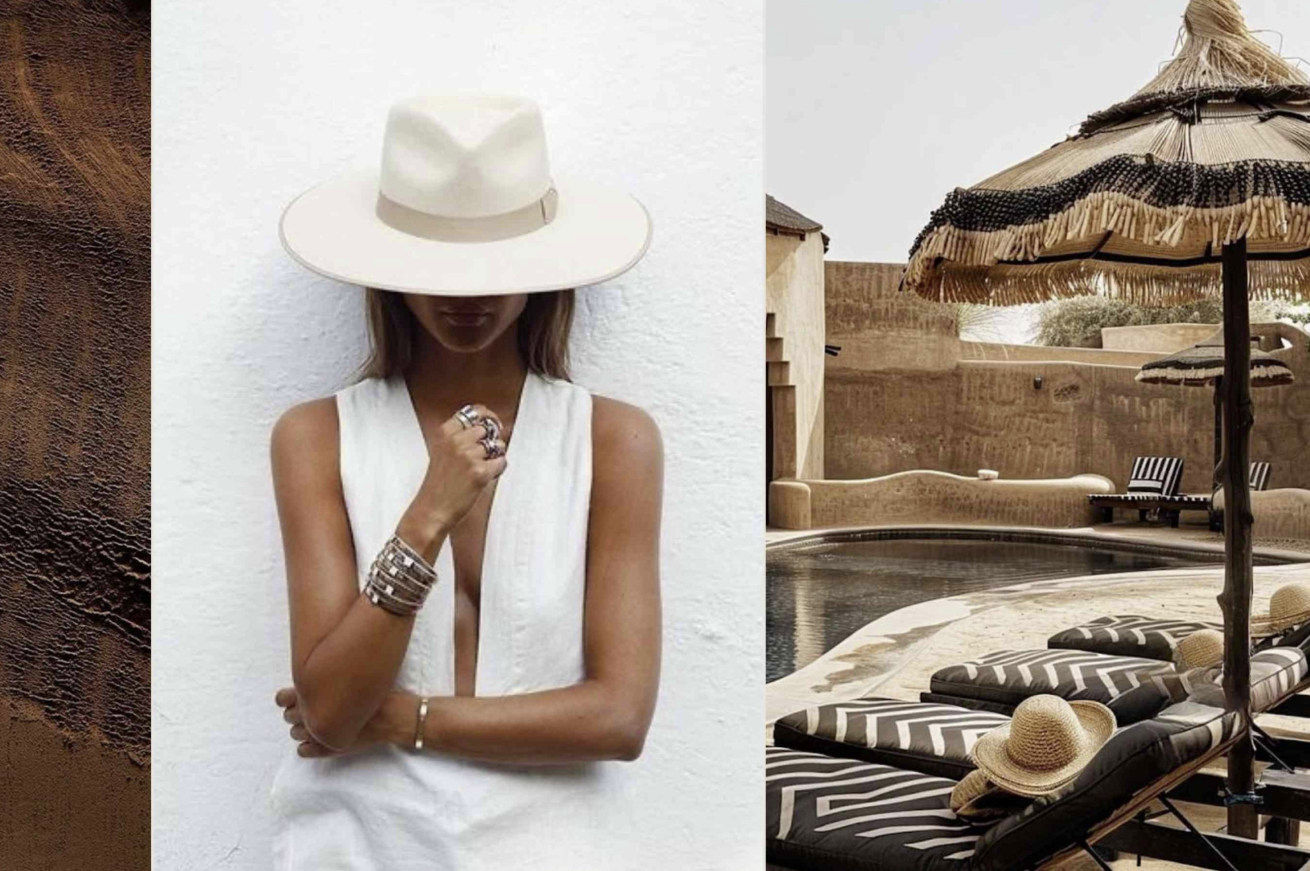
Located directly beside Lake Lalla Takerkoust, Le Petit Hôtel du Flouka offers accommodation with views across the water towards the Atlas Mountains.
The property features individually decorated rooms, two swimming pools and a restaurant with a lakeside terrace. Its intimate setting makes it suitable for a short escape from Marrakech or a few days spent exploring the surrounding region.
The outdoor spaces, sun loungers and shaded terraces provide a setting for afternoons by the pool and lunches overlooking the lake.
Explore Le Petit Hôtel du Flouka
Dressing for a Lakeside Escape
A lightweight resort wardrobe is particularly practical for this type of stay.
A flowing summer dress, wide-brimmed hat and leather sandals work well for warm afternoons, while silver jewellery adds a decorative element for lunch or dinner.
As temperatures can change after sunset, especially outside the summer months, a lightweight jacket or cotton shirt is a useful addition.
For inspiration, explore the selection of dresses and skirts available in the Les Couleurs du Monde shop.
#Marrakech #LallaTakerkoust #LePetitHotelDuFlouka #TravelAndEscapes #LakesideEscape #AtlasMountains #MarrakechTravel #ResortStyle #LesCouleursDuMonde
Marrakech @lescouleursdemarrakech
Raffia and Palm Fibre in Moroccan Design
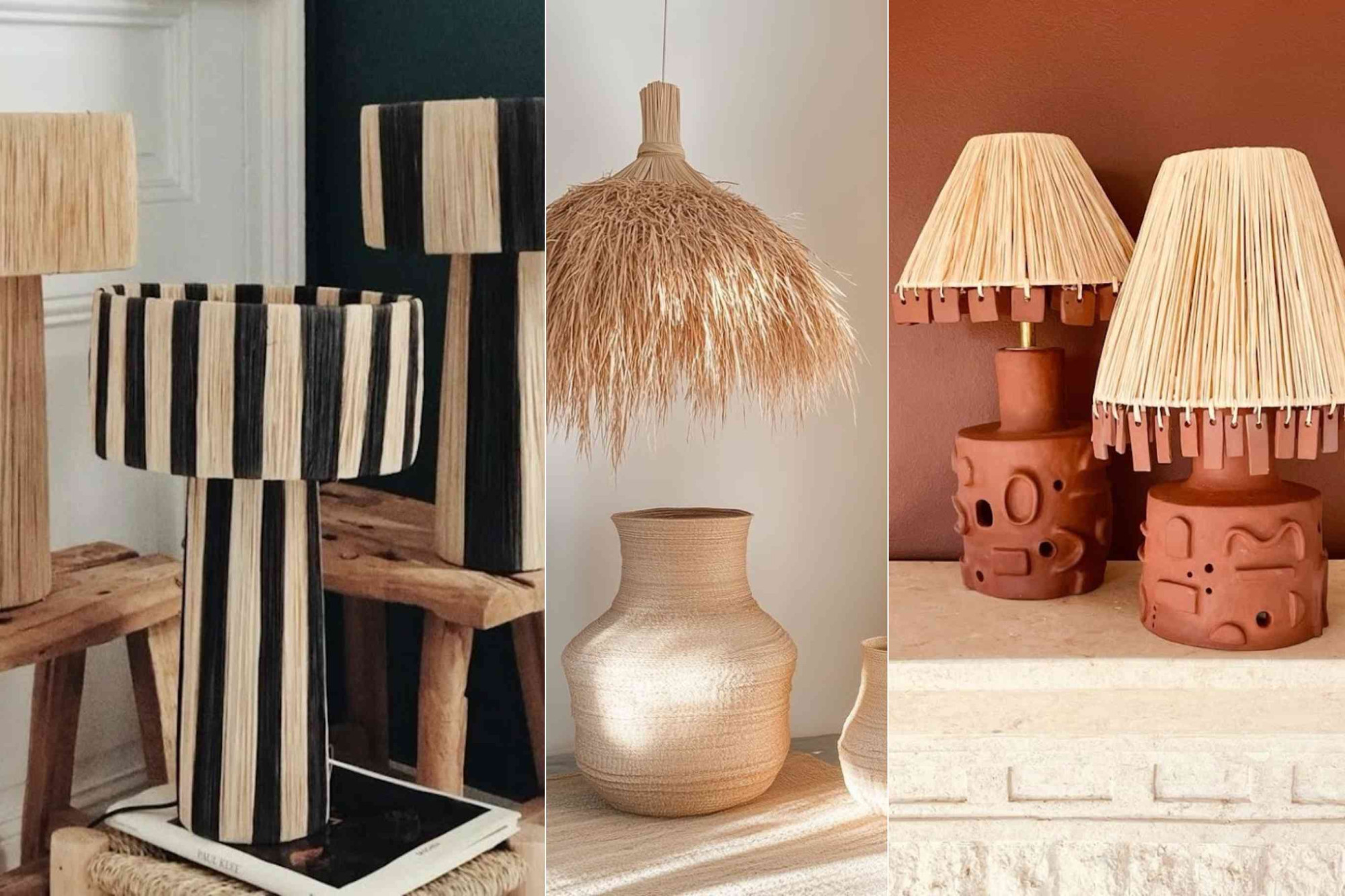
Natural-fibre lighting has become an important part of contemporary Moroccan interior design, but the materials used are not all of Moroccan origin. Raffia and doum palm are frequently grouped together, although they come from different plants and have distinct working properties.
Raffia and Doum: Two Different Materials
Raffia is obtained from palms of the genus Raphia, which grow in tropical regions, particularly Madagascar and parts of mainland Africa. The fibres are flexible and can be dyed, crocheted, wrapped or woven into decorative surfaces.
Raffia used by Moroccan designers is generally imported, as the raffia palm is not native to Morocco.
Doum, by contrast, is associated with Morocco's traditional basket-making industry. The name commonly refers to the Mediterranean dwarf palm, Chamaerops humilis. Its leaves are harvested, dried and prepared for weaving into baskets, mats and household objects.
Both materials can be used for lampshades, although their different structures influence the finished design. Raffia lends itself to fine strands and decorative fringes, while prepared palm leaves are particularly suitable for plaited and structured forms.
From Basket-Making to Lighting Design
Basketry has an established place in Moroccan craft production. Techniques originally used for agricultural baskets, storage containers and domestic objects are now applied to lighting and contemporary furniture.
Creating a fibre lampshade involves preparing the material, forming a supporting structure and attaching or weaving the strands by hand. The spacing and density of the fibres determine how much light passes through the shade.
Long, loose fringes produce a different result from closely woven surfaces. The proportions of the frame also influence whether the finished piece functions primarily as a pendant light, table lamp or decorative object.
Contemporary Workshops in Marrakech
Marrakech has become an important centre for designers working with traditional craft techniques.
DOUM, founded by Samira Madrane and Yasmine Erguibi, works with raffia and Moroccan palm fibres. Its associated women's cooperative, DOUM FOR WOMEN, specialises in weaving, braiding and decorative finishing. The business has also extended its work into interior decoration and furniture.
The workshop on the Route de l'Ourika illustrates how traditional fibre-working skills can be organised into contemporary design production.
Other Marrakech-based studios, including HAMIMI, explore handcrafted lighting through different textile techniques. HAMIMI works with Moroccan artisans to produce sculptural crocheted lamps inspired by familiar domestic forms.
These examples demonstrate how contemporary designers develop new products through established manual skills, while introducing different materials, proportions and construction methods.
#Marrakech #MoroccanDesign #Raffia #PalmFibre #MoroccanCraftsmanship #LightingDesign #InteriorDesign #HomeAndDesign
Marrakech @lescouleursdemarrakech
The Rooftops of Marrakech
The rooftop terrace is an established feature of traditional domestic architecture in Marrakech, originally serving practical household purposes rather than functioning as an outdoor lounge. Within the densely built medina, flat roofs provided additional space for domestic activities that required sunlight and ventilation.
The Traditional Function of the Roof
In Moroccan courtyard houses, the interior patio provides light and ventilation to the surrounding rooms. The roof offers a different type of space, exposed to the open air and separated from the activity of the street.
Traditionally, rooftops were used for drying laundry, airing bedding and carrying out household tasks. Their use also reflected the importance of privacy in domestic architecture.
Unlike the interior courtyard, which is enclosed by the building, the rooftop provides access to sunlight and views across the surrounding neighbourhood.
Architecture and Craftsmanship
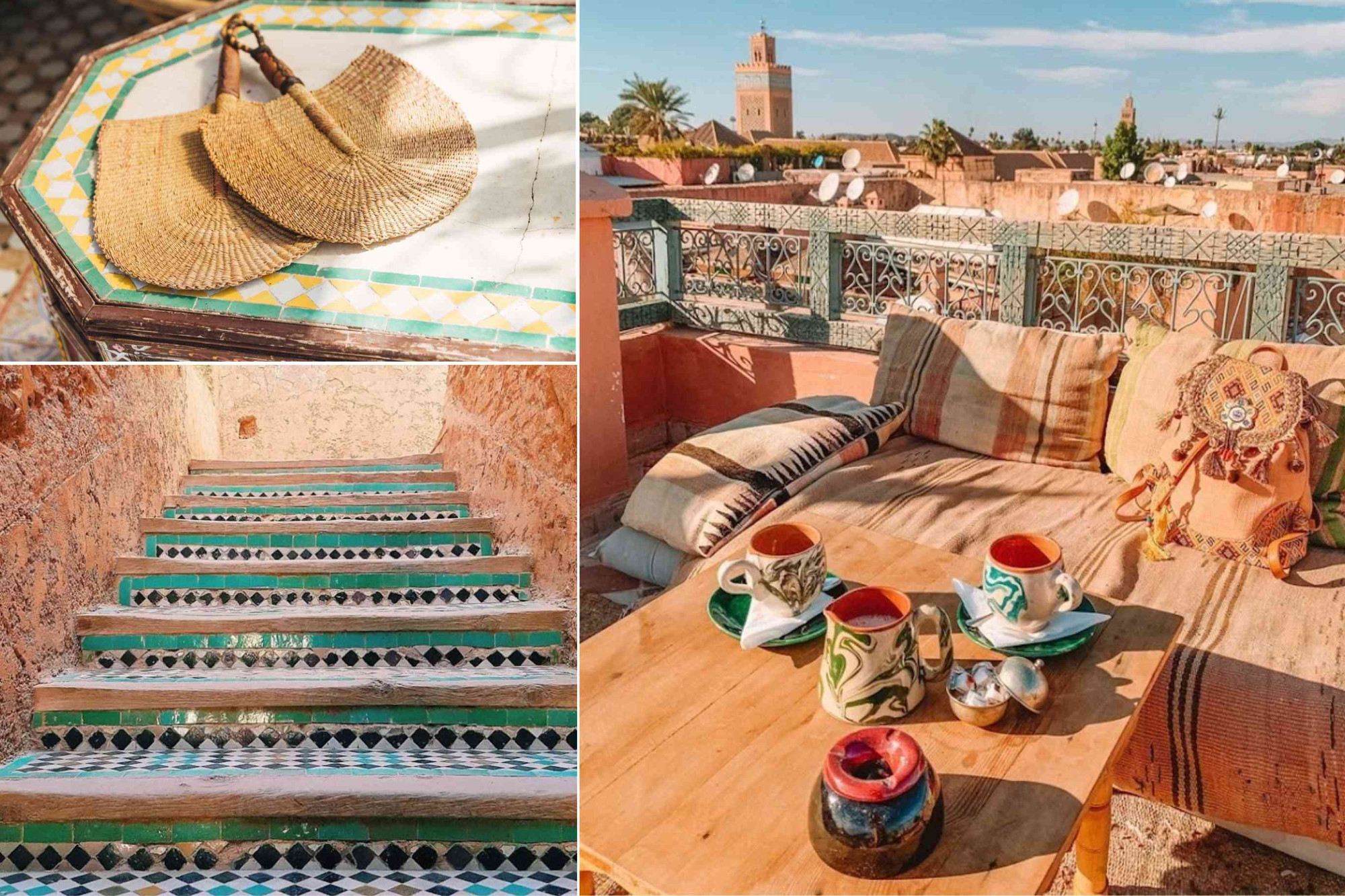
Access to the roof is usually provided by an internal staircase. In restored riads, these staircases may feature traditional ceramic decoration, including zellige mosaics.
Zellige is produced from glazed ceramic pieces individually cut and assembled into geometric patterns. The technique requires specialised craftsmanship and is used throughout Moroccan architecture, from fountains and courtyards to walls and staircases.
The decorated staircase pictured here illustrates how functional architectural elements can also incorporate traditional craft techniques.
From Domestic Roof to Guest Terrace
The conversion of historic houses into guest accommodation has introduced new uses for many rooftops in Marrakech.
Terraces may now include shaded seating areas, outdoor dining spaces and planted corners. These additions provide facilities for guests while retaining the original structure of the building.
From the rooftops of the medina, the Koutoubia minaret remains one of the most recognisable landmarks. Completed during the Almohad period in the 12th century, the minaret rises above the surrounding buildings and provides an important point of orientation.
The rooftop remains a distinctive element of Marrakech's architecture, connecting the traditional organisation of the Moroccan home with its contemporary use.
#Marrakech #MoroccanArchitecture #RiadArchitecture #MarrakechMedina #RooftopTerraces #Zellige #HomeAndDesign #CulturalHeritage
Marrakech @lescouleursdemarrakech
The Sculptural Floor Lamp
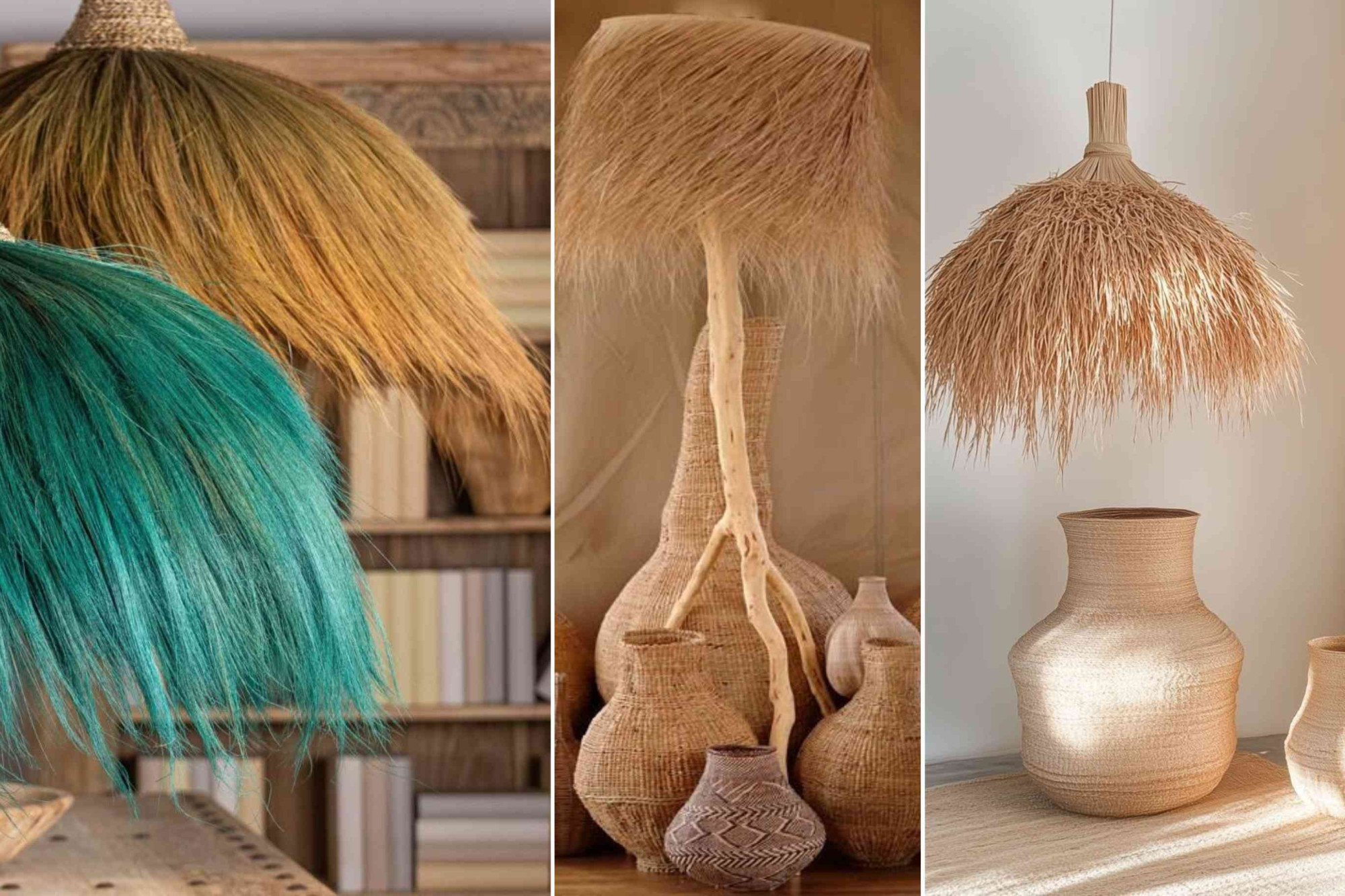
Contemporary lighting design in Morocco increasingly incorporates sculptural forms, combining traditional craftsmanship with unconventional materials and proportions. Floor lamps made from irregular wood, woven fibres and oversized shades demonstrate how lighting can also function as a freestanding design object.
From Natural Materials to Sculptural Forms
The lamp pictured here combines a branch-like wooden structure with a large fringed shade. Its irregular silhouette differs from conventional lighting designs built around symmetrical bases and standard lampshades.
The contrast between the solid wooden support and the flexible strands gives the piece its distinctive character. The shade also filters the light, making this type of lamp particularly suitable for ambient lighting.
Contemporary Design in Marrakech
Marrakech-based atelier Maison Izem explores a different approach through its Raffia Totem Floor Lamp. Handmade in Morocco, the design consists of vertically arranged woven forms that create a sculptural structure.
The atelier's work illustrates how traditional handcrafting techniques can be developed into contemporary lighting designs with a recognisable individual identity.
#Marrakech #MoroccanDesign #SculpturalLighting #ContemporaryDesign #Craftsmanship #InteriorDesign #HomeAndDesign
Marrakech @lescouleursdemarrakech
Zowart | Furniture with a Cultural Identity
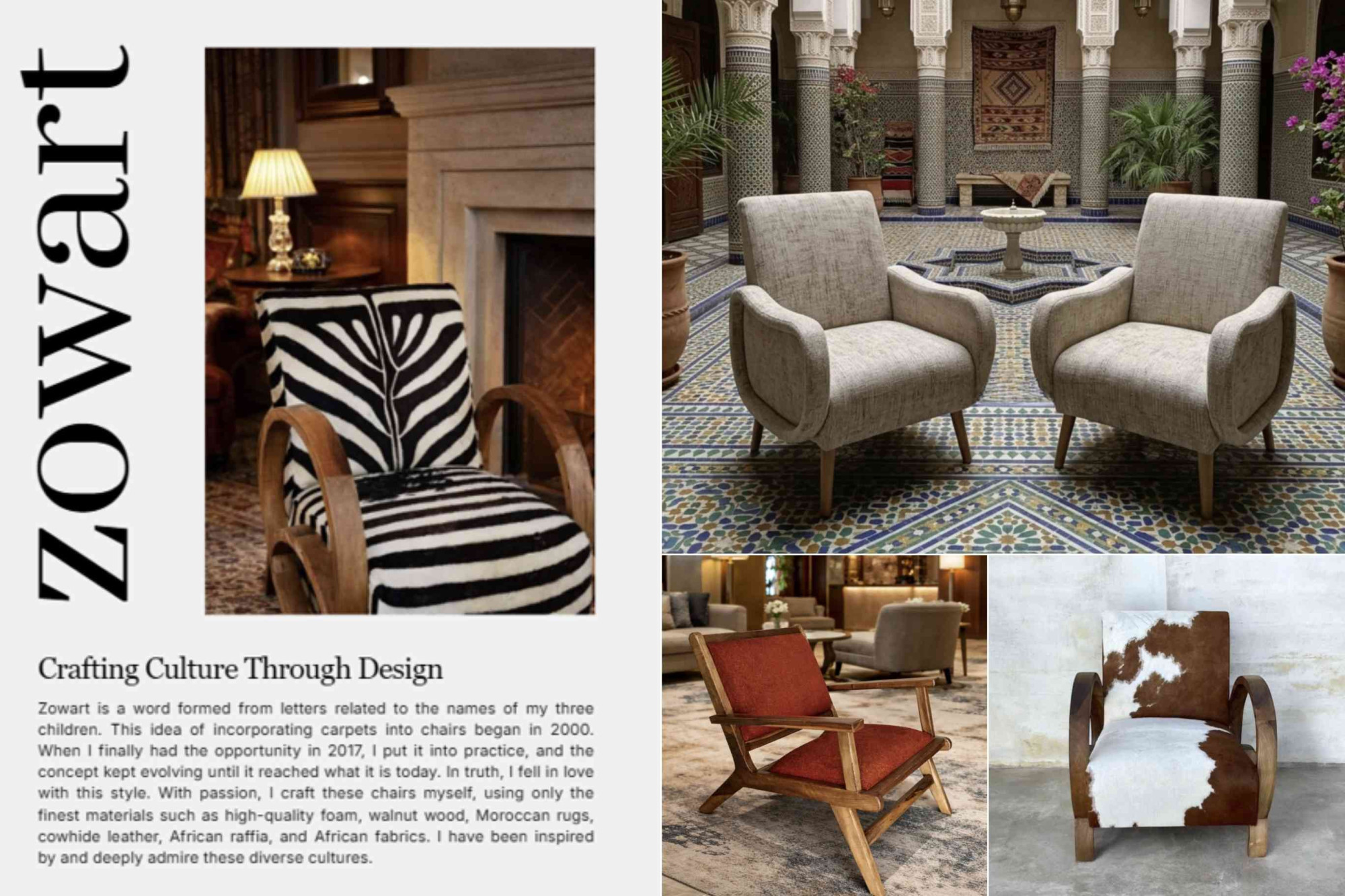
Zowart develops contemporary furniture through a combination of distinctive wooden structures, Moroccan textiles and materials associated with different African craft traditions. Its chairs are particularly recognisable for their curved frames and contrasting upholstery.
A Personal Design Story
The idea behind Zowart dates back to 2000, with the furniture collection taking its present direction in 2017. The name itself has a personal origin, combining letters associated with the designer's three children.
The collection is built around a recognisable chair silhouette, allowing different materials and decorative treatments to be introduced without changing the essential design.
Materials and Construction
Walnut wood forms the structural foundation of the chairs. Upholstery varies between Moroccan rugs, cowhide, raffia and patterned textiles, creating individual combinations of texture and colour.
The contrast between the shaped wooden frame and the upholstery is central to Zowart's design identity. Rather than relying on a single decorative style, the collection brings different material traditions into a consistent furniture form.
Based on the Ourika Road outside Marrakech, Zowart represents an individual approach to furniture design shaped by personal history and cross-cultural influences.
Featured in Les Couleurs du Monde
Explore the story behind Zowart, its furniture collection and the cultural influences informing its designs.
Discover Zowart in our first magazine edition, page 46
#Zowart #FurnitureDesign #MoroccanDesign #AfricanDesign #ContemporaryFurniture #Marrakech #HomeAndDesign
Marrakech @lescouleursdemarrakech
Tracey Heppner | The Art of Curated Travel
For travel designer Tracey Heppner, creating a journey through Morocco begins with understanding the traveller rather than selecting destinations from a standard itinerary. Her approach focuses on individual interests, personal connections and experiences that reflect the character of each place.
The Value of Local Knowledge
Years of designing journeys through Morocco have shaped Tracey's understanding of how local relationships influence travel planning.
In Marrakech, this may involve arranging a visit to an artisan's workshop, introducing travellers to independent businesses or selecting accommodation that reflects their interests.
These choices require knowledge of the people and places involved, as well as an understanding of what makes an experience relevant to a particular traveller.
A Personal Approach to Travel
Curated travel involves more than arranging transport, accommodation and activities. It requires deciding which experiences belong together, how much time to allow and when to leave parts of the itinerary flexible.
For Tracey, the objective is to create a journey that reflects the individual traveller while allowing room for encounters and experiences that cannot always be planned in advance.
Featured in Les Couleurs du Monde
Read more about Tracey Heppner's perspective on Marrakech and her approach to personalised travel in our second magazine edition.
Discover Tracey Heppner in our second edition, page 10
#Marrakech #MoroccoTravel #TraceyHeppner #CuratedTravel #CulturalTravel #TravelAndEscapes
Marrakech @lescouleursdemarrakech
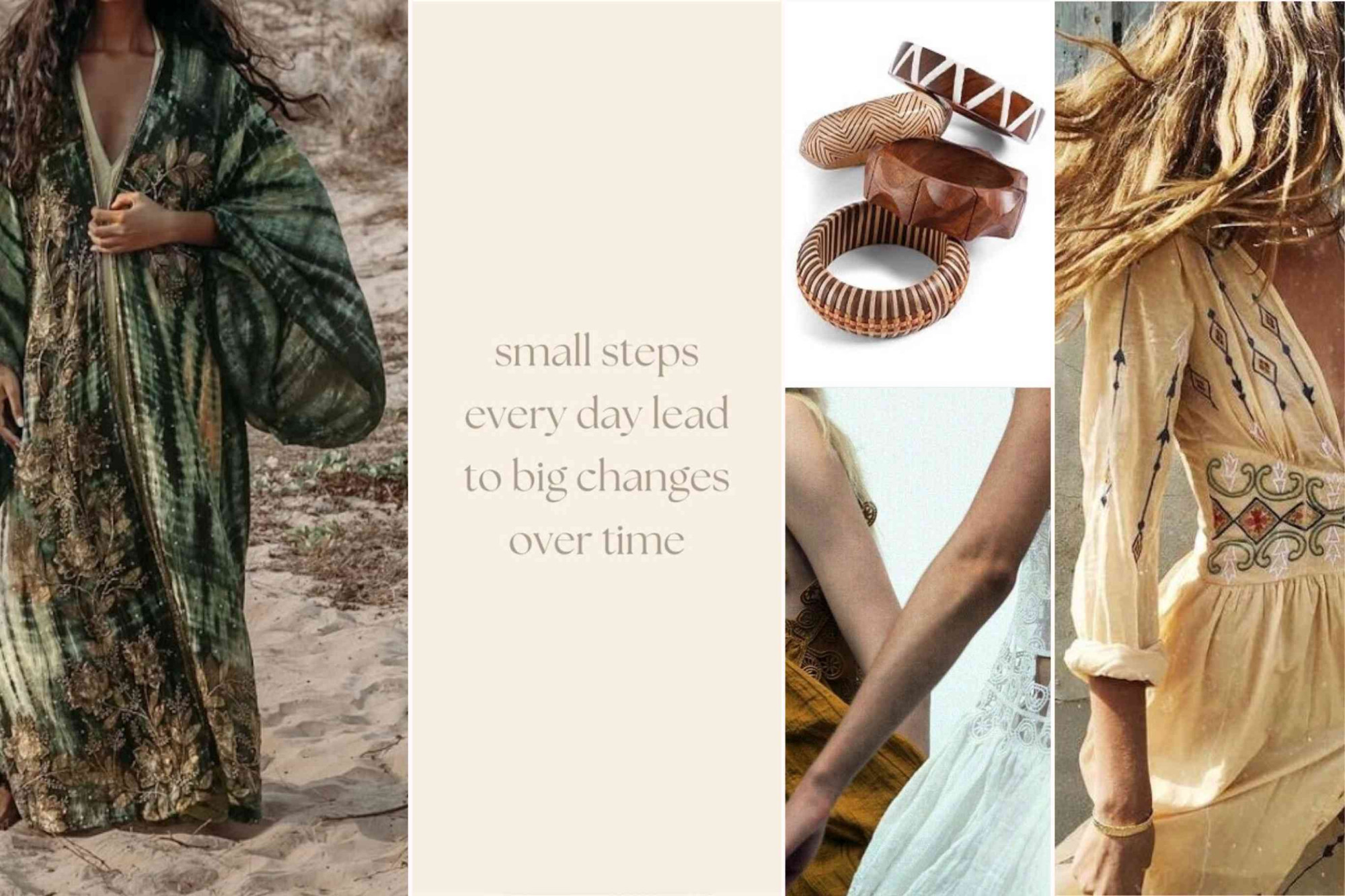
The Moroccan Caftan | Tradition and Contemporary Fashion
The Moroccan caftan has evolved through centuries of textile craftsmanship, adapting its silhouette and decoration while retaining a recognisable place in the country's clothing traditions. Today, it remains particularly associated with weddings, celebrations and formal occasions.
From Traditional Dress to Contemporary Fashion
The caftan is traditionally a long garment with a front opening, frequently decorated with sfifa, an ornamental braid applied along the edges, and aakad, small handmade buttons.
Its construction differs from the takchita, a formal Moroccan ensemble generally consisting of two layers, with an outer garment worn over an inner dress.
Contemporary designers reinterpret these established forms through lighter fabrics, different sleeve proportions and simplified decoration. The distinction between a traditional caftan and a modern interpretation lies partly in how the garment is constructed and finished.
The Importance of the Maâlem
A maâlem, or master craftsperson, plays an important role in traditional Moroccan garment production. Specialist artisans may be responsible for decorative braiding, button-making and other finishing techniques.
These details require considerable manual work, particularly on elaborate ceremonial garments. Their quality depends on the precision of the stitching, the consistency of the braid and its integration into the garment.
Moroccan Fashion Today
The caftan continues to influence Moroccan fashion beyond ceremonial clothing. Designers incorporate elements such as long silhouettes, decorative necklines and traditional finishing into contemporary dresses and separates.
These adaptations demonstrate how established clothing techniques can remain relevant while responding to changing preferences in fabric, fit and occasion.
#Marrakech #MoroccanCaftan #MoroccanFashion #FashionHeritage #TraditionalCraftsmanship #ContemporaryFashion #StyleAndFashion
Marrakech @lescouleursdemarrakech
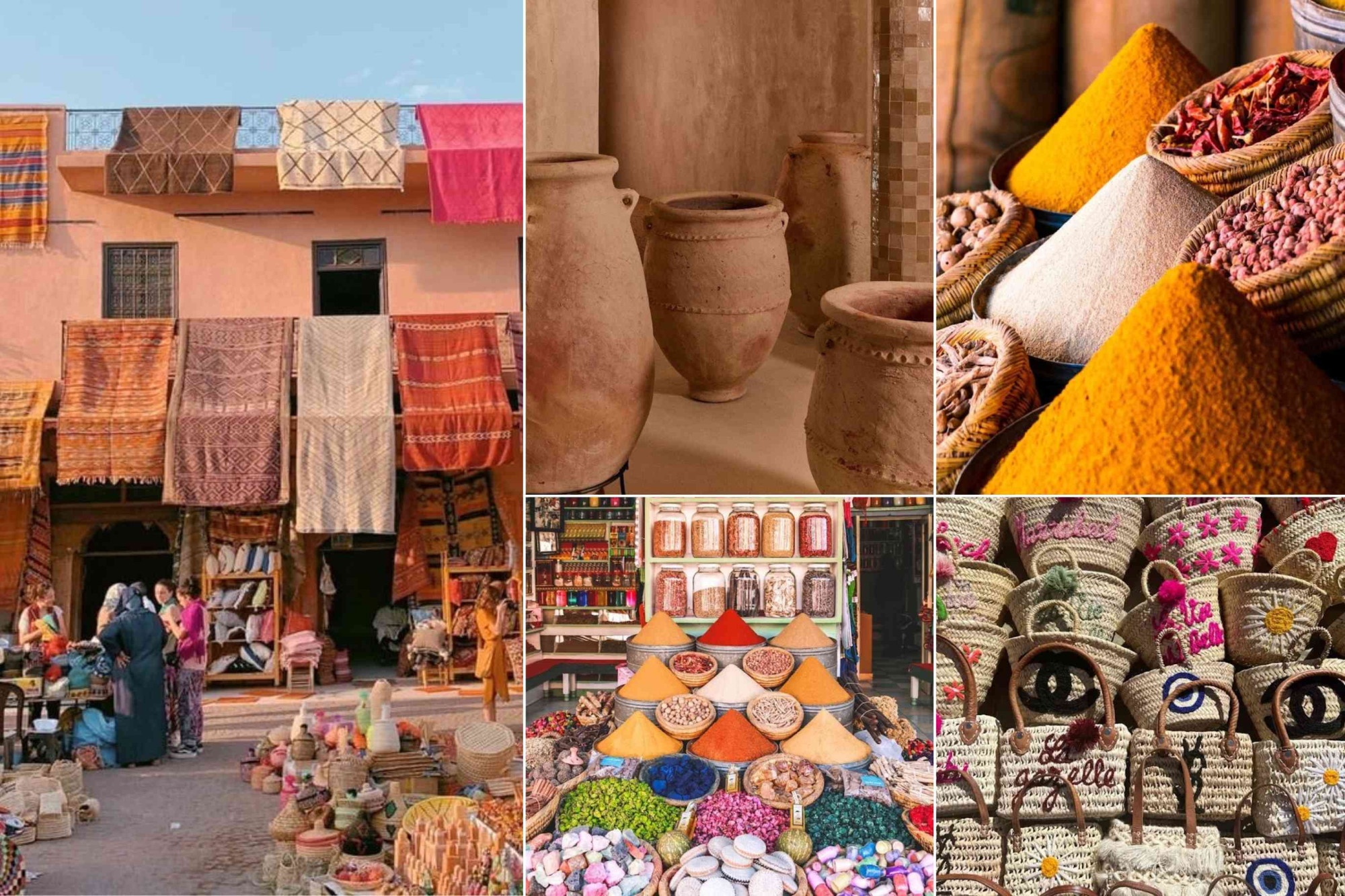
The Spice Trade of Marrakech
The spice markets of Marrakech bring together ingredients from Morocco's agricultural regions and products imported through international trade. Although the colourful displays are closely associated with the medina, the spices themselves have different geographical origins and culinary uses.
What Is Actually Grown in Morocco?
Saffron is one of Morocco's most valuable agricultural products. The area around Taliouine, in the Anti-Atlas, is particularly known for cultivating Crocus sativus, the flower from which saffron threads are harvested by hand.
Cumin is another important ingredient in Moroccan cooking and is cultivated in parts of the country. Its seeds are dried and ground for use in dishes such as tagines, grilled meats and vegetable preparations.
By contrast, spices such as cinnamon, cloves and black pepper originate from plants associated with tropical growing regions and are generally imported.
The Difference Between Spices and Blends
Not everything sold in the spice markets is a single ingredient.
Ras el hanout is a blend whose composition varies between merchants and households. It may contain cumin, ginger, turmeric, cinnamon, coriander and other spices, with proportions determined by the person preparing it.
There is no single traditional recipe. The name refers to a merchant's selection of spices rather than a fixed combination.
Where to Explore | Rahba Kedima
Rahba Kedima, in Marrakech's medina, is associated with spice merchants, herbal products and traditional market trading.
When buying saffron, look for identifiable dried threads rather than an unidentified powder. For spice blends, asking about the ingredients and preparation date provides more useful information than judging quality by colour alone.
Location: Rahba Kedima, Medina, Marrakech, Morocco.
#Marrakech #MoroccanSpices #Saffron #RasElHanout #MoroccanCuisine #FoodCulture #TableAndTaste
Marrakech @lescouleursdemarrakech
Handmade or Mass-Produced? Shopping in Marrakech
Marrakech's souks bring together skilled artisans, independent traders and retailers selling factory-produced goods. Although many products draw on Moroccan craft traditions, their appearance alone does not establish where or how they were made.
Recognising Handmade Products
Traditional leather babouches, woven baskets and ceramic objects offer useful examples of different production methods.
Hand-stitched leather slippers may show small variations in stitching and finishing, while woven baskets can reveal differences in tension and shape. These details can indicate manual production, although consistency is not necessarily evidence of machine manufacturing.
Materials also deserve attention. Genuine leather, synthetic alternatives, natural fibres and industrially produced components may appear in visually similar products.
A more reliable approach is to ask about the workshop, the materials and the production process rather than judging authenticity by appearance alone.
Understanding Origin and Price
Marrakech is a major trading centre for products made throughout Morocco. Carpets, ceramics, textiles and leather goods sold in the medina may originate in other cities or rural communities.
A product sold as handmade is not necessarily made in Marrakech. Equally, a higher price does not guarantee traditional craftsmanship or fair payment to the maker.
Buying directly from a workshop can provide greater insight into production, although sellers' claims should still be assessed carefully.
Where to Explore | Ensemble Artisanal de Marrakech
Located on Avenue Mohammed V, the Ensemble Artisanal brings together shops and workshops specialising in Moroccan crafts, including leatherwork, ceramics, textiles and woodwork.
It offers an opportunity to examine different materials and production techniques and to speak with artisans about their work.
Location: Avenue Mohammed V, Marrakech, Morocco.
#Marrakech #MoroccanCraftsmanship #MarrakechSouks #HandmadeInMorocco #TraditionalCrafts #ArtAndCulture #LocalTrade
Marrakech @lescouleursdemarrakech
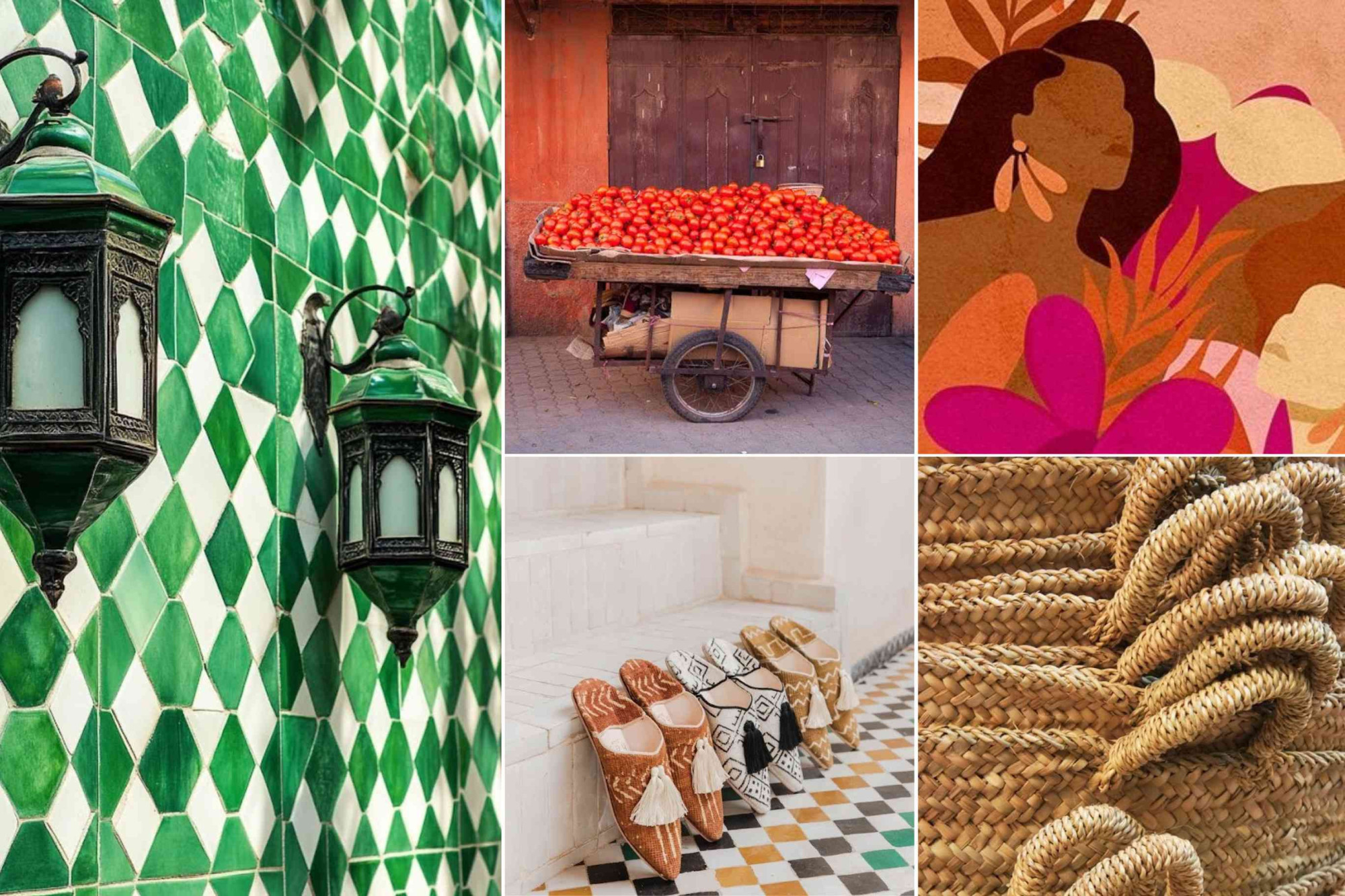
The Embroidery Traditions of Morocco
Moroccan embroidery is not a single decorative style but a collection of regional textile traditions, each with its own techniques, motifs and historical influences. Its applications range from traditional clothing to household textiles and contemporary accessories.
Fès and Rabat: Different Traditions
Fès is particularly associated with tarz fassi, a counted-thread embroidery technique recognised for its precise geometric patterns. Traditionally worked on linen or cotton, it can produce reversible designs with carefully arranged stitches.
Rabat developed a different embroidery tradition, featuring larger floral and geometric motifs. Coloured silk threads were used to decorate textiles such as cushions, covers and ceremonial fabrics.
These regional differences reflect the importance of embroidery as a specialised craft passed between generations.
From Traditional Textiles to Contemporary Fashion
Embroidery remains an important decorative element in Moroccan clothing, particularly in garments such as the caftan and djellaba.
Traditional techniques include sfifa, decorative braid applied along garment edges, and aakad, handmade ornamental buttons used as fastenings. These details are distinct from embroidery but are frequently combined with it in Moroccan dressmaking.
Contemporary designers also incorporate embroidered panels, contrasting threads and traditional motifs into jackets, bags and home accessories.
Textile Craft in Marrakech
Marrakech provides an important retail setting for Moroccan textiles produced in different regions of the country.
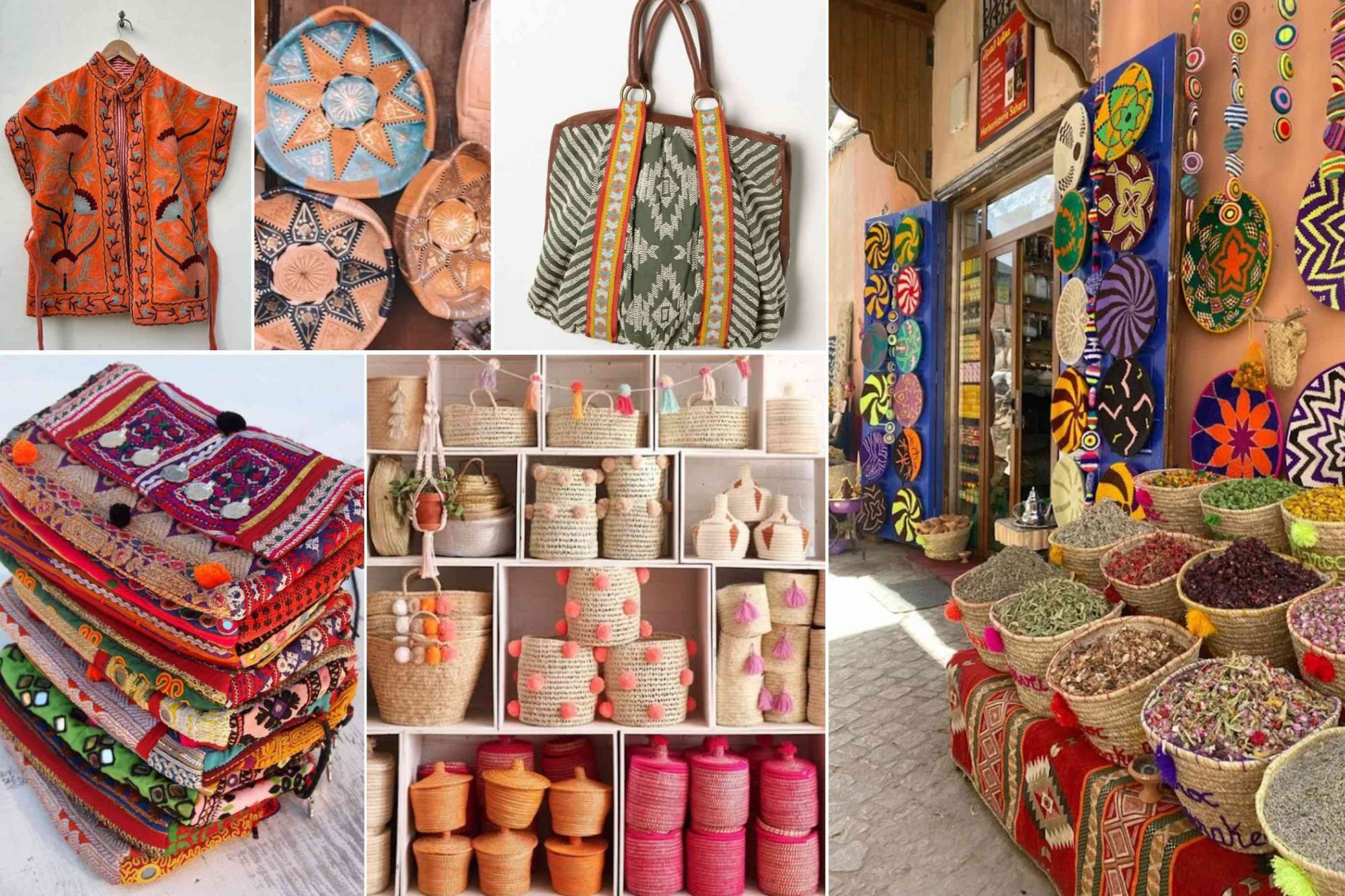
Within the medina, embroidered cushions, traditional garments, woven bags and decorative fabrics are sold alongside other craft products. Their appearance varies according to the techniques used, the materials selected and the workshops responsible for production.
The distinction between regional traditions is important when identifying these pieces, as not every embroidered product sold in Marrakech originates in the city itself.
Souk Semmarine | Medina, north of Jemaa el-Fna
The main shopping street of the medina, with shops selling fabrics, embroidered accessories, traditional clothing and decorative textiles.
#Marrakech #MoroccanEmbroidery #TextileHeritage #MoroccanCraftsmanship #TraditionalTextiles #MoroccanFashion #ArtAndCulture
Marrakech @lescouleursdemarrakech
The Khamsa | A Symbol of Protection
The khamsa, a hand-shaped symbol associated with protection against the evil eye, is one of the most recognisable motifs in Moroccan decorative culture. Its name derives from the Arabic word for five, referring to the five fingers of the hand.
A Symbol Shared Across Cultures
The khamsa has a long history across North Africa and the Middle East. It is associated with both Muslim and Jewish traditions, where it is also known as the Hand of Fatima or the Hand of Miriam.
The symbol is traditionally believed to offer protection against the evil eye, a concept involving harm attributed to an envious or hostile gaze.
Its precise historical origins remain debated, and its use extends beyond a single religion or community.
From Amulet to Decorative Object
In Morocco, the khamsa appears in jewellery, metalwork, painted ceramics and wall decorations.
Some examples incorporate an eye in the centre of the palm, reinforcing the protective association. Others feature floral motifs, geometric patterns or inscriptions.
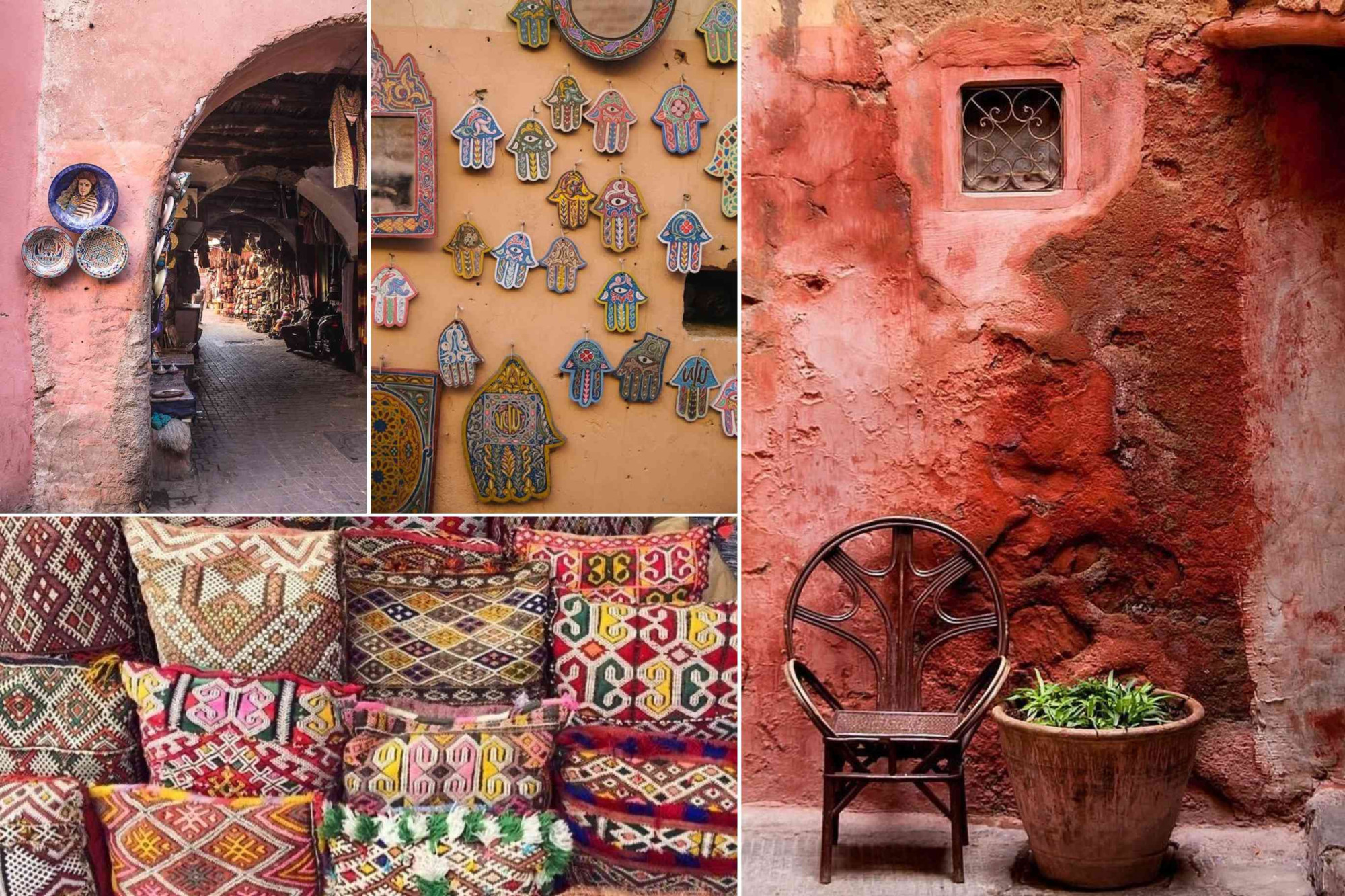
The colourful ceramic hands sold in Marrakech's souks illustrate how a traditional protective symbol has also become a decorative object. Contemporary versions vary considerably in colour, material and design.
Where to Explore | Marrakech Medina
Small shops around the medina sell khamsa ornaments in ceramic, brass and silver-coloured metal, alongside jewellery and other traditional decorative objects.
Location: Souk Semmarine and surrounding lanes, Medina, Marrakech, Morocco.
#Marrakech #Khamsa #MoroccanCulture #CulturalSymbols #MoroccanCraftsmanship #MarrakechMedina #ArtAndCulture
Marrakech @lescouleursdemarrakech
Inside Marrakech's Traditional Herbal Shops
Traditional herbal shops in Marrakech bring together dried plants, aromatic ingredients and preparations associated with Moroccan household practices. Their shelves contain products used in cooking, perfumery, cosmetics and traditional remedies, although these different applications should not be confused.
From Plants to Preparations
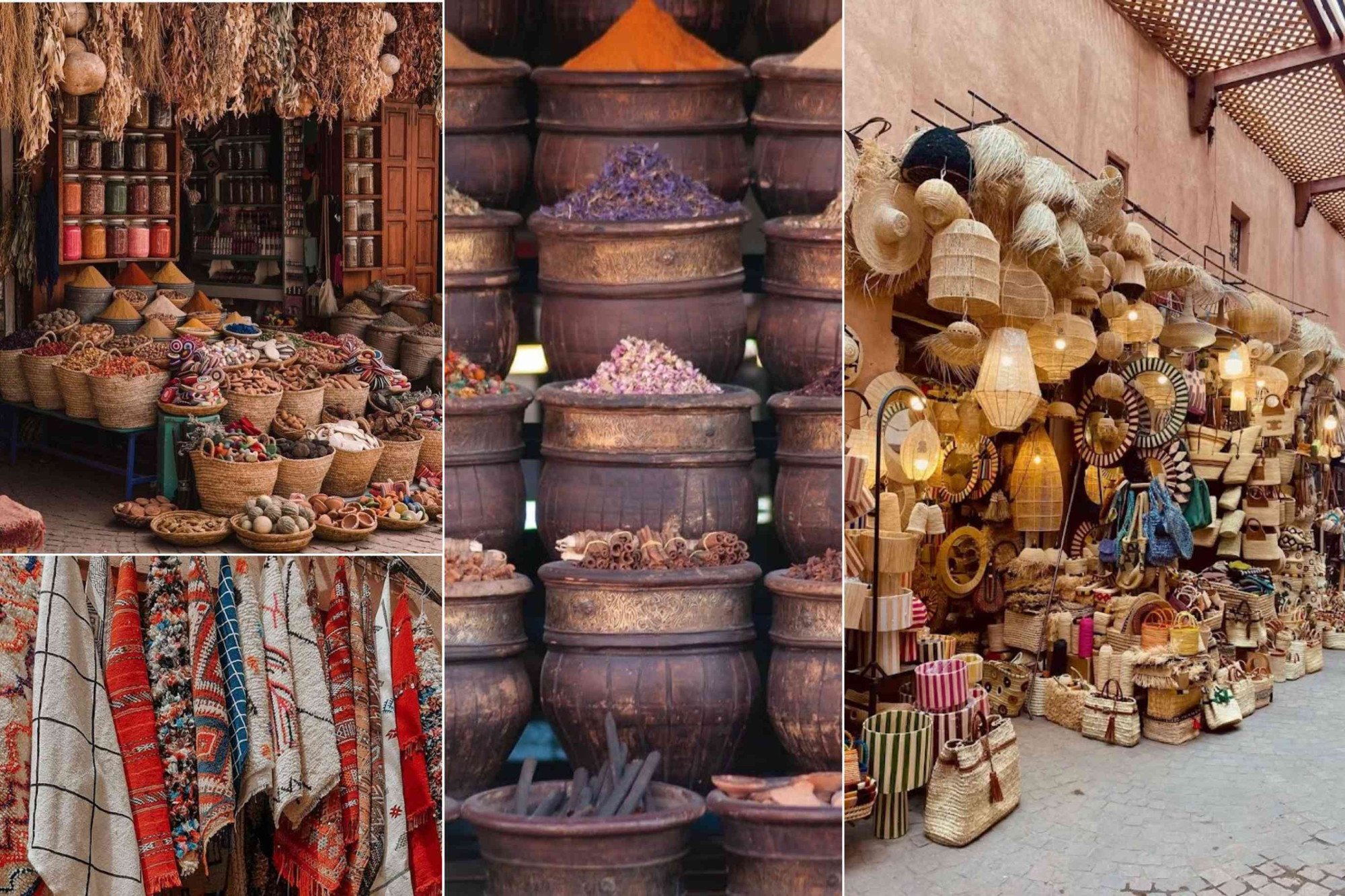
Rose petals, lavender, rosemary and other dried botanicals are sold alongside essential oils, clays and powdered ingredients.
Rose water, for example, is used in Moroccan pastries and cosmetic preparations. Orange blossom water is another established ingredient, particularly in desserts and sweet drinks.
Rhassoul, a mineral clay sourced from Morocco, is traditionally used in hair and body cleansing. It is a mineral product rather than a medicinal herb, illustrating the range of materials found in these shops.
Traditional Knowledge and Modern Claims
The use of plants in Moroccan households has developed through generations of practical knowledge. However, a product's traditional reputation does not establish its medical effectiveness or safety.
Herbal preparations may vary in concentration and purity, while essential oils require particular care because they are highly concentrated.
The distinction matters when purchasing products marketed for health, beauty or therapeutic purposes.
Where to Explore | Marrakech Medina
Herbal shops can be found throughout the medina, including the commercial streets around Rahba Kedima. Their displays frequently combine dried flowers, aromatic plants, natural oils and traditional cosmetic ingredients.
When purchasing products, ask for the botanical name, intended use and ingredients, particularly when buying oils or powdered preparations.
#Marrakech #MoroccanHerbalism #Herboristerie #MoroccanCulture #TraditionalKnowledge #MarrakechMedina #ArtAndCulture
Marrakech @lescouleursdemarrakech
The Art of Moroccan Passementerie
Decorative tassels, braided cords and ornamental trimmings belong to the craft of passementerie, a specialised form of textile decoration used in Moroccan interiors and traditional furnishings. Unlike woven fabrics, passementerie produces separate decorative elements that can be attached to finished objects.
A Craft of Its Own
Passementerie includes tassels, fringes, cords and ornamental knots. These elements are made by twisting, wrapping, braiding and securing threads around a central structure.
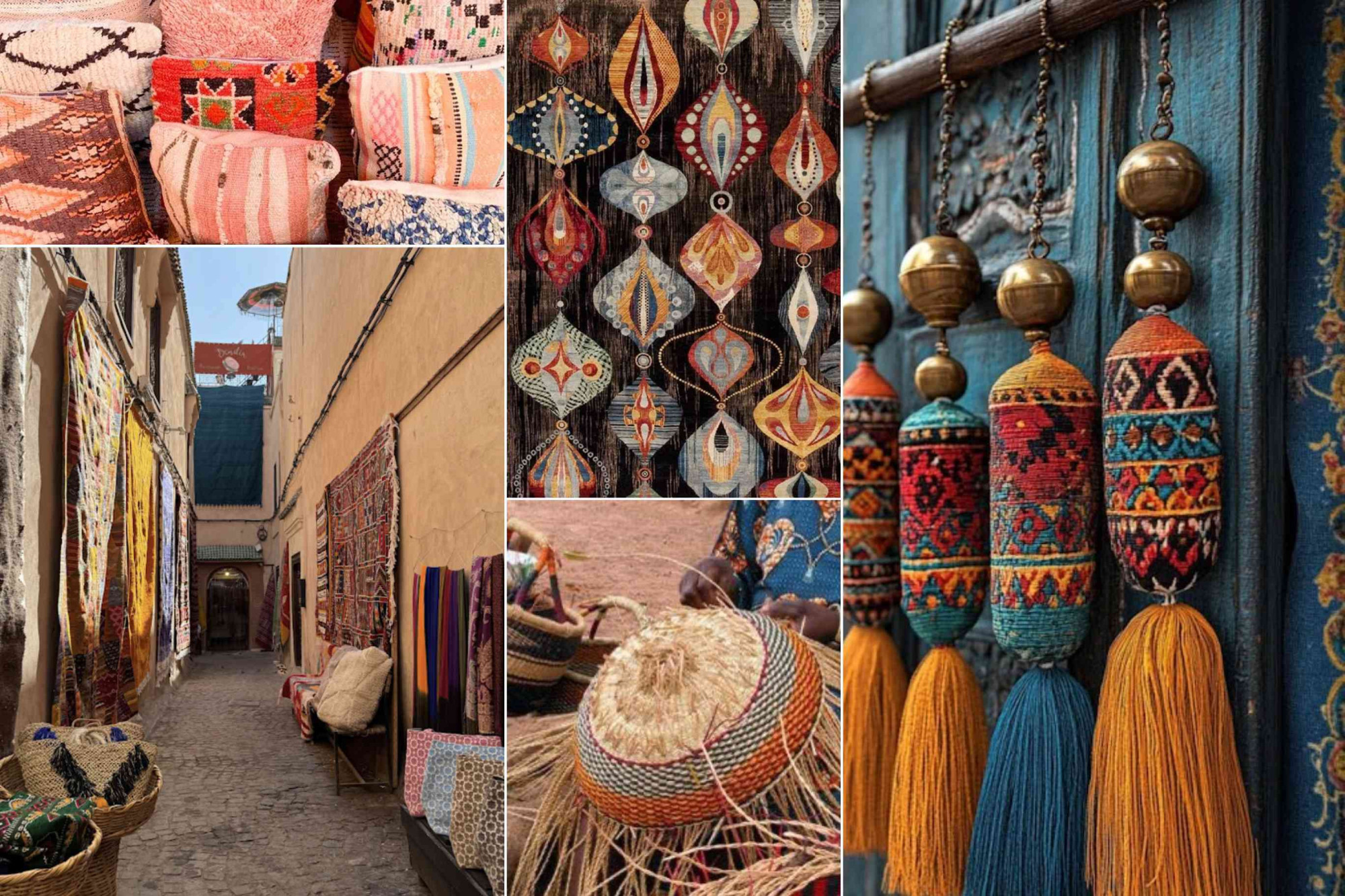
The elaborate hanging ornaments pictured here combine patterned textile sections with metal components and long coloured tassels. Their construction requires several stages of work, from preparing the threads to assembling the finished piece.
Traditionally, decorative trimmings have been used on cushions, curtains, upholstered furniture and ceremonial textiles. Similar techniques also appear in clothing accessories and ornamental household objects.
From Functional Detail to Decoration
A tassel originally used to finish a cord or conceal a fastening can become an independent decorative object.
In contemporary Moroccan interiors, oversized tassels may be attached to furniture, displayed on doors or incorporated into wall decorations. The change in scale gives a small textile detail a different function.
The use of contrasting colours, metallic elements and repeated patterns also connects passementerie to Morocco's broader decorative traditions.
Where to Explore | Marrakech Medina
Textile and furnishing shops in the medina offer decorative cords, tassels and handmade accessories. The areas around Souk Semmarine and the smaller surrounding lanes provide opportunities to examine different types of textile decoration.
Location: Souk Semmarine, Medina, Marrakech, Morocco.
#Marrakech #MoroccanPassementerie #DecorativeArts #MoroccanCraftsmanship #TextileDesign #MoroccanInteriors #HomeAndDesign
Marrakech @lescouleursdemarrakech
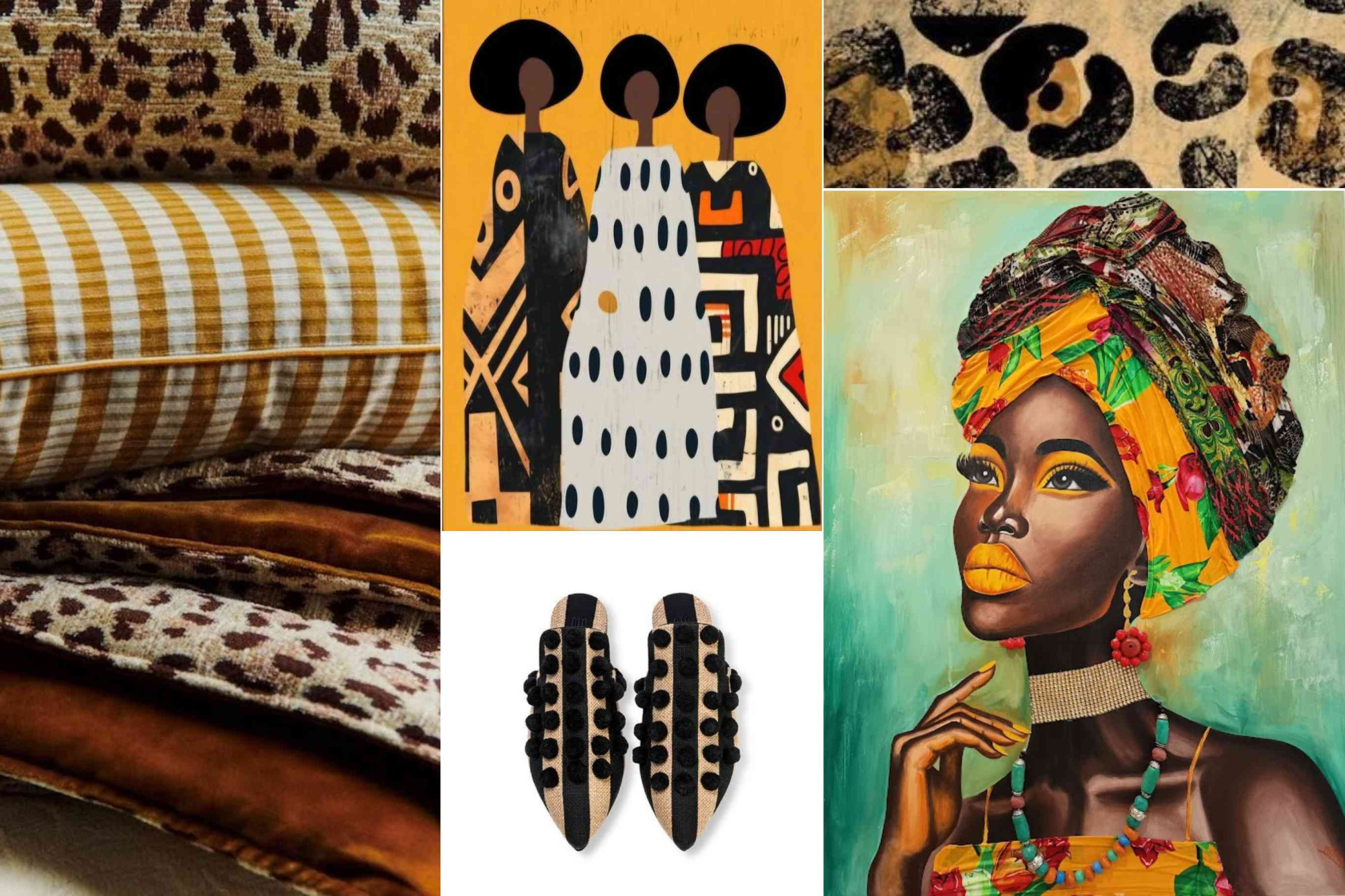
Marrakech and the Contemporary African Art Scene
Marrakech has become an important meeting place for contemporary African art, bringing Moroccan artistic practices into conversation with work from across the continent. Galleries, exhibitions and cultural initiatives have contributed to the city's growing international profile.
A Broader African Perspective
Contemporary African art cannot be defined by a single visual style. Painting, photography, sculpture and mixed-media practices reflect different histories, cultural identities and artistic approaches.
In Marrakech, this diversity has gained visibility through exhibitions featuring artists from Morocco and other African countries.
The city also hosts 1-54 Contemporary African Art Fair, an international art fair dedicated to contemporary art from Africa and its diaspora.
Galleries and Cultural Spaces
MACAAL, the Museum of African Contemporary Art Al Maaden, is an important institution in Marrakech's contemporary art landscape. Its exhibitions and collection explore artistic production from Morocco and across Africa.
Galerie 127 is particularly associated with photography, while other independent galleries contribute to the city's wider contemporary art scene.
Art Beyond Traditional Craft
Marrakech is internationally recognised for its carpets, ceramics and decorative arts, but its contemporary art scene extends well beyond these traditions.
Artists working with portraiture, abstraction, photography and sculptural forms introduce subjects such as identity, migration, memory and social change.
Together, these practices position Marrakech as a place to encounter different perspectives on contemporary African art.
#Marrakech #AfricanContemporaryArt #MACAAL #MoroccanArt #ArtAndCulture #AfricanArtists #LesCouleursDeMarrakech
Marrakech @lescouleursdemarrakech
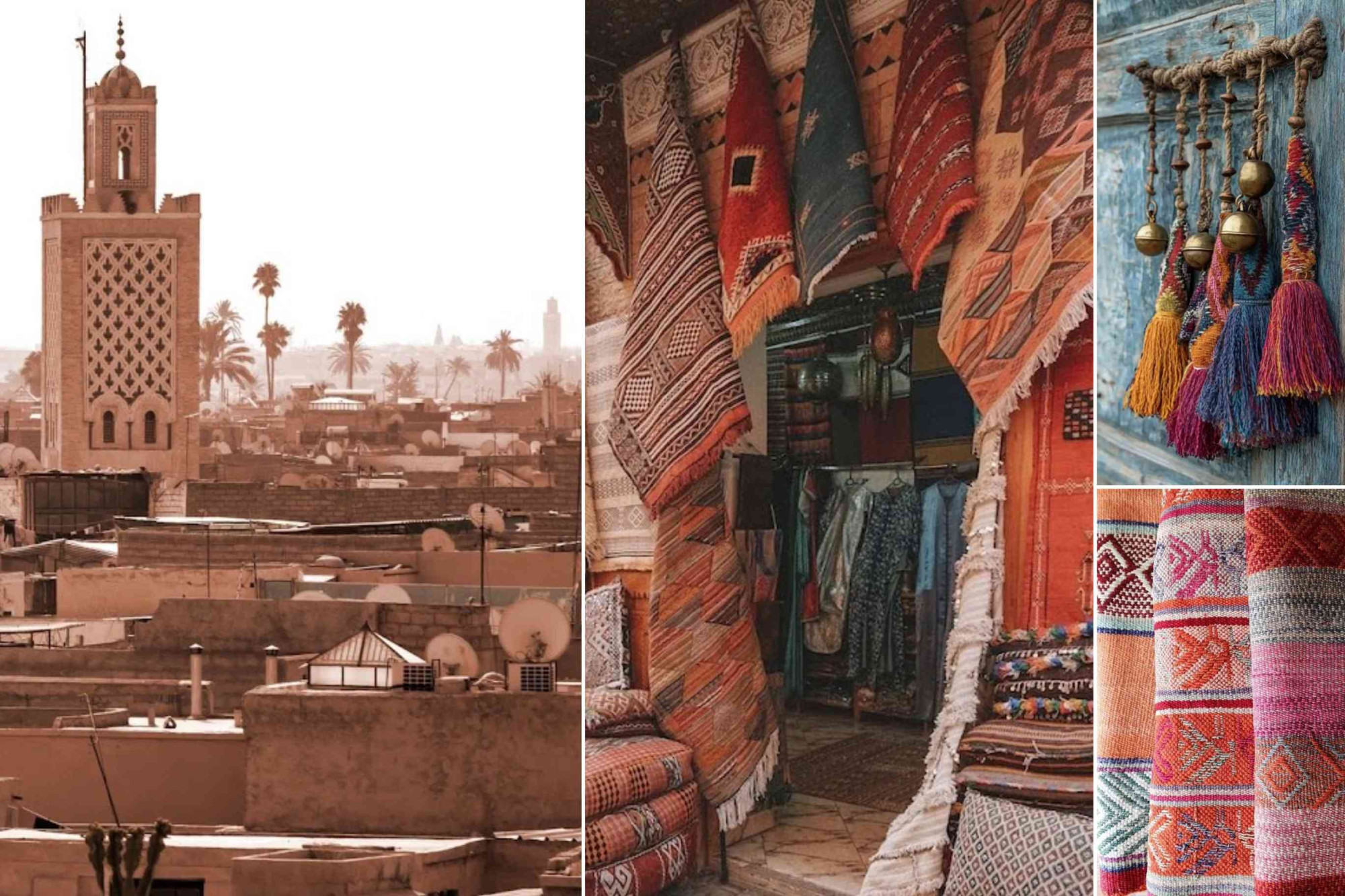
The Language of Amazigh Rugs
The geometric patterns found in Moroccan Amazigh rugs are frequently associated with protection, fertility and family life. Yet there is no single symbolic language that applies to every rug or weaving community.
The Meaning Behind the Motifs
Diamonds, zigzags and repeated geometric shapes appear in textiles from different regions of Morocco. Their interpretation depends on local traditions, the individual weaver and the context in which the rug was produced.
A diamond may be described as a symbol of femininity or protection, but such explanations are not universal. Some patterns are inherited through generations, while others reflect personal choices or the technical possibilities of the loom.
Historically, many Amazigh rugs were woven by women for domestic use. Their designs could develop without a preliminary drawing, allowing the weaver to introduce variations during production.
Tradition or Commercial Interpretation?
As Moroccan rugs became internationally popular, individual motifs were increasingly assigned specific symbolic meanings in commercial descriptions.
These interpretations should be approached with care. Without information about the rug's origin and the person who made it, an exact symbolic reading is difficult to establish.
The weaving technique, materials and regional background generally provide more reliable information about a textile than a decorative symbol considered in isolation.
Where to Explore | Rahba Kedima, Marrakech
The carpet shops around Rahba Kedima in the medina bring together rugs from different Moroccan weaving regions. It is an interesting area to compare geometric compositions, wool textures and flatwoven techniques.
When examining a rug, ask about its region of origin, whether it was handwoven and what is known about the weaving workshop or individual maker.
Location: Rahba Kedima, Medina, Marrakech, Morocco.
#Marrakech #AmazighRugs #MoroccanTextiles #TextileHeritage #MoroccanCraftsmanship #AtlasMountains #ArtAndCulture
Marrakech @lescouleursdemarrakech
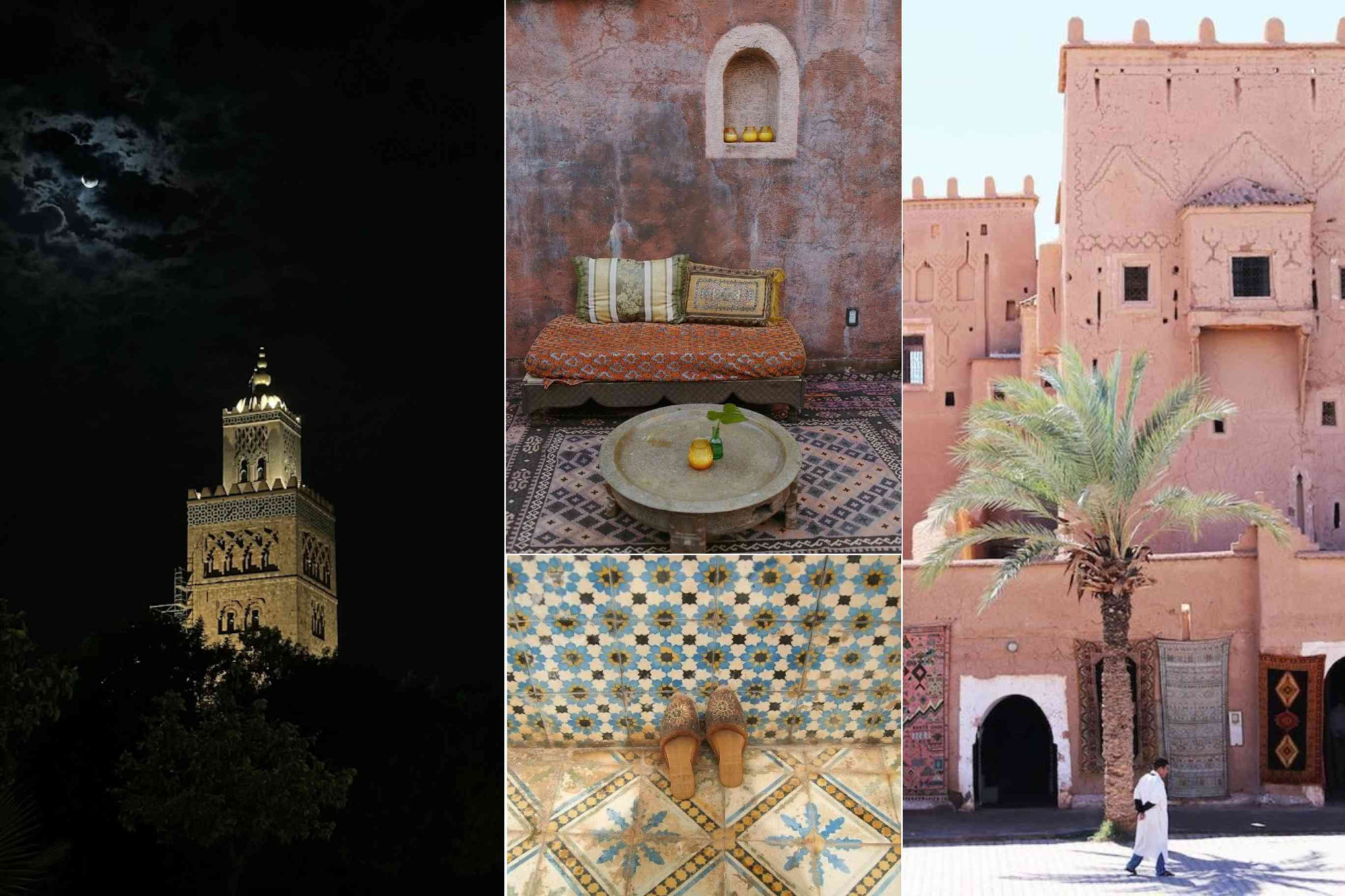
Kasbahs and Ksour | The Architecture of Southern Morocco
The fortified earthen buildings of southern Morocco were designed to provide protection, accommodate communities and respond to the region's demanding climate. Their construction reflects specialised knowledge of local materials and traditional building techniques.
Kasbah or Ksar?
Although the terms are sometimes used interchangeably, they describe different types of architecture.
A kasbah generally refers to a fortified residence, citadel or defensive complex, frequently associated with a powerful family or local authority.
A ksar (plural ksour) is a fortified settlement containing several households, often surrounded by defensive walls and incorporating communal spaces.
Both are characteristic of southern Morocco, particularly the valleys and oasis settlements extending towards the Sahara.
Building with Earth
Traditional construction frequently uses pisé, or rammed earth, in which layers of moist soil are compressed inside temporary formwork.
The resulting thick walls provide thermal mass, helping moderate indoor temperature changes between day and night. Timber, earth-based plaster and locally available stone may also be incorporated into the buildings.
These structures require regular maintenance, particularly after heavy rainfall, because prolonged exposure to water can damage earthen walls.
A Place to Explore | Aït Ben Haddou
Situated in the province of Ouarzazate, Aït Ben Haddou is one of Morocco's best-known examples of a traditional fortified settlement.
The UNESCO-listed ksar consists of earthen buildings enclosed within defensive walls, with towers and decorated façades illustrating the architectural traditions of the region.
Its location along historic trade routes connecting the Sahara with Marrakech contributed to its importance as a settlement and stopping point.
Aït Ben Haddou is approximately 180–190 kilometres from Marrakech by road. The drive usually takes around 3.5 to 4.5 hours via the Tizi n’Tichka mountain pass, depending on road and weather conditions.
Location: Aït Ben Haddou, Ouarzazate Province, Morocco.
#Morocco #SouthernMorocco #Kasbah #Ksar #AitBenHaddou #MoroccanArchitecture #CulturalHeritage #TravelAndEscapes
Marrakech @lescouleursdemarrakech
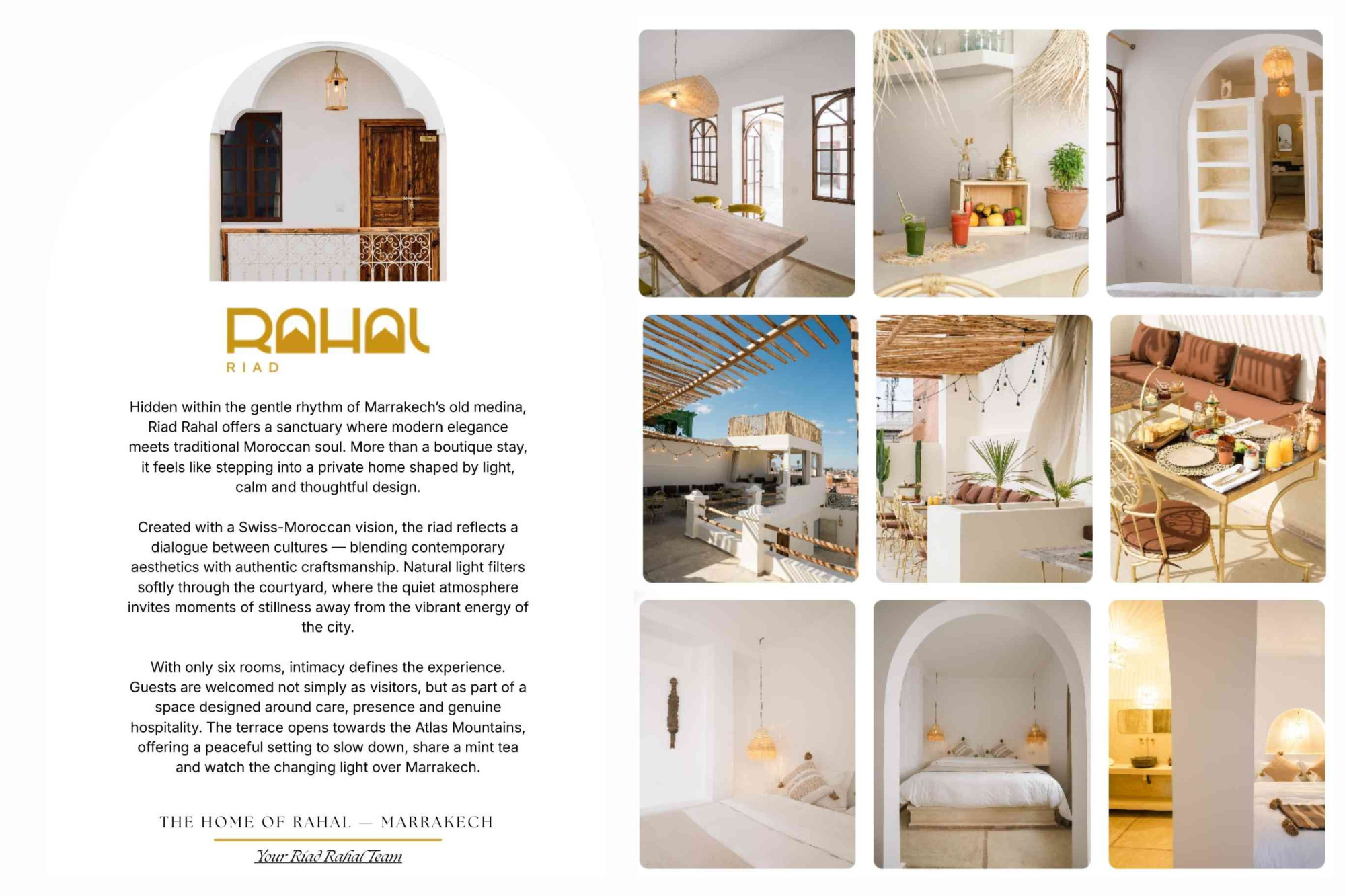
Riad Rahal | A Swiss-Moroccan Perspective on Marrakech
With just six rooms, Riad Rahal offers an intimate stay in Marrakech's medina, combining contemporary design with traditional Moroccan architecture.
Located in the Riad Laarous neighbourhood, the property is within walking distance of the souks, cultural attractions and Jemaa el-Fnaa. Its courtyard and surrounding rooms follow the traditional layout of a Moroccan riad, creating a private setting within the old city.
A Swiss-Moroccan Design Influence
The interiors reflect a combination of Swiss simplicity and Moroccan craftsmanship. White walls, understated furniture and natural materials sit alongside carved wooden doors, traditional metalwork and decorative details inspired by local architecture.
Rather than recreating a conventional Moroccan interior, Riad Rahal introduces a contemporary interpretation that retains the building's architectural character.
Staying at Riad Rahal
The six-room setting gives the property a personal atmosphere. Guests can enjoy breakfast in the shared spaces, spend time in the courtyard or use the rooftop terrace between visits to the medina.
Its location makes it a practical base for exploring Marrakech on foot, while the interiors offer a different perspective on traditional riad accommodation.
Featured in Les Couleurs du Monde
Riad Rahal was featured in our first magazine edition, where we took a closer look at its design, Swiss-Moroccan influences and approach to hospitality.
Read The Home of Rahal | Marrakech in our first edition →
Explore Riad Rahal and book your stay with Les Couleurs du Monde Travel →
#Marrakech #RiadRahal #MoroccanArchitecture #BoutiqueStay #MarrakechMedina #MoroccanDesign #TravelAndEscapes
Marrakech @lescouleursdemarrakech
Understanding Marrakech Through Its Architecture
The architecture of Marrakech reveals how buildings and streets were designed around privacy, climate and daily life. Many of the city's most recognisable features developed from practical requirements rather than decorative preferences.
The Streets of the Medina
The historic medina contains a network of narrow streets, passages and residential lanes. Some lead directly to commercial areas, while others end in quieter neighbourhoods or private entrances.
Traditional houses frequently present relatively plain exterior walls to the street. Their most elaborate architectural details are reserved for interior courtyards and reception spaces, reflecting the importance of privacy in domestic life.
Architecture Designed for the Climate
Thick masonry walls help moderate changes in temperature, while internal courtyards provide daylight and ventilation to surrounding rooms.
Small openings, shaded passages and recessed doorways reduce direct exposure to the sun.
Decorative features such as carved plaster, timber ceilings and zellige tilework are particularly associated with important interior spaces. Their designs reflect specialised craftsmanship and regional architectural traditions.
The Importance of Rooftop Spaces
Flat rooftops have long served practical domestic purposes, including drying laundry and providing additional outdoor space.
Today, many restored riads have adapted their terraces for dining and relaxation. From these elevated spaces, the relationship between the medina's closely packed buildings, minarets and surrounding landscape becomes more apparent.
Marrakech in Les Couleurs du Monde
Explore more of Marrakech through our fourth magazine edition, featuring the city as part of our wider editorial coverage of travel, culture and design.
Explore Marrakech in Les Couleurs du Monde | Edition 04 →
#Marrakech #MarrakechMedina #MoroccanArchitecture #ArchitecturalHeritage #MoroccanDesign #TravelAndEscapes #LesCouleursDeMarrakech
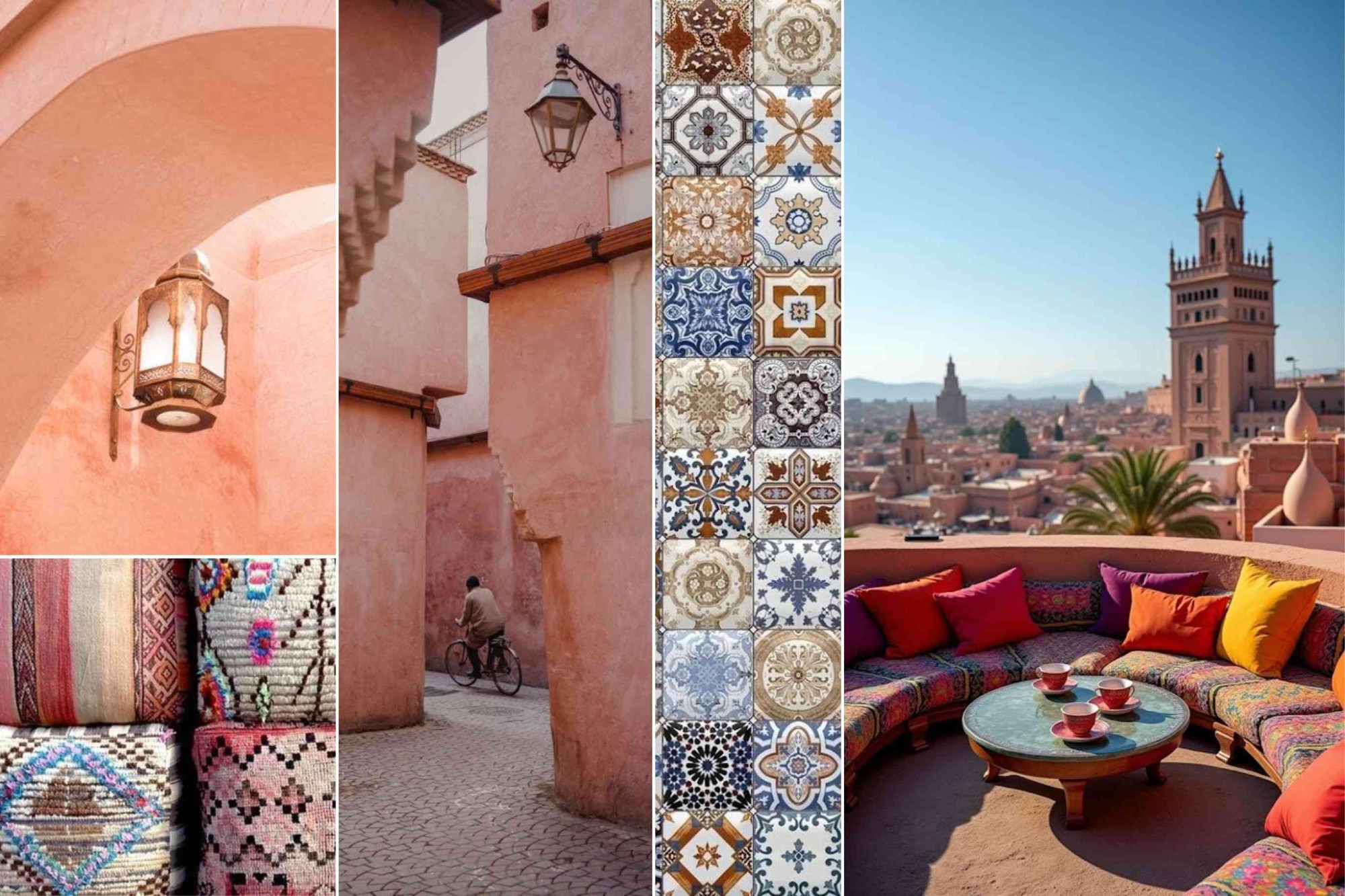
Marrakech @lescouleursdemarrakech
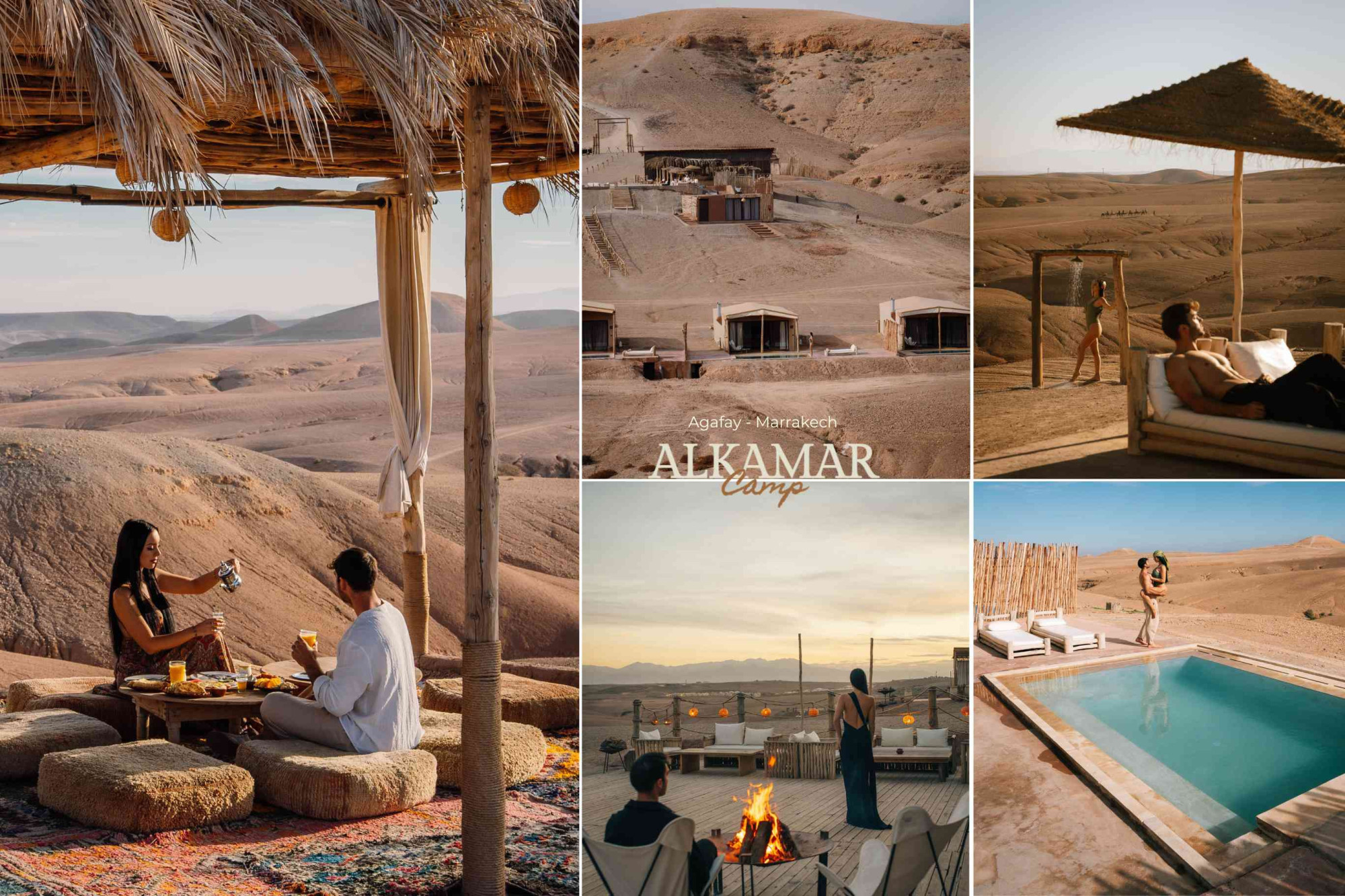
Alkamar Camp Agafay | A Desert Hideaway Near Marrakech
Approximately 35 kilometres from Marrakech, Alkamar Camp Agafay offers a small-scale desert stay surrounded by the rocky landscape of Agafay and views towards the Atlas Mountains.
Created by Rachid El Youssoufi and Ismail Fdi, the camp consists of ten boutique lodges, each with its own private pool. The interiors combine contemporary Moroccan design with handwoven rugs, custom-made furniture and fireplaces for cooler evenings.
Staying in the Agafay Desert
Unlike the sand dunes of the Sahara, Agafay is characterised by dry, undulating terrain and open views towards the mountains.
At Alkamar, a 25-metre swimming pool forms a central part of the property, while the individual lodges provide private outdoor spaces.
The camp also offers activities including camel rides, quad biking and buggy excursions. Yoga, massages and Moroccan dining provide alternatives for guests who prefer to remain at the property.
Featured in Les Couleurs du Monde
Alkamar Camp Agafay was featured in our first magazine edition, where we introduced the camp's architecture, design and approach to desert hospitality.
Read Desert Hideaway | Alkamar Camp Agafay in our first edition →
#Agafay #AlkamarCamp #Marrakech #DesertLodges #AtlasMountains #MoroccanDesign #TravelAndEscapes
Marrakech @lescouleursdemarrakech
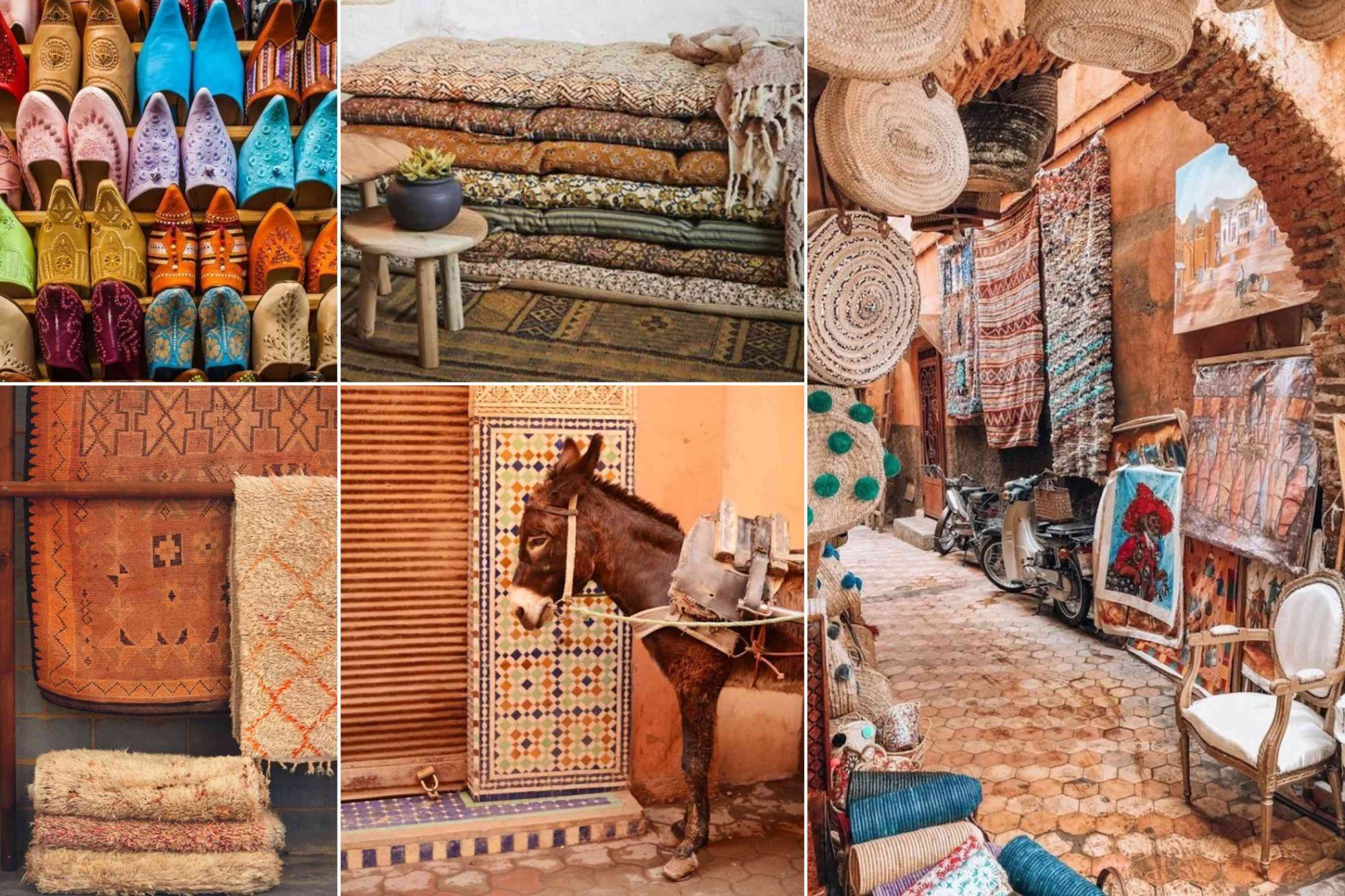
The Working Animals Behind Marrakech's Medina
Behind the colourful shops and busy streets of Marrakech's medina lies a transport system that has depended on working animals for generations. Donkeys, mules and horses have helped move goods through neighbourhoods where narrow passages and limited vehicle access complicate deliveries.
How the Medina Receives Its Goods
The medina is both a residential district and a commercial centre. Shops, workshops, restaurants and riads require regular deliveries, from food and textiles to furniture and construction materials.
Goods transported by larger vehicles must sometimes be transferred to smaller forms of transport before reaching their destination.
Handcarts and motorised vehicles now handle much of this work, but animals remain part of the transport system in certain areas.
Donkeys are generally smaller and well adapted to carrying loads. Mules, produced by crossing a male donkey with a female horse, are valued for their strength and ability to negotiate difficult terrain.
The Economic Reality of Working Animals
For some owners, an animal represents an essential source of income. Its health directly affects the family's ability to earn a living.
The cost of veterinary treatment, appropriate feed and suitable equipment can therefore become a financial challenge.
Poorly fitted harnesses may cause painful wounds, while excessive loads, dehydration and inadequate rest can lead to serious health problems.
Organisations Making a Difference
SPANA has established veterinary services in Morocco, including a centre in Marrakech that provides free treatment for working animals belonging to owners who cannot afford veterinary care.
Its work includes medical treatment, advice on animal care and the distribution of equipment designed to reduce harness injuries.
Another initiative is Jarjeer Mule and Donkey Refuge, established in 2014 near Oumnass, outside Marrakech. The sanctuary provides care and a permanent home for working animals that are elderly, injured or no longer able to work.
A Different Perspective on Marrakech
The working animals of Marrakech are connected to the city's commercial history, its street layout and the livelihoods of people who depend on them.
Their continued presence also highlights the importance of improving animal welfare as the medina's transport needs evolve.
Understanding this relationship reveals a less visible part of daily life behind Marrakech's shops and historic buildings.
#Marrakech #MarrakechMedina #WorkingAnimals #MoroccanHeritage #AnimalWelfare #LocalLife #TravelAndEscapes
Marrakech @lescouleursdemarrakech
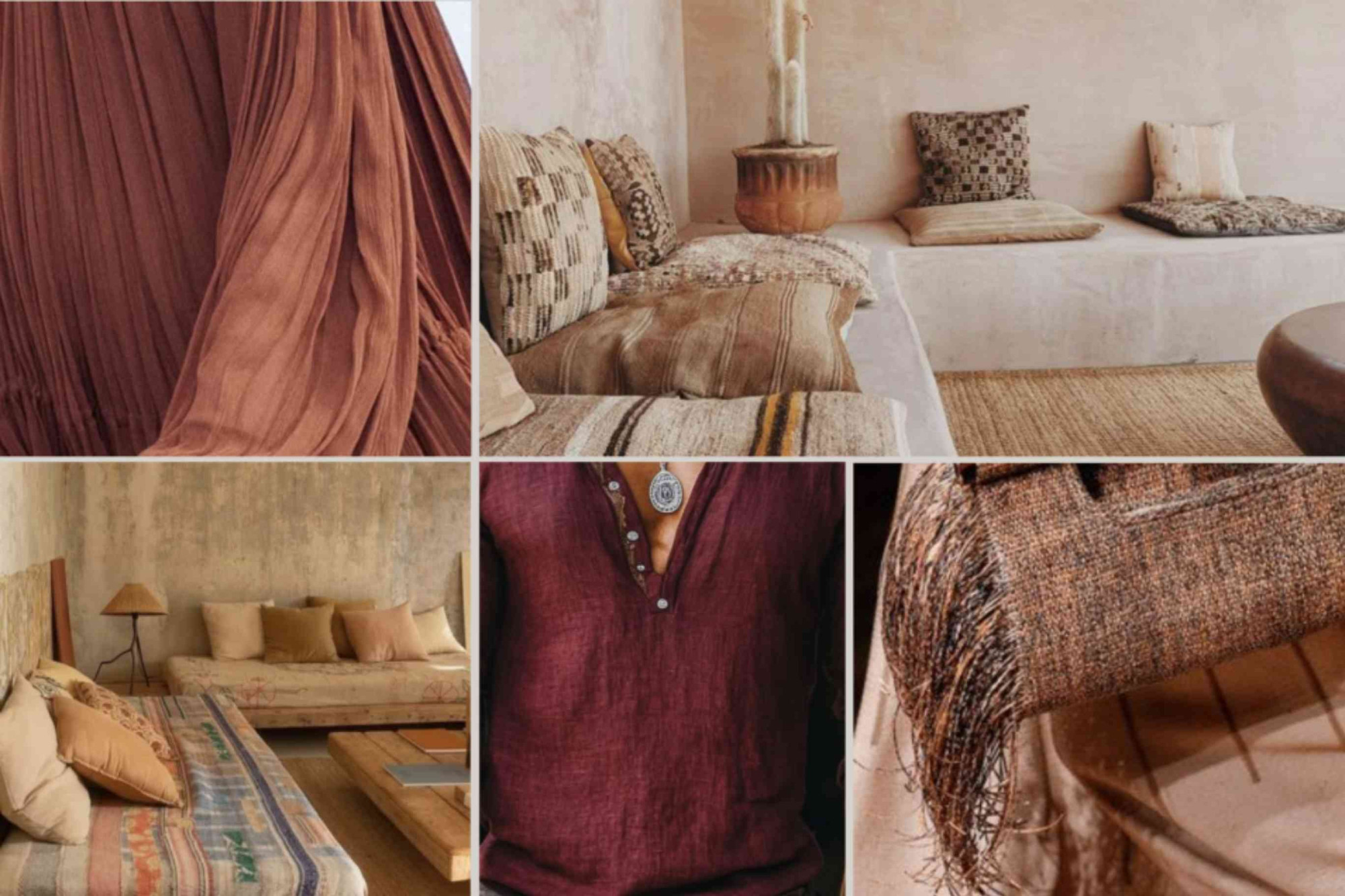
A Different Way of Living
The traditional Moroccan salon is more than a reception room. Its layout reflects the importance of hospitality, family relationships and the distinction between public and private spaces within the home.
A Room Reserved for Guests
In many traditional Moroccan households, the salon is a dedicated space for receiving visitors, separate from the rooms used for everyday family life.
This arrangement allows guests to be welcomed without entering the more private areas of the house. Larger homes may have several reception spaces, sometimes distinguishing between formal occasions and informal family gatherings.
The organisation of these rooms reflects social customs in which welcoming guests and sharing food are important parts of domestic life.
The Traditional Sedari
A characteristic feature of the Moroccan salon is the sedari, a long upholstered bench traditionally arranged along the walls.
Unlike a conventional sofa arrangement, this configuration allows several people to sit together while keeping the centre of the room accessible.
Low tables are used for serving mint tea, pastries and shared dishes. Cushions provide additional comfort, while upholstery, carpets and decorative finishes vary according to regional traditions and individual households.
The Moroccan Salon in Contemporary Marrakech
In renovated houses and riads across Marrakech, the traditional salon has influenced a more restrained approach to interior design.
Long upholstered benches are sometimes replaced by built-in seating finished in tadelakt, a traditional Moroccan lime plaster. Neutral linen, handwoven cushions and low wooden tables introduce contemporary materials and proportions while preserving the original seating arrangement.
Some interiors also integrate the salon into an open living space rather than maintaining a separate formal reception room.
These adaptations illustrate how a traditional domestic arrangement continues to evolve, retaining its connection to Moroccan hospitality while responding to contemporary ways of living.
#Marrakech #MoroccanSalon #MoroccanInteriors #InteriorCulture #MoroccanDesign #HomeAndDesign #LesCouleursDeMarrakech
Marrakech @lescouleursdemarrakech
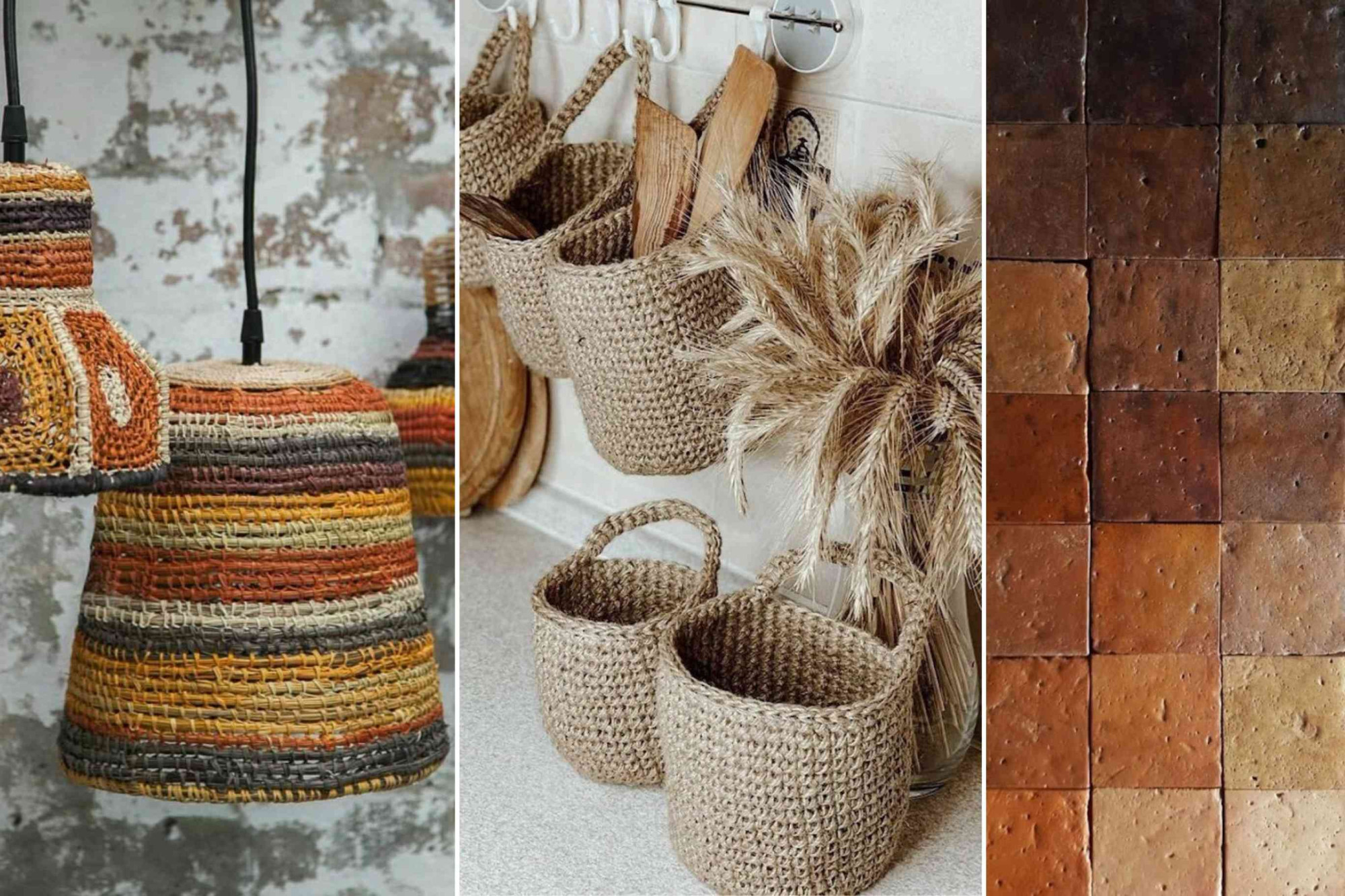
Moroccan Basketry
Traditional Moroccan basket-making has evolved from producing everyday household objects to creating contemporary lighting, furniture and decorative accessories. The techniques remain closely connected to the country's craft traditions, although the shapes and functions of the finished products have changed.
From Practical Objects to Interior Design
Basketry has traditionally been used in Morocco to make containers for agricultural produce, household storage and transporting goods.
Artisans work with plant materials such as doum palm leaves, reeds and grasses. The fibres are prepared, dried and woven or plaited into different structures, depending on their intended use.
A traditional carrying basket requires strength and stability, while a decorative object allows greater freedom in shape, proportions and weaving patterns.
This distinction has contributed to the development of contemporary collections that reinterpret traditional basket-making techniques.
The Development of Woven Lighting
Woven pendant lamps have become a recognisable feature of contemporary Moroccan-inspired interiors.
Unlike storage baskets, lampshades are designed around the distribution of light. Open weaving allows light to pass through the structure, while denser patterns create a more enclosed shade.
Artisans experiment with elongated silhouettes, oversized proportions and combinations of weaving techniques. Some designs retain the appearance of traditional baskets, while others are developed specifically as lighting objects.
The result is a contemporary application of established craftsmanship, rather than simply a traditional basket used for another purpose.
Where to Explore | Marrakech Medina
Two areas of the medina are particularly associated with traditional basketry.
Souk Chouari is historically linked to basket makers and woodworkers. The name chouari refers to a double-sided woven pannier traditionally used to transport goods on pack animals.
Souk Kessabine is another area associated with woven baskets and objects made from natural plant fibres.
The selection varies between individual shops, from practical household baskets to decorative accessories and contemporary woven lighting.
These souks provide an opportunity to examine different weaving techniques and understand how traditional Moroccan basketry continues to develop.
#Marrakech #MoroccanBasketry #MoroccanLighting #WovenLighting #TraditionalCraftsmanship #MoroccanDesign #HomeAndDesign
Marrakech @lescouleursdemarrakech
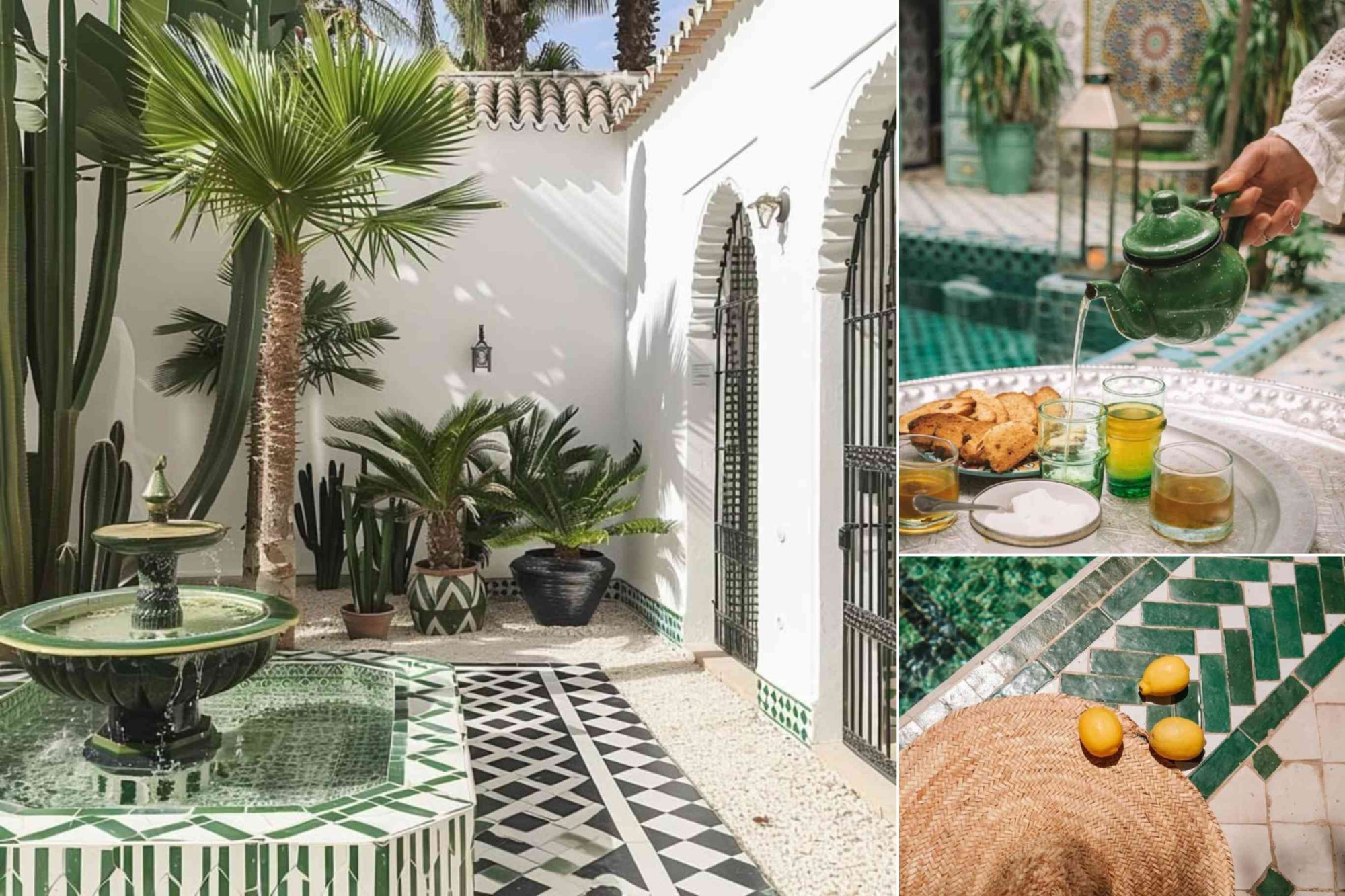
The Riad Courtyard
The central courtyard of a traditional Marrakech riad is an architectural response to the city's climate and the need for privacy within densely built residential neighbourhoods. Its design influences the amount of sunlight entering the house, the movement of air and the temperature of surrounding rooms.
Why Traditional Riads Face Inward
Traditional houses in Marrakech generally have relatively few openings onto the street. Instead, windows and doors face an internal courtyard, providing daylight and ventilation without exposing family life to public view.
This arrangement is particularly suited to the medina, where buildings stand close together and streets are frequently narrow.
The courtyard also separates domestic activities from the public environment, reflecting the importance of privacy in traditional Moroccan housing.
How the Courtyard Responds to Heat
The height of surrounding walls and the proportions of the courtyard determine how much direct sunlight reaches the ground and adjacent rooms.
During the hottest parts of the day, shaded surfaces absorb less solar heat than exposed areas. Thick masonry walls also slow the transfer of heat into interior spaces.
Trees and planting provide additional shade, while water features may contribute some local evaporative cooling when conditions allow.
Air movement depends on the building's openings, courtyard geometry and temperature differences. A courtyard does not automatically cool every room, but its design can help reduce exposure to direct sunlight.
Traditional Architecture in Contemporary Marrakech
Many restored riads retain their original courtyard arrangement while introducing contemporary furniture and outdoor seating.
Lightweight chairs, compact tables and movable shade structures allow the courtyard to accommodate dining and relaxation without permanently altering the architecture.
In well-considered renovations, the position of furniture, planting and lighting respects the courtyard's original role in providing access, daylight and ventilation.
The result is a domestic space that continues to serve the practical purposes for which the traditional riad was designed.
#Marrakech #RiadArchitecture #MoroccanCourtyard #ClimateResponsiveDesign #MoroccanArchitecture #ArchitecturalHeritage #HomeAndDesign
Marrakech @lescouleursdemarrakech
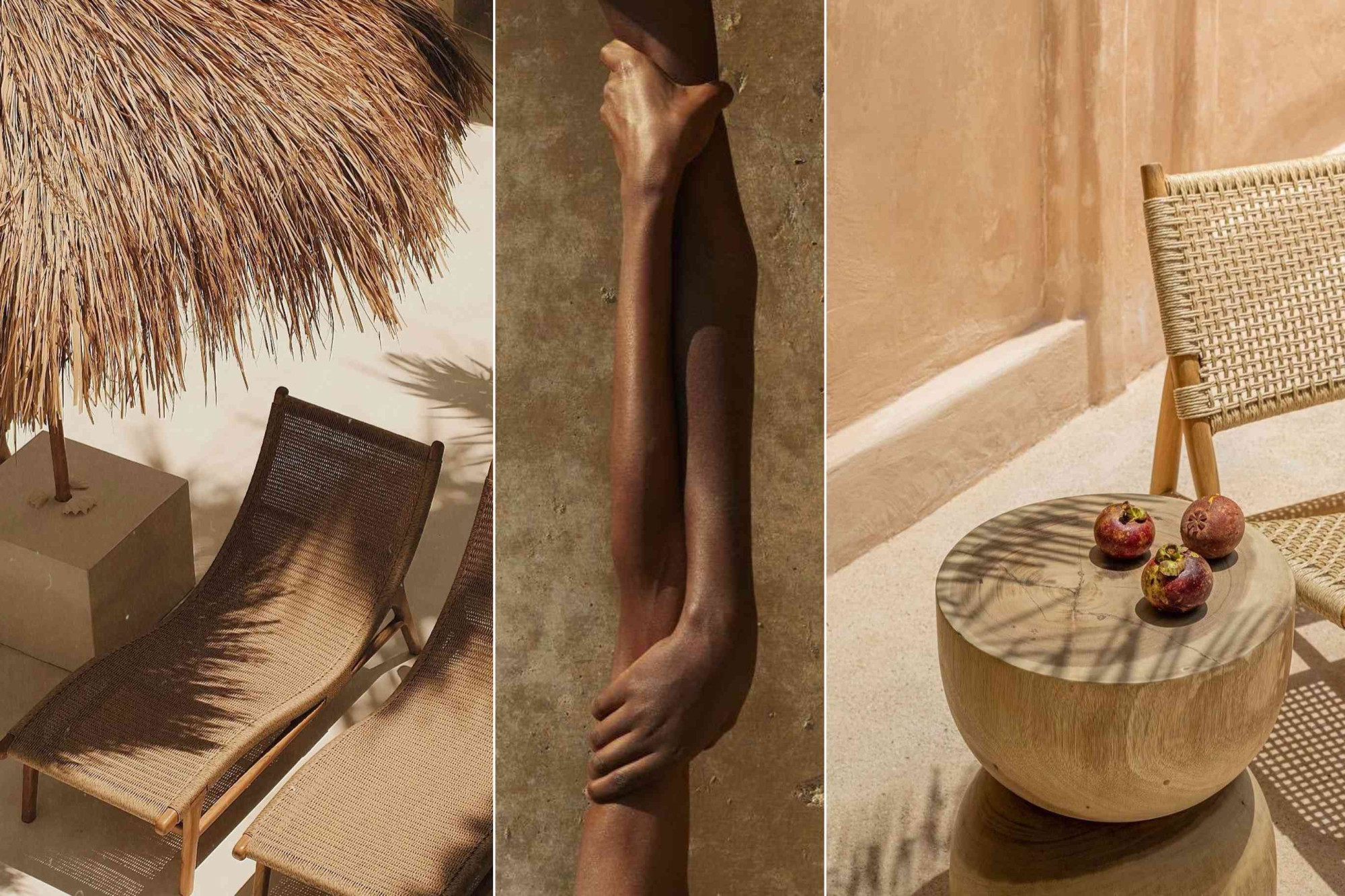
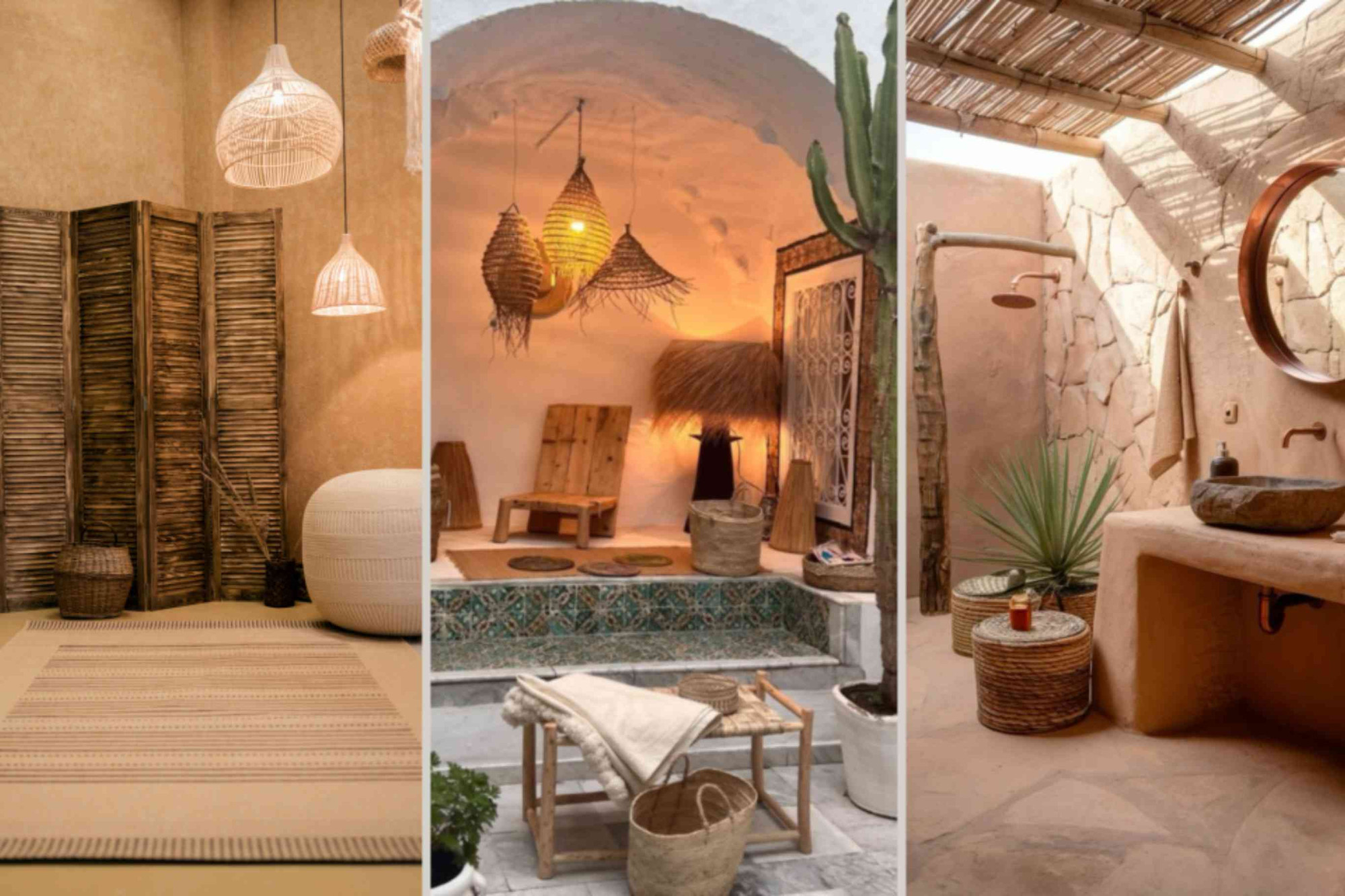
The Contemporary Marrakech Interior
A quieter approach to interior design has become increasingly visible in Marrakech, particularly in boutique riads, private villas and smaller hospitality properties. Warm mineral colours, textured surfaces and simple furniture create interiors that draw on Moroccan design without reproducing its more elaborate decorative traditions.
A Restrained Colour Palette
Sand, clay, limestone and warm beige form the basis of this interior style. Rather than introducing strong contrasts, designers work with subtle differences in tone and surface texture.
Matte plaster walls, pale flooring and natural wood provide continuity between rooms. Darker elements, such as aged timber or bronze-coloured fittings, introduce contrast without dominating the space.
Furniture and Decorative Details
Low seating, woven chairs and solid wooden tables are characteristic of this contemporary interpretation.
Furniture is generally selected for its proportions and materials rather than decorative complexity. A single sculptural object or a distinctive pendant lamp may become the principal feature of a room.
Woven lighting introduces texture, while wooden shutters and screens provide privacy and help filter daylight.
The Relationship Between Interior and Exterior
In many Marrakech properties, covered terraces, courtyards and interior rooms share similar materials and colours.
This continuity allows furniture and decorative elements to be used across different spaces, particularly in areas designed for sitting, dining and relaxing.
The combination of textured walls, filtered sunlight and a limited selection of furnishings gives these interiors their recognisable character.
#Marrakech #MoroccanInteriors #ContemporaryDesign #InteriorStyle #MarrakechDesign #HomeAndDesign #LesCouleursDeMarrakech
Marrakech @lescouleursdemarrakech
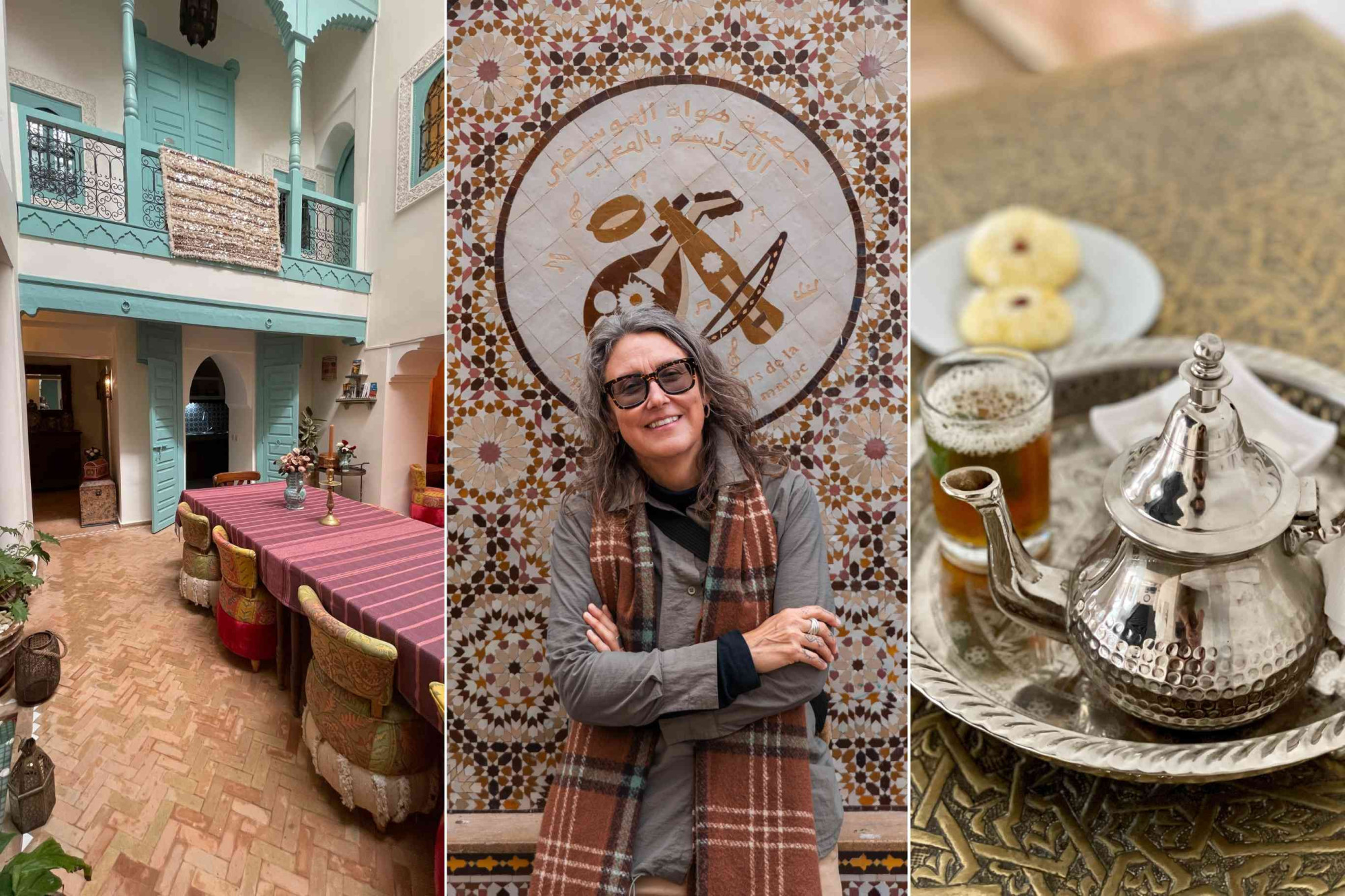
The Ritual of Hospitality
In Marrakech, offering tea is an established expression of hospitality, whether welcoming guests into a private home, receiving visitors at a riad or sharing a conversation with friends. The preparation and serving of Moroccan mint tea follow customs that have become closely associated with social life.
More Than Mint and Hot Water
Traditional Moroccan mint tea is generally prepared with Chinese gunpowder green tea, fresh spearmint and sugar.
Green tea became increasingly established in Morocco during the nineteenth century as international trade expanded. Over time, its preparation developed into a distinctive part of Moroccan food culture.
The proportions vary between households and regions. Some preparations are particularly sweet, while others contain more mint or use additional aromatic herbs.
The Art of Serving Tea
Tea is traditionally prepared in a metal teapot and served in small glasses, frequently arranged on a decorative tray.
Pouring from a height is a recognisable part of the serving ritual. It helps aerate the tea and can produce a light layer of foam.
In some households, a small amount of tea is poured into a glass and returned to the pot to mix the ingredients before serving.
The host may prepare several rounds of tea during a visit, with the strength and flavour changing as the leaves continue to infuse.
Tea in Marrakech Today
The tradition remains visible in homes, riads, cafés and some shops throughout the medina.
Tea may accompany pastries such as ghriba, kaab el ghazal or fekkas, although it is equally common to serve it without food.
The significance of Moroccan mint tea lies in the act of preparing and sharing it. The teapot, glasses and ingredients are familiar elements of a custom that continues to connect everyday hospitality with Moroccan cultural traditions.
#Marrakech #MoroccanMintTea #MoroccanTea #MoroccanHospitality #MoroccanTraditions #FoodCulture #TableAndTaste
Marrakech @lescouleursdemarrakech
Marrakech | The Story Behind the Red City
The name Red City is closely associated with the historic ramparts of Marrakech, whose reddish earthen construction has defined the city's appearance for nearly nine centuries.
The Walls of an Imperial Capital
Marrakech was founded around 1070 by the Almoravids and developed into the capital of a powerful dynasty.
Under Sultan Ali ibn Yusuf, defensive walls were constructed around the city in the twelfth century, traditionally dated to approximately 1126–1127.
The ramparts extended for several kilometres, protecting the growing settlement and controlling access through fortified gates.
Their construction used pisé, or rammed earth, a technique in which layers of moist soil are compressed within wooden formwork to create substantial walls.
Why Are the Walls Red?
The reddish appearance comes partly from the mineral composition of the earth used in construction.
Iron-bearing minerals contribute to the ochre and reddish-brown tones associated with the region's soil. The finished colour also depends on the composition of the building material, surface treatments and exposure to weather.
Over time, plaster coatings, repairs and restoration have influenced the appearance of the ramparts.
The red colour seen today is therefore the result of both historic construction and centuries of maintenance.
Where to See the Historic Ramparts
One of the most recognisable sections is near Bab Agnaou, the monumental gate associated with the Almohad period.
Built in the twelfth century, Bab Agnaou served as a ceremonial entrance to the royal kasbah. Its carved stone decoration distinguishes it from the simpler earthen walls surrounding much of the historic city.
Another important location is Bab Doukkala, a historic entrance on the northwestern side of the medina, where the defensive walls remain prominent in the surrounding streetscape.
These surviving structures provide a direct connection to Marrakech's development as an imperial capital.
#Marrakech #TheRedCity #MarrakechRamparts #BabAgnaou #MoroccanArchitecture #ArchitecturalHeritage #ArtAndCulture