
Winter Moods & Escapes
Edition of Les Couleurs du Monde featuring inspiring destinations, refined stays and unique experiences Contact: info@lescouleursdumonde.com
Mykonos @lescouleursdemykonos
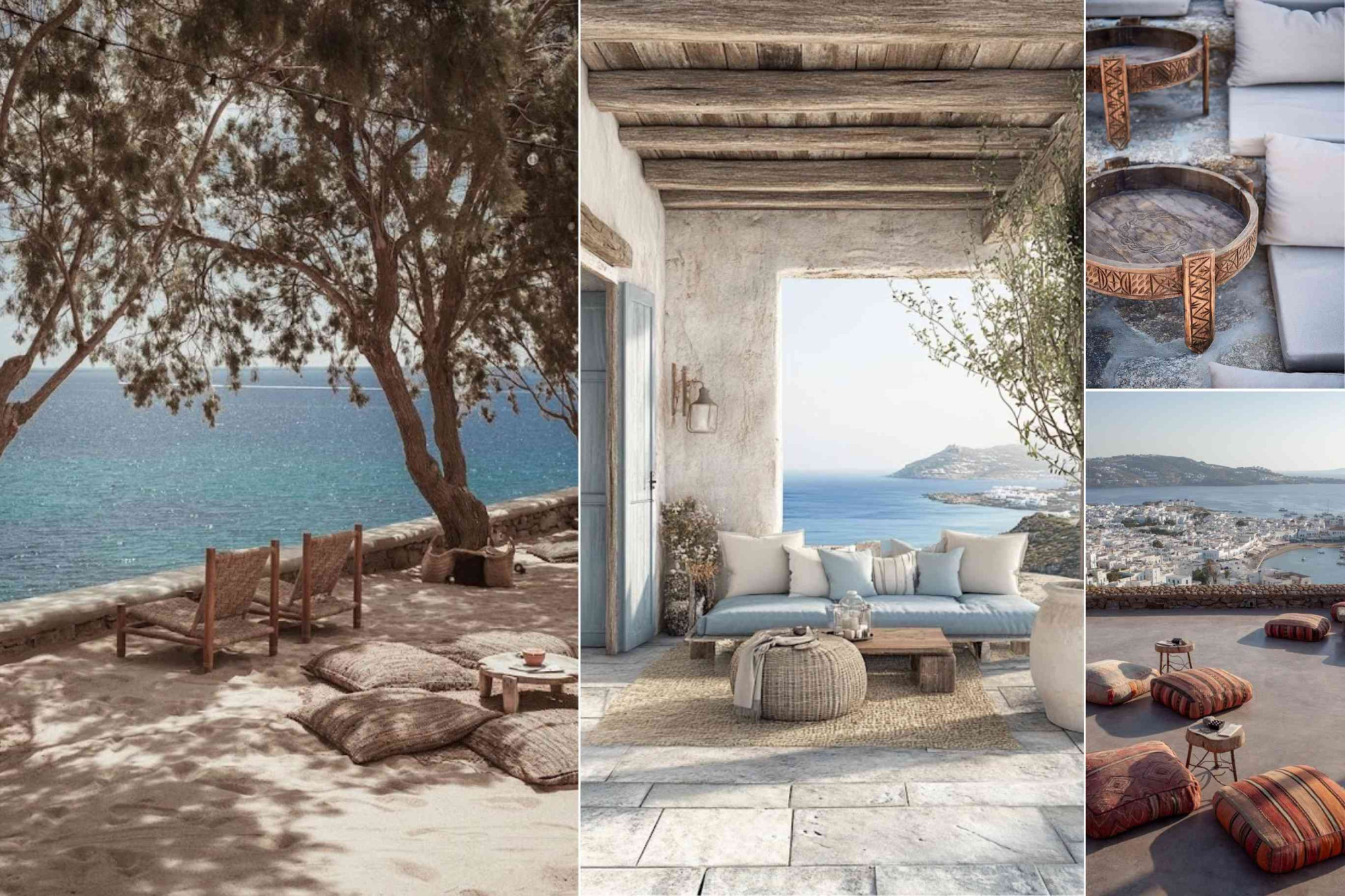
In Mykonos, the terrace is one of the most important parts of the house, designed as a proper living space rather than simply an area outside.
Many houses and villas on the island are positioned to make the most of their views over the Aegean. Instead of filling the terrace with conventional outdoor furniture, the Mykonos approach tends to keep things low and relatively simple.
Built-in benches are particularly characteristic. Finished in white or pale plaster and topped with generous cushions, they become outdoor sofas without adding much visual weight. Large floor cushions and poufs provide extra seating and can easily be moved around when more people arrive.
Shade is another important part of the design. Wooden pergolas with exposed beams create sheltered areas while keeping the terrace open to the surroundings.
The materials remain closely connected to the island. Stone floors and walls are combined with weathered or natural wood, woven pieces, linen and cotton. White and sandy tones dominate, while faded blue works naturally with the colours of the sea and traditional Cycladic architecture.
The striped and patterned floor cushions seen here introduce warmer rust, brown and red tones. Together with carved wooden tables and woven accessories, they bring more colour and texture to an otherwise neutral setting.
Furniture stays low, materials are simple and the view remains central to the space. It is a combination that has become particularly recognisable in villas, small hotels and summer houses across Mykonos.
Want to mix cushions and patterns?
Discover How to Mix Cushions →
#Mykonos #MykonosDesign #CycladicDesign #GreekIslands #OutdoorLiving
Mykonos @lescouleursdemykonos
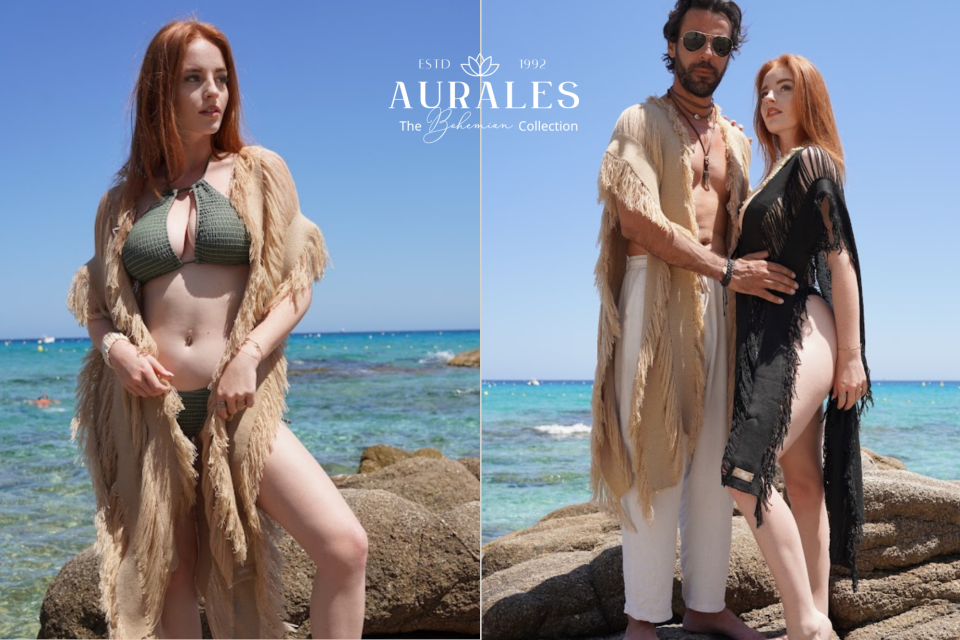
Beachwear in Mykonos needs to work for more than a few hours beside the water.
At beach destinations such as Paraga, a morning by the sea can easily turn into lunch followed by drinks later in the afternoon. This makes pieces that can be worn directly over swimwear particularly useful.
The moss-green Desert Serenity Bralette and matching Desert Serenity Under create the base of the first look. Over the bikini, the camel-coloured Camel Coastline Kaftan adds a long, lightweight layer with an asymmetric shape and fringe detailing.
Black works equally well for a Mykonos beach look. The Bohemian Allure Nights is a sheer black cover-up with an asymmetric hem and loose silhouette, making it easy to wear directly over swimwear.
For men, loose neutral trousers are an easy alternative to conventional beachwear. The beige Medina Dreams Trousers are made from a viscose-linen blend with a drawstring waist and relaxed leg, which suits the informal beach-club setting seen across Mykonos.
The result is beachwear that can stay on throughout the day: swimwear underneath, one relaxed layer on top and pieces that work just as naturally for lunch as they do beside the sea.
Shop the Collection
Camel Coastline Kaftan
Bohemian Allure Nights
Medina Dreams Trousers
Desert Serenity Under
Desert Serenity Bralette
#AuralesBohemian #MykonosStyle #MykonosFashion #Beachwear #GreekIslands
Mykonos @lescouleursdemykonos
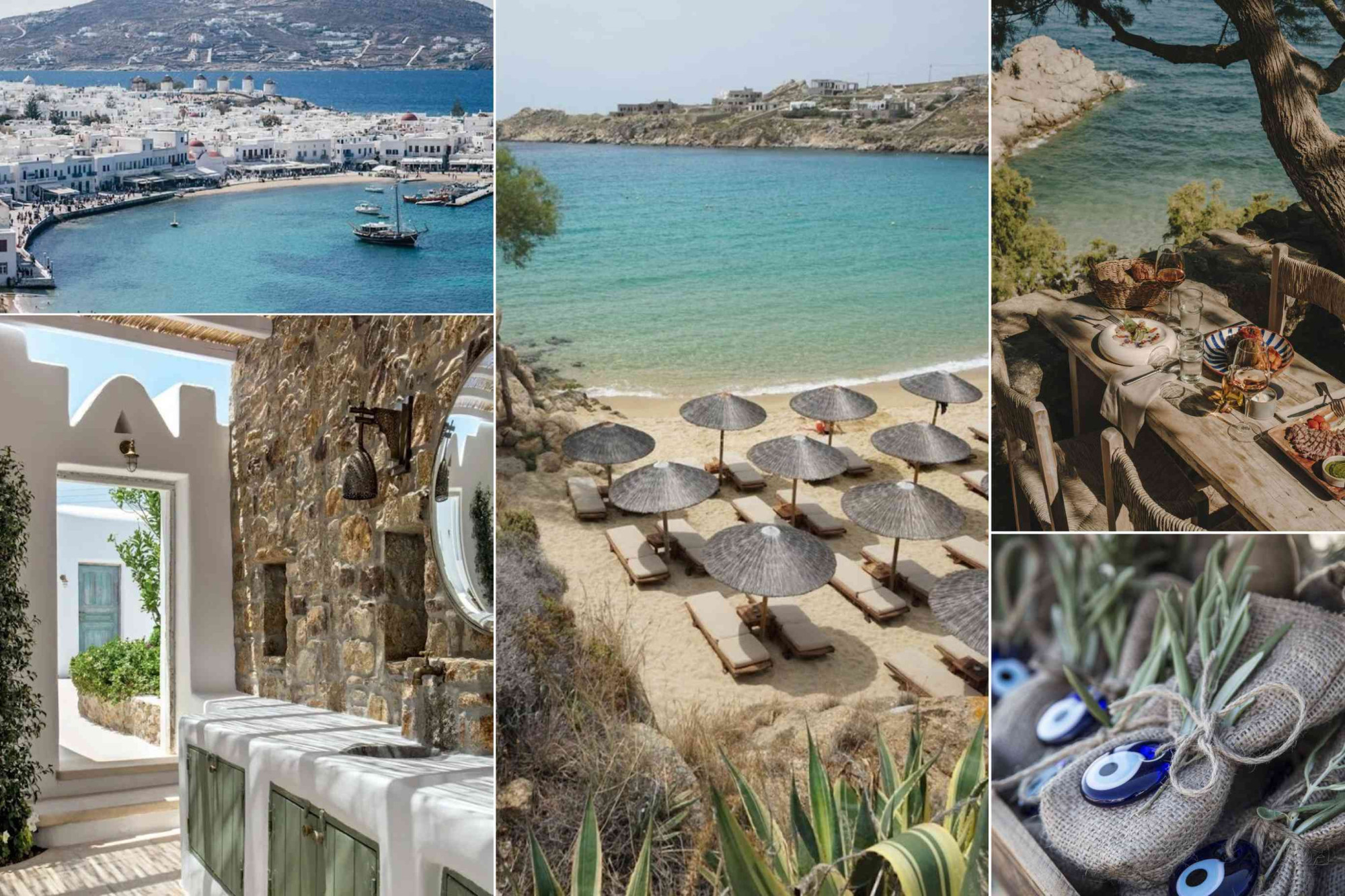
Mykonos is small enough to combine the old town, a quiet beach and a long lunch by the sea in the same day, but spending more time on the island reveals much more than its best-known places.
Mykonos Town, or Chora, remains at the centre of island life. Its whitewashed buildings surround the harbour, while narrow streets lead between small shops, cafés and restaurants. Early mornings and quieter periods of the day show a different side of streets that become much busier later.
Away from town, the character changes quickly. Small bays and beaches are found around much of the island, ranging from well-known beach clubs to quieter stretches of coast. Places such as Agios Sostis and Fokos are particularly suited to slower days by the sea.
Long lunches are part of that rhythm. Fish, seafood, salads and other Greek dishes are served on terraces and beside the water, making lunch as much a part of the day as the beach itself.
The island’s architecture also becomes more noticeable when there is time to explore. White plaster, local stone, pale wood and simple built-in furniture appear across traditional houses and contemporary stays, creating a visual connection between older Mykonos and newer interpretations of island living.
Staying longer makes it possible to experience these different sides together: Chora, small beaches, local food, architecture and the quieter routines that exist alongside the island’s famous nightlife.
Stay a Little Longer
There is another way to experience Mykonos when a short escape becomes a longer stay. Discover how slow travel, private stays and everyday island life are changing the way travellers experience the destination.
#Mykonos #GreekIslands #MykonosTown #Greece #SlowTravel
Mykonos @lescouleursdemykonos
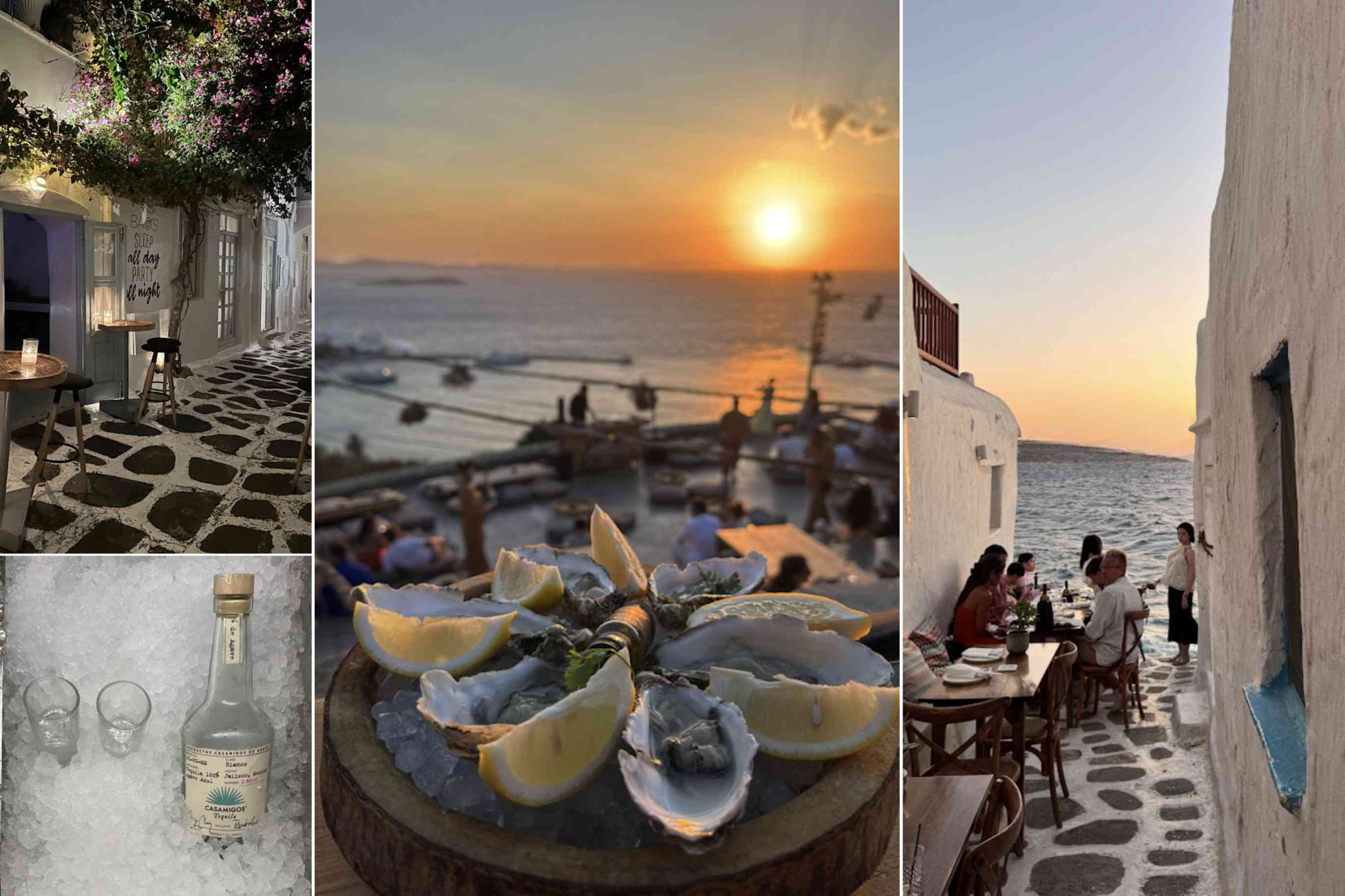
Sunset is one of the best times to have dinner or drinks in Mykonos Town.
Chora is particularly lively in the early evening, when people return from the beaches and the restaurants, bars and small terraces begin to fill. Tables appear along the characteristic stone-paved streets, between whitewashed buildings and blue or wooden doors.
The waterfront and Little Venice are well-known places for watching the sunset, but dining slightly away from the busiest viewpoints can be equally appealing. Many restaurants use small courtyards, terraces and narrow spaces between buildings for outdoor tables.
Seafood naturally features prominently on menus. Fresh fish, grilled octopus and shellfish are common choices, while oysters, as shown here, are more associated with contemporary restaurants and bars than traditional Mykonian cooking.
Greek spirits are another option before or after dinner. Tsipouro, visible in the image, is a grape-based Greek spirit traditionally served in small glasses and frequently accompanied by small dishes or meze.
After dinner, Chora is easy to explore on foot. Its compact centre means restaurants, shops, bars and the waterfront are all within walking distance, making dinner less of a single reservation and more part of an evening spent around town.
What could you do with the shells afterwards?
Discover Decorating with Oyster Shells →
#Mykonos #MykonosTown #GreekIslands #GreekFood #MykonosRestaurants
Mykonos @lescouleursdemykonos
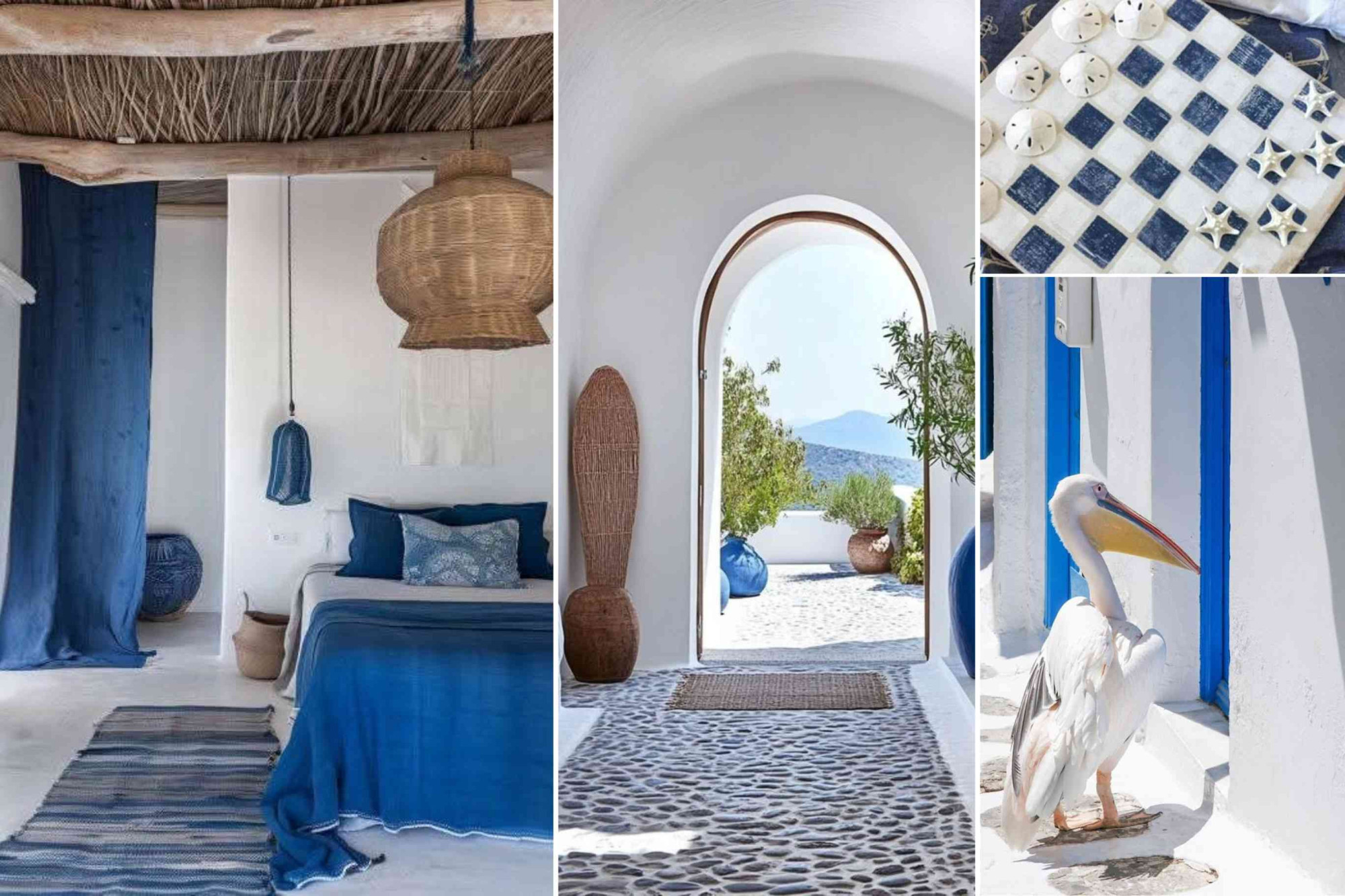
Blue and white remain two of the most recognisable colours in Mykonos, both outside and inside the island's buildings.
Across Mykonos, whitewashed walls are traditionally combined with doors, shutters and details painted in shades of blue. The contrast is particularly visible in Chora, where narrow streets run between white buildings punctuated by blue, green and occasionally red details.
The same palette works naturally indoors. A bedroom can remain almost completely white while blue bed linen, curtains or cushions provide the main colour. Natural materials such as woven lampshades, baskets, timber and simple rugs prevent the combination from feeling too uniform.
Traditional architecture also provides decorative elements of its own. Rounded openings, thick plastered walls and stone floors are characteristic details that can remain visible rather than being covered or replaced.
Small objects can reinforce the palette. Blue-and-white ceramics, candles and tableware are easy additions, particularly when mixed with pieces in natural materials.
Even the pelican shown here has a connection with Mykonos. Petros the Pelican became an unofficial mascot of the island in the 1950s, and pelicans have remained a familiar sight and symbol of Mykonos ever since.
The result is an interior style that feels immediately connected to the island without relying on obvious nautical decoration. White provides the base, blue introduces contrast and stone, wood and woven materials add warmth.
Want to bring more blue into the interior?
Discover Decorating with Indigo Textiles →
#Mykonos #MykonosDesign #CycladicInteriors #GreekIslands #BlueAndWhite
Mykonos @lescouleursdemykonos
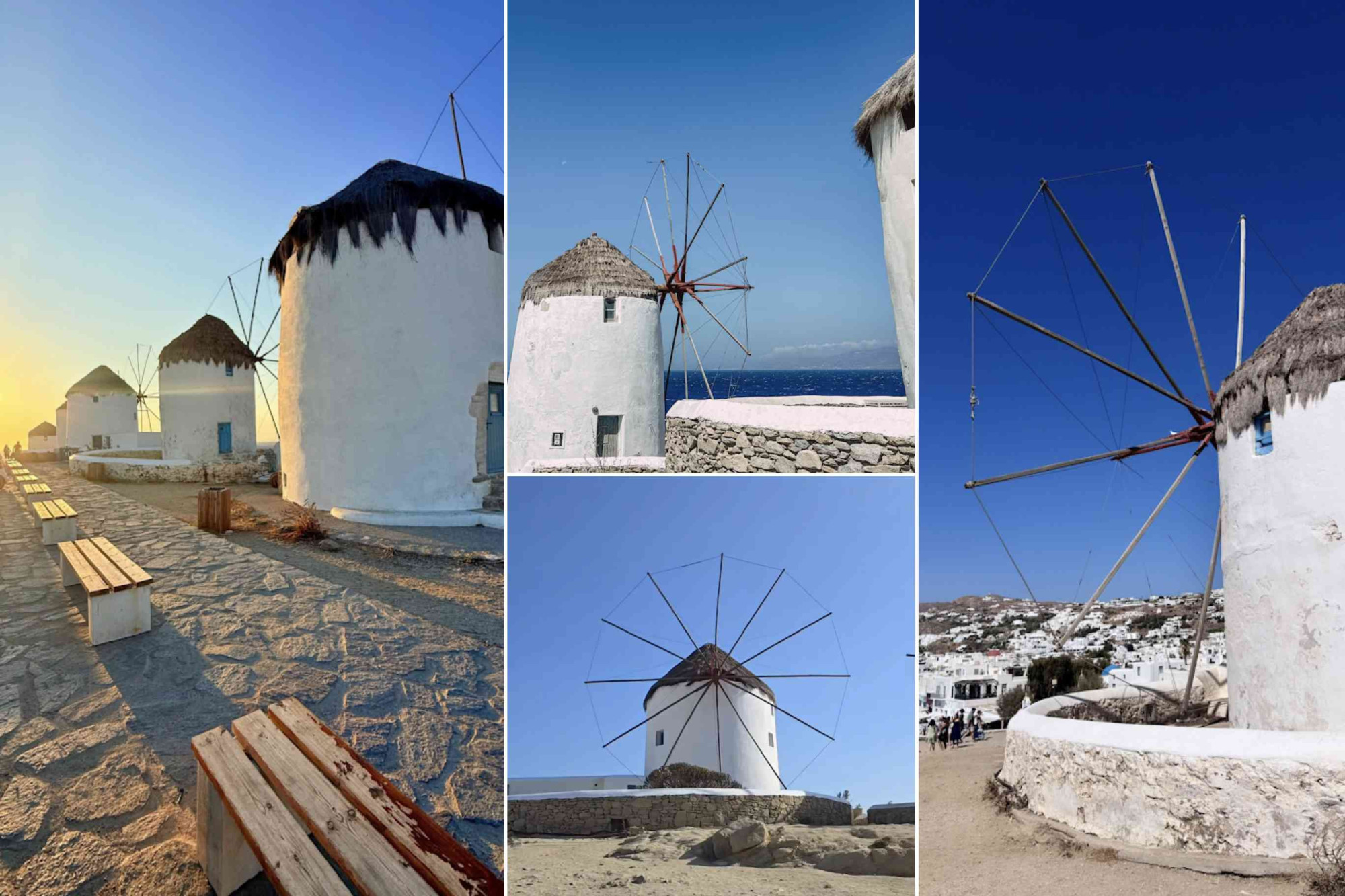
The windmills of Mykonos are one of the island's best-known sights and an important part of its traditional architecture.
The most famous group is Kato Mili, the windmills standing on the hill above Little Venice and Mykonos Town. Their elevated position was practical: Mykonos is known for its strong winds, which provided the power needed to operate the mills.
Historically, the windmills were used primarily to grind wheat and barley into flour. Grain arrived on the island through its busy port, and milling became an important local activity.
Their architecture is particularly distinctive. The mills have thick, whitewashed cylindrical walls, small windows, conical roofs and large wooden mechanisms that once supported fabric sails. The simple construction was designed around their function and the exposed conditions of the island.
Today, the windmills are no longer used commercially, but several have been preserved. Bonis Windmill, overlooking Chora, now forms part of the Agricultural Museum of Mykonos and provides a closer look at the island's milling traditions.
Kato Mili is also one of the most popular places to visit around sunset. From the hill, there are open views towards the Aegean, Little Venice and the waterfront of Mykonos Town.
Want to capture more than the view?
Discover Taking Photos While Travelling →
#Mykonos #MykonosWindmills #KatoMili #MykonosTown #GreekIslands
Mykonos @lescouleursdemykonos
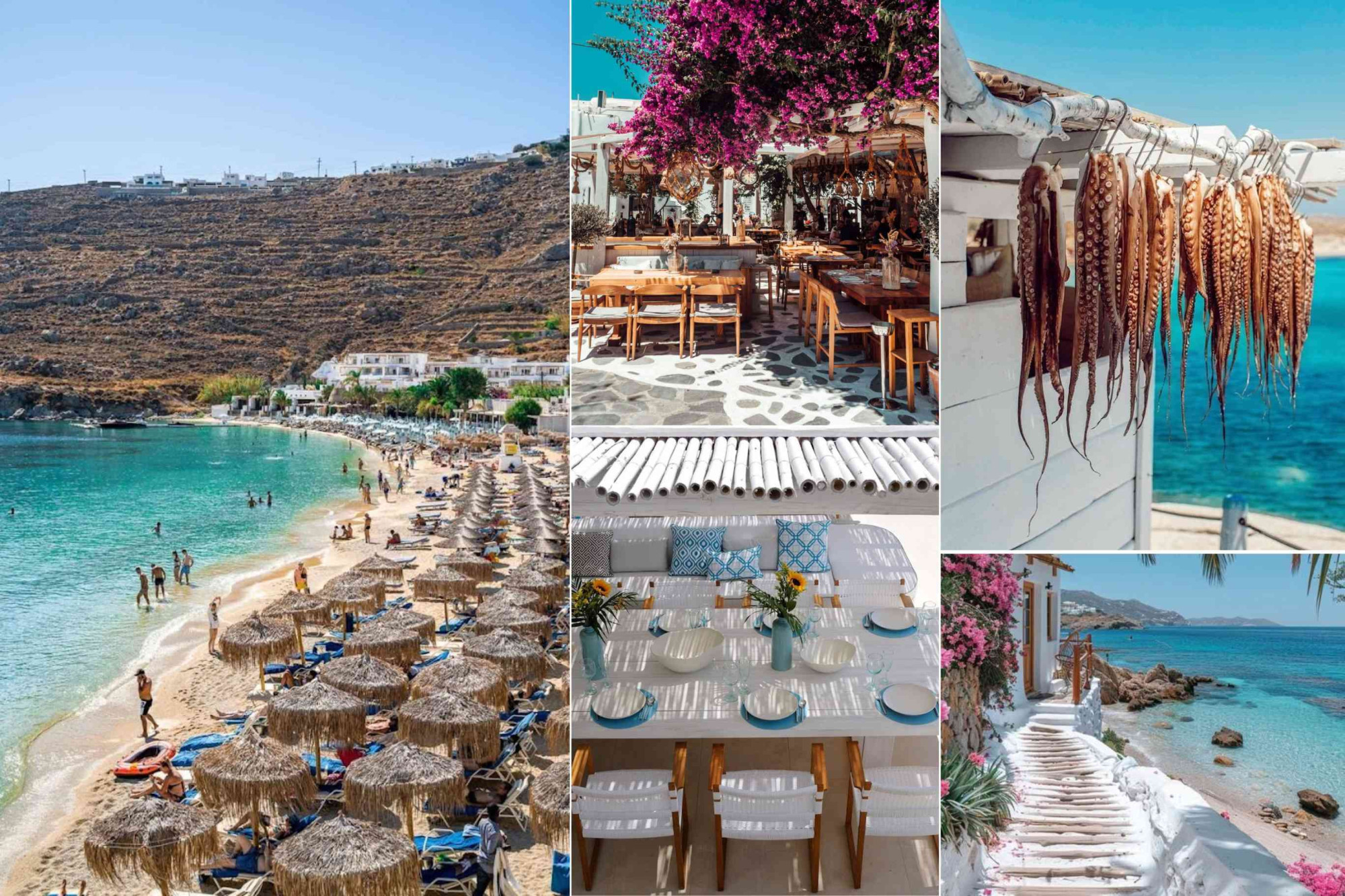
A beach day in Mykonos is rarely limited to swimming and a few hours in the sun.
Many of the island's beaches are organised with sunbeds and traditional straw parasols, while restaurants and tavernas sit only a few steps from the sand. This makes it easy to arrive in the morning and stay through lunch and well into the afternoon.
Beaches such as Ornos, Platis Gialos and Paraga have plenty of facilities and places to eat, while areas including Agios Sostis and Fokos have a quieter and less developed character.
Food is naturally part of the day. Grilled fish, octopus, calamari, Greek salads and small plates to share are typical choices at seaside tavernas. Octopus hanging outside to dry in the sun, as seen here, is a familiar sight at traditional Greek seafood restaurants.
The setting is usually straightforward: wooden tables, white chairs, stone terraces, bougainvillea and uninterrupted views towards the Aegean. Some places have developed into sophisticated beach clubs, while traditional tavernas continue to provide a much simpler alternative.
Choosing the beach therefore depends as much on how you want to spend the day as on the beach itself. Mykonos has places for a long lunch and music as well as bays where swimming and a simple meal by the water remain the main attraction.
Looking for a little beach style inspiration?
Discover Gingham by the Riviera →
#Mykonos #MykonosBeaches #GreekIslands #GreekFood #BeachLife