A New Way of Experiencing
Explore our philosophy of slow discovery Contact: info@lescouleursdumonde.com
Nomades du Monde @nomadesdumonde
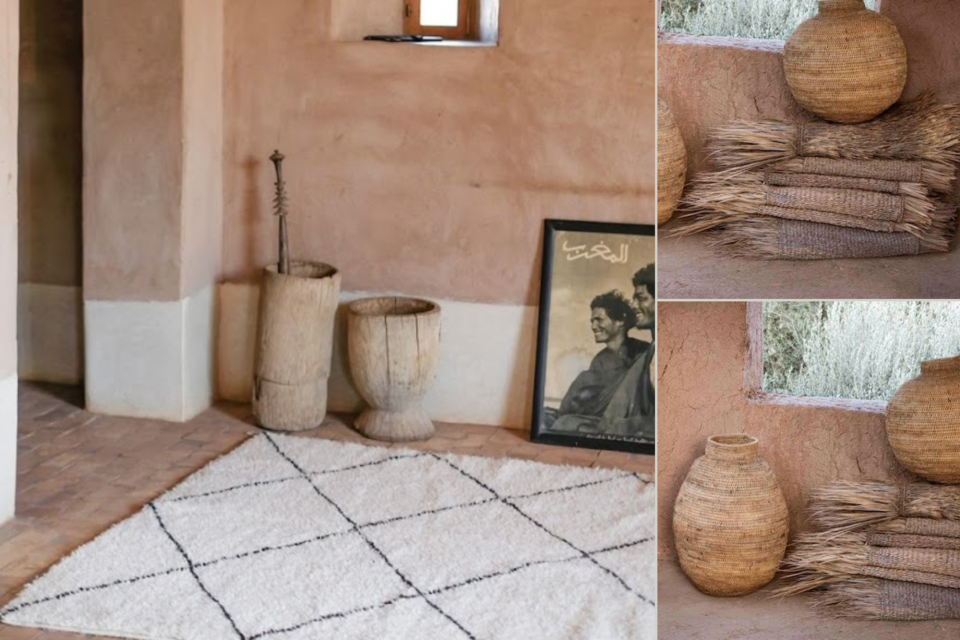
A Moroccan rug can change a room without requiring the rest of the interior to follow a Moroccan style. Its pattern, texture and scale are strong enough to give a space character while still working alongside very simple furniture and architecture.
The familiar cream rug with dark geometric lines is closely associated with Beni Ourain weaving. Traditionally made from wool, these rugs are known for their deep pile and graphic patterns, with individual pieces showing variations in line, proportion and composition.
Their appeal in contemporary interiors comes partly from that balance. The surface is soft and tactile, while the pattern is visually simple. Against clay-coloured walls, timber, stone or plaster, the rug introduces contrast without dominating the room.
Scale is important when choosing one. A larger rug can connect several pieces of furniture and make a seating area feel more complete. Smaller versions work beside a bed, in an entrance or in a quiet corner where the texture can stand on its own.
Moroccan rugs also sit naturally alongside baskets, woven objects and handmade ceramics. These pieces do not need to match. Differences in weave, colour and shape give the interior a collected quality and allow each object to retain its own identity.
For a home outside Morocco, the most interesting approach is not to recreate a complete Moroccan interior. One well-chosen rug can bring craftsmanship, pattern and warmth into a very different architectural setting.
#MoroccanRugs #BeniOurain #InteriorDesign #MoroccanDesign #NomadesDuMonde
Nomades du Monde @nomadesdumonde
Woven Lighting
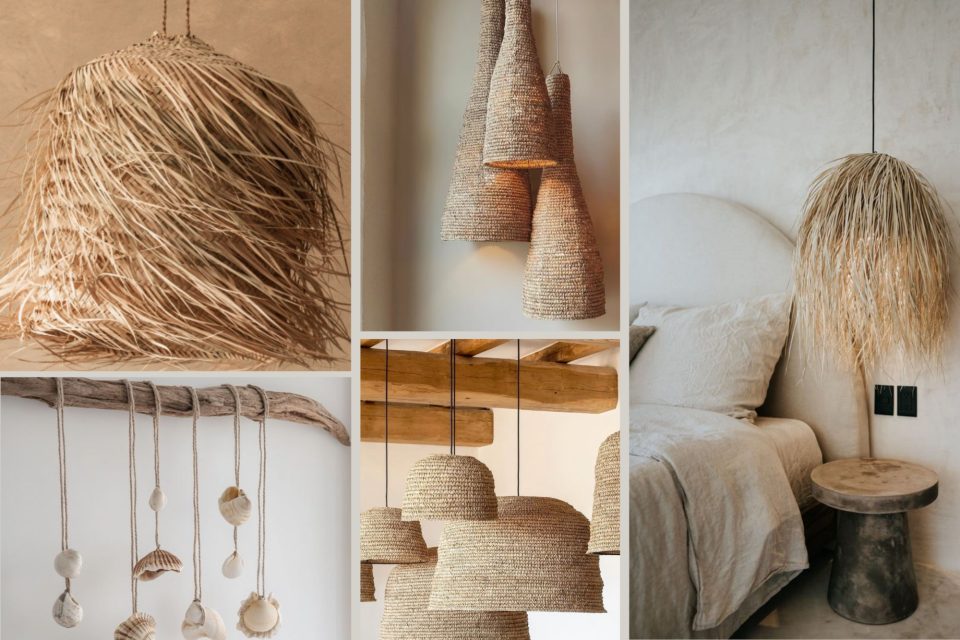
Woven lighting brings texture into a room without adding heavy materials or strong colours. Materials such as raffia, palm leaves, rattan and other plant fibres are shaped into shades that remain visually light while giving a space more character.
The open structure of woven fibres also changes the way a lamp works. Instead of simply illuminating a room, the shade filters the light and can create softer shadows across walls, ceilings and surrounding surfaces.
The scale of the lamp plays an important role. A large woven pendant can become the main feature above a dining table or seating area, while smaller pendants work well in groups or beside a bed. Irregular fibres and visible weaving give each shape a less uniform appearance than industrial lighting.
These lamps also show how traditional weaving techniques can find a place in contemporary interiors. The material may be simple, but changing the weave, density, shape and proportions can produce very different results.
For a quieter interior, woven lighting works particularly well alongside plaster walls, timber, linen and stone. Rather than competing with these surfaces, it adds another layer of texture and brings warmth to a neutral space.
#NomadesDuMonde #WovenLighting #LightingDesign #InteriorDesign #LesCouleursDuMonde
Nomades du Monde @nomadesdumonde
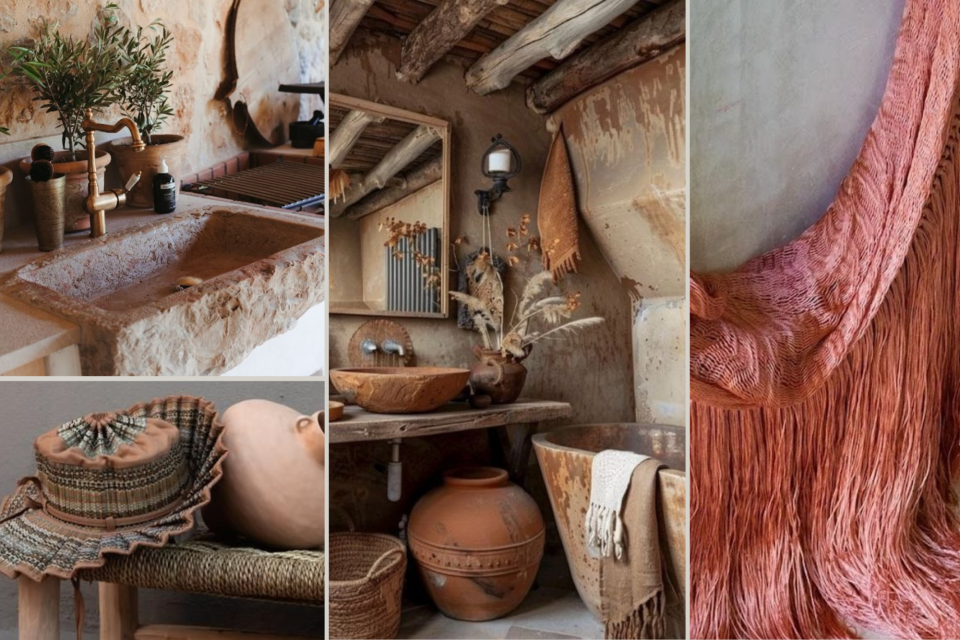
Raw and irregular surfaces can give an interior character without relying on additional decoration. Stone, lime plaster, aged timber and textured wall finishes allow the construction and materials of a space to remain visible rather than being completely concealed.
This approach has strong roots in traditional architecture. Stone walls were often built from materials found locally, timber beams formed part of the structure and lime-based plaster was applied by hand. Small variations in colour, texture and finish were therefore a natural consequence of the way a building was made.
Keeping these characteristics visible can also work in contemporary interiors. Instead of covering an uneven stone wall or replacing aged beams, existing surfaces can become part of the design. New materials can then be introduced selectively through furniture, textiles, lighting and objects.
Texture is particularly important when the colour palette is restrained. A room built around beige, sand, clay and brown tones can still have considerable visual depth when smooth plaster is combined with rough stone, woven fibres, timber and ceramics.
The balance between different surfaces matters. If walls, floors, furniture and decorative objects all have strong textures, the interior can quickly become visually crowded. Using a limited number of materials allows individual surfaces to remain noticeable.
Raw finishes also create an effective background for functional objects. Ceramic vessels, baskets, textiles and simple furniture can stand out against irregular plaster or stone without requiring additional wall decoration.
Existing buildings can be particularly interesting in this respect. Signs of previous construction, changes in plaster and variations in stone do not always need to be removed during renovation. When structurally sound, some of these elements can be retained as evidence of how the building was originally constructed.
The result is not necessarily a rustic interior. Raw surfaces can be combined with contemporary fittings, minimal furniture and modern lighting. It is the contrast between unfinished texture and more precise elements that can make the materials more noticeable.
#RawInteriors #TexturedWalls #NaturalMaterials #InteriorDesign #NomadesDuMonde
Nomades du Monde @nomadesdumonde
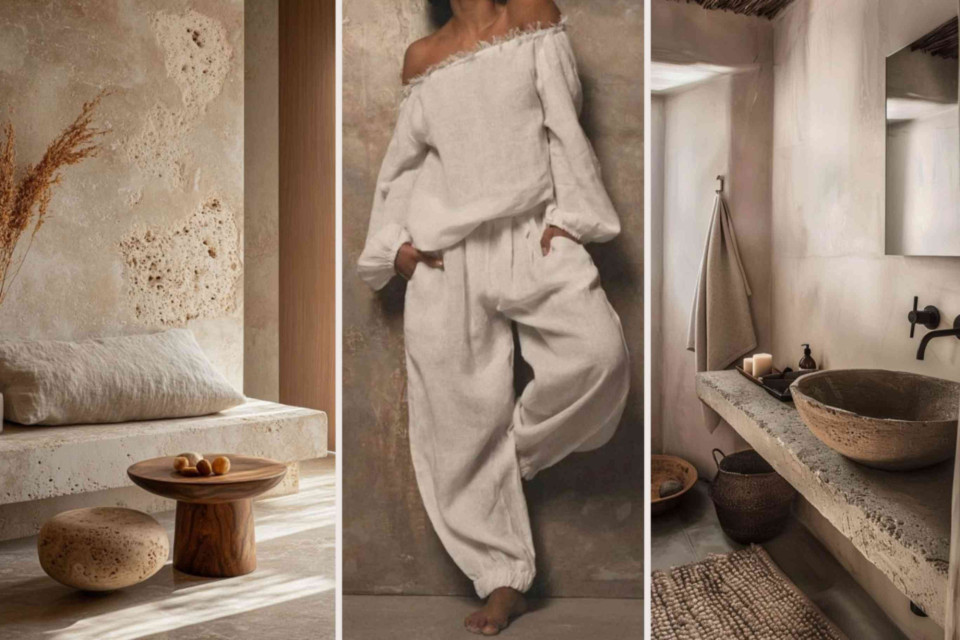
Linen is well suited to interiors where texture, comfort and simple materials define the space. Its visible weave and naturally relaxed appearance introduce softness alongside harder surfaces such as stone, plaster, clay and timber.
The material can be used throughout a home in different ways. Bedding is perhaps the most familiar application, but linen also works for curtains, cushions, table textiles, loose covers and selected upholstery. Using the same fibre for several purposes creates a connection between rooms without requiring identical fabrics.
The weight of the linen makes an important difference. Lightweight linen allows daylight to pass through and works particularly well for curtains in warm climates. Medium-weight fabrics are suitable for bedding and cushion covers, while heavier linen can be used for upholstery and other surfaces exposed to more frequent use.
Washed linen has a softer texture and a more relaxed appearance. Creases remain visible, but they are part of the character of the fabric. This makes linen particularly suitable for interiors where materials are allowed to show signs of everyday use.
Colour can be kept equally simple. Natural flax tones, chalky white, sand, clay and muted earth colours combine easily with lime plaster, stone floors, timber furniture and woven objects. Small differences in tone can create depth even when the entire room follows a neutral palette.
Linen is made from fibres of the flax plant and is known for its strength. The fabric generally becomes softer with repeated washing and use, allowing bedding and household textiles to change gradually over time.
It can also help balance interiors dominated by mineral materials. A stone bench or built-in plaster bed can feel visually hard on its own. Adding linen cushions, bedding or a curtain introduces movement and softness while leaving the architectural form visible.
The most interesting results often come from combining different linen weights within the same space. A fine curtain, heavier cushion cover and relaxed bedding each have their own texture while still belonging to one material family. This makes it possible to use linen throughout an interior without making every textile or room look the same.
#LinenInteriors #NaturalTextiles #InteriorMaterials #NomadicInteriors #NomadesDuMonde
Nomades du Monde @nomadesdumonde
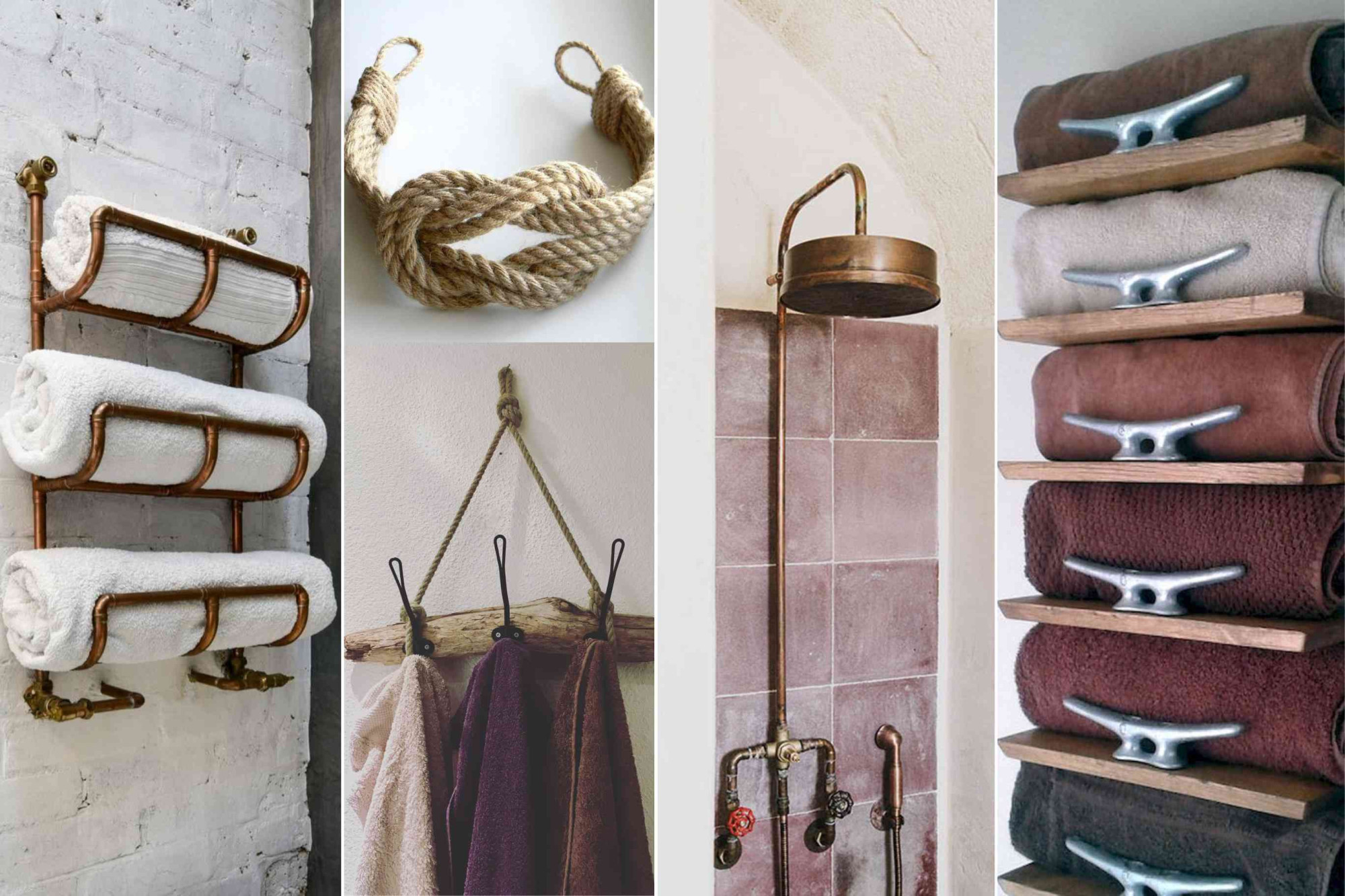
Towels are everyday objects, but the way they are stored can become part of the design of a bathroom. Open racks, hooks, narrow shelves and wall-mounted holders keep textiles accessible while reducing the need for large cupboards or freestanding furniture.
Wall-mounted storage is particularly useful in smaller bathrooms. A vertical towel rack can hold several folded towels while using very little floor space. Individual hooks work well for towels that are currently in use and narrow shelves can provide additional storage above a bath, basin or unused section of wall.
The choice of material changes the character of these simple systems. Aged brass and copper introduce warmer tones, rope adds a more informal texture and timber works naturally alongside plaster, stone and ceramic surfaces. Metal boat cleats and other functional hardware can also be repurposed as hooks, creating storage from objects originally designed for a completely different purpose.
Open towel storage makes colour more visible too. Instead of hiding textiles inside a cupboard, towels can become part of the room's palette. Cream, sand, terracotta, brown and muted plum tones can introduce subtle variation into bathrooms dominated by neutral mineral surfaces.
There is a practical consideration when towels remain exposed. Clean towels should be positioned away from areas that receive frequent splashes and enough space between textiles helps them dry after use. Storage for fresh towels and hanging space for wet towels therefore serve different functions.
Rope systems can be useful where a softer material is preferred to conventional metal rails. Thick natural rope can form loops, rails or suspended hanging points and requires relatively little visual space. The fittings and wall fixings still need to be suitable for the weight and humidity of a bathroom.
Small details can have a surprisingly large effect in a compact room. A row of hooks, a narrow timber shelf or a vertical rack can solve a specific storage problem without introducing another piece of furniture. The towels remain easy to reach and the wall itself becomes useful storage space.
#BathroomStorage #TowelStorage #BathroomDesign #InteriorDetails #NomadesDuMonde
Nomades du Monde @nomadesdumonde
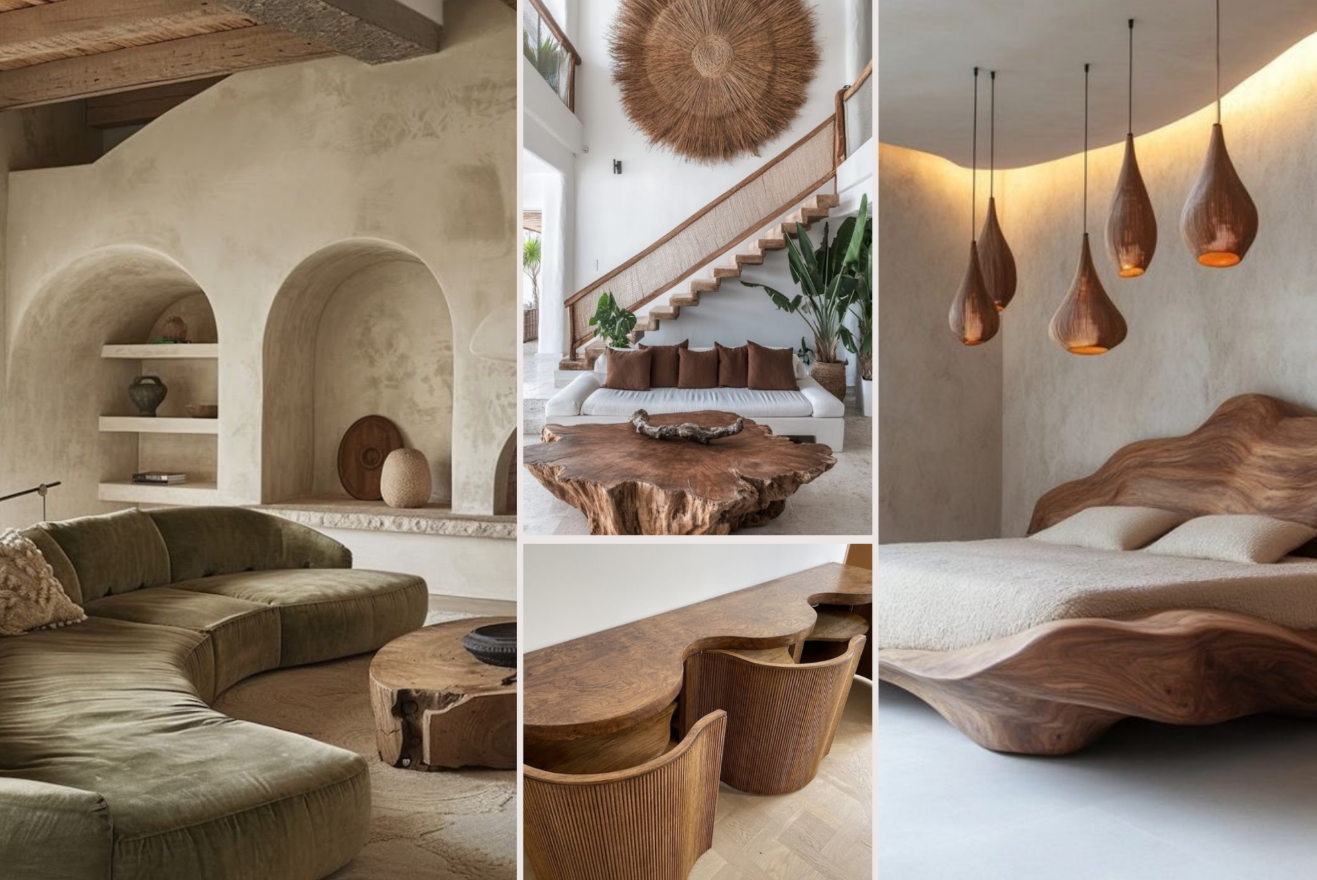
Built-in elements can replace separate pieces of furniture by making the architecture itself part of how a room is used. Niches, benches, platforms, shelving and even bed frames can be formed directly from walls and floors, creating spaces with fewer individual objects.
Wall niches are one of the simplest examples. Recesses can provide space for ceramics, books or lighting without adding shelving to the surface of the wall. Larger arched niches can define different functions within an open room while maintaining a visual connection between spaces.
Built-in seating follows the same principle. A bench formed along a wall needs no separate frame and can be adapted precisely to the dimensions of a room. Cushions and upholstery provide the comfort, while the underlying structure remains relatively permanent.
Beds can also become architectural elements. Raised platforms and sculpted bases create a defined sleeping area without a conventional bed frame. Timber, plaster or mineral finishes can connect the bed visually to the walls and floor around it.
This approach is particularly useful when a room has irregular dimensions. Instead of searching for furniture that fits an awkward corner or curved wall, a built-in element can be designed around the available space.
Material choice determines how strongly these additions stand out. When a niche or bench receives the same plaster finish as the surrounding walls, it appears almost carved from the room itself. Timber creates a stronger distinction and can introduce warmth against pale mineral surfaces.
Built-in furniture can also reduce the number of visible legs, frames and separate structures within an interior. This leaves more attention for the shapes of the architecture and for a smaller selection of movable pieces such as tables, chairs, textiles and lighting.
The permanent nature of built-in design does require careful planning. The dimensions of a bench, shelf or bed platform are difficult to change later, so height, depth, circulation and intended use need to be considered before construction.
In rooms where these elements are planned well, architecture and furniture begin to perform the same function. A wall provides storage, a platform becomes a bed and a continuous surface can move from seating to shelving without adding another object to the room.
#BuiltInDesign #InteriorArchitecture #BuiltInFurniture #InteriorDesign #NomadesDuMonde
Nomades du Monde @nomadesdumonde
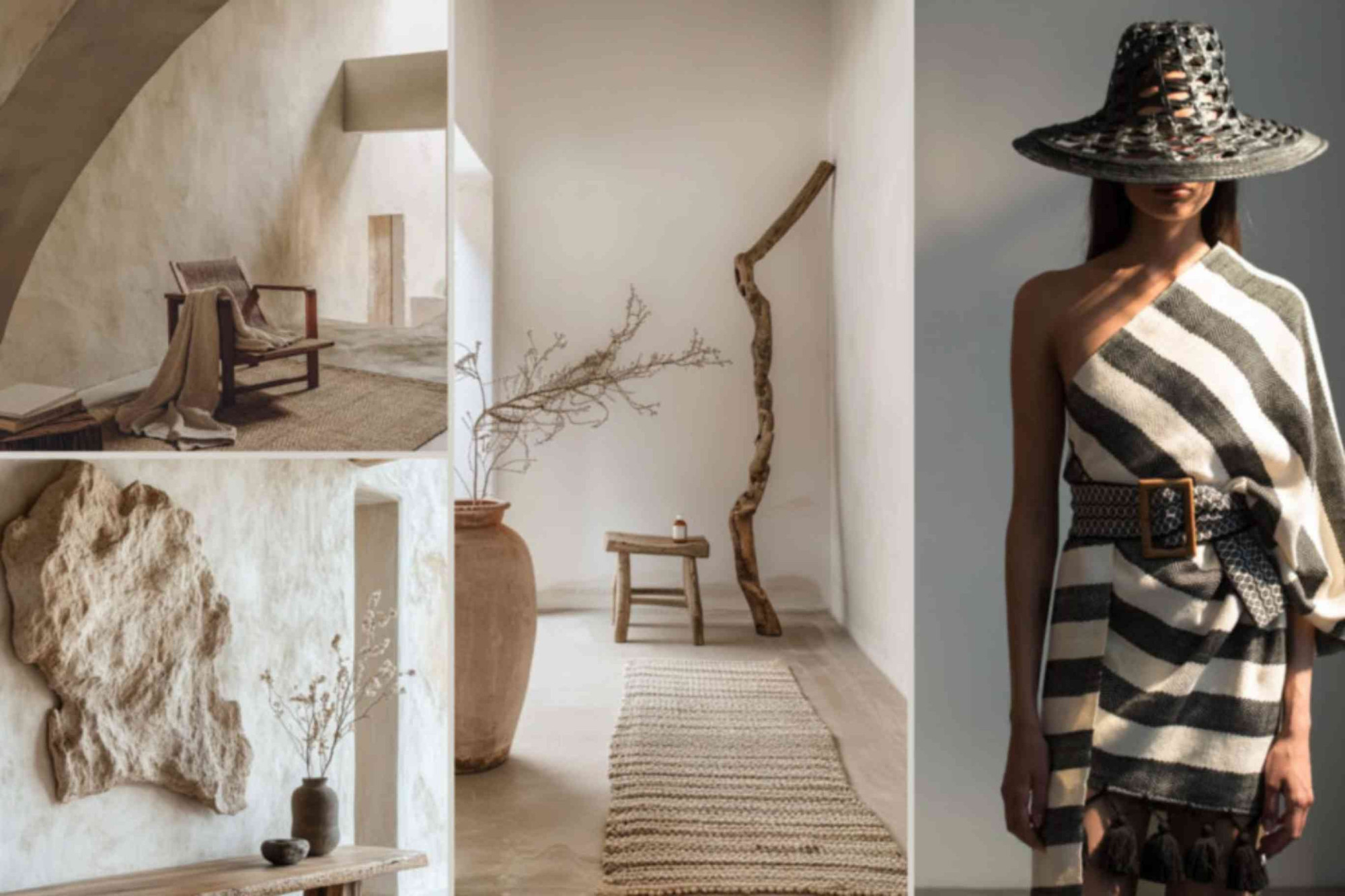
Stripes are one of the simplest patterns to introduce into an interior, yet their appearance can change considerably depending on the material, scale and way they are made. In nomadic textiles, stripes often emerge directly from the weaving process, making pattern and construction part of the same object.
Woven rugs are a natural place for stripes. Alternating bands of wool or other fibres can create rhythm across a floor without introducing a complex motif. Wider stripes feel more graphic, while narrow or irregular bands create a quieter surface that is easier to combine with textured walls, timber and handmade objects.
The direction of the pattern also influences how a textile works within a room. Long stripes can visually emphasise the length of a corridor or narrow space. On cushions, blankets and smaller textiles, the same pattern becomes a compact detail instead of a dominant feature.
Colour does not need to be strong for stripes to remain visible. Combinations of cream, charcoal, brown, sand and natural wool tones rely on contrast between light and dark rather than bright colour. This makes striped textiles particularly useful in interiors with restrained palettes.
Irregularity can be part of the design. Handwoven stripes may vary slightly in width, alignment and density as the textile is produced. These differences reveal how the fabric was constructed and distinguish it from a mechanically repeated printed pattern.
Stripes also move easily between interiors and fashion. A pattern used on a woven floor covering can appear on blankets, bags, clothing or accessories while retaining a similar visual language. The scale and orientation change according to the object, but the basic structure remains recognisable.
This makes striped textiles particularly interesting for Nomades du Monde because they connect different forms of design. A woven runner can define a passage through a home, a blanket can introduce the same graphic rhythm to a chair and a striped garment can carry that visual language outside the interior.
#StripedTextiles #WovenDesign #TextileDesign #NomadicDesign #NomadesDuMonde
Nomades du Monde @nomadesdumonde
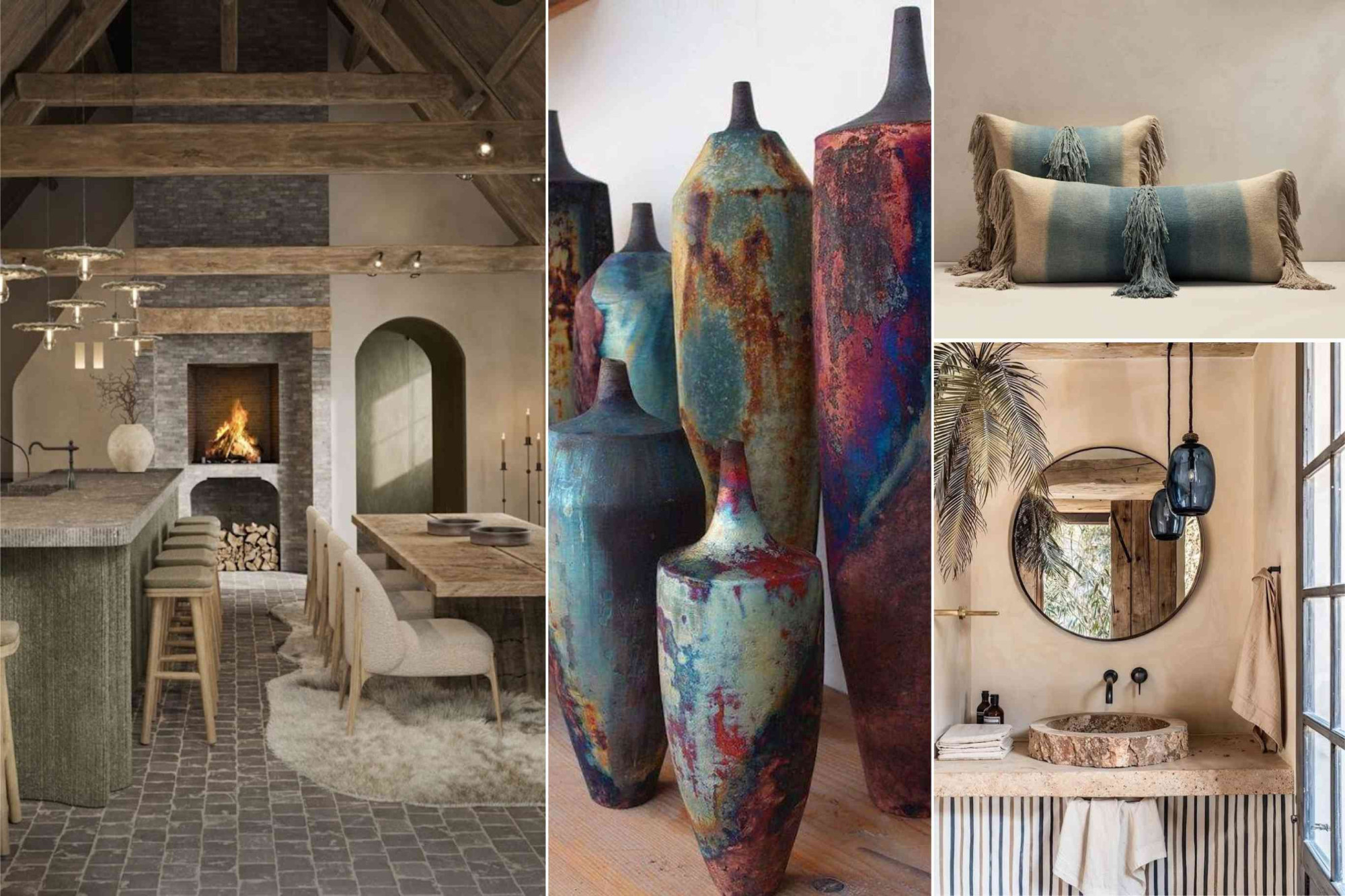
Large vessels can give an interior height, colour and sculptural form without requiring conventional decoration. Originally associated with practical uses such as storing water, oil, grain or other goods, vessels have gradually become objects that can stand on their own within contemporary interiors.
Scale is one of the reasons they work so well. A tall vessel can occupy an empty corner, sit beside a fireplace or create a vertical accent against a large wall. Smaller pieces can be grouped on a table, shelf or built-in niche to create variation in height and shape.
The form of the vessel is equally important. Narrow necks, rounded bodies, elongated silhouettes and irregular profiles each create a different presence. When several vessels are placed together, differences in proportion can make the arrangement more interesting than using identical objects.
Surface finishes introduce another layer. Clay can remain matte and earthy, while glazed ceramics can bring deeper colours and reflective surfaces into a neutral room. Oxidised, distressed or layered finishes can create combinations of blue, rust, burgundy and green that change depending on the light.
Vessels can also provide a useful way to introduce colour without changing the larger elements of an interior. A room built around timber, stone, plaster and muted textiles can accommodate one strongly coloured ceramic piece without requiring the same colour to appear throughout the space.
Placement deserves attention. Large vessels need enough surrounding space for their silhouette to remain visible. In a crowded arrangement, their sculptural quality can disappear among smaller decorative objects. One substantial piece can therefore have more impact than several unrelated accessories.
They do not always need flowers or branches either. An interesting shape or surface can be enough. When branches are added, the vessel becomes part of a larger composition and its proportions should be considered in relation to the height and spread of the arrangement.
From traditional storage object to contemporary decorative piece, the vessel shows how a familiar functional form can continue to evolve. Changes in scale, glaze, colour and placement allow the same basic object to work in very different interiors.
#DecorativeVessels #CeramicDesign #InteriorObjects #NomadicDesign #NomadesDuMonde
Nomades du Monde @nomadesdumonde
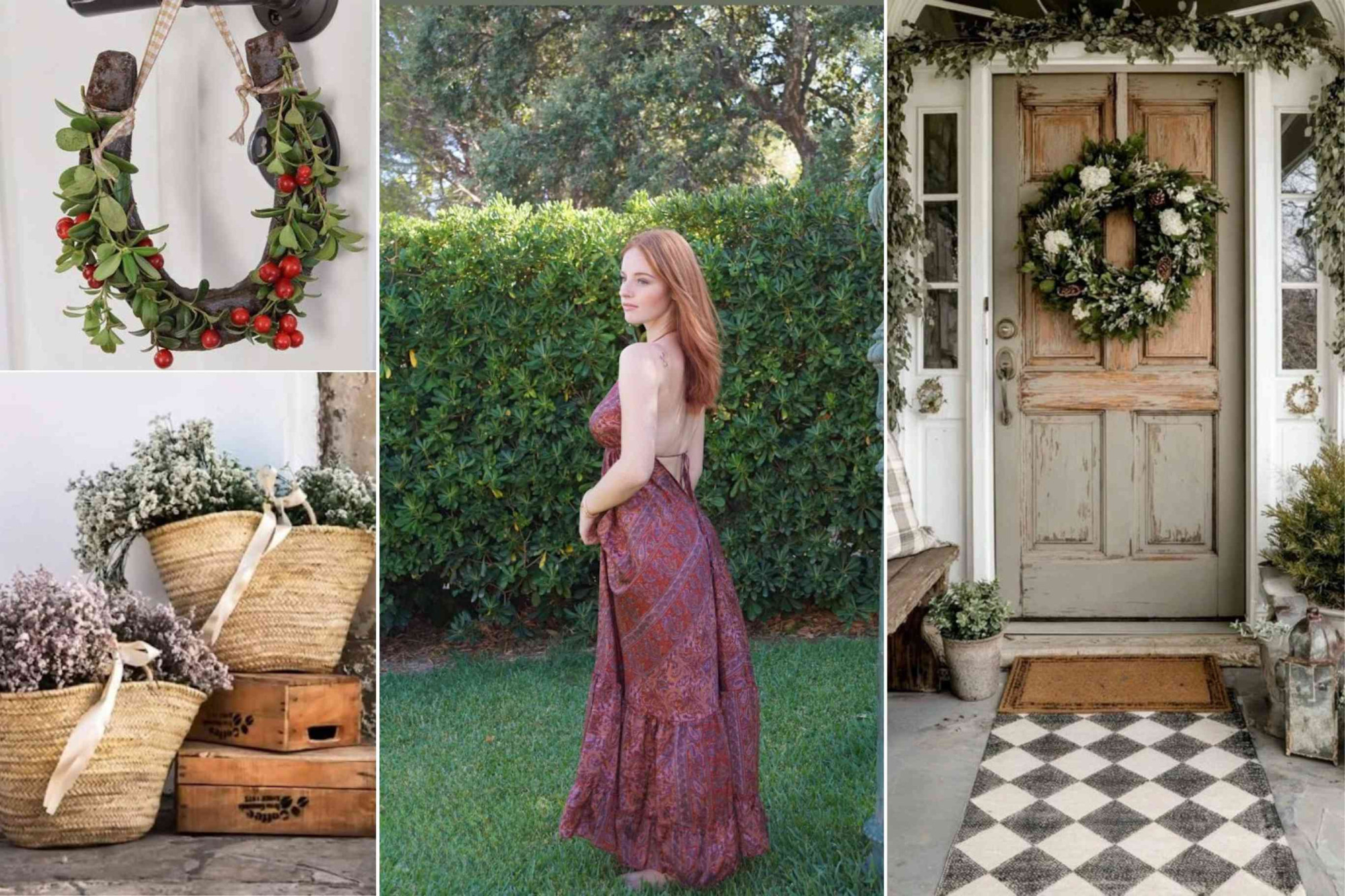
Seasonal greenery can change the atmosphere of a home without requiring a complete change in decoration. During winter, evergreen branches, small trees and simple wreaths bring elements of the landscape indoors and can be used in both traditional and contemporary interiors.
Evergreens are particularly suited to winter because they retain their foliage when many other plants have lost their leaves. Fir, spruce, pine, cedar and similar varieties provide different shades of green as well as variations in needle length, branch structure and texture.
A wreath is one of the simplest ways to use these materials. It can be hung on a door, exterior wall or inside the home and does not need additional ornaments to create an impact. The shape and density of the branches can provide enough detail on their own.
Small trees can also be used beyond the conventional decorated Christmas tree. An undecorated evergreen placed in a basket, pot or simple container can introduce seasonal greenery while remaining visually quiet. This works particularly well in entrances, covered terraces and rooms dominated by timber, stone and neutral textiles.
Loose branches provide even more flexibility. They can be placed along a table, arranged in a large vessel or used on a mantelpiece. Shorter branches can be tied together for doors and windows, making it possible to decorate several areas with relatively little material.
The condition of the greenery matters when it is brought indoors. Freshly cut branches gradually dry in heated rooms, so positioning them away from fireplaces, radiators and other direct heat sources helps them remain fresh for longer. Containers with water can be used for suitable cut branches.
Seasonal decoration can also extend to everyday routines. Wool blankets brought out for colder weather, baskets for firewood and winter greenery near an entrance all respond to how the home is used during this part of the year.
Once the season ends, natural greenery can be removed without leaving a collection of decorative objects that needs to be stored for the rest of the year. The home returns to its previous state while the same idea can be adapted again with different branches and plants the following winter.
#SeasonalGreenery #WinterInteriors #NaturalDecor #WinterHome #NomadesDuMonde

Nomades du Monde @nomadesdumonde
A wreath can be made from much more than traditional fir branches. Foliage, herbs, berries, dried flowers and seasonal plants can all be used to create arrangements that reflect what is available at a particular time of year.
The base determines both the shape and the amount of material required. Willow, grapevine and flexible branches can be formed into a circular structure and left partially visible. Metal rings provide a cleaner outline and are useful when greenery is only attached to part of the wreath.
Fresh foliage creates a fuller appearance. Olive, eucalyptus, bay, rosemary and other sturdy branches can be layered around the base, while berries or flowers introduce smaller areas of colour. Using several types of greenery also creates differences in leaf shape and texture.
Dried materials work differently. Lavender, grasses, seed heads and dried flowers retain their shape for longer and can produce lighter arrangements with less volume. They are particularly useful for wreaths intended to remain indoors for several weeks or months.
The amount of decoration can be adjusted to the setting. A large wreath can fill an otherwise empty front door, while a smaller arrangement works on an interior wall, cupboard or hook. Leaving part of the structure exposed can make the design feel less formal than a completely covered ring.
Seasonality provides an easy way to vary the same idea throughout the year. Spring branches and flowers can replace winter evergreens, herbs and olive foliage suit warmer months and dried grasses, berries and seed heads work well later in the year.
Materials can also come directly from a garden or from cuttings left after pruning. Branches that are too short for a vase may still be useful in a wreath, while herbs and flowers can continue drying after they have been attached.
A simple wreath therefore becomes a practical way of working with plants already available around the home. Its colour, texture and composition can change with the season without changing the underlying principle.
#NaturalWreaths #SeasonalDecor #BotanicalDesign #HomeDecoration #NomadesDuMonde
Nomades du Monde @nomadesdumonde
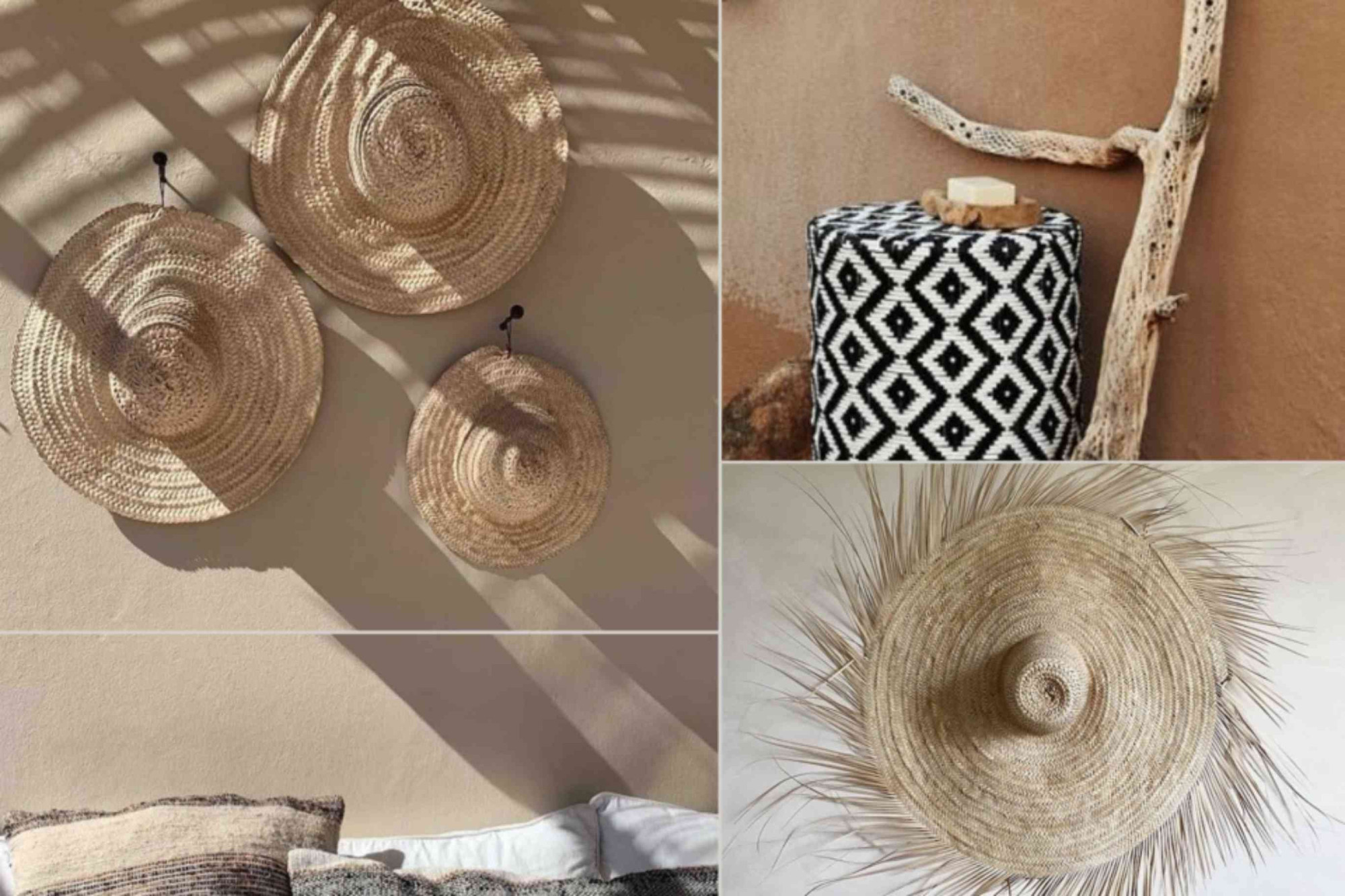
Woven objects can move from practical household use to wall decoration without losing the techniques and materials that originally defined them. Baskets, trays, hats and flat woven forms can introduce texture to a wall while remaining closely connected to traditional forms of making.
Plant fibres such as palm, raffia, reed, sisal and grasses are particularly suitable for this type of work. Their natural flexibility allows fibres to be coiled, braided or woven into structured shapes. The technique determines the final surface, from tightly woven geometric patterns to loose edges where individual fibres remain visible.
Circular pieces work particularly well on large walls. Several sizes can be grouped together to create a composition without using framed artwork. Differences in weave, diameter and colour provide enough variation while the repeated round form keeps the arrangement visually connected.
Spacing changes the effect. A tightly grouped collection reads almost as one installation, while individual pieces positioned further apart allow the shape and weaving of each object to remain visible.
Light also becomes part of the display. Raised surfaces and open weaving cast shadows against the wall, particularly when sunlight enters from the side. As the light changes during the day, the pattern surrounding the object can change as well.
Woven wall pieces do not need to remain in their original natural colour. Black, white and earth-toned fibres can be combined into geometric patterns, creating a stronger graphic element while retaining the texture of the weave.
Existing objects can be used in the same way. A shallow basket, traditional woven hat or tray brought back from a destination can be displayed instead of stored away. This gives functional objects a second role within the home and allows pieces from different places to be combined gradually.
The strongest arrangements usually rely on a clear connection between the objects, such as material, shape or weaving technique. This keeps a collection of individually different pieces visually coherent.
#WovenDesign #WallDecor #NaturalFibres #InteriorObjects #NomadesDuMonde
Nomades du Monde @nomadesdumonde
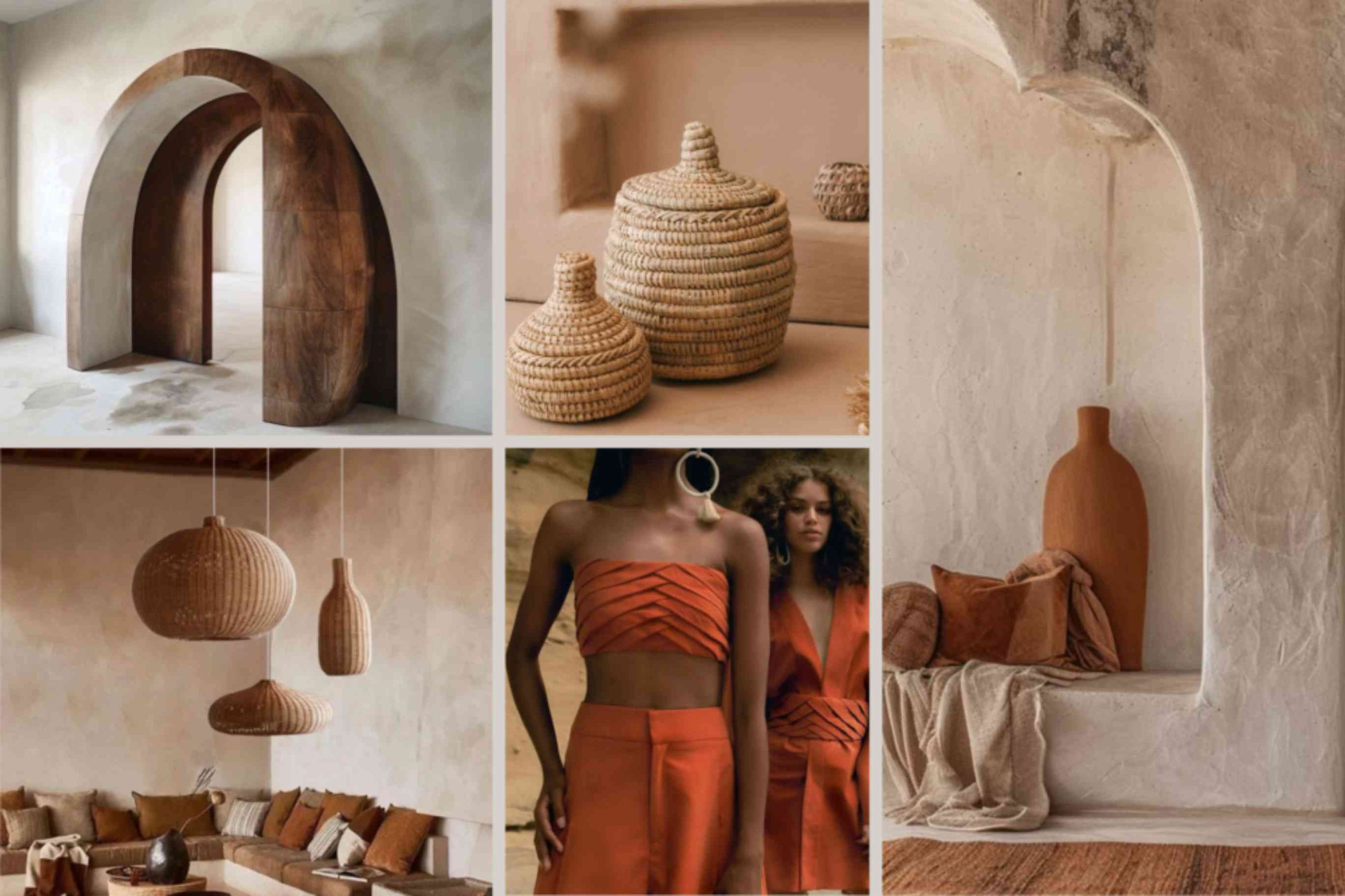
Terracotta can introduce warmth into a neutral interior without changing the simplicity of the overall palette. Its earthy colour sits naturally alongside lime plaster, pale stone, timber, woven fibres and linen, making it particularly useful in spaces dominated by beige, cream and sand tones.
The material has a long history in architecture and household objects. Made from iron-rich clay that develops its characteristic warm colour during firing, terracotta has been used for floor tiles, roof tiles, vessels, tableware and decorative objects across many regions of the world.
In an interior, terracotta does not need to cover a large surface. A single vessel, ceramic object or group of smaller pieces can introduce enough colour to change a pale room. Larger applications such as floor tiles create a stronger presence and can establish the colour palette for an entire space.
Different clay bodies and firing conditions produce considerable variation. Terracotta can range from pale peach and muted orange to deeper rust, red and brown. Combining several related tones creates more depth than repeating one exact shade throughout a room.
Its matte surface is another reason it combines well with natural materials. Unglazed terracotta absorbs light instead of reflecting it strongly, creating a visual connection with textured plaster, raw timber and woven fibres.
Terracotta tones can also be introduced through textiles. Rust-coloured cushions, throws or upholstery can echo ceramic objects elsewhere in the room without requiring every element to be made from clay. This allows colour to move between furniture, objects and architectural details.
The same palette can extend into fashion. Clay, cinnamon, burnt orange and rust work across linen, cotton and woven fabrics, showing how a colour rooted in a natural material can move between interiors and clothing.
Using terracotta selectively keeps its warmth noticeable. Against pale walls and restrained furnishings, even a small amount of the colour can become a defining element of the space.
#Terracotta #EarthyInteriors #InteriorMaterials #NaturalInteriors #NomadesDuMonde
Nomades du Monde @nomadesdumonde
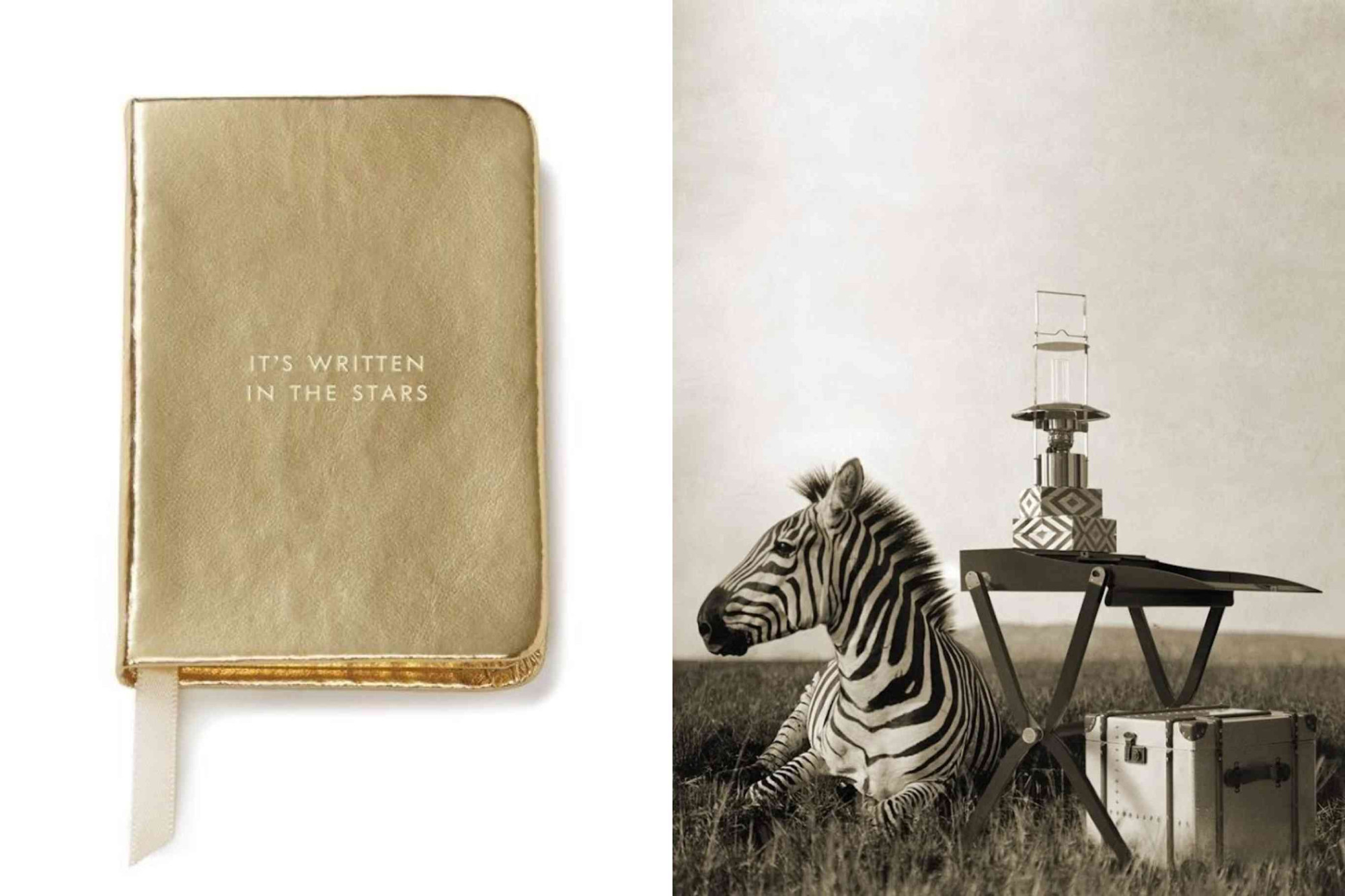
A travel journal creates a physical record of a journey that photographs alone do not always provide. Addresses, observations, sketches, recommendations and small details can be written down as they happen and kept together long after the trip has ended.
The format does not need to be complicated. A compact notebook is often more useful than a large journal because it can easily be carried in a bag during the day. Blank pages provide space for drawing, lined pages are practical for longer notes and mixed formats can accommodate both.
What goes into the journal can extend beyond conventional diary entries. Restaurant names, hotel details, local ingredients, colours, architecture, conversations and places worth returning to can all become part of the record. Tickets, labels, postcards and other small paper objects can also be added between the pages.
Writing while travelling can be useful for remembering details that quickly become difficult to place afterwards. The name of a small shop, a particular material seen in a hotel or the location of a market may seem obvious at the time but can easily disappear among hundreds of photographs once the trip is over.
A journal can also function as a practical reference. Keeping notes about accommodation, restaurants, routes and local addresses creates a personal archive that can be consulted when returning to a destination or recommending it to someone else.
The notebook itself often changes during a journey. Pages become folded, covers show wear and loose pieces of paper accumulate between entries. These traces are part of its function as an object that travels instead of something designed to remain untouched on a shelf.
For longer journeys, individual notebooks can be dedicated to different destinations or years. Over time, they form a personal library of places, with each volume containing information that would otherwise be scattered across phones, photographs and saved locations.
#TravelJournal #TravelNotes #TravelMemories #NomadicLiving #NomadesDuMonde
Nomades du Monde @nomadesdumonde
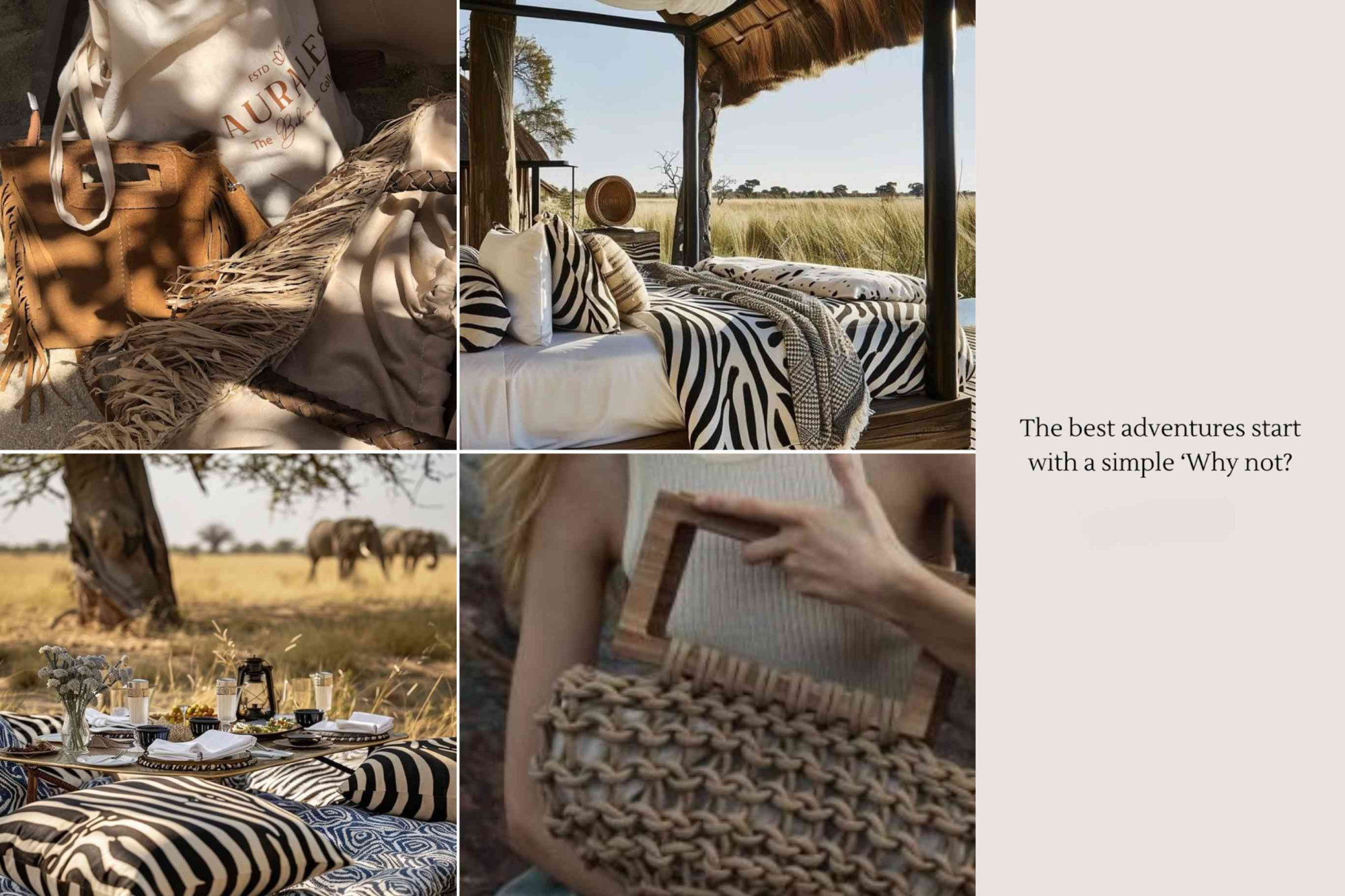
Safari interiors are designed around a close relationship with the landscape, with many spaces functioning somewhere between an indoor room and an outdoor living area. Canvas, timber, woven fibres and lightweight furniture are commonly used because they suit structures that may be more open and less permanent than conventional buildings.
The bed is often the main element of a safari tent or lodge room. Instead of filling the space with furniture, seating, textiles and small tables are arranged around it while views towards the surrounding landscape remain open. Covered terraces can extend the room further and provide places to sit during different parts of the day.
Textiles play an important role in these interiors. Neutral canvas and linen can form the base, while striped, geometric or animal-inspired patterns introduce contrast through cushions, rugs and blankets. Using these patterns selectively keeps them noticeable without allowing a single motif to dominate the entire interior.
Portable furniture has a practical connection to safari history. Folding chairs, campaign tables, trunks and travel cases were designed to be transported and assembled when required. Contemporary safari interiors often reinterpret these forms in timber, leather, canvas and metal.
Dining can follow the same flexible approach. A table placed outside for breakfast or dinner creates a temporary setting that can be removed again afterwards. Textiles, tableware, lanterns and simple furniture are enough to define the space without permanent construction.
Handwoven bags, baskets and other portable objects also fit naturally into this environment. They can move between practical travel accessories and storage within a room, reflecting a wider principle of nomadic design where objects are useful in more than one setting.
Modern safari stays range from simple tented camps to highly designed lodges, but the most characteristic spaces retain a sense of openness. Shade, airflow, views and proximity to the landscape influence the design just as much as furniture and decoration.
This makes safari living an interesting reference for contemporary interiors: rooms can be comfortable and carefully designed while still maintaining a lighter relationship with architecture and the objects placed inside them.
#SafariLiving #SafariInteriors #NomadicDesign #InteriorDesign #NomadesDuMonde
Nomades du Monde @nomadesdumonde
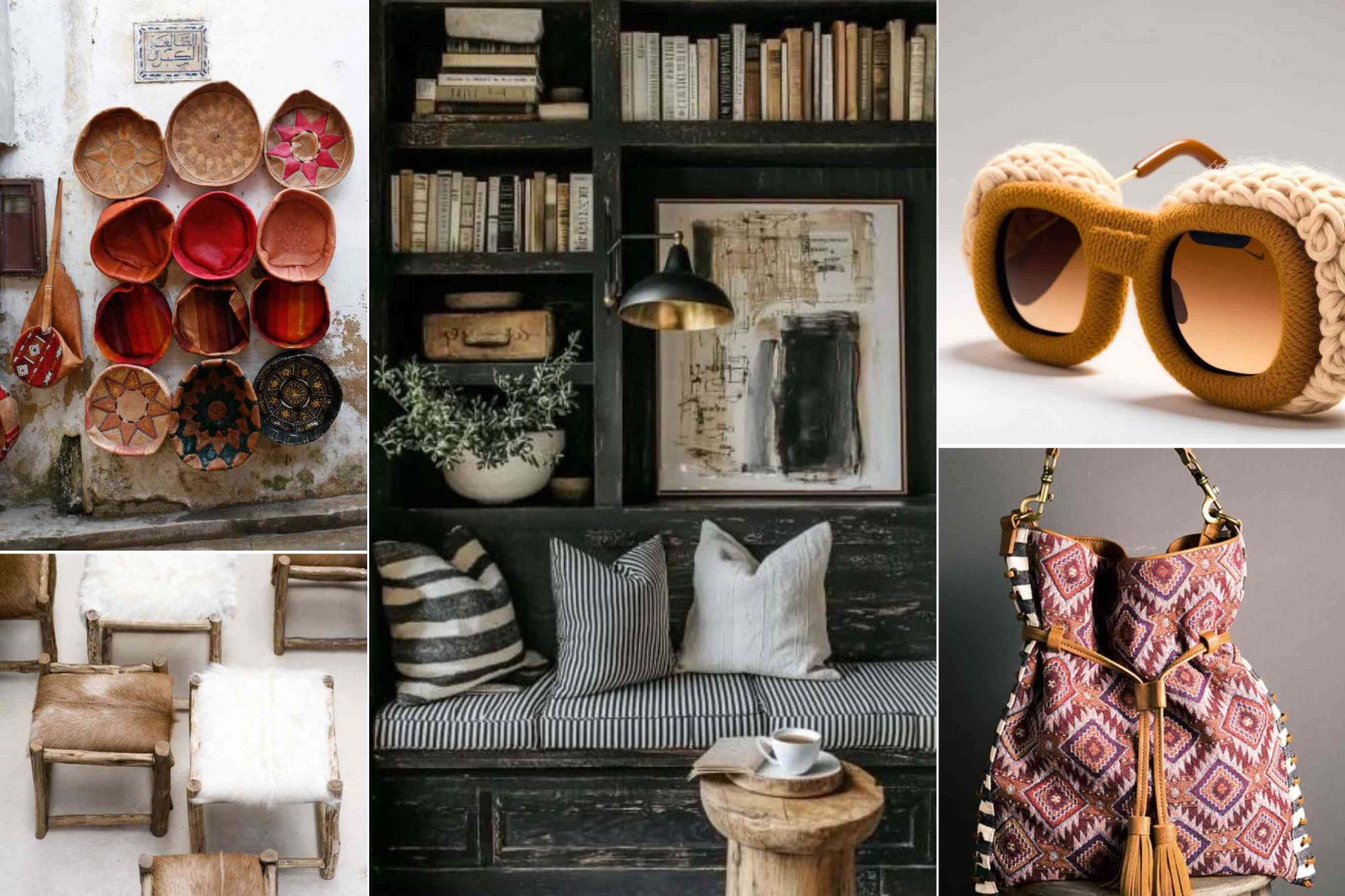
Objects collected while travelling can give an interior a personal character that is difficult to create by buying everything at once. Baskets, textiles, ceramics, books, small furniture and accessories can gradually become part of a home, with each piece connected to a different place, maker or moment.
A collection does not need to consist of valuable or rare objects. Everyday pieces can be equally interesting. A woven basket from a local market, a small stool, a piece of fabric or a handmade container may have been designed for practical use but can take on a different role once brought home.
How these objects are displayed determines whether they feel like a collection or simply a group of unrelated items. Repeating one characteristic can create a visual connection. Several baskets may have different colours and weaving patterns but share a similar shape. Textiles from different regions can be combined through related tones or geometric motifs.
Shelves and built-in cabinetry provide useful places for smaller finds. Books can sit alongside ceramics, framed works and objects, creating a display that can continue to change as new pieces are added. Leaving some empty space prevents individual items from disappearing within the collection.
Walls can also be used for objects that were not originally designed as decoration. Flat baskets, woven hats, textiles and small pieces of furniture can become wall-mounted displays, particularly when their construction or shape is interesting from a distance.
Travel finds can extend beyond the interior. Sunglasses, bags, jewellery and other accessories use many of the same techniques seen in home objects, including weaving, embroidery, leatherwork and textile construction. This creates a natural connection between interior design and personal style.
It is useful to consider practicality when buying objects during a trip. Size, weight and fragility affect how easily something can be transported, while knowing where an object was made can provide more context than simply purchasing a souvenir designed specifically for visitors.
Over time, these individual finds can form a record of different destinations without turning the home into a themed interior. Their connection comes from the person who selected and uses them, while differences in material, origin and technique remain visible.
#CollectedInteriors #TravelFinds #InteriorObjects #NomadicDesign #NomadesDuMonde
Nomades du Monde @nomadesdumonde
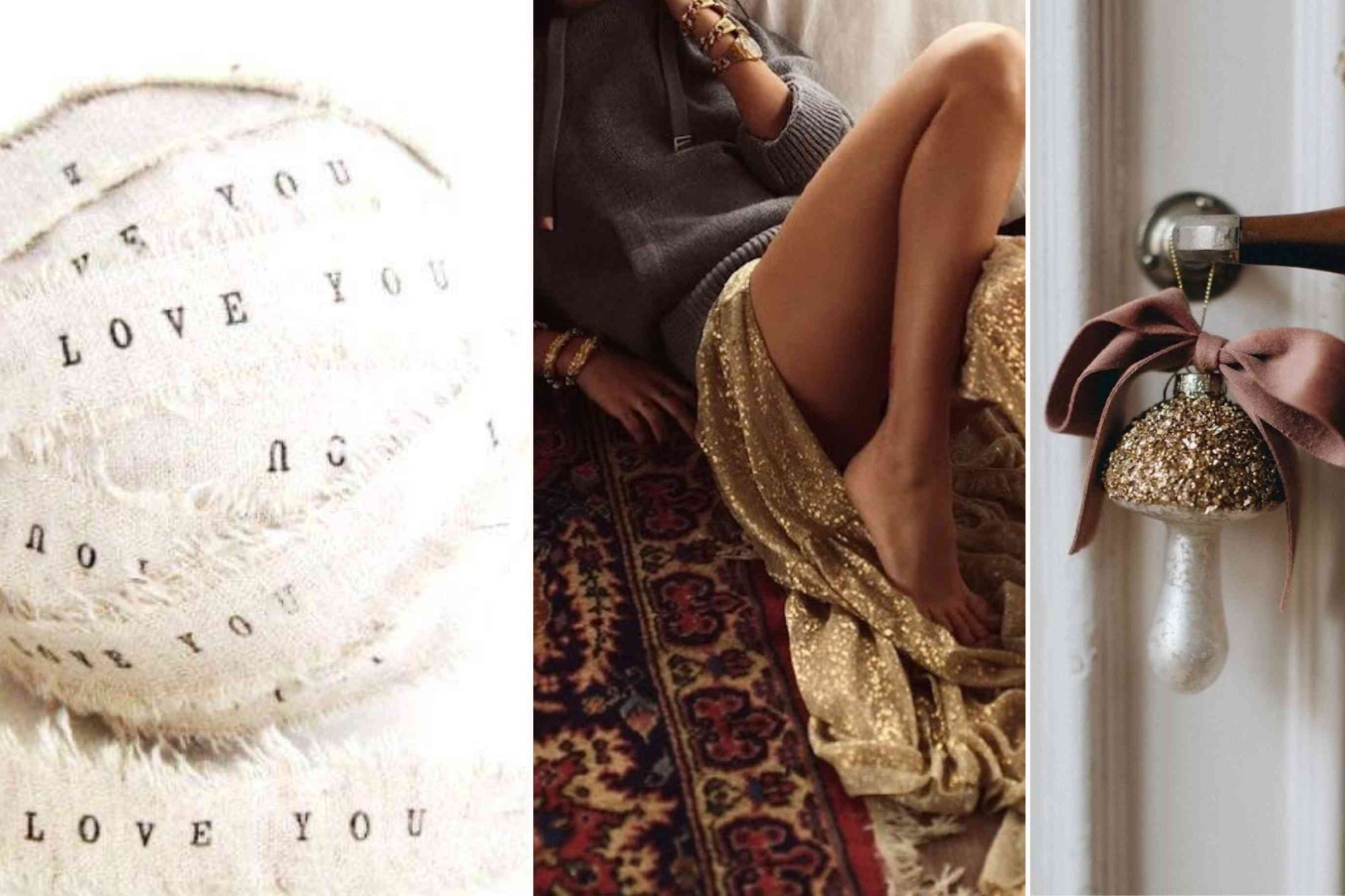
Small decorative details can change the character of an interior without requiring new furniture or major alterations. A ribbon tied around a handle, a small textile object, an unusual ornament or a metallic accent can introduce colour and personality in places that are normally overlooked.
Door and cupboard handles are useful examples. They are functional elements that appear throughout a home, but they can also provide a place for a small decorative addition. Fabric ribbons, tassels, woven cords or lightweight ornaments can be attached temporarily and changed according to the season or occasion.
Textiles provide another simple way to add detail. Embroidery, printed words, stitched motifs and decorative edging can turn a cushion, napkin or small piece of fabric into an individual object. These elements work particularly well when the surrounding interior is relatively restrained.
Metallic finishes can create contrast against softer materials. Gold, brass and bronze catch light differently from linen, wool, timber and woven fibres. A small reflective surface can therefore become noticeable without needing to be large.
Temporary details are particularly useful for seasonal decoration. Instead of replacing cushions, curtains or larger objects, ribbons and ornaments can introduce a different colour or finish for a few weeks and then be removed or reused elsewhere.
Scale is important. Several small decorative elements placed close together can quickly become visually busy. Selecting one or two details in a particular area allows them to remain noticeable while the rest of the room stays calm.
Personal objects can work in the same way. A piece of jewellery, a fabric brought back from a trip or a small handmade object does not always need a conventional display. It can be incorporated into an existing part of the interior and given a new function.
These small interventions make it possible to change a room gradually. They can move from one place to another, respond to different seasons and introduce materials or colours that would be too dominant on a larger scale.
#InteriorDetails #DecorativeDetails #HomeStyling #NomadicDesign #NomadesDuMonde
Nomades du Monde @nomadesdumonde
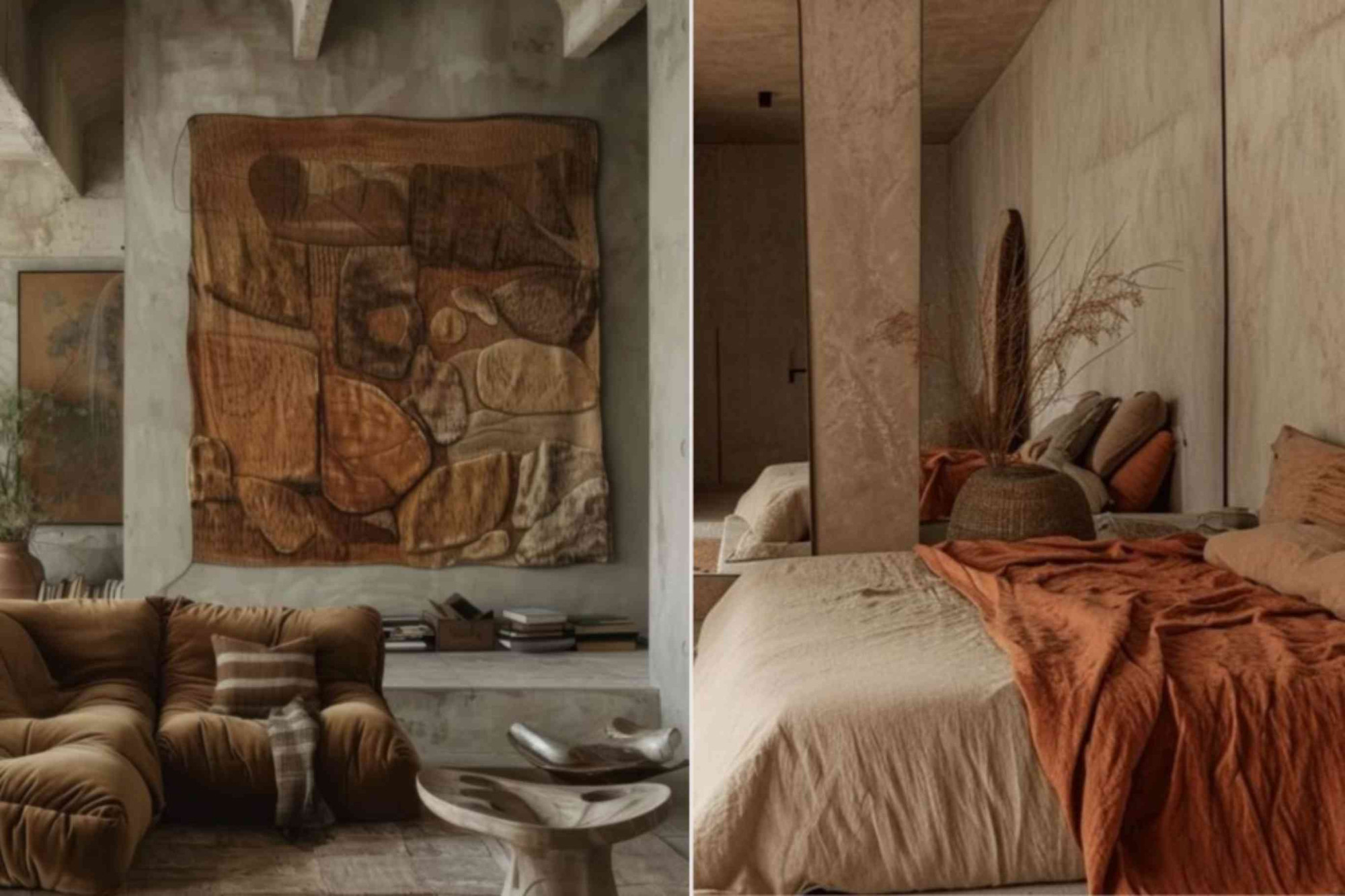
Textiles can function as large-scale wall art while adding a type of texture that paintings and prints cannot provide. Woven panels, tapestries, quilts and fibre compositions introduce depth through their material as well as through colour and pattern.
Historically, wall textiles also had a practical purpose. Large tapestries helped cover cold stone walls and provided an additional insulating layer in castles and other buildings. Their decorative role developed alongside this practical function, with increasingly complex woven scenes, patterns and borders.
Contemporary textile art can take a much more abstract form. Different fibres, weaving techniques and fabric remnants can be combined to create compositions based on shape, texture and colour. Raised sections and variations in thickness give the work a physical depth that changes depending on where it is viewed.
Scale is important when a textile becomes the main artwork in a room. One substantial piece can fill a large wall above a sofa, bed or built-in bench without requiring a collection of smaller decorative objects around it.
The material also affects acoustics. Soft surfaces absorb some sound, which can be useful in rooms dominated by hard materials such as stone, concrete, plaster and timber. A large textile therefore contributes both visually and physically to the space.
Earth tones work particularly well when the surrounding architecture follows a neutral palette. Ochre, rust, sand, brown and muted cream can introduce variation while maintaining a connection with timber, clay, natural fibres and mineral finishes.
Hanging methods depend on the weight and construction of the work. Textile panels can be suspended from concealed battens, rods or specialist hanging systems. Larger pieces require sufficient support to prevent the fabric from stretching unevenly over time.
Textile art also creates opportunities to include regional weaving traditions and contemporary fibre artists within an interior. The wall becomes a place for a functional craft technique to be presented at an architectural scale.
#TextileArt #WovenArt #WallTextiles #InteriorDesign #NomadesDuMonde
Nomades du Monde @nomadesdumonde
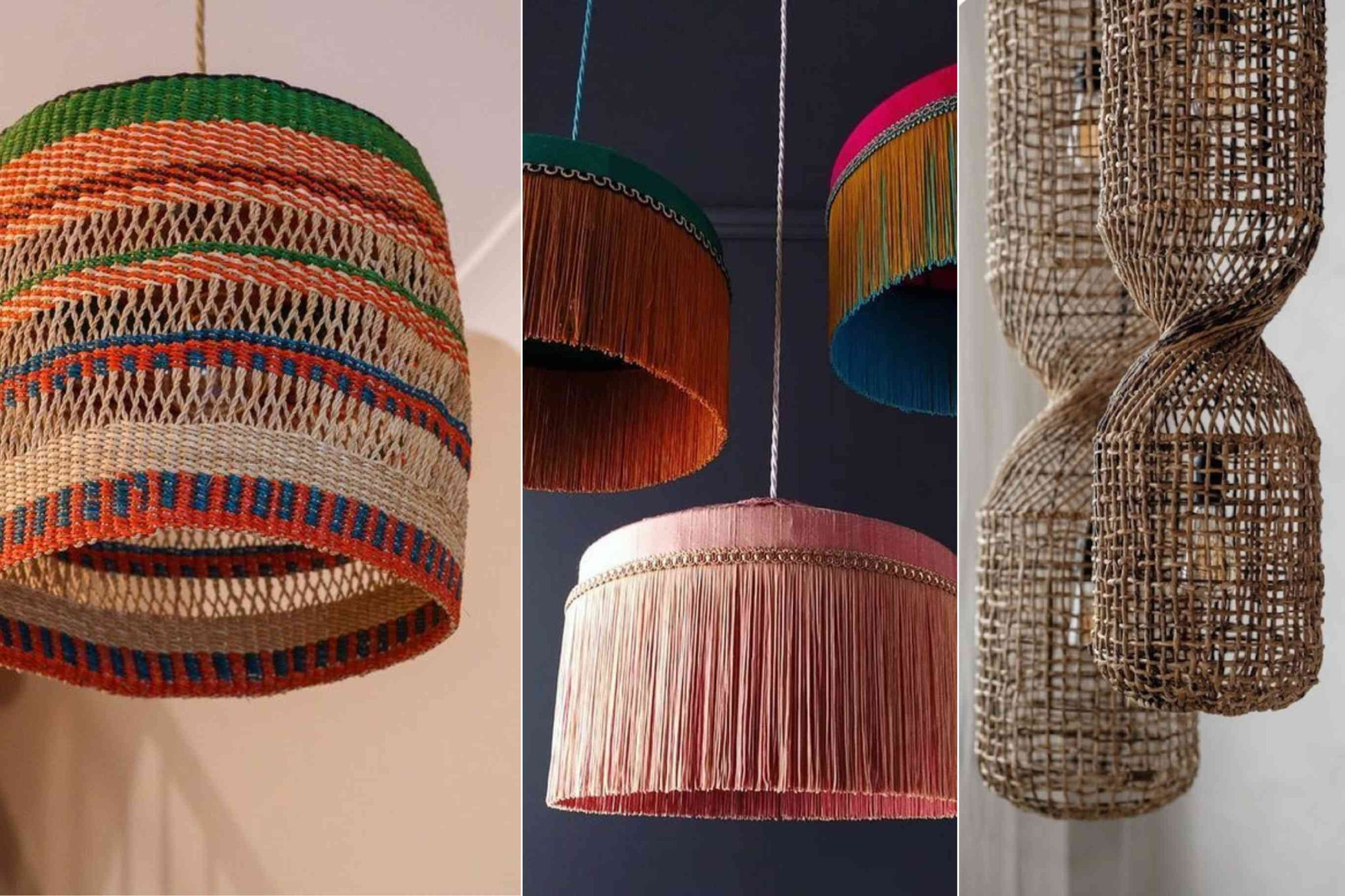
Woven lighting does not have to stay neutral. Colour, fringe and different weaving styles can turn a pendant lamp into one of the most distinctive elements in a room.
Natural fibres such as raffia, grasses and rattan provide the base, while coloured threads and woven bands introduce pattern. Terracotta, green, blue and pink can be used as small accents or across the entire shade.
Fringe creates a different effect. The hanging threads soften the shape of the lamp and introduce movement, particularly on larger pendants above dining tables, seating areas or beside a bed.
Open weaving allows light to remain visible through the structure. During the day, the lamp works as a decorative object. In the evening, the weave, fringe and colour become part of the lighting itself.
These designs are particularly effective in otherwise restrained interiors. One expressive pendant can bring colour and texture into a room without needing additional decoration around it.
#WovenLighting #FringeDesign #LightingDesign #InteriorDesign #NomadesDuMonde
Nomades du Monde @nomadesdumonde
Layering Textures
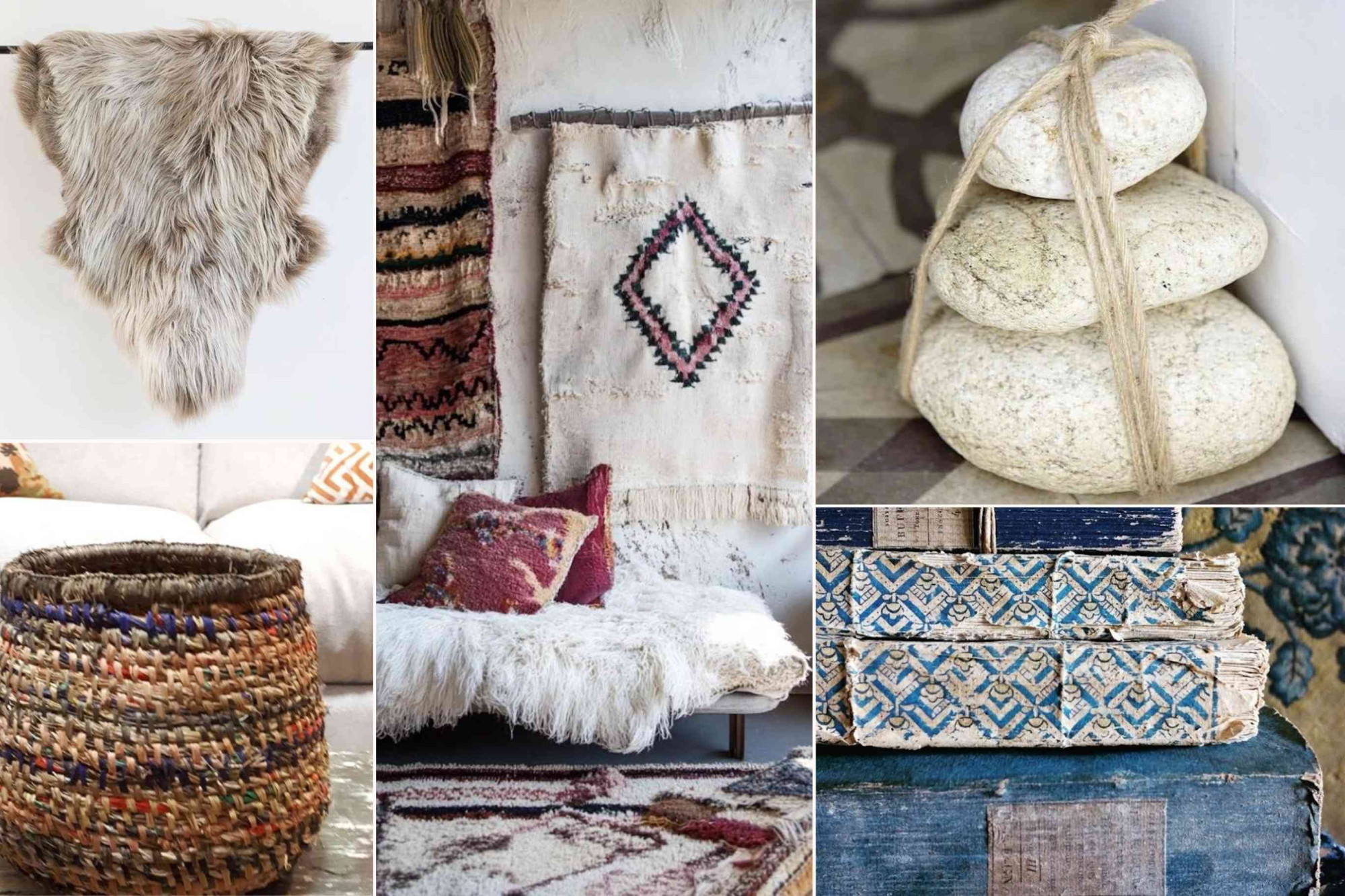
A neutral interior does not need many colours to feel interesting. Combining different textures can create depth while keeping the overall palette calm.
Wool, woven fibres, thick rugs and soft cushions bring warmth to harder surfaces such as plaster, stone and timber. Each material has a different structure, which prevents similar neutral tones from blending into one flat surface.
Layering works particularly well with textiles. A rug can sit beneath another woven piece, cushions can combine different weaves and a sheepskin or heavy wool textile can add softness to seating or a bedroom.
Smaller objects can continue the same idea. Woven baskets, fabric-covered boxes and simple stone objects introduce texture without filling the room with decoration.
The result depends on variety rather than quantity. A few contrasting surfaces can give a restrained interior enough detail while allowing the individual materials to remain visible.
#LayeredTextures #NaturalTextiles #InteriorDesign #NomadicInteriors #NomadesDuMonde
Nomades du Monde @nomadesdumonde
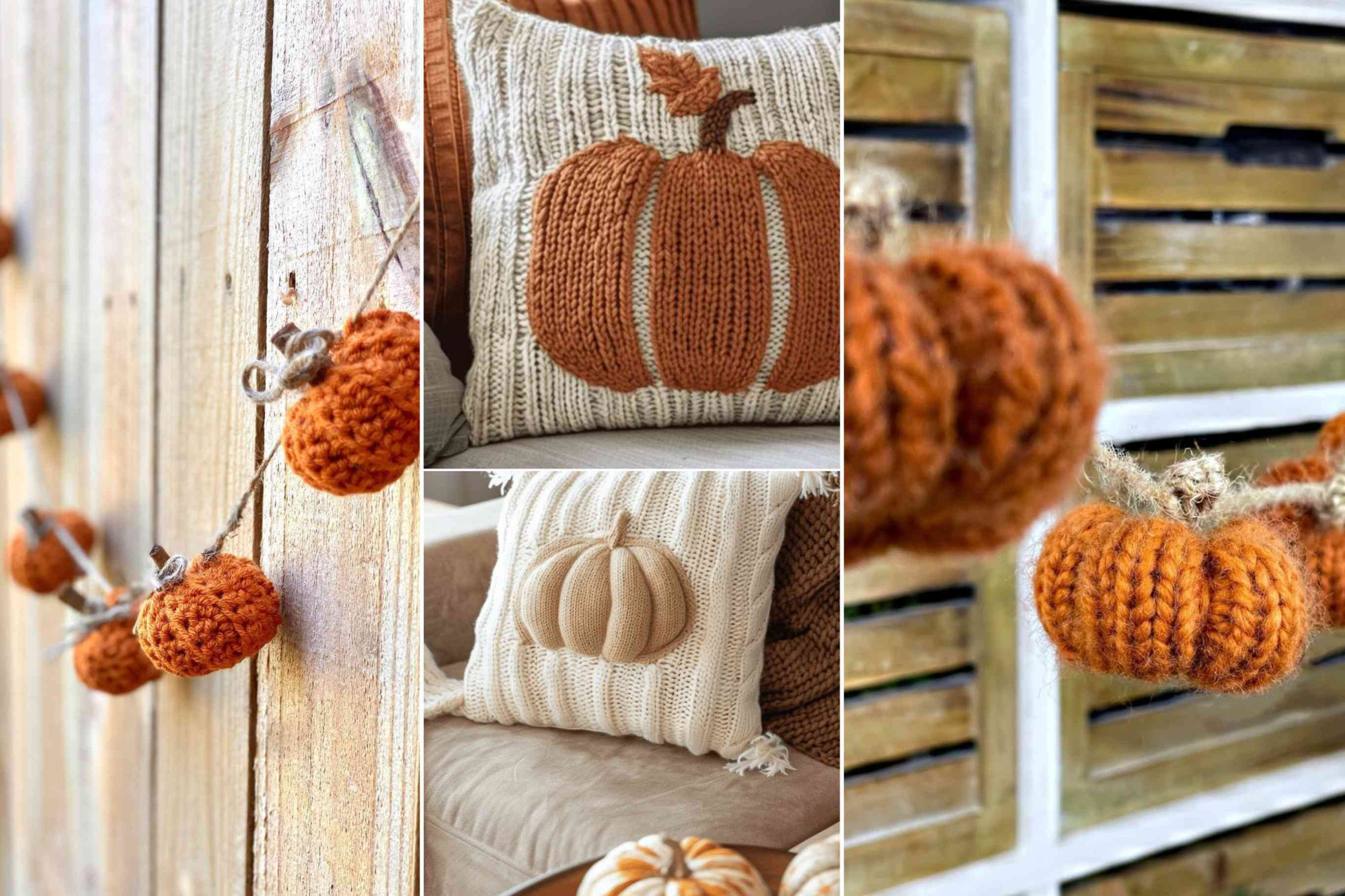
Small knitted objects can bring seasonal colour and texture into a home without changing the entire interior. Pumpkins, cushions and garlands made from wool or yarn are an easy way to introduce an autumn reference through material instead of conventional decorations.
Knitted pumpkins work particularly well because different yarns create very different results. Chunky wool gives them a soft, substantial shape, while finer knitting creates a more structured surface. Rust, cream, ochre and brown connect naturally with an autumn palette.
Cushions can carry the same theme in a less temporary way. A knitted pumpkin motif or a raised appliqué adds texture to a sofa or chair and can easily be combined with plain wool, linen and woven cushions.
Smaller knitted pieces can be grouped into a garland, placed in a basket or used individually on shelves and tables. Because they are lightweight, they are easy to move and store once the season changes.
The idea also lends itself to making pieces at home. Simple shapes can be knitted or crocheted from leftover yarn, making seasonal decoration a small creative project instead of something that needs to be bought new each year.
#KnittedDecor #AutumnInteriors #SeasonalDecor #TextileDesign #NomadesDuMonde
Nomades du Monde @nomadesdumonde
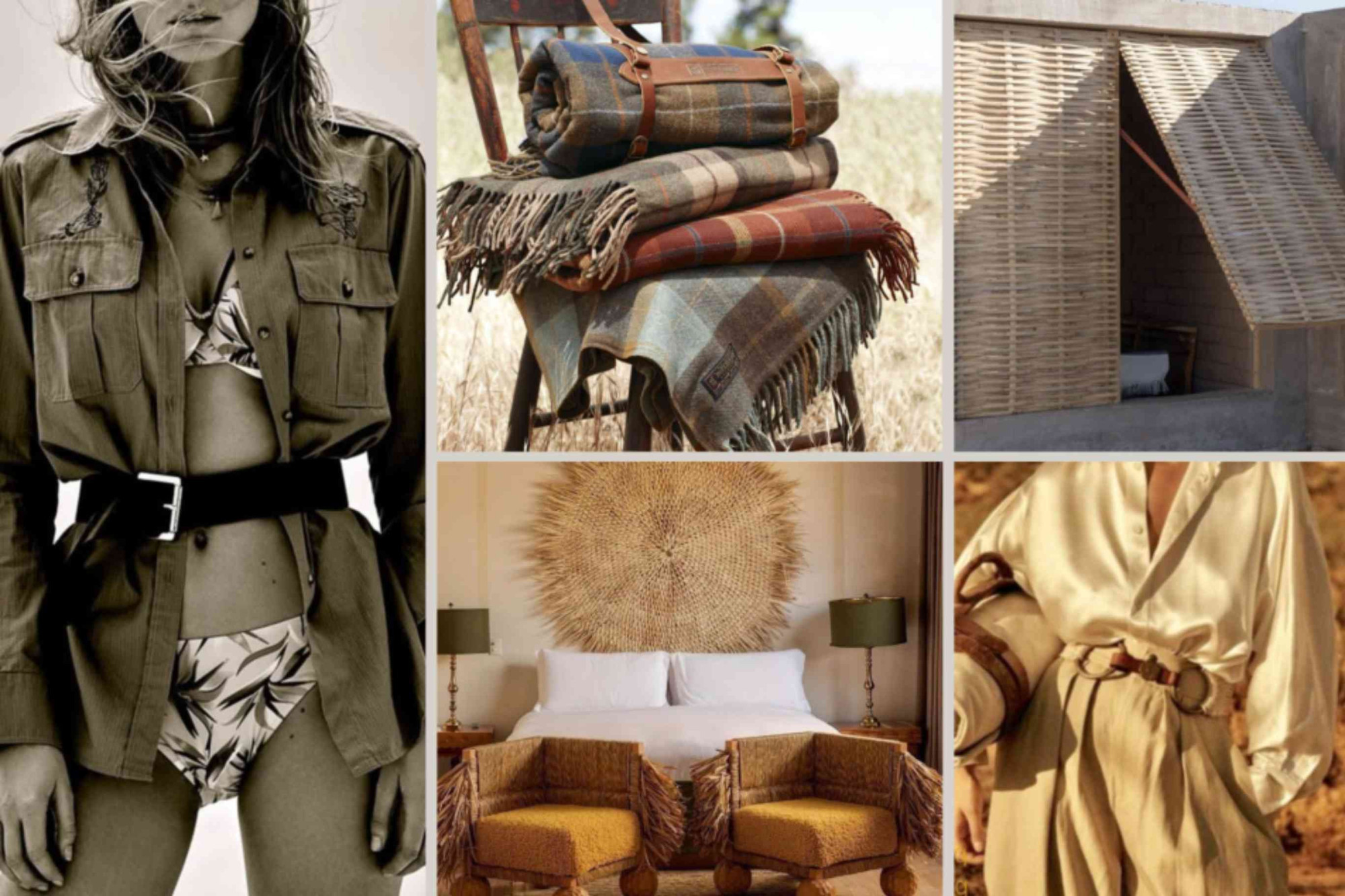
Safari-inspired interiors take many of their cues from travel equipment, natural materials and colours found in the surrounding landscape. Khaki, tobacco, sand and muted greens create a palette that can move easily between interiors, clothing and travel accessories.
Canvas and leather are particularly characteristic materials. Their association with field bags, folding furniture and luggage gives them a practical character, while wool blankets and woven textiles add warmth and pattern.
Furniture can follow the same visual language. Woven chairs, timber tables and simple lamps work well with textured walls and natural flooring. A few stronger pieces are usually enough to establish the look without turning the room into a themed interior.
There is also a clear connection with fashion. Safari jackets, wide belts, linen clothing and functional bags use many of the same colours and materials found in lodge interiors. This crossover makes the safari aesthetic broader than interior design alone.
Contemporary lodges often interpret these references in a more restrained way, combining traditional safari influences with modern architecture and locally sourced materials.
#SafariStyle #SafariInteriors #TravelDesign #NomadicLiving #NomadesDuMonde
Nomades du Monde @nomadesdumonde
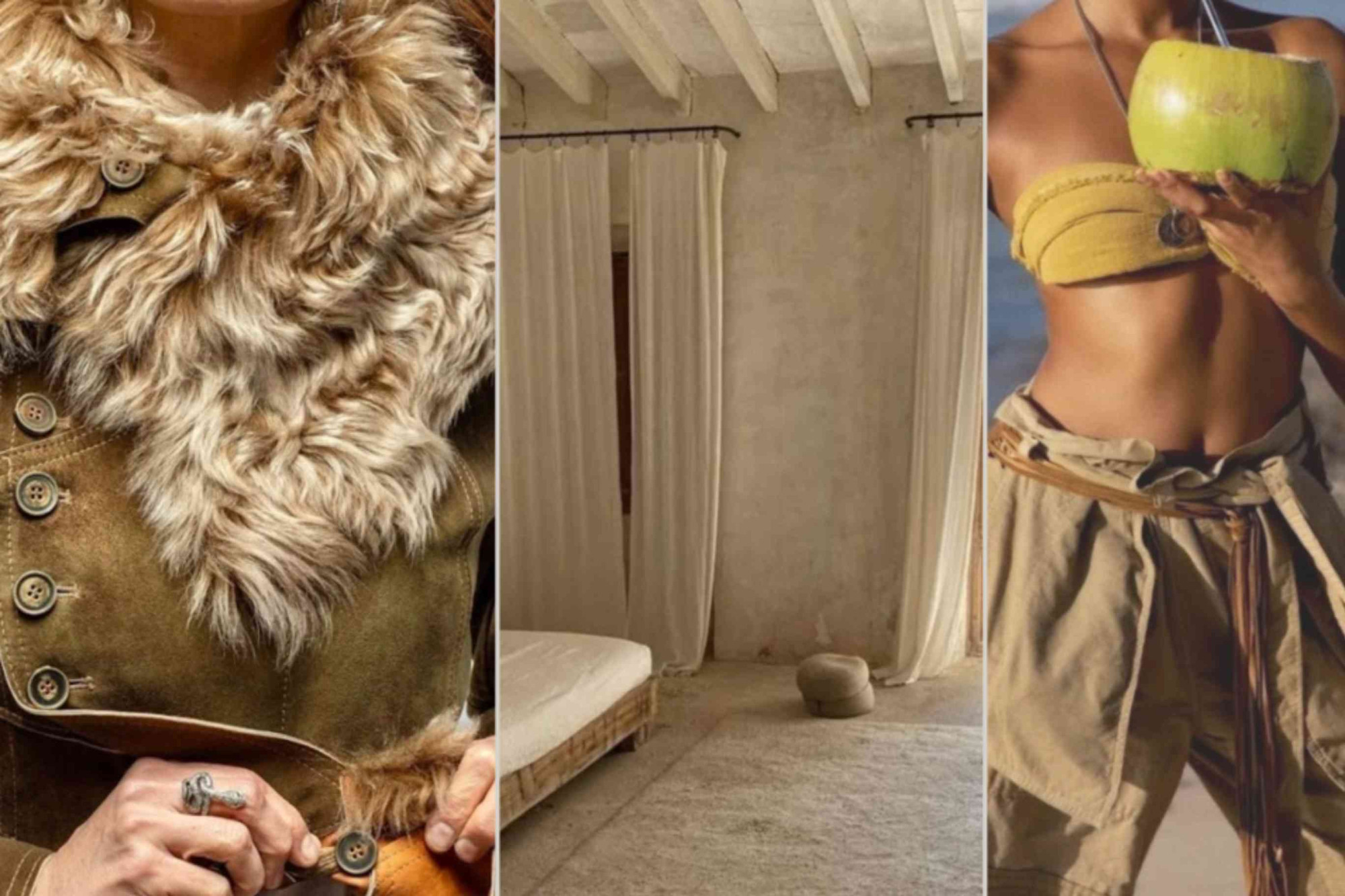
Comfort is often created by the materials closest to us. The same principle applies to what we wear and to the spaces in which we live, making textiles an important connection between fashion and interiors.
A heavy woollen rug changes the feeling of a bare floor in much the same way that a thick wool or shearling layer changes the experience of being outdoors in colder weather. Texture, weight and softness influence comfort before colour or decoration even become important.
In warmer conditions, that relationship changes. Loose linen and cotton fabrics allow more movement and feel lighter against the body. Inside the home, lightweight curtains, linen bedding and loosely woven textiles create the same sense of less material between ourselves and the surroundings.
This explains why changing textiles can have such an impact without changing the architecture or furniture. A room can move from winter to summer simply through rugs, bedding, curtains and cushions with different weights and textures.
Looking at textiles through touch and use, instead of purely as decoration, makes material choice much more relevant to everyday living.
#NaturalTextiles #TextileDesign #InteriorDesign #NomadicLiving #NomadesDuMonde
Nomades du Monde @nomadesdumonde
Some of the most interesting interior objects were never designed purely as decoration. Baskets, woven hats, stools and containers begin with a practical purpose, but their material and construction can give them a second life within the home.
A woven hat placed on a wall immediately reveals its shape and pattern in a different way. A basket left visible becomes part of the room instead of disappearing into storage. Even simple containers can contribute texture when their fibres, handles and weaving remain visible.
This approach is especially relevant to objects found while travelling. Pieces made for daily use can represent local materials and techniques more naturally than objects produced specifically as souvenirs.
How an object is used at home does not need to match its original purpose. A basket can hold textiles, become a planter or simply stand on a shelf. A woven tray can move to the wall. A traditional stool can become a bedside table.
Giving existing objects new roles creates interiors that develop gradually. Each piece has a function, a material identity and potentially a connection to a place, instead of being selected simply to fill an empty space.
#EverydayObjects #WovenDesign #InteriorObjects #NomadicInteriors #NomadesDuMonde
Nomades du Monde @nomadesdumonde
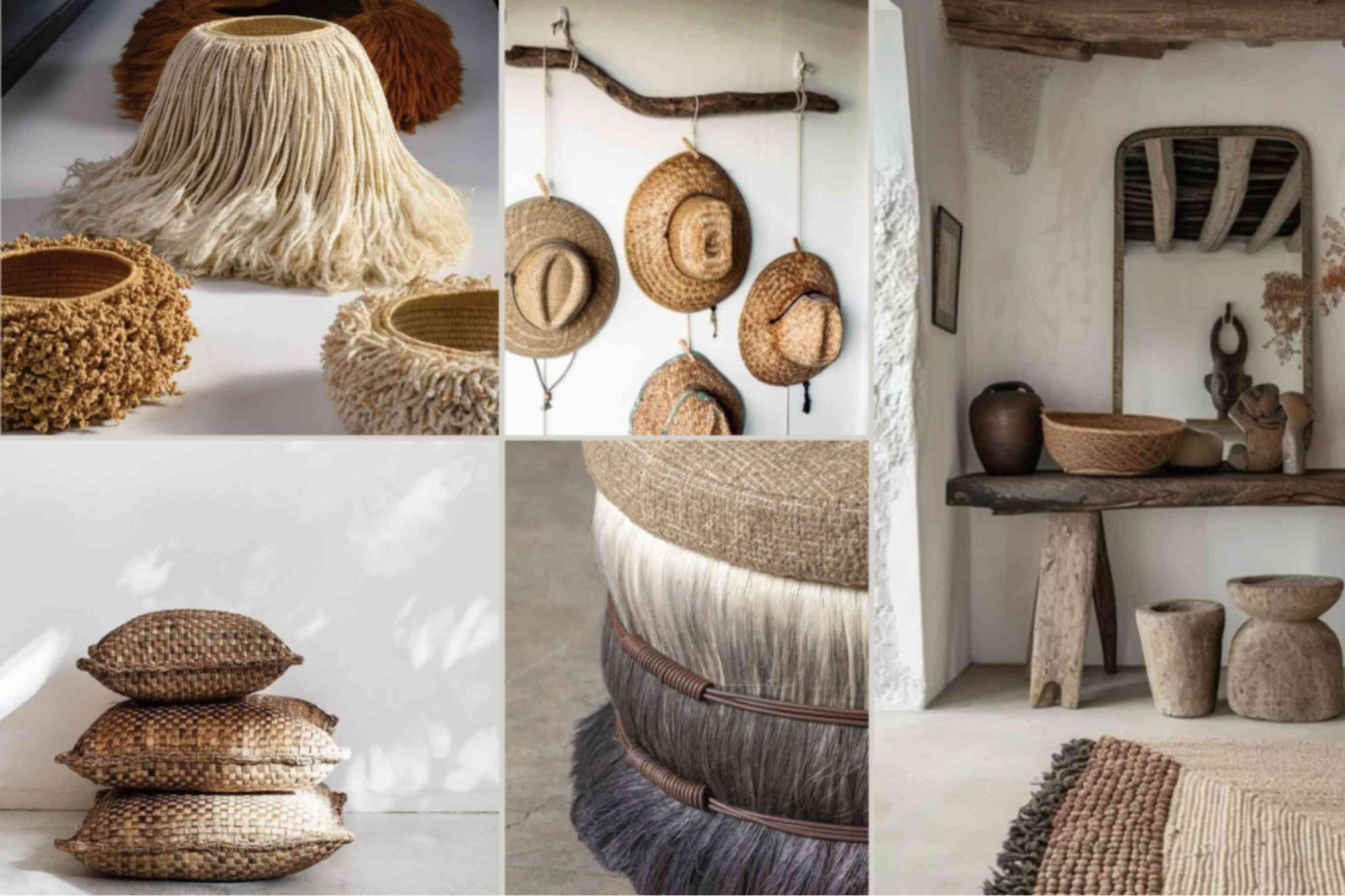
Nomadic living changes the relationship we have with objects. When possessions need to move with us, size, weight and usefulness become as important as appearance.
Textiles are a good example. A woven piece can serve as a blanket, wrap, room divider or decorative element depending on where it is used. Jewellery follows a similar logic on a much smaller scale: personal objects travel easily and can carry materials, techniques or references from different places.
Containers and vessels have historically been equally important to mobile ways of living. Their value came from what they could store, protect or transport. Today, many of these forms remain present in interiors even when their original function has changed.
This creates an interesting distinction between permanent and portable design. Architecture stays in one place, while textiles, jewellery, vessels and personal objects move between homes, destinations and different stages of life.
A nomadic interior can therefore be shaped as much by what arrives with its inhabitants as by the building itself. The objects become a changing layer within the space, carrying their own histories from one setting to another.
#PortableDesign #NomadicLiving #DesignObjects #TravelAndDesign #NomadesDuMonde
Nomades du Monde @nomadesdumonde
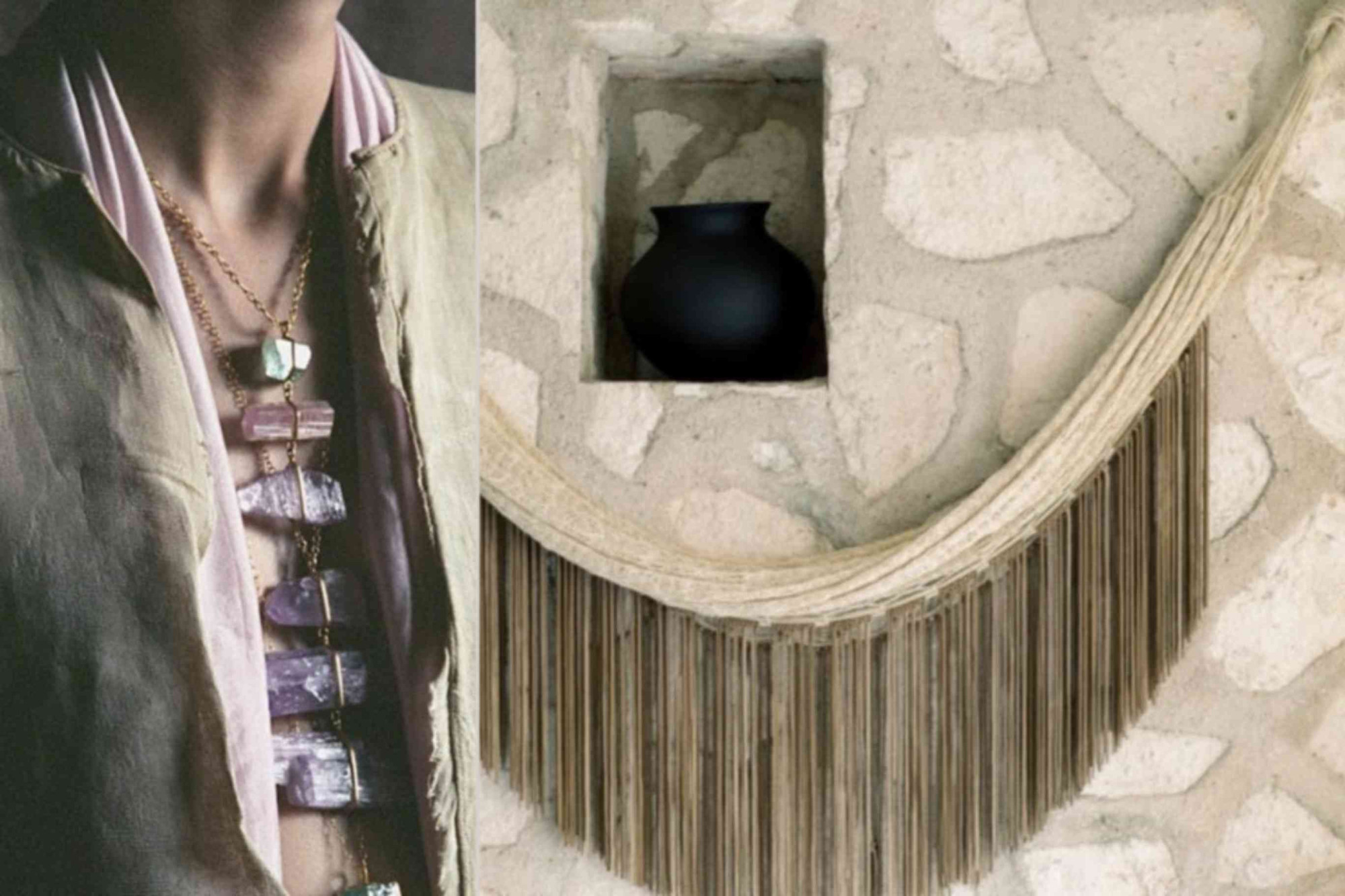
A home does not need to be filled with furniture to function well. In warm climates and relaxed living environments, a smaller number of useful pieces can leave more space for movement, air and everyday life.
Simple benches, built-in seating, stools and open clothing rails can replace heavier furniture. Their construction is visible and their purpose is clear, which suits interiors where the architecture and surrounding landscape already provide much of the visual character.
Open storage reinforces this approach. A timber rail can hold a small selection of clothing without requiring a full wardrobe, while baskets provide flexible storage for textiles and smaller belongings. Both can be moved or adapted as needs change.
The idea becomes especially relevant in holiday homes, beach houses and temporary stays. These spaces are used differently from a permanent home and may not require the same amount of storage, furniture or equipment.
Fewer pieces also make material choices more noticeable. Timber, woven fibres, linen and simple textiles have room to stand out when they are not surrounded by unnecessary objects.
#SimpleInteriors #FlexibleLiving #InteriorDesign #NomadicLiving #NomadesDuMonde
Nomades du Monde @nomadesdumonde
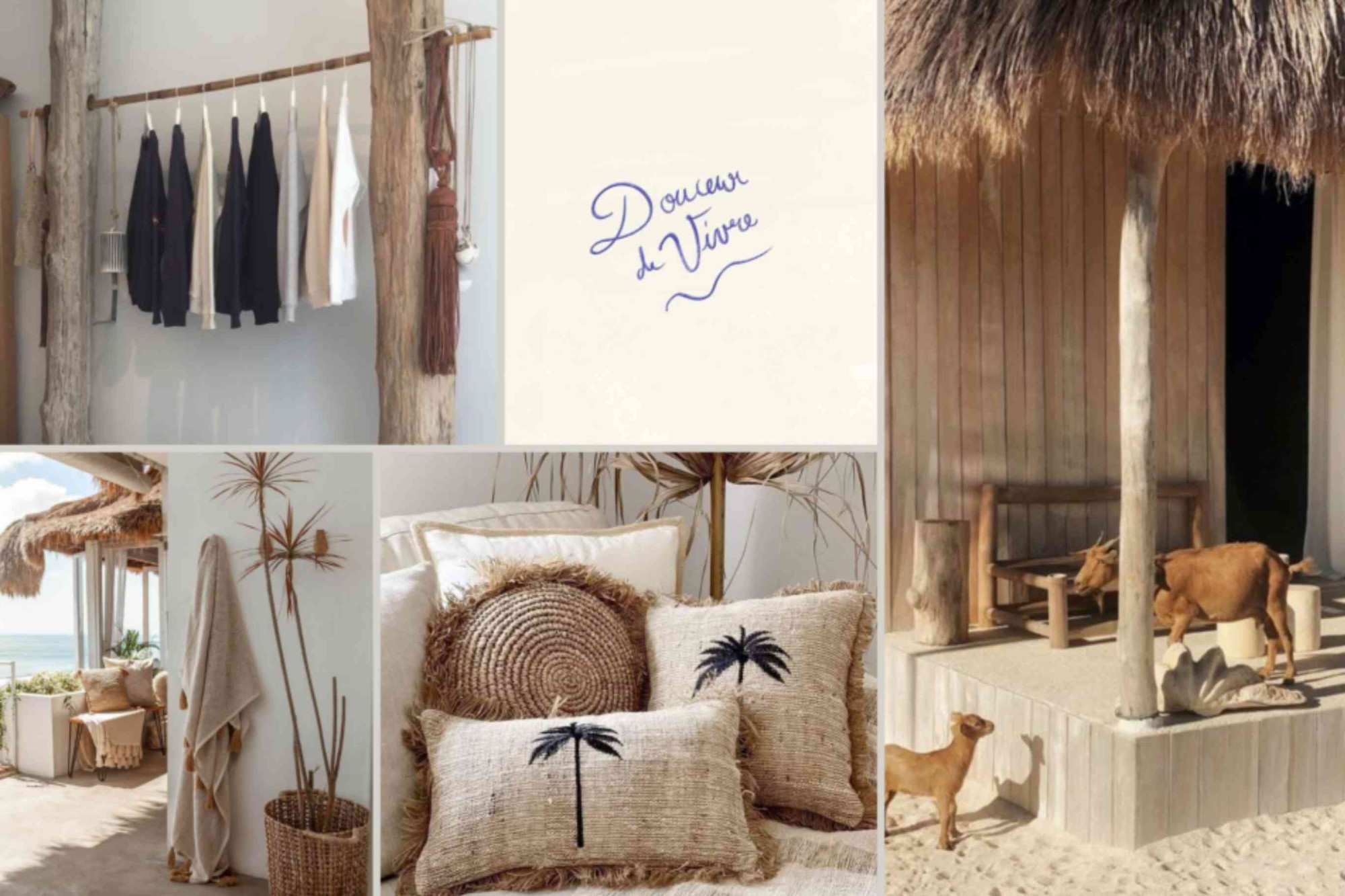
Stripes are simple in principle, but they become much more interesting when they are woven, embroidered or applied by hand. Small variations in width, colour and texture give the pattern a character that perfectly straight printed lines do not have.
On cushions and other textiles, stripes can provide structure without introducing a complicated motif. Ochre, rust, cream and brown bring warmth, while contrasting details such as tassels, piping or embroidery give each piece its own identity.
Mixing stripes with other patterns makes the composition less predictable. Geometric forms, animal-inspired motifs and smaller repeated patterns can sit together when they share part of the same colour palette.
The tactile quality matters just as much as the pattern itself. Raised embroidery, thick yarn and woven surfaces make the stripes visible through texture as well as colour, giving even a simple cushion more depth.
This is what makes stripes so adaptable within nomadic interiors. The basic pattern may be universal, but materials, techniques and colour combinations can give it a strong connection to a particular maker or place.
#StripedTextiles #TextileDesign #WovenTextiles #InteriorDesign #NomadesDuMonde
Nomades du Monde @nomadesdumonde
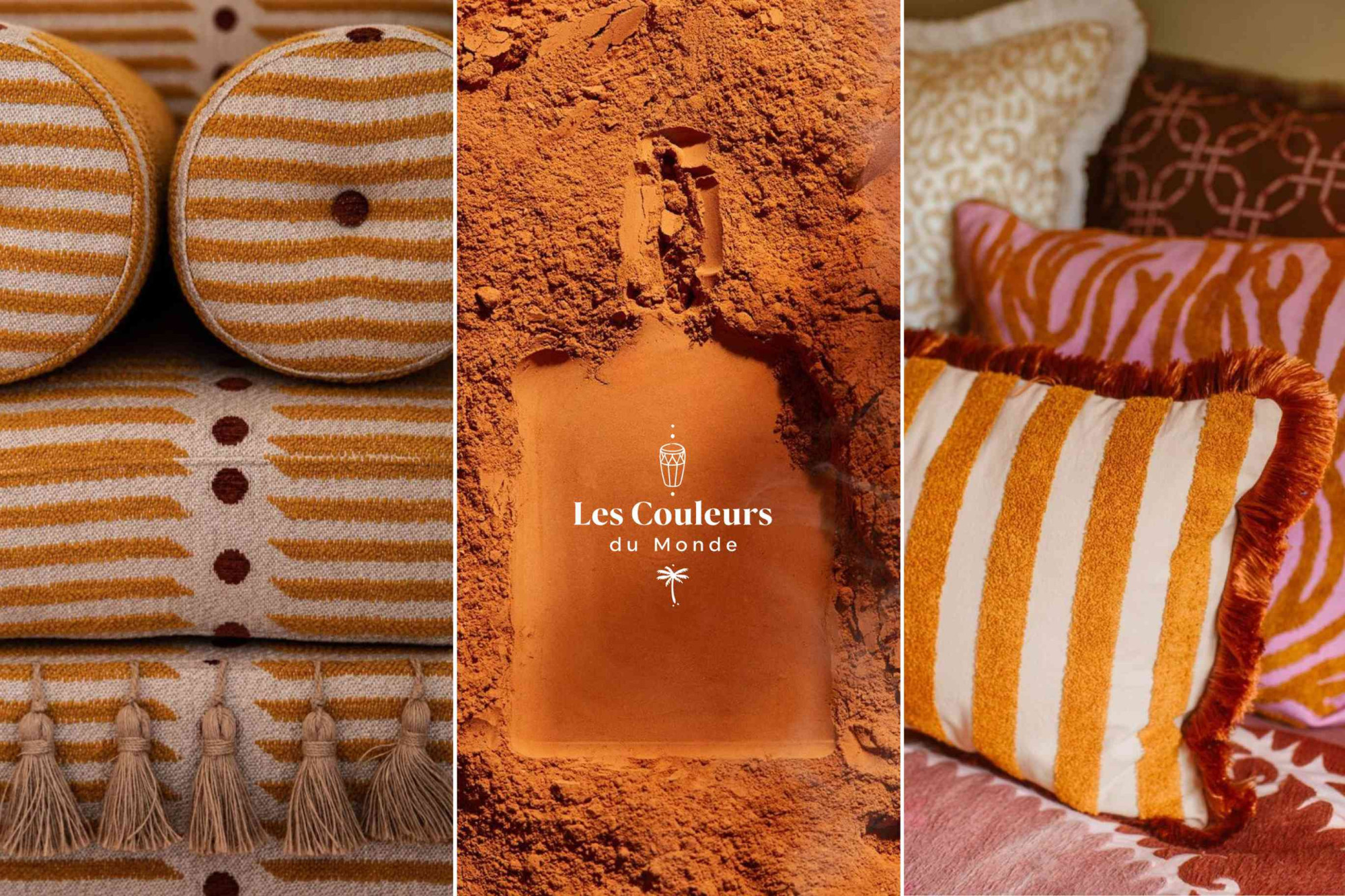
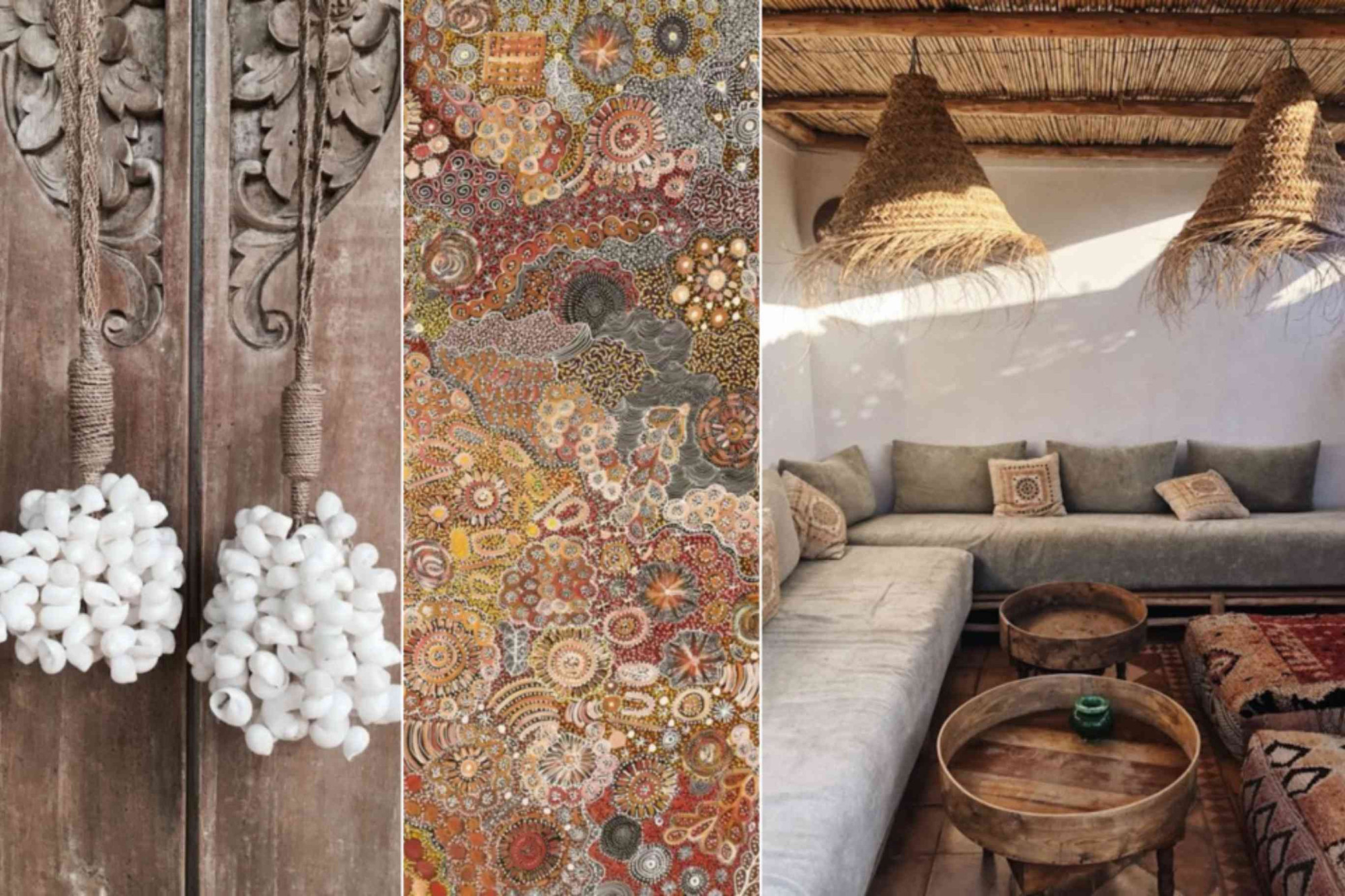
A single shell, bead or stitched detail is small. Repeated dozens or hundreds of times, it can become an entirely new surface. This principle appears across craft, textile design and decorative objects.
Shells grouped closely together create volume and texture. Beads and embroidery can build intricate patterns from tiny individual elements, while repeated fibres turn simple plant material into structured lighting and woven surfaces.
Repetition does not require perfect uniformity. Differences in size, shape and colour can make the finished piece more interesting, especially when natural materials are involved. The individual elements remain visible even when they form part of a larger composition.
This approach works at very different scales. It can appear in a small decorative object, an embroidered textile, a lampshade or a large piece of wall art. What connects them is the process: simple components gain impact through accumulation.
For interiors, these pieces provide detail without relying on elaborate forms. From a distance, the overall shape or pattern is visible. Up close, the individual materials and the work behind the object become apparent.
#CraftDesign #SurfaceDesign #TextileDesign #InteriorObjects #NomadesDuMonde
Nomades du Monde @nomadesdumonde
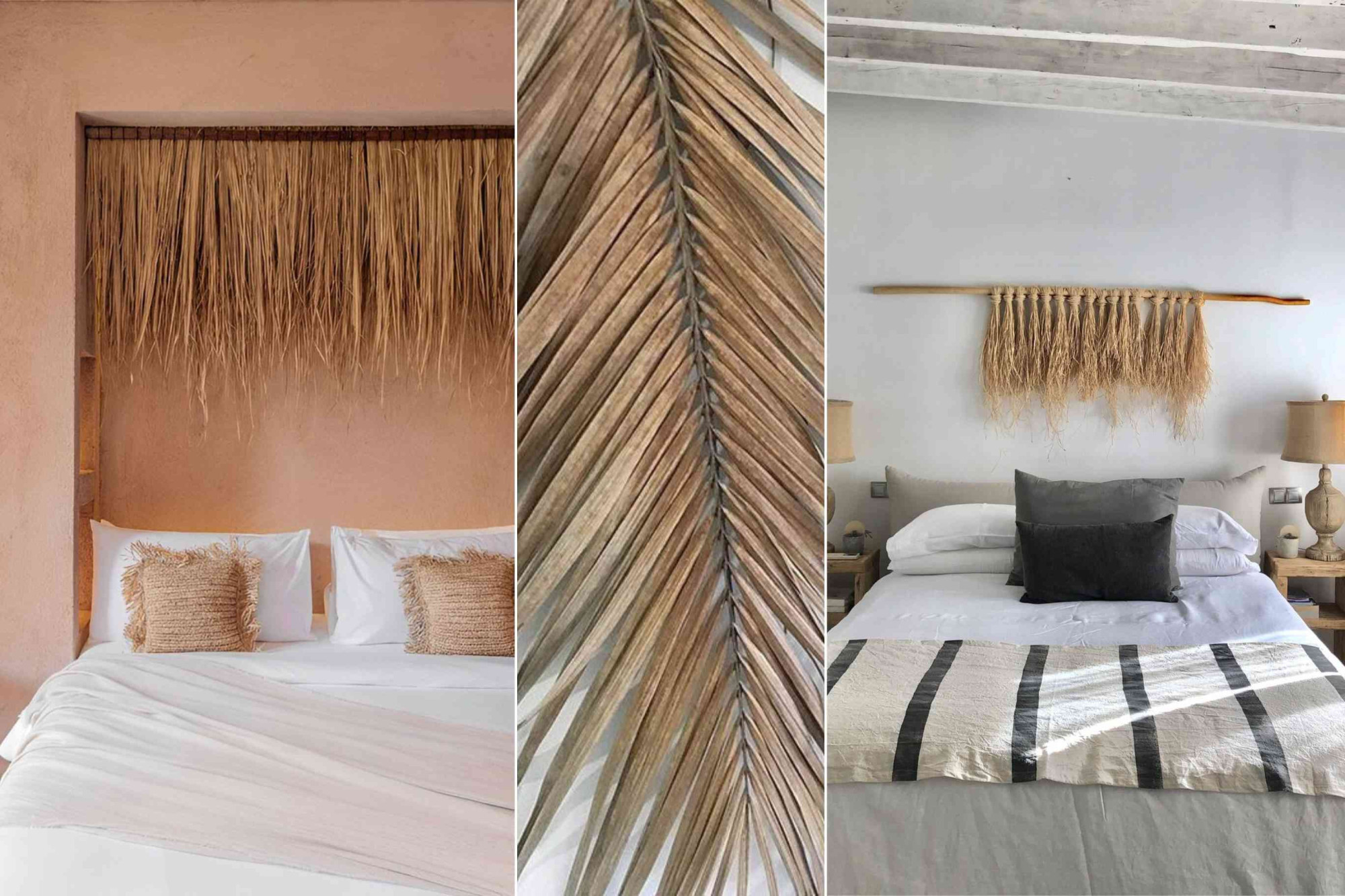
Palm leaves can become a design material long after their role on the tree has ended. Once dried, their strong linear structure can be used for wall pieces, headboards, screens and other decorative elements.
The shape of the leaf already contains a natural pattern. Parallel fibres spread from the central stem, creating lines that can be emphasised by arranging whole leaves side by side or separating the fibres into smaller sections.
In bedrooms, dried palm fibres can provide an alternative to a conventional headboard. A simple horizontal branch or timber frame is enough to create a large feature above the bed without introducing a heavy piece of furniture.
The material works especially well against limewashed, plastered or pale walls, where its irregular edges and warm natural colour remain visible. Combined with linen bedding and woven textiles, it adds texture while keeping the room relatively simple.
Palm leaves also connect an interior directly to its environment. In regions where palms grow locally, pruning and dried leaves can provide material for new objects instead of being discarded.
#PalmLeafDesign #NaturalMaterials #BedroomDesign #InteriorDetails #NomadesDuMonde
Nomades du Monde @nomadesdumonde
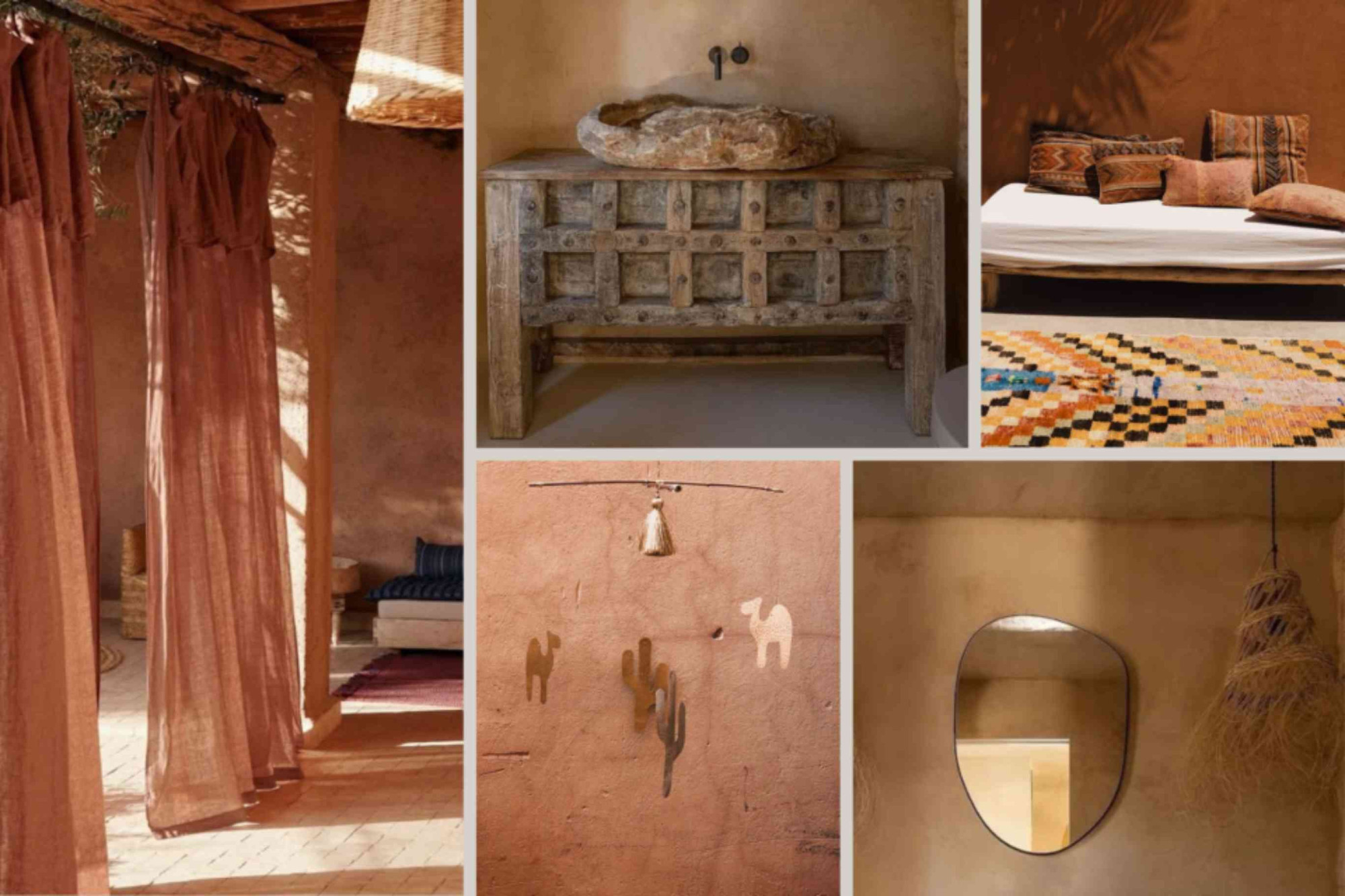
Earth tones do not have to result in an entirely beige interior. Clay, terracotta, rust, ochre and faded pink can bring colour into a space while remaining connected to materials found in the landscape.
Walls provide the largest opportunity to establish this palette. Limewash and mineral finishes create subtle variations in tone, while curtains, rugs and cushions can introduce stronger shades without competing with the architecture.
The most interesting combinations use several related colours instead of repeating one exact shade. Dusty pink curtains can sit beside terracotta walls, a multicoloured rug can introduce ochre and blue and darker rust textiles can provide contrast.
Timber, stone and aged furniture give these colours a natural foundation. Their uneven surfaces prevent the palette from feeling too polished and allow contemporary pieces to sit alongside older or handmade objects.
Earth tones therefore provide considerable freedom with colour. The palette can remain warm and cohesive while still including pattern, contrast and individual pieces with a stronger visual identity.
#EarthTones #ColourInInteriors #InteriorDesign #NaturalInteriors #NomadesDuMonde
Nomades du Monde @nomadesdumonde
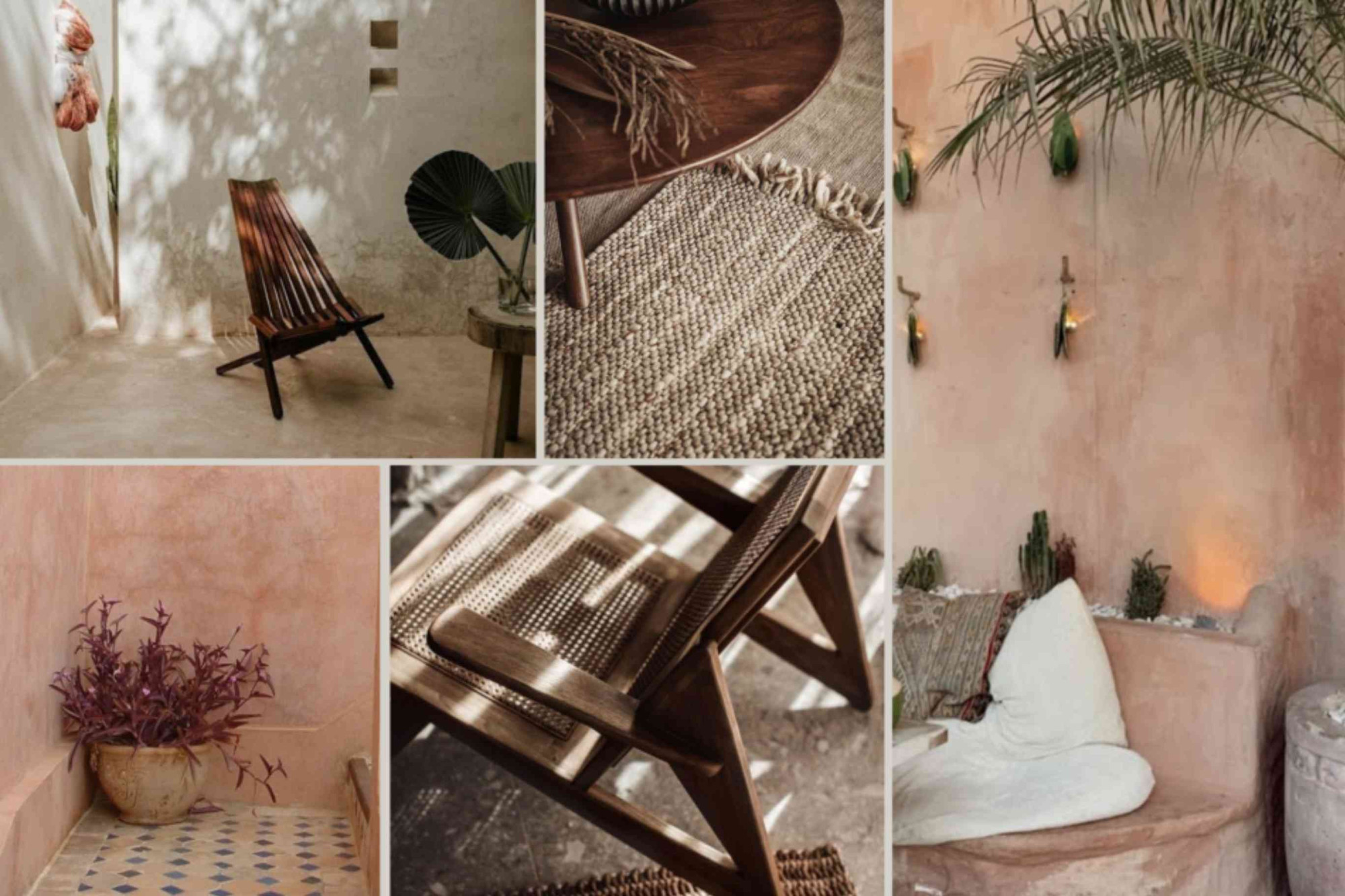
Furniture placed closer to the floor changes both the appearance of a room and the way the space is used. Low chairs, floor cushions, built-in benches and compact tables create a more informal type of living area than conventional sofas and dining furniture.
This approach appears in many different living traditions, especially where sitting, eating and resting take place close to the ground. Contemporary interiors can reinterpret the idea without reproducing a particular cultural style.
Low furniture also leaves more of the architecture visible. Walls feel taller, windows remain unobstructed and smaller rooms can appear more open because fewer objects interrupt the view across the space.
Comfort depends on combining the right elements. A low timber chair can be paired with a woven seat, rugs can soften hard floors and built-in benches can use loose cushions that are easy to rearrange.
The result is a room organised around how people sit and gather, with furniture taking up less visual space and the architecture playing a larger role.
#LowLevelLiving #InteriorDesign #FurnitureDesign #NomadicInteriors #NomadesDuMonde