The SUMMER Edition
From the Mediterranean to Mongolia, remarkable destinations, unique stays, local stories, design, culture and the inspiring people behind them. Contact: info@lescouleursdumonde.com
Les Couleurs de la Côte D'Azur @rivieradumonde
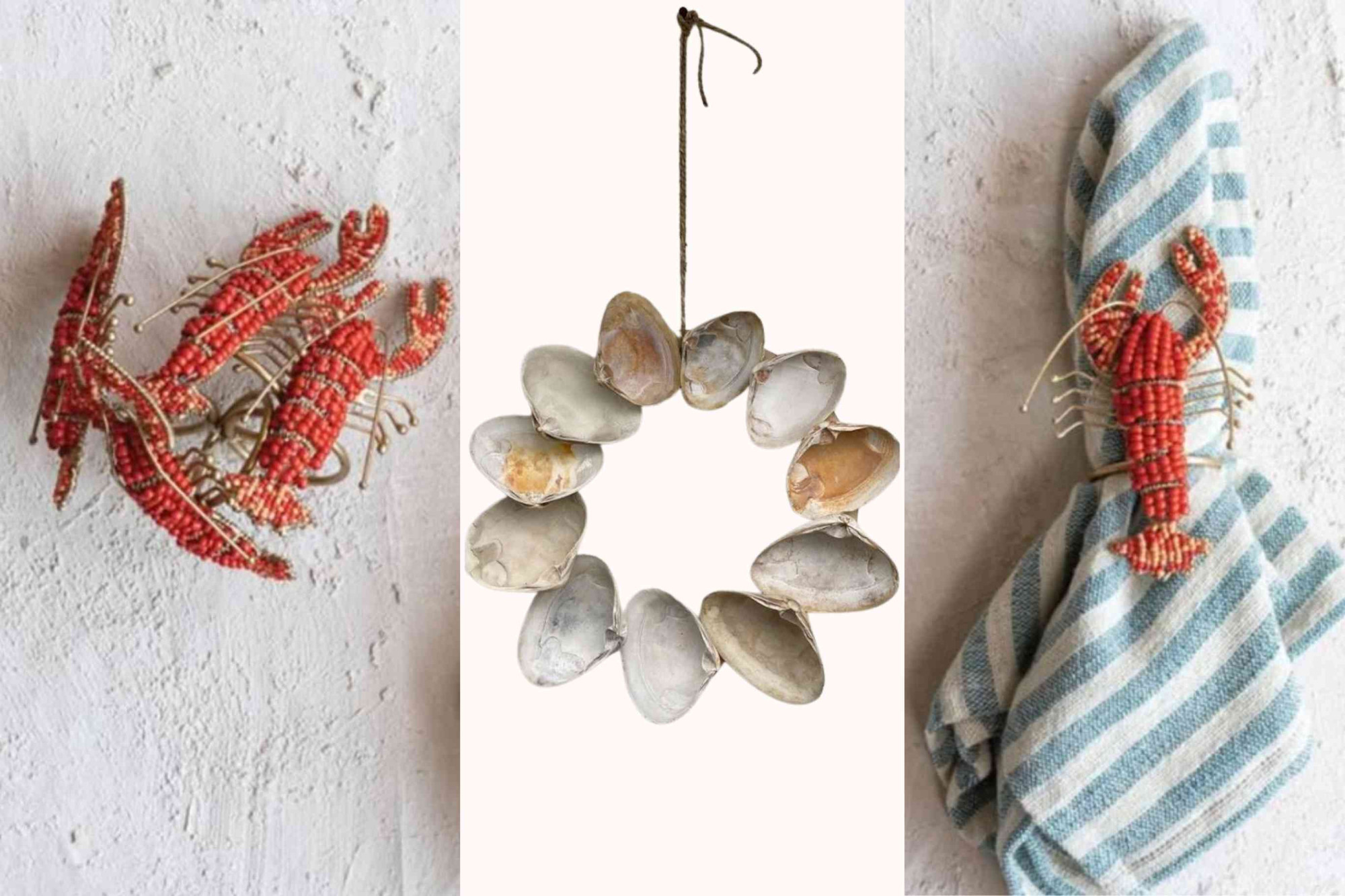
Coastal table styling does not need anchors, ropes or an entire blue-and-white theme. A few small details inspired by the sea can be enough to give a table a coastal character.
Napkin rings are an easy place to start. Shells, coral-inspired shapes or small sea creatures introduce the theme without taking over the table. Combined with striped or plain linen, they can create a clear reference to the coast while remaining practical.
Natural shells can also be used as individual objects. Larger shells can hold salt or small condiments, while smaller ones can be grouped around candles or placed beside each setting.
Colour can be introduced selectively. Coral red works particularly well as a small accent against white, sand and pale blue. Because the colour is strong, repeating it in just one or two details is often enough.
Table linen does not need to match perfectly either. A striped napkin can sit beside plain linen, simple ceramics and natural materials without requiring a complete coordinated set.
These details are also easy to change. Shells, napkin rings and textiles can be added for a summer lunch and removed afterwards, leaving the basic tableware unchanged.
Coastal style works best when the reference to the sea remains simple. A few recognisable objects can say more than decorating the entire table around a theme.
#CoastalTable #TableSetting #CoastalLiving #TableDecor #RivieraDuMonde
Les Couleurs de la Côte D'Azur @rivieradumonde
Giving Old Objects a New Purpose
Not every object in a home needs to be used for its original purpose. Old furniture, containers and everyday objects can take on completely different functions when they are brought into an interior.
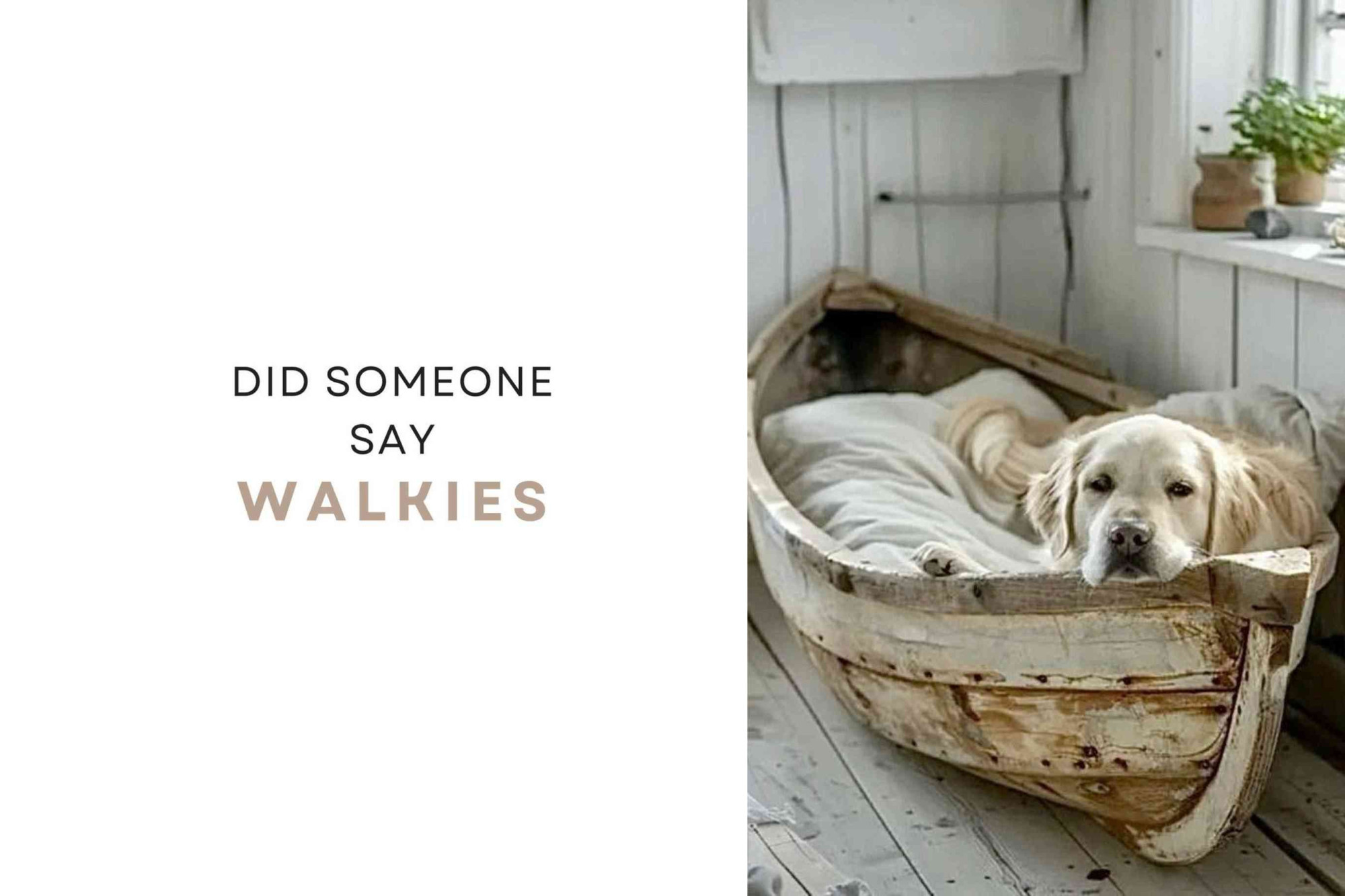
A small wooden boat, for example, can become a dog bed. An old workbench can serve as a kitchen island, wooden crates can provide storage and vintage cabinets can be adapted for bathrooms or bedrooms.
What makes these pieces interesting is often their construction. Solid timber, visible joints, worn paint and signs of previous use give them characteristics that are difficult to reproduce with new furniture.
Repurposing also allows unusual dimensions and shapes to become useful. An object that no longer works in its original context may fit perfectly into a particular corner of a home or solve a practical need in an unexpected way.
The key is functionality. A repurposed piece still needs to work for its new purpose. A dog bed needs a comfortable base, a converted cabinet needs practical storage and an old table needs to remain stable enough for everyday use.
Small adaptations are often sufficient. Adding a cushion, changing the height, fitting shelves or reinforcing part of the construction can make an existing object suitable for a new role without removing the details that made it worth keeping.
Reusing objects in this way is not simply about decorating with vintage pieces. It is about looking at what already exists and considering what else it could become.
#RepurposedDesign #VintageInteriors #InteriorIdeas #HomeDesign #RivieraDuMonde
Les Couleurs de la Côte D'Azur @rivieradumonde
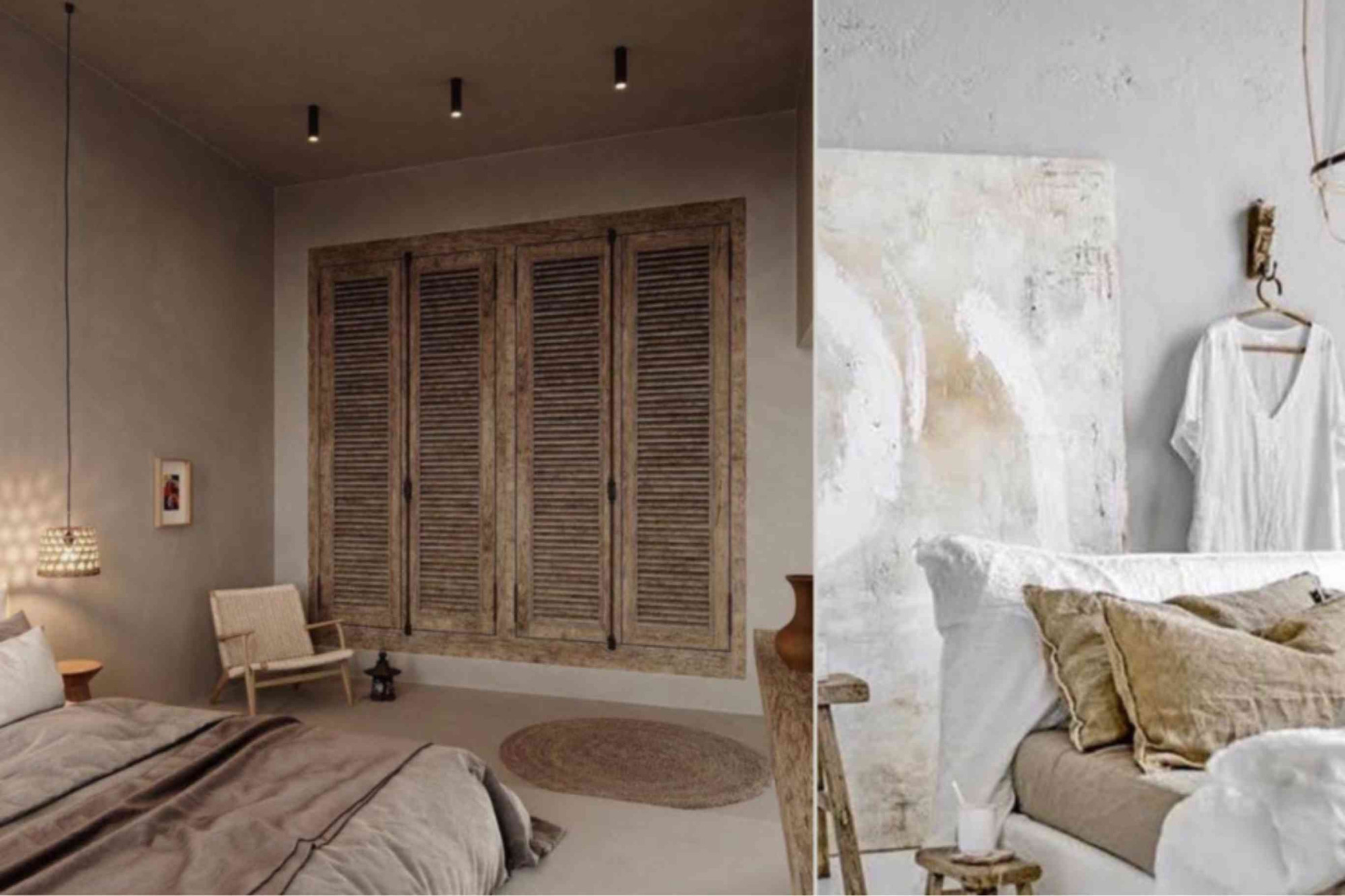
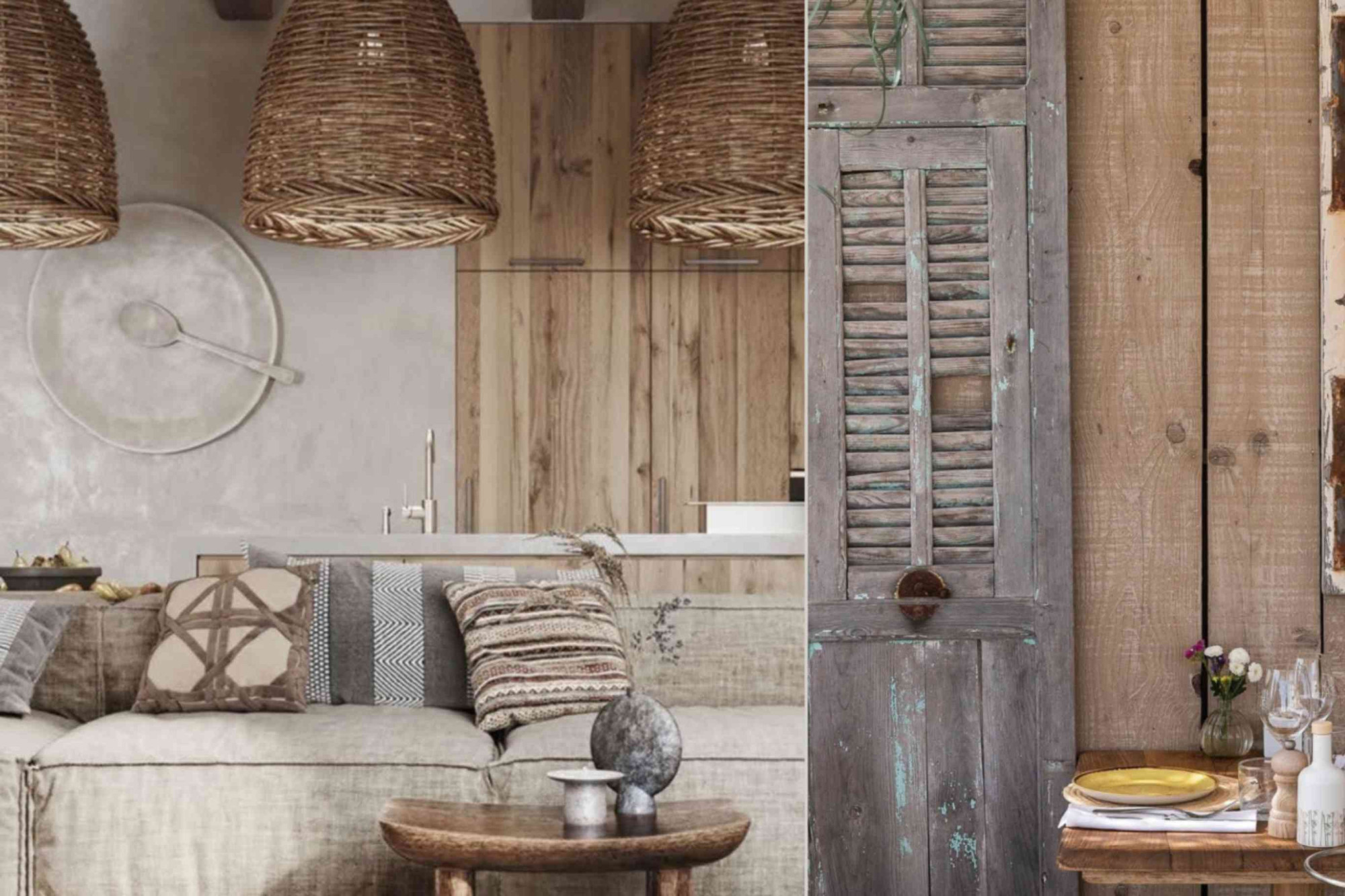
Shutters are usually associated with the outside of a house, but they can also become part of the interior. Old wooden shutters can be reused as cupboard doors, window coverings, room dividers or decorative architectural elements.
Their slatted construction is particularly useful. Unlike a solid door, shutters allow some air and light to pass through while still concealing what sits behind them. This makes them suitable for wardrobes, linen cupboards and storage in warm climates where ventilation can be important.
Reclaimed shutters also introduce texture without requiring additional decoration. Weathered timber, faded paint and irregular surfaces create contrast against plastered walls and simple floors. In a restrained bedroom or bathroom, one large set of shutters can provide enough visual detail on its own.
They can also solve practical problems in existing interiors. A built-in cupboard with unusual dimensions may not suit standard doors, while an old pair of shutters can sometimes be adapted to fit. Tall shutters can conceal open storage or even replace a conventional wardrobe front.
The condition of the wood matters when shutters are reused. Hinges may need replacing, loose slats should be repaired and surfaces used inside should be cleaned and treated appropriately. The aim does not necessarily have to be a perfect restoration. Signs of age can remain visible while the piece itself becomes functional again.
Using shutters indoors is therefore more than a Mediterranean styling detail. It is a practical way of giving an existing architectural element a second function within the home.
#WoodenShutters #ReclaimedDesign #InteriorDetails #MediterraneanInteriors #RivieraDuMonde
Les Couleurs de la Côte D'Azur @rivieradumonde
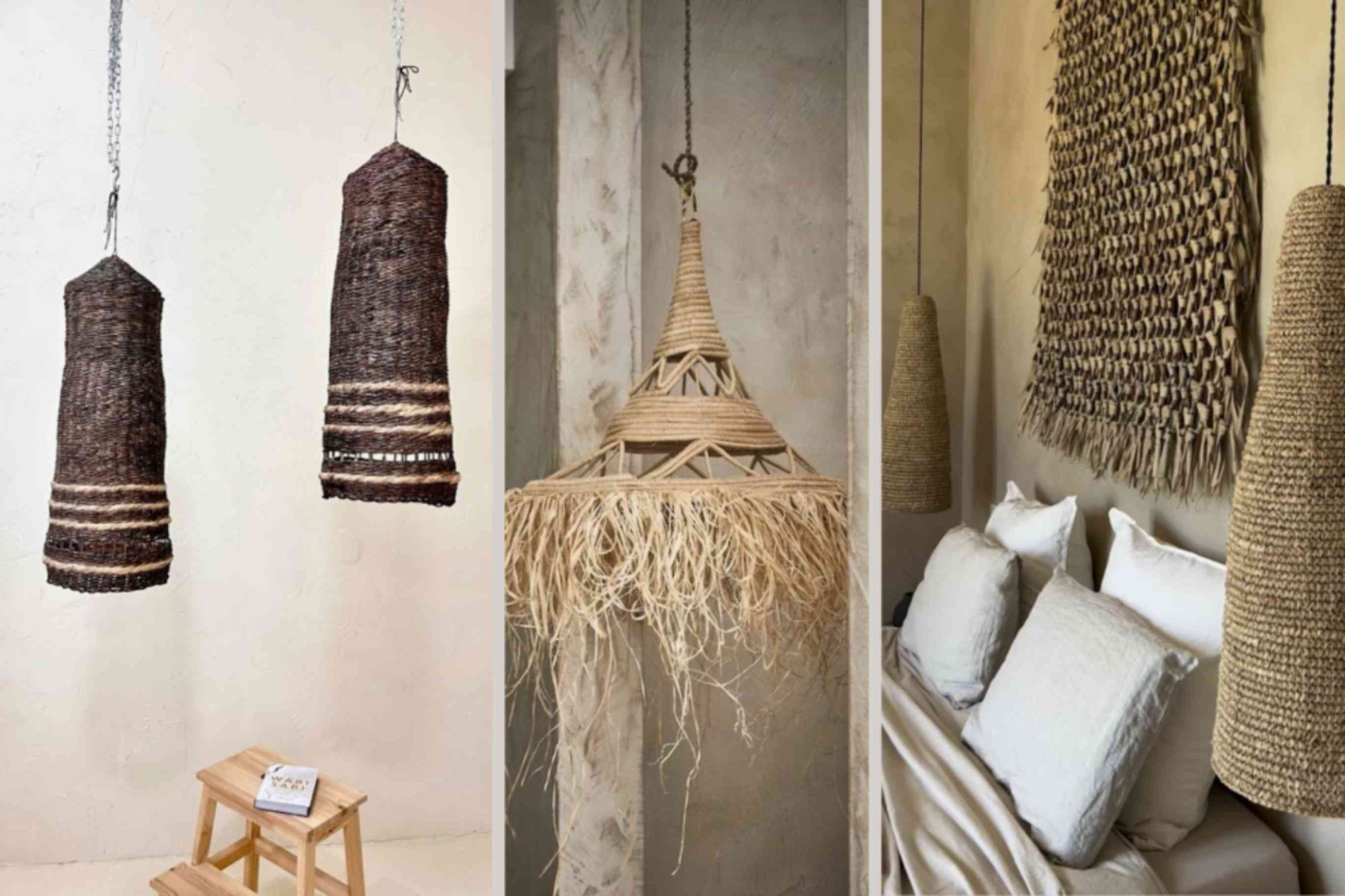
A lampshade does more than cover a light source. When it is made from woven natural fibres, its material and construction influence both the appearance of the object and the way light enters a room.
Rattan, raffia, seagrass, palm fibre and other plant-based materials can be woven tightly or loosely depending on the effect required. A dense weave directs more light downwards, while an open structure allows light to escape through the sides and creates patterns on nearby walls.
The technique also determines the shape. Some shades are built around a frame, while others rely largely on the strength of the woven fibres themselves. This makes it possible to create elongated pendants, wide ceiling shades and irregular forms that would be difficult to achieve with rigid materials.
Because much of the visual interest comes from the weave, these lights work particularly well in interiors with relatively simple finishes. Plaster walls, timber, stone and neutral textiles allow the structure of the fibres to remain visible without requiring additional decorative elements.
Scale is another consideration. A single oversized woven pendant can define a dining table or seating area, while several smaller lights can create rhythm along a corridor or above a kitchen counter.
Natural-fibre lighting is often associated with coastal or tropical interiors, but the material does not need to determine the entire style of a room. Combined with contemporary furniture and restrained colours, woven lighting can function simply as a practical source of light with a strong material presence.
#WovenLighting #NaturalMaterials #LightingDesign #InteriorDesign #RivieraDuMonde
Les Couleurs de la Côte D'Azur @rivieradumonde
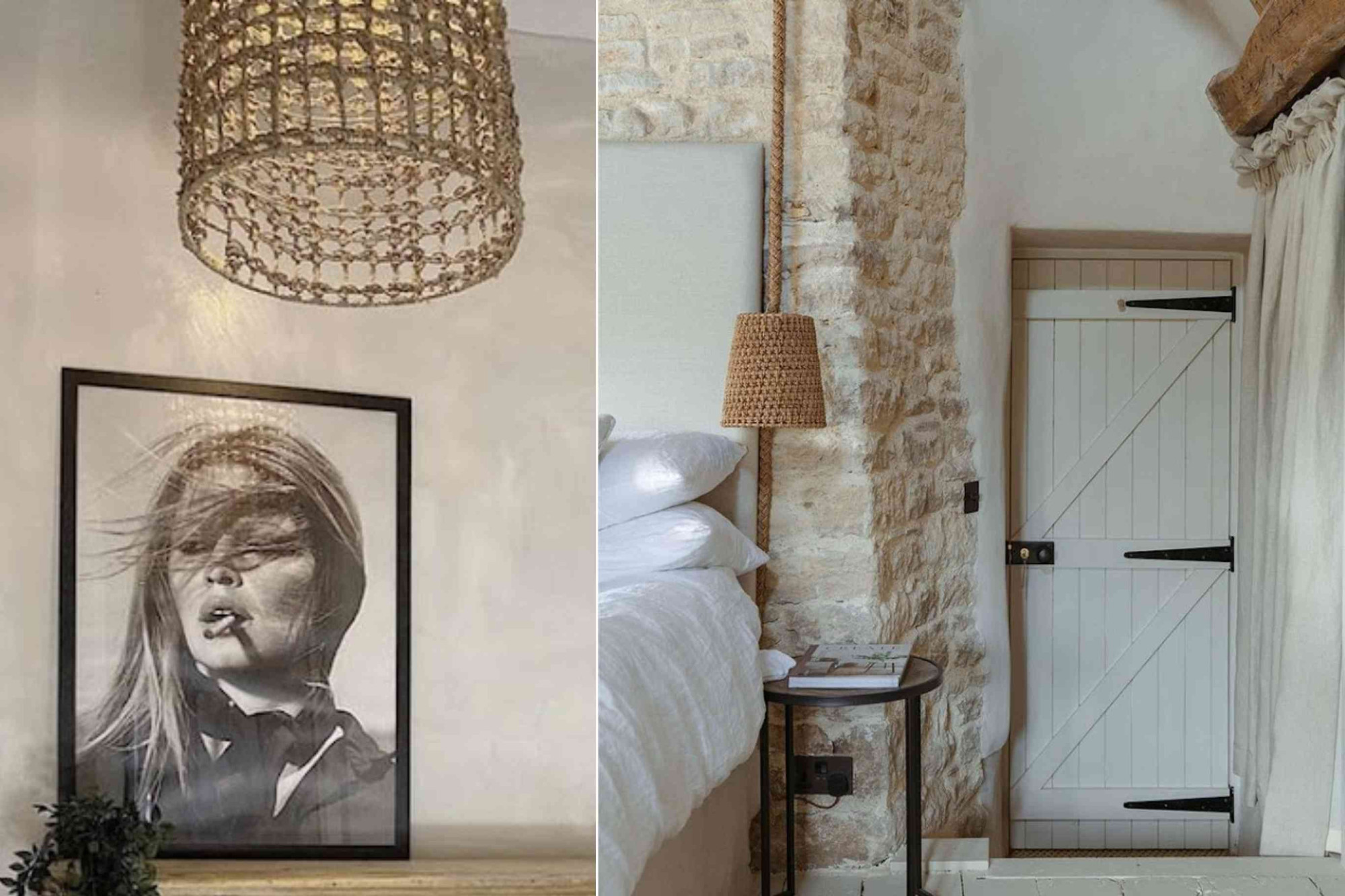
An exposed stone wall can reveal something that a finished surface often hides: how a building was constructed. In older houses, removing layers of plaster can uncover masonry that has been part of the structure for decades or even centuries.
Keeping this stone visible is not simply a decorative decision. Original walls can show local building traditions through the type of stone, the size of the blocks and the way they were laid. Limestone in Provence, sandstone in other regions and volcanic stone on certain islands all connect an interior to the materials available around it.
Stone also behaves differently from a conventional painted wall. Its uneven surface catches daylight, creates natural variations in colour and gives depth to otherwise simple rooms. For this reason, exposing one wall can often be more effective than leaving every stone surface visible.
The surrounding materials influence how the stone is perceived. White walls and pale textiles create contrast, while timber doors, woven lighting and simple furniture complement its natural texture without competing with it.
Restoration requires some restraint. Old mortar may need repair and unstable sections should be addressed, but excessive cleaning or perfectly uniform pointing can remove much of the character that made the original masonry interesting.
There is also no requirement for an old house to look entirely traditional. Existing stone can sit comfortably beside contemporary lighting, modern furniture and simple architectural details.
Preserving an original stone wall allows part of the building's construction to remain visible while the rest of the interior continues to adapt to contemporary living.
#StoneWalls #NaturalMaterials #InteriorArchitecture #RenovationDesign #RivieraDuMonde
Les Couleurs de la Côte D'Azur @rivieradumonde
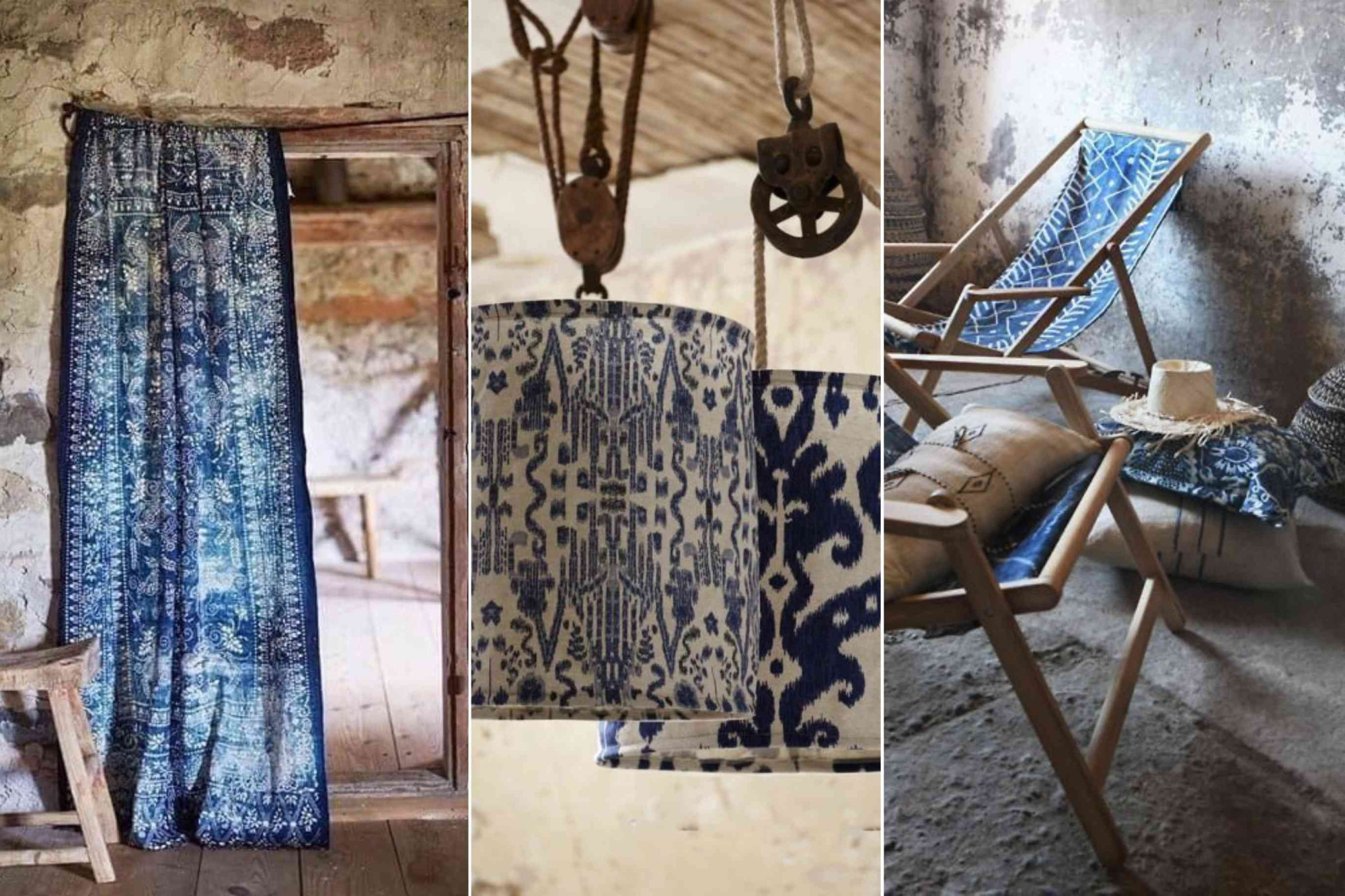
Blue and white textiles can bring colour into a room without making the interior feel busy. Indigo works particularly well because the deeper blue tones combine easily with the natural materials often already present in a home.
A large piece of fabric can be used as a curtain instead of a conventional window covering. The same textile can return on a cushion, a folding chair or a simple upholstered seat. This creates a connection between different parts of the room without everything needing to match.
Indigo also works well as a single accent. In a neutral bedroom, one patterned bedcover may be enough. In a living room, a few cushions can introduce colour between linen, wood and stone. A beautiful piece of fabric can even be hung directly on the wall.
The patterns do not need to be identical. Combining different blue and white designs can make an interior feel collected rather than completely coordinated. Keeping the rest of the palette relatively simple prevents the patterns from becoming overwhelming.
Older or smaller pieces of fabric can also be useful. Instead of storing them away because there is not enough material for curtains or upholstery, they can become cushion covers, seat fabric or a small wall piece.
Indigo is therefore an easy way to introduce stronger colour into interiors that are otherwise based around white, beige, wood and other natural tones.
#IndigoInteriors #InteriorTextiles #BlueInteriors #HomeDesign #RivieraDuMonde
Les Couleurs de la Côte D'Azur @rivieradumonde
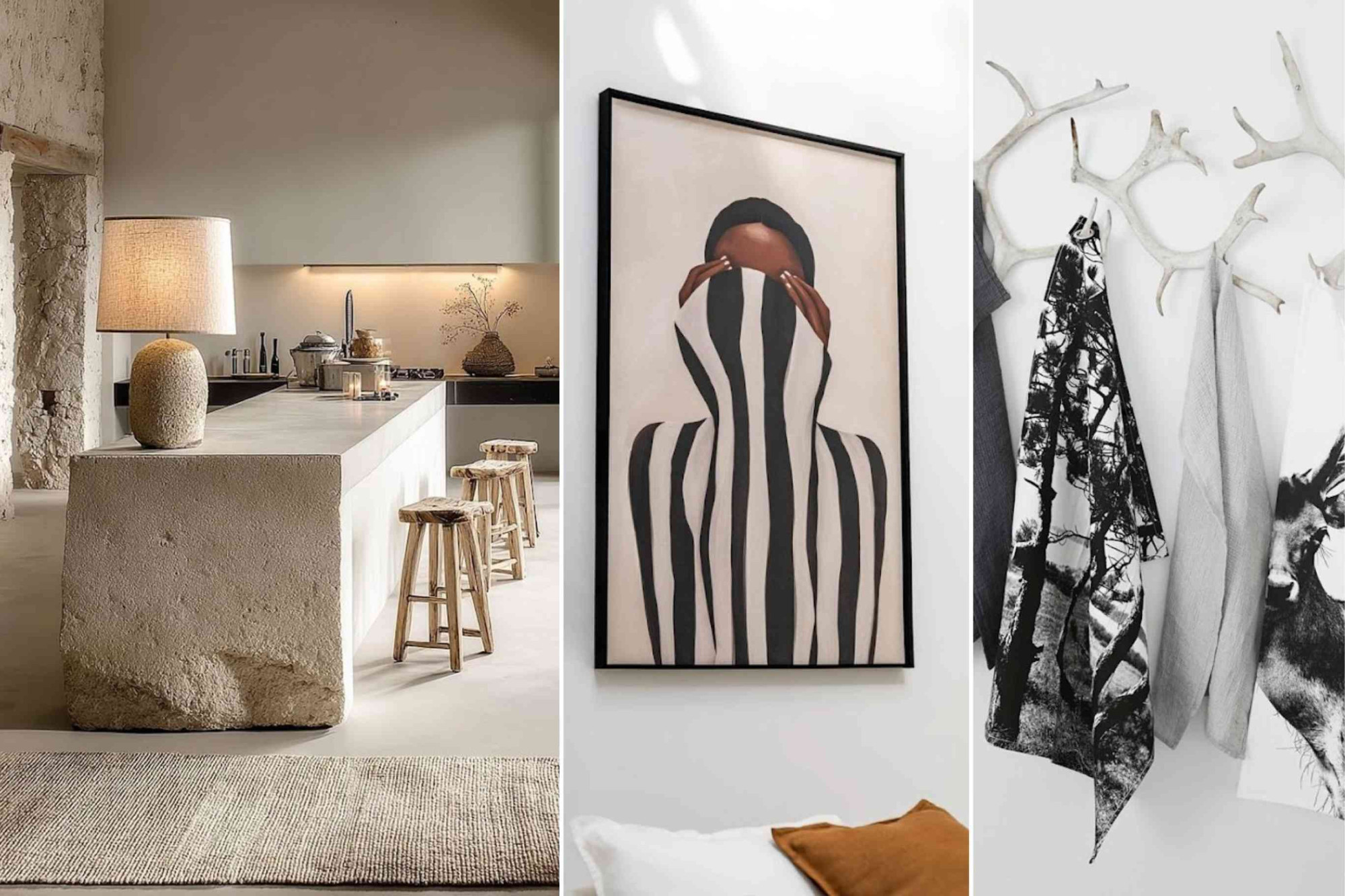
Art can change a room without changing anything else in it. A large work above a bed, a smaller piece in a kitchen or a photograph against a simple wall can become one of the strongest elements in an interior.
The size of the work is often more important than filling every available wall. One larger piece can give a room a clearer focus than several smaller objects competing for attention.
Where the artwork is placed also matters. It does not always need to hang centrally above a sofa or piece of furniture. Art can work beside a doorway, above a kitchen counter or on a narrow wall that might otherwise remain empty.
Colour does not have to match the interior exactly. A black and white photograph can work in a warm neutral room, while a painting can introduce colours that appear nowhere else in the space. The connection can come through mood, proportion or simply the contrast it creates.
Simple surroundings often give art more presence. Plaster walls, natural stone, timber and neutral textiles provide a quiet background where a photograph, painting or textile work can stand on its own.
This also makes art an interesting starting point when furnishing a room. Instead of choosing a work at the very end to fill an empty wall, the artwork can influence the colours, objects and materials placed around it.
#ArtAtHome #InteriorArt #InteriorDesign #HomeStyling #RivieraDuMonde
Les Couleurs de la Côte D'Azur @rivieradumonde
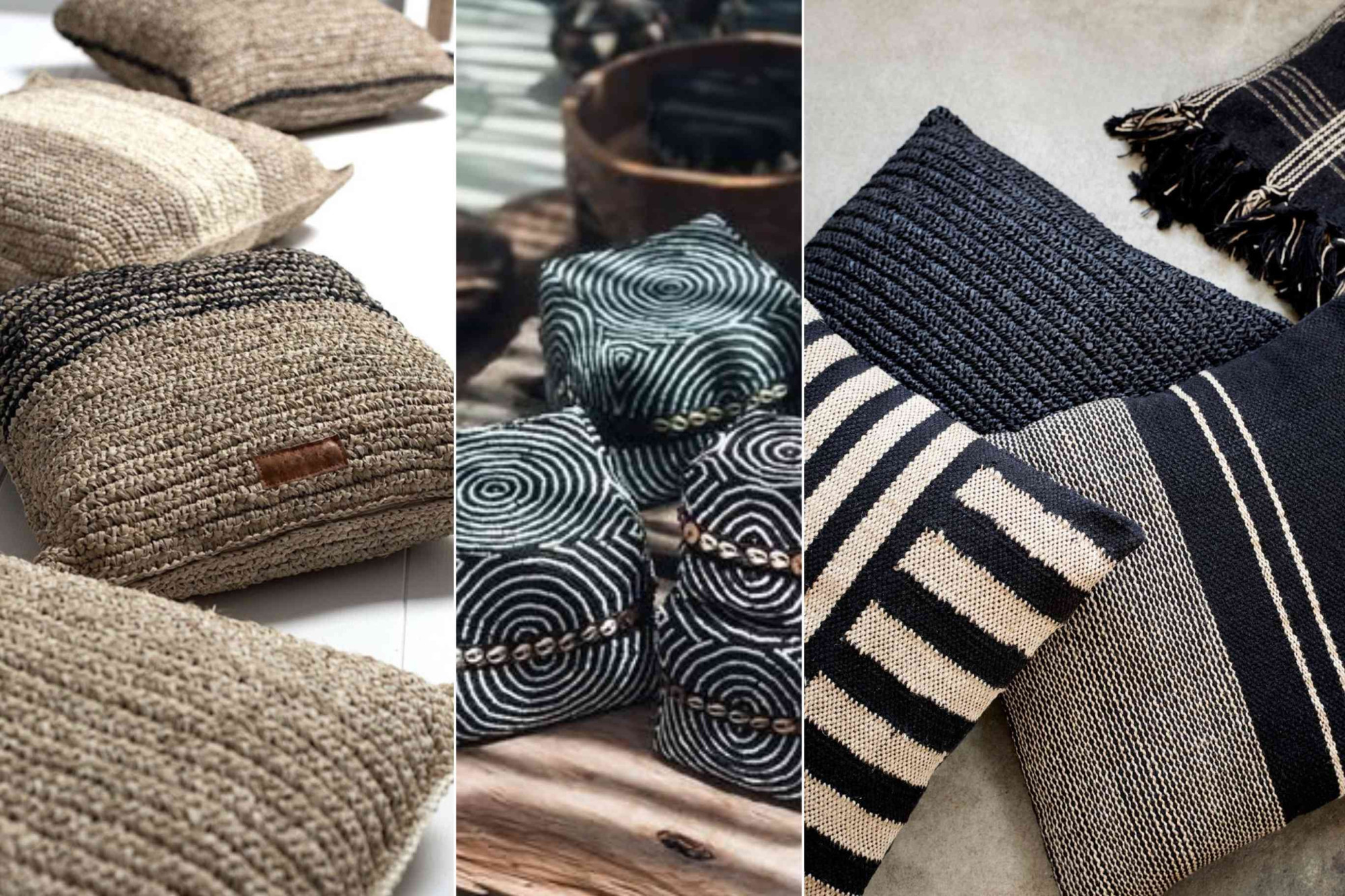
Cushions do not need to come from the same collection to work together. Combining different textures, patterns and sizes can make a sofa or bed look more considered than using several identical cushions.
A simple starting point is to choose one element that connects them. This can be a colour, as in a combination of black, cream and grey, or a material that appears several times. The patterns themselves can then be different.
Stripes work well beside smaller repetitive patterns because the designs do not compete in the same way. A plain knitted or woven cushion can be added between them to give the stronger patterns some space.
Texture is equally useful. A chunky weave beside a smoother textile creates variation even when both cushions have almost the same colour. This is particularly effective in neutral interiors where there are fewer strong colours to create contrast.
Different sizes also make a group feel less uniform. Larger cushions can form the base, with one or two smaller pieces in front. There is no need to fill an entire sofa. A few well-chosen cushions can be enough.
The same principle can be used throughout a room. A striped cushion on a chair can relate to a patterned cushion on the sofa without repeating it exactly.
Instead of looking for a matching set, think of cushions as individual textile pieces that share just enough colour, texture or pattern to belong together.
#CushionStyling #InteriorTextiles #TextileDesign #InteriorIdeas #RivieraDuMonde
Les Couleurs de la Côte D'Azur @rivieradumonde
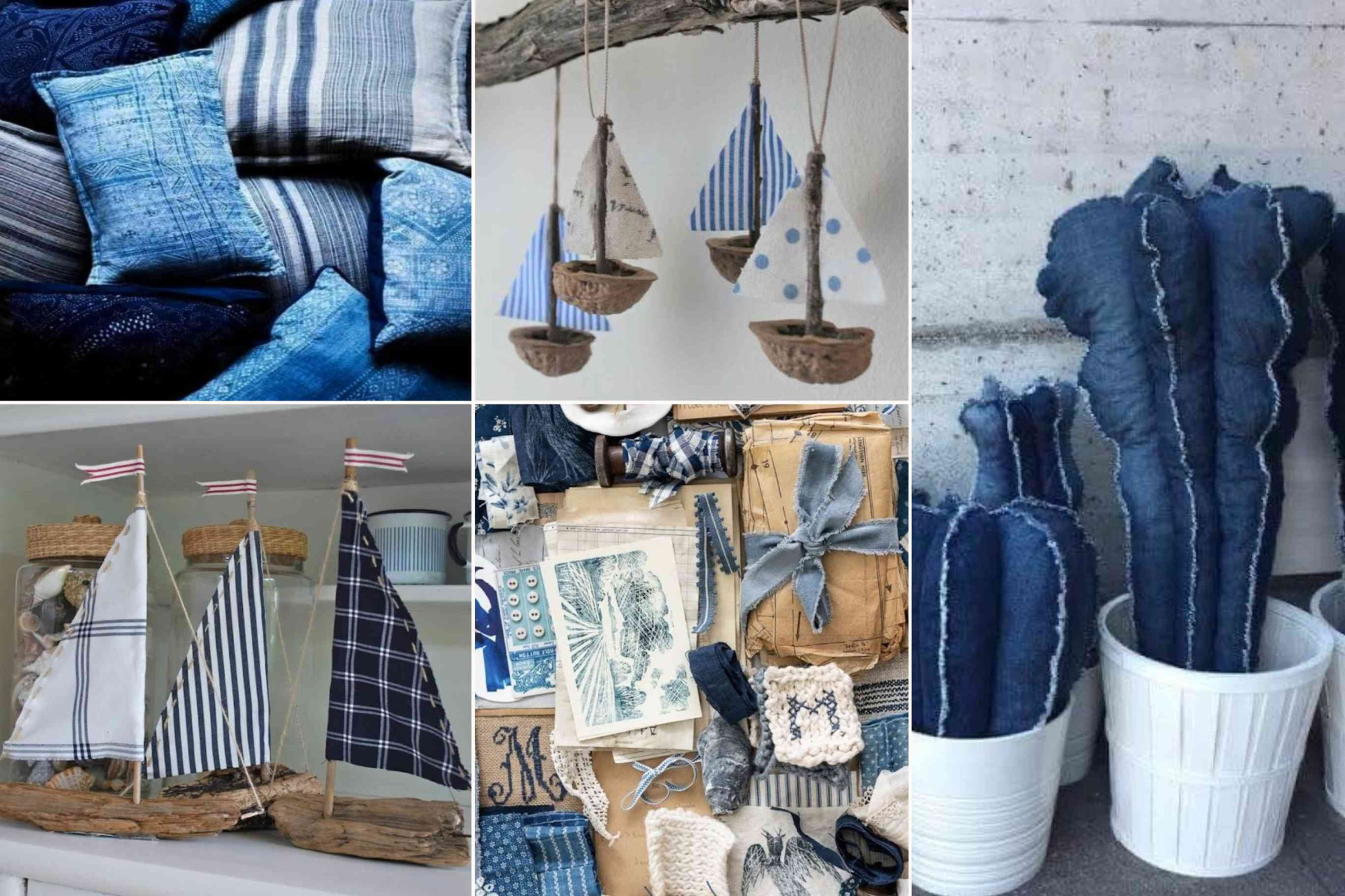
Small pieces of fabric are often too useful to throw away. Even when there is not enough material left for a cushion or larger project, scraps can still be used for small objects around the home.
One of the easiest options is to cover an existing object. A small box can be wrapped in fabric, a plain notebook can receive a textile cover and leftover material can be used around storage containers or small decorative pieces.
Strips of fabric are useful too. They can replace ribbon around a gift, be tied around napkins or used to hang lightweight decorations. Frayed edges do not always need to be hidden, particularly with linen and cotton where they can become part of the finish.
Small sewn shapes are another possibility. Boats, stars, trees or simple hanging decorations require very little fabric and allow different patterns to be combined within the same project.
For slightly larger remnants, making a small cushion cover, seat pad or fabric basket can use pieces that would otherwise remain stored in a drawer.
Keeping scraps grouped by colour can make them easier to reuse. Several different blue fabrics, for example, can work together even when the patterns and textures are not identical.
It is a simple way to use more of a textile once the main project is finished and to make small objects for the home from material already available.
#FabricScraps #DIYHomeDecor #TextileIdeas #CreativeReuse #RivieraDuMonde
Les Couleurs de la Côte D'Azur @rivieradumonde
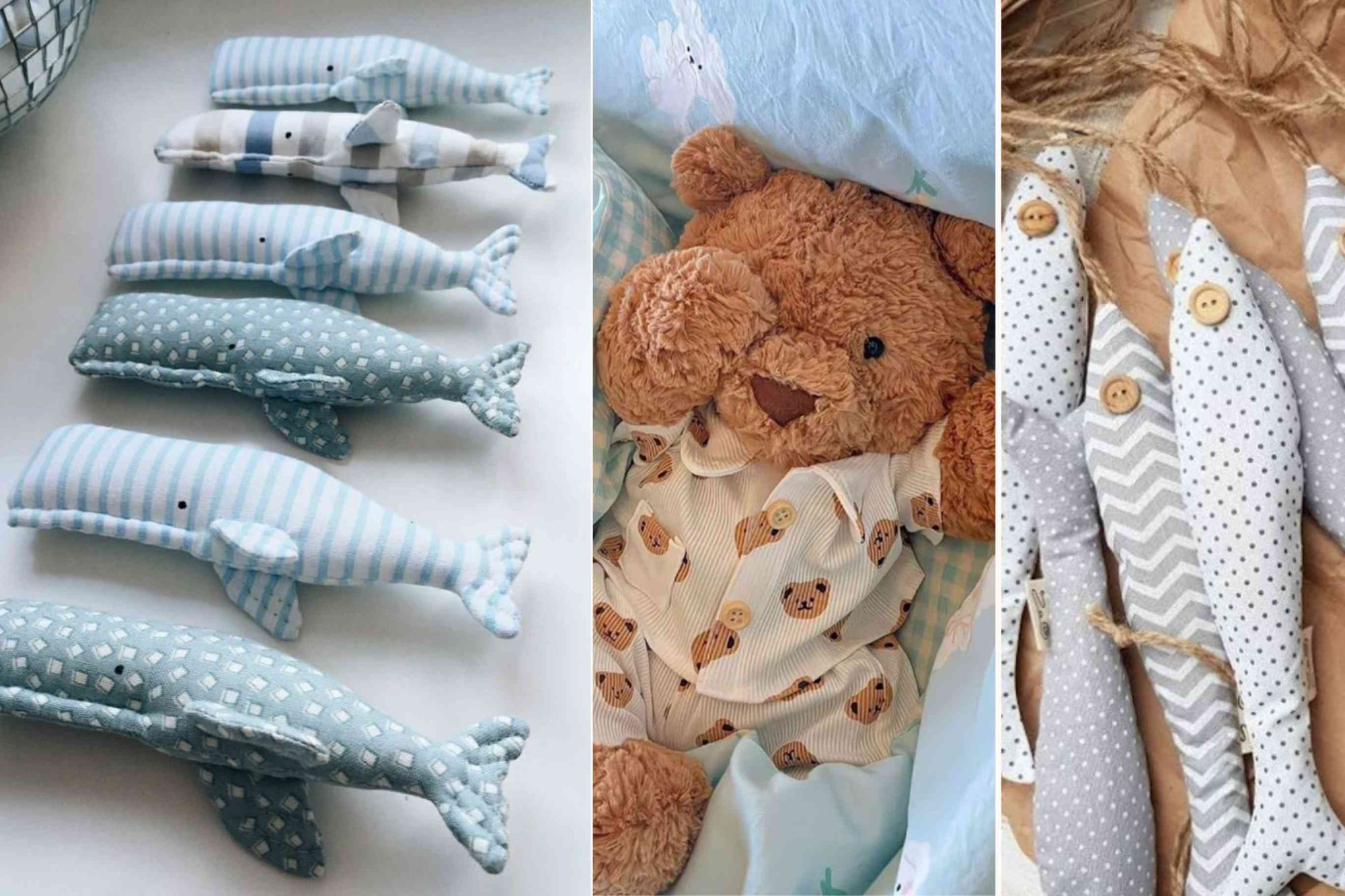
Small fabric toys can be made with surprisingly little material. Simple shapes such as fish, whales, stars or clouds are particularly suitable because they do not require complicated patterns or a large amount of fabric.
Cotton and linen remnants work well for this type of project. Stripes, dots and small prints can be mixed, so there is no need to find several pieces of exactly the same fabric.
Start with a simple shape drawn on paper. Cut two matching pieces of fabric, place them together and sew around the edge, leaving a small opening. After adding the filling, the opening can be closed by hand.
Small details can give each piece its own character. A button can become an eye, a contrasting fabric can be used for fins and a few stitches can create a mouth. The design does not need many additions to be recognisable.
The finished pieces can be placed on a shelf or bed, collected in a basket or used as decorative objects around the room. Several versions of the same shape in different fabrics can also make a simple set.
It is an accessible project for using fabrics already available at home while creating something specifically for a child’s room.
#FabricToys #KidsRoomIdeas #DIYHome #SewingProjects #RivieraDuMonde
Les Couleurs de la Côte D'Azur @rivieradumonde
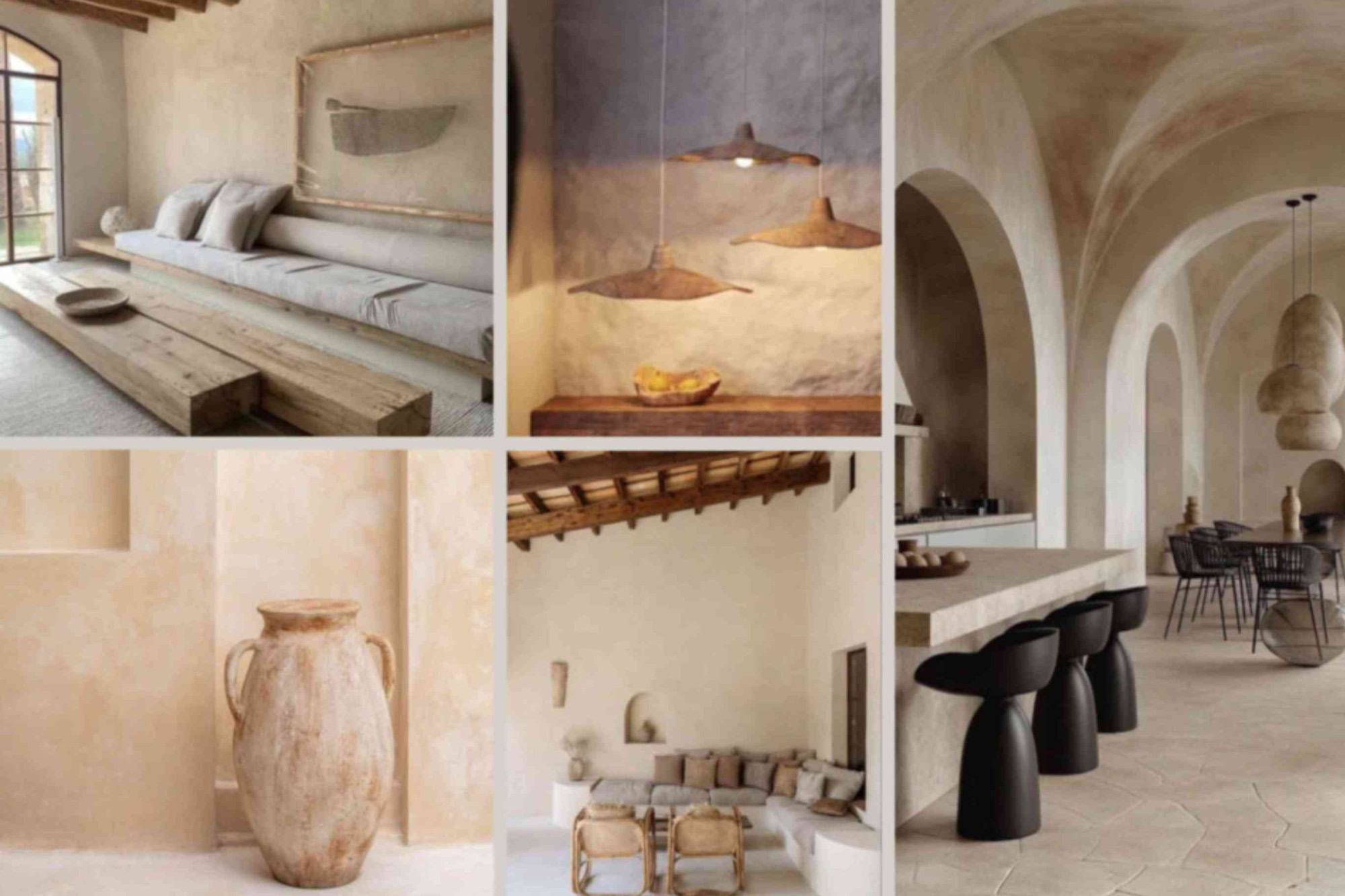
Not every piece of furniture needs to be a separate object. Benches, sofas, shelving and even dining areas can be incorporated directly into the structure of a room.
A built-in sofa is a good example. Instead of placing a conventional sofa against the wall, a low base can follow the dimensions of the space and be finished with a mattress or loose cushions. In smaller rooms, this can make better use of the available width and eliminate unused gaps around furniture.
The same idea works for seating around a dining table, along a window or in a covered outdoor area. A continuous bench can accommodate several people without requiring a row of individual chairs.
Built-in elements can also connect different functions. A kitchen counter can continue into a dining area, a low wall can become seating and a platform can provide both a place to sit and storage underneath.
Because these pieces are part of the room, the choice of finish becomes important. Using the same plaster, stone or timber as the surrounding architecture makes the furniture feel integrated rather than added afterwards.
Comfort can then come from the elements placed on top. Cushions, mattresses and textiles soften a solid base and can easily be replaced when colours or fabrics change.
Built-in furniture is particularly useful when a room has unusual dimensions or when fewer individual pieces are preferred. Instead of furnishing every part of the space, the architecture itself can provide some of what the room needs.
#BuiltInFurniture #InteriorDesign #BuiltInSeating #InteriorArchitecture #RivieraDuMonde
Les Couleurs de la Côte D'Azur @rivieradumonde
A neutral interior does not mean using the same shade everywhere. Combining several whites, creams, beiges, greys and muted darker tones can give a room more depth while keeping the overall palette calm.
Start with the largest surfaces. Walls, floors and large pieces of furniture usually determine the base colour of the room. These do not need to match exactly. A warm stone wall can sit beside a pale floor, while an off-white wall can work with natural timber.
Smaller elements can then introduce contrast. A charcoal cushion, grey stripe or darker piece of furniture can prevent a pale interior from becoming too uniform.
Texture becomes particularly important when there are few colours. Rough stone beside smooth plaster creates variation. Woven baskets, linen, timber and heavier fabrics each reflect light differently, even when their colours are very similar.
It also helps to mix warm and cooler neutrals carefully. Beige and sand tones can soften grey, while a small amount of black or charcoal can give definition to an otherwise light room.
There is no need to select every element from one exact colour family. A neutral palette works best when the shades relate to each other without being identical.
The result is an interior where variation comes from tone, material and texture rather than from adding more colour.
#NeutralInteriors #InteriorColours #NaturalInteriors #InteriorDesign #RivieraDuMonde
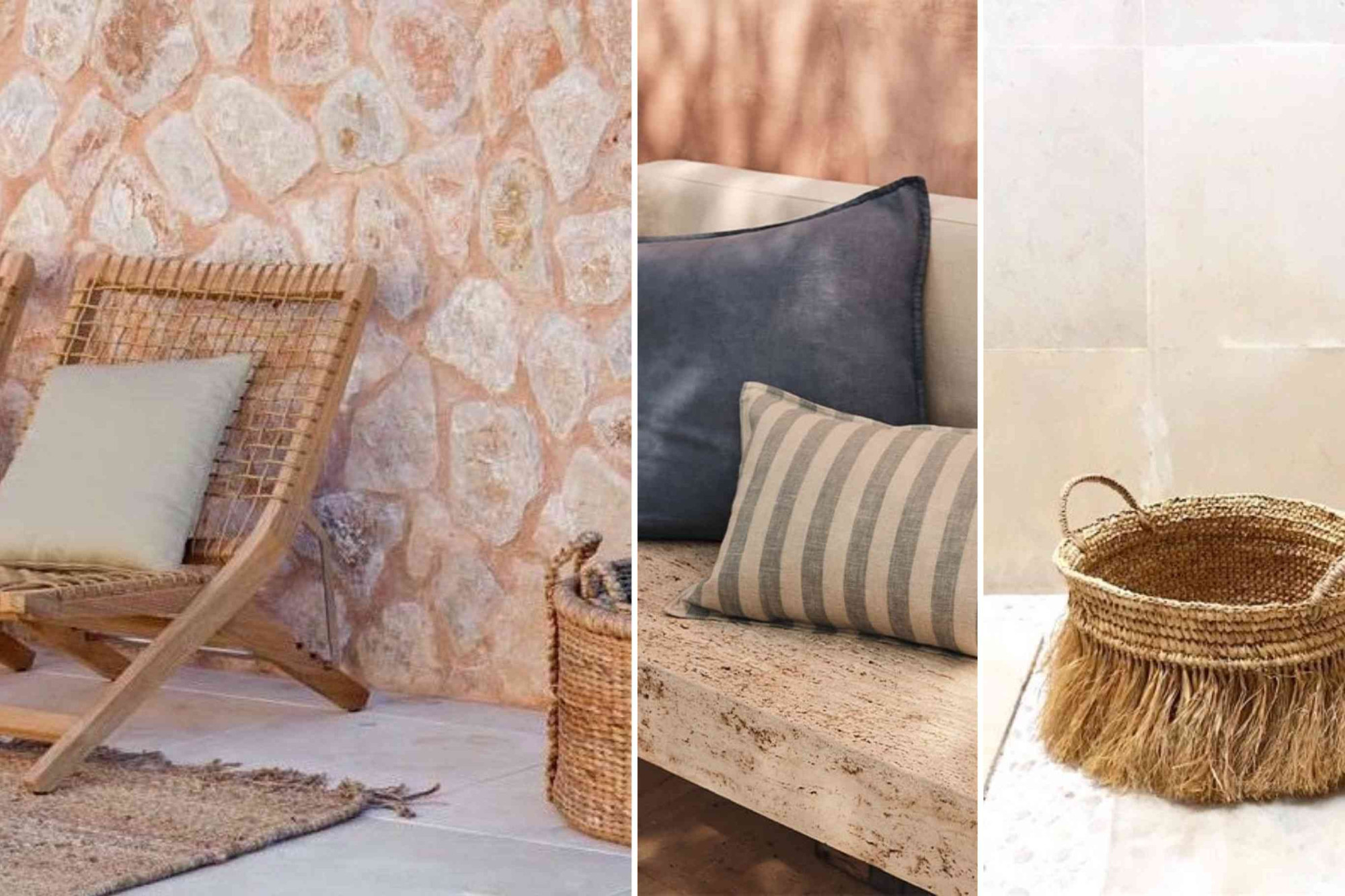
Les Couleurs de la Côte D'Azur @rivieradumonde
A pendant light can look completely different depending on where and how it is hung. Size, shape and height are therefore just as important as the material of the lamp itself.
Above a dining table, a wider pendant can help define the eating area. It should feel substantial enough in relation to the table, without blocking the view between people sitting opposite each other.
In a bedroom or smaller corner, a narrower pendant often works better. Hanging it lower can create a more focused light and allows the lamp to become part of the furniture arrangement rather than simply sitting near the ceiling.
Shape also changes the effect. Rounded shades spread their volume horizontally, while long or tapered designs draw the eye downwards. Irregular woven forms can work particularly well when the rest of the room is kept relatively simple.
Several pendants can also be grouped together. They do not necessarily need to hang at exactly the same height. A small difference between them can make the arrangement feel less rigid.
Before choosing a large pendant, it is useful to consider what will sit underneath it. A lamp that looks oversized in an empty room may be exactly the right scale once a table, bed or seating area is in place.
The pendant should ultimately relate to the space around it, not just look good as an individual object.
#PendantLighting #LightingIdeas #InteriorLighting #HomeDesign #RivieraDuMonde
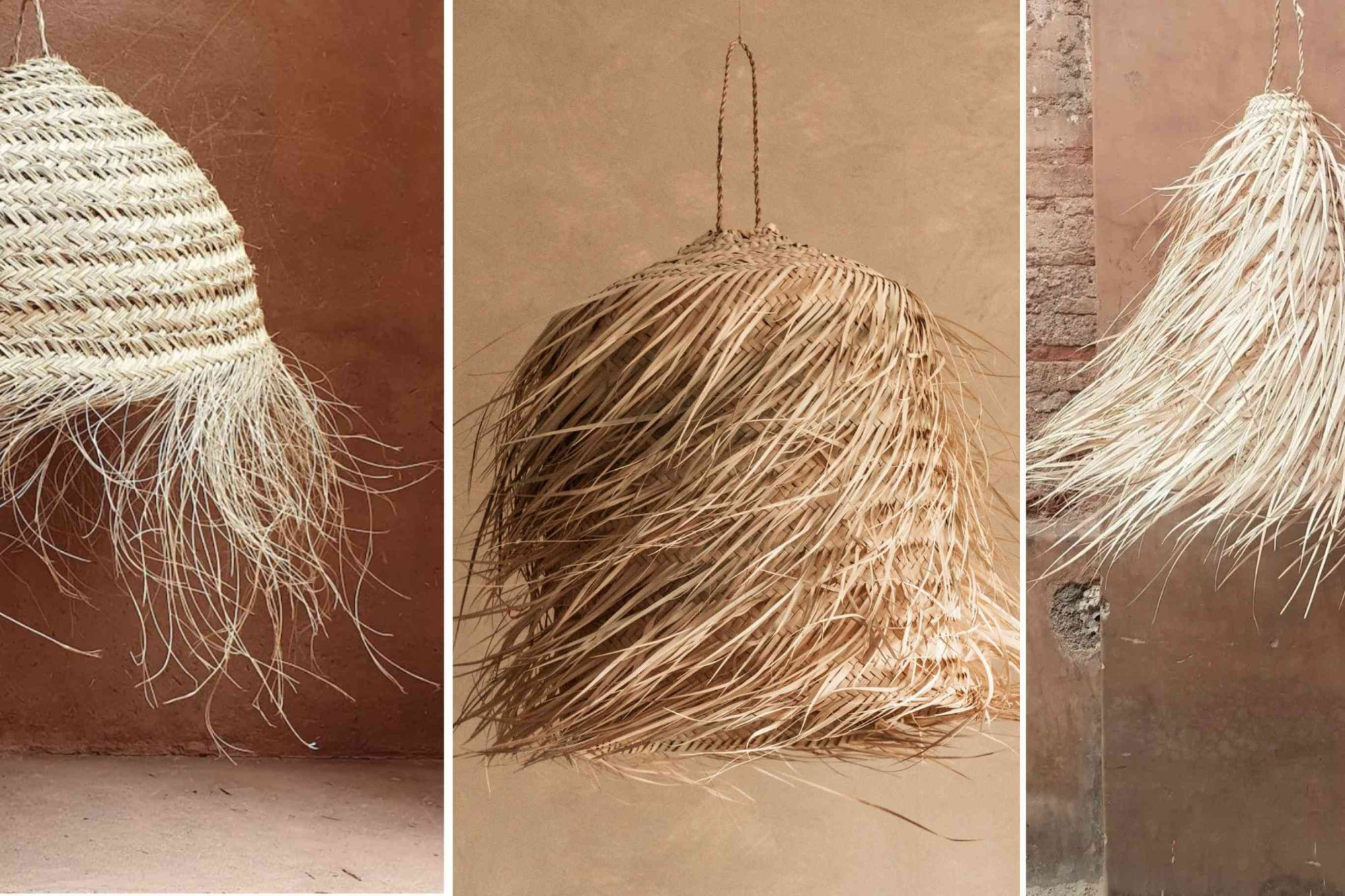
Les Couleurs de la Côte D'Azur @rivieradumonde
The Accent Chair
An extra chair can be one of the easiest ways to complete a room without adding another large piece of furniture. It can fill an unused corner, create an additional place to sit or give a bedroom a small reading area.
The chair does not need to match the sofa. In fact, choosing a different material or shape often works better. A woven chair beside an upholstered sofa introduces another texture while still fitting naturally into the room.
Open designs are particularly useful when you want to keep a space feeling light. Chairs with visible legs, woven backs or open sides take up less visual space than heavily upholstered models, even when their actual dimensions are similar.
Placement can be informal. An accent chair can sit slightly away from the main seating arrangement, beside a window or in a corner of the bedroom. A small side table or floor lamp is often enough to give that area a purpose.
Comfort still matters. A chair may look beautiful on its own, but the seat depth, back support and height should suit how it will actually be used. A cushion can add softness without hiding the structure of the chair.
There is also no need to buy accent chairs in pairs. A single well-chosen chair can introduce a new shape or material and make an otherwise unused part of the room functional.
#AccentChair #FurnitureDesign #InteriorIdeas #WovenFurniture #RivieraDuMonde
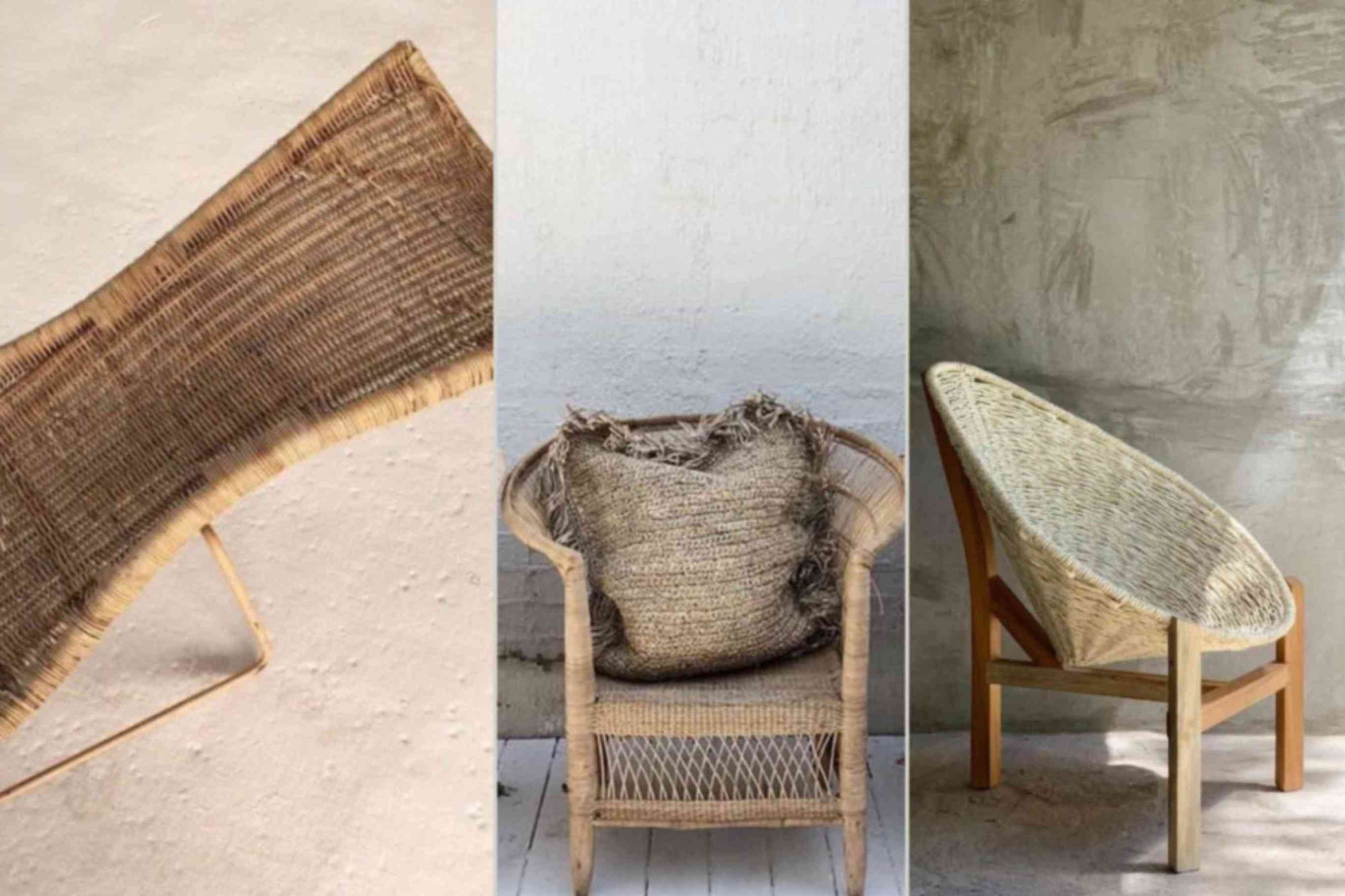
Les Couleurs de la Côte D'Azur @rivieradumonde
A niche can turn a section of wall into useful space without adding another piece of furniture. It can provide storage, display an object or create a small functional area within the architecture itself.
In a bathroom, a niche can hold everyday products beside a bath or shower. In a kitchen, it can provide a place for ceramics, bottles or frequently used objects without requiring an additional shelf.
Larger niches can have a different function. A deep opening can become a bench, a place for firewood or a display area for a large vase or artwork. Existing openings in older homes can sometimes be adapted rather than closed during renovation.
The finish does not always need to be different from the surrounding wall. Using the same plaster or stone keeps the niche visually connected to the architecture. A contrasting material can be useful when the intention is to make it more prominent.
Lighting can also change how a niche works. A small integrated light can make a deeper opening practical in the evening and highlight objects placed inside it.
The important part is deciding what the niche is for. Too many small decorative niches can quickly make a wall feel busy, while one or two well-positioned openings can provide useful space without adding more furniture.
#WallNiches #InteriorArchitecture #InteriorIdeas #BuiltInDesign #RivieraDuMonde
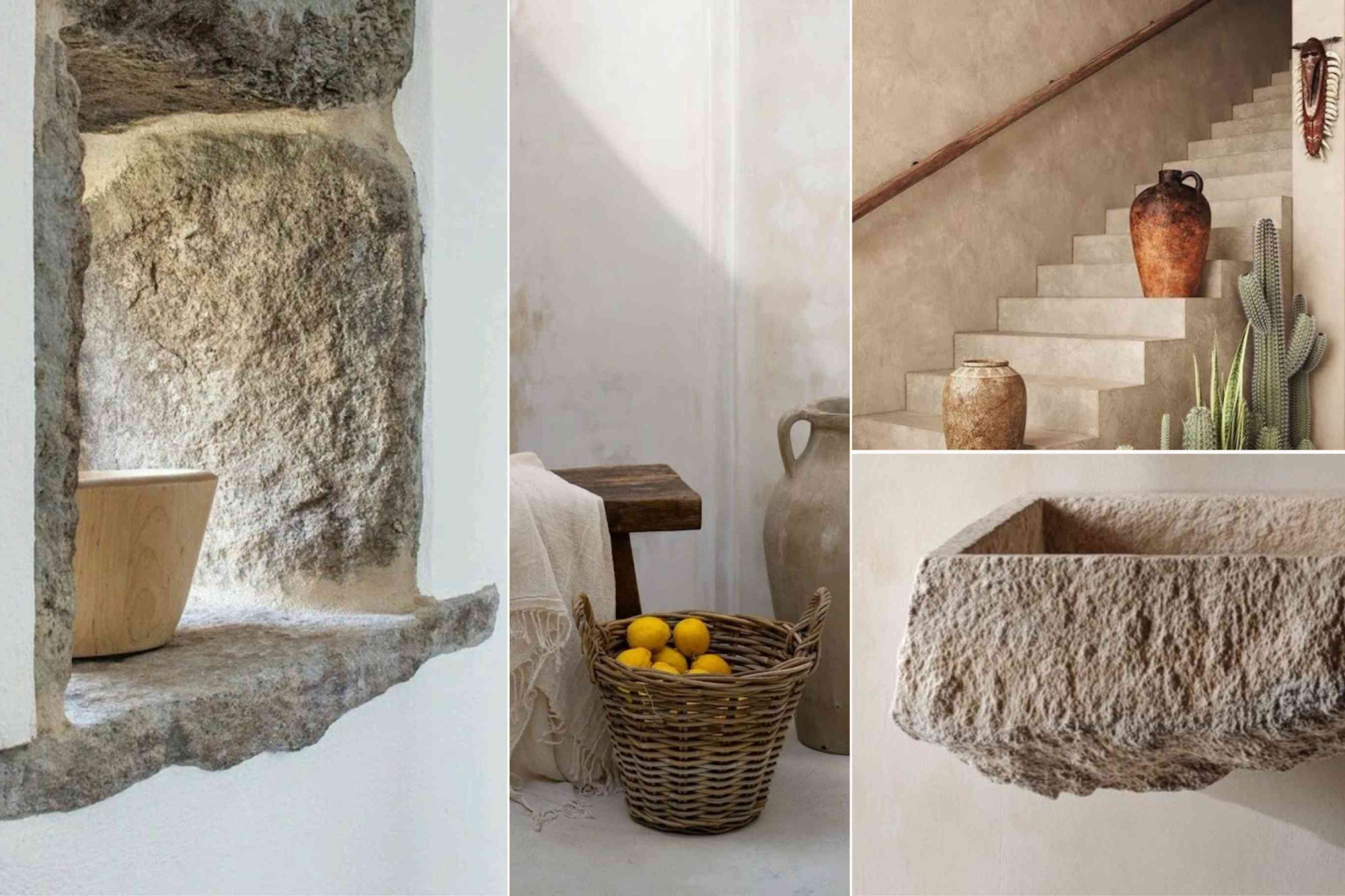
Les Couleurs de la Côte D'Azur @rivieradumonde
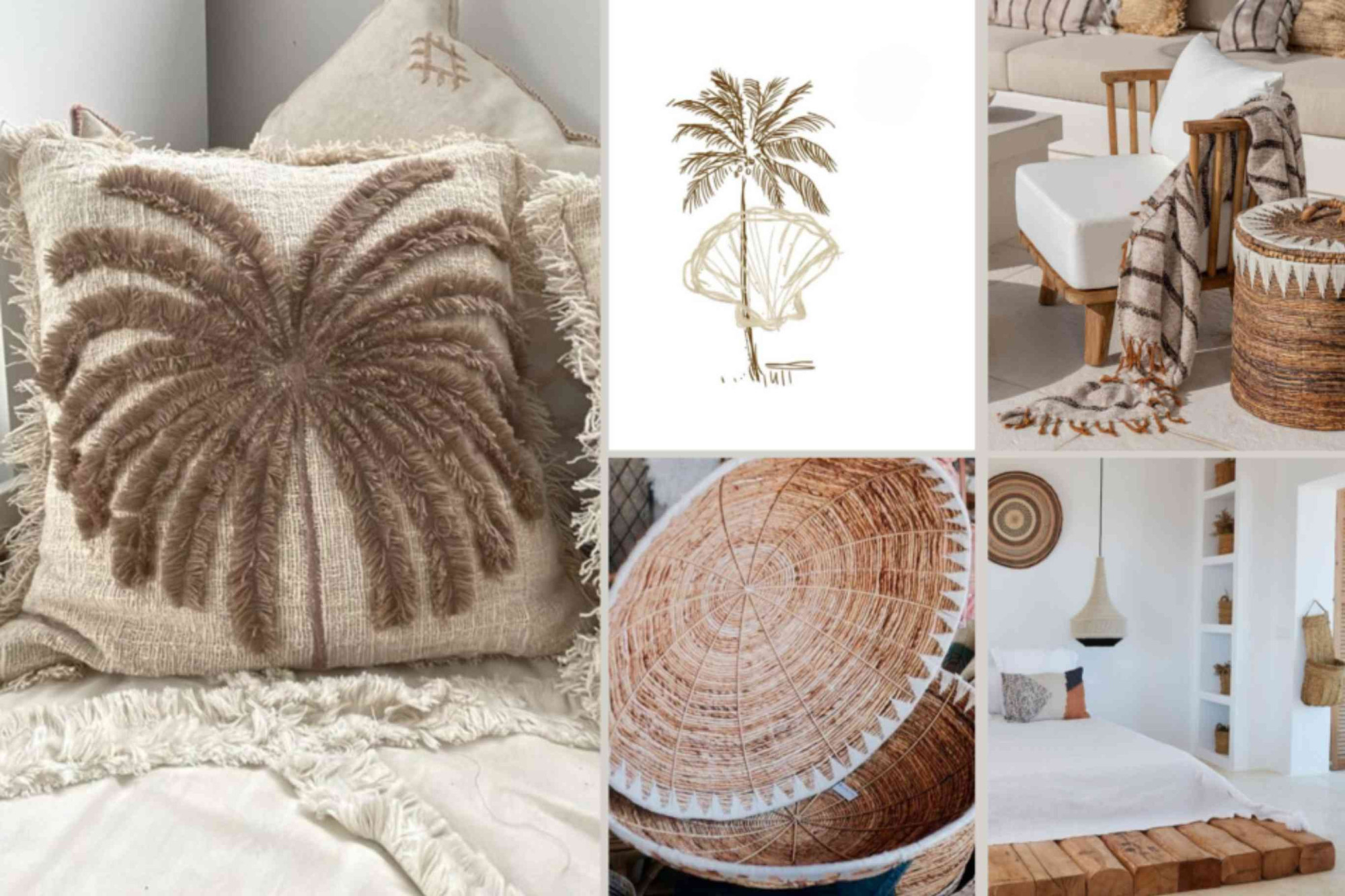
Botanical motifs can introduce references to the landscape without filling a room with plants. Palm leaves, branches and other natural forms can appear on cushions, artwork, ceramics and woven objects while the rest of the interior remains relatively simple.
A cushion is an easy place to introduce a larger motif. Against plain bedding or a neutral sofa, one textured palm or leaf design can be enough without needing several patterned textiles around it.
Botanical artwork works differently. A simple drawing or print can occupy an otherwise empty wall and connect visually with natural materials already present in the room.
The motif can also appear more subtly. Woven baskets may use patterns inspired by leaves or flowers, while embroidery and raised textile details add the same reference through texture instead of colour.
There is no need to repeat the exact same palm or pattern throughout the room. In fact, using it once or twice usually works better. The connection can come from the general botanical theme rather than identical designs.
This makes botanical motifs particularly easy to combine with wood, linen, woven fibres and neutral colours. They add a recognisable decorative element without determining the entire interior.
#BotanicalInteriors #InteriorTextiles #HomeDecor #InteriorDetails #RivieraDuMonde
Les Couleurs de la Côte D'Azur @rivieradumonde
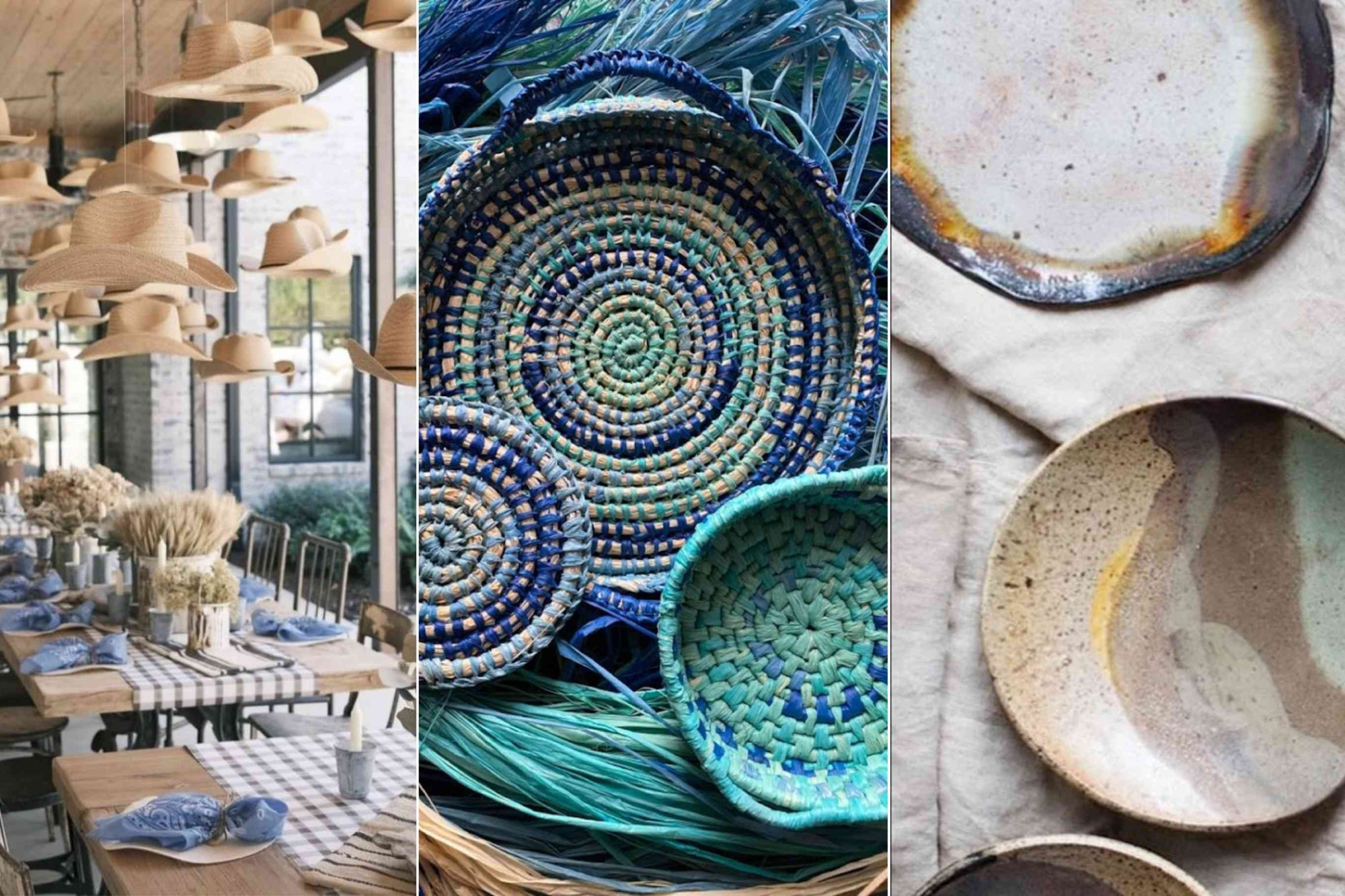
Decorating a room does not always require conventional decorative objects. Things that are normally used, worn or stored away can become part of the interior when they are displayed in an unexpected way.
Hats are a good example. Instead of keeping them in a cupboard, a collection can be suspended from cords above a table or in an open space. Different shapes and heights turn individual hats into one larger installation.
Colour makes the arrangement even more interesting. Natural straw can be mixed with blue, green or other coloured pieces, creating small accents without changing the main colours of the room.
The same principle works elsewhere. Coloured baskets can be grouped on a wall, ceramics can remain visible on open shelves and textiles can bring another layer of colour to a table or seating area.
These objects do not all need to have exactly the same shade. A combination of different blues and greens, for example, can work together when repeated across several materials.
This is also a useful way to decorate with objects that already have a purpose. A hat remains wearable, a basket can still provide storage and ceramics continue to be used at the table.
Instead of separating practical objects from decoration, the two can become part of the same interior.
#ColourAtHome #CreativeInteriors #InteriorObjects #HomeDecor #RivieraDuMonde
Les Couleurs de la Côte D'Azur @rivieradumonde
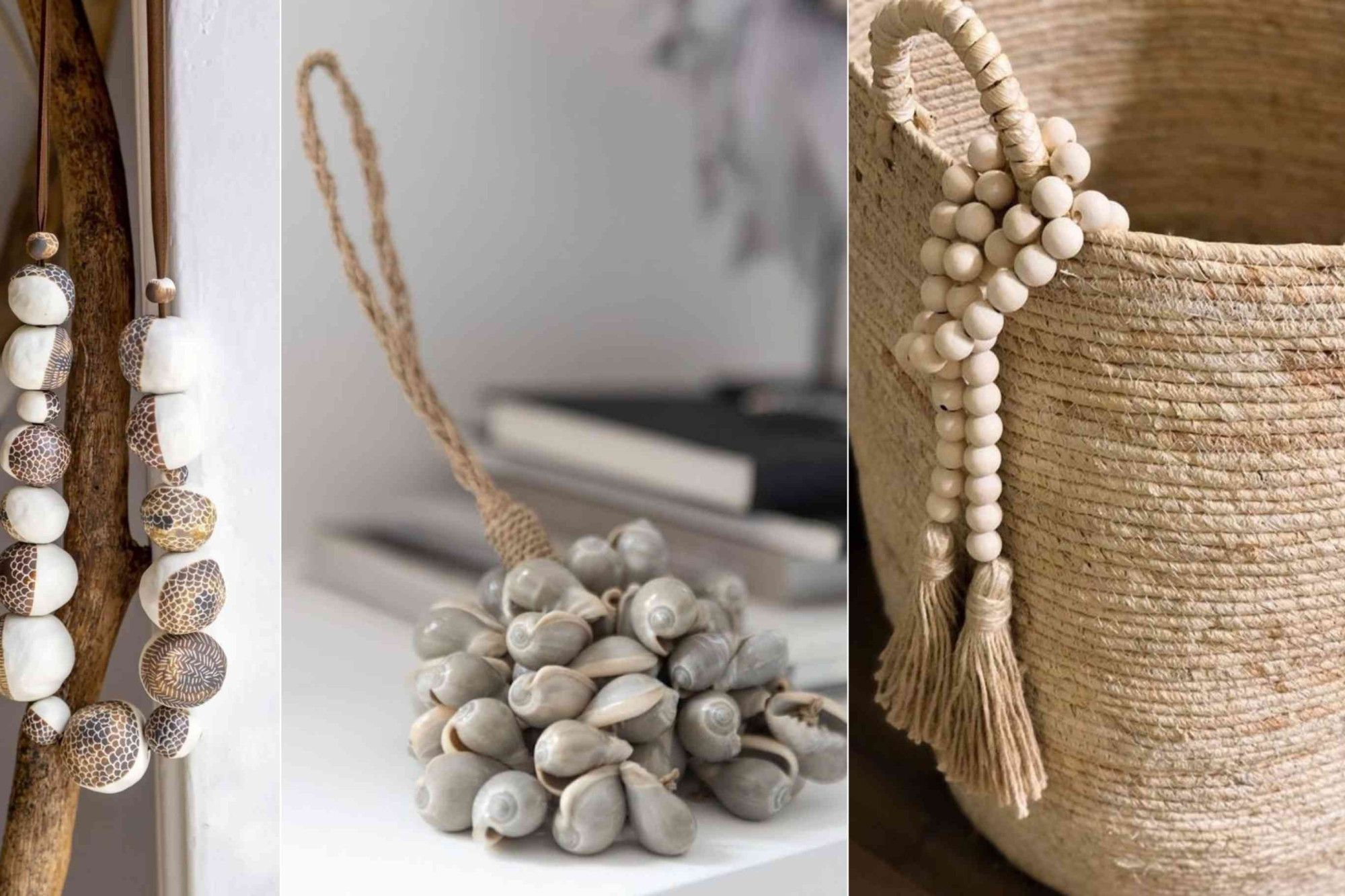
Beads and shell necklaces do not have to be stored away when they are not being worn or used. Their shape, material and length make them interesting objects to display around the home.
A long strand of wooden or ceramic beads can be draped over the handle of a basket, placed around the neck of a large vase or left loosely on a table. This adds detail without requiring another conventional decorative object.
Shell strands work particularly well as small accents. They can hang from a hook, lie on a stack of books or be grouped with objects collected from the coast. Because the shells already vary naturally in shape and colour, they do not need much additional styling.
Scale makes a difference. Larger beads have more presence and work well with substantial baskets and pottery, while smaller shells or beads are better suited to shelves and smaller arrangements.
These pieces can also be easy to make yourself. Shells collected during a trip, wooden beads or ceramic pieces can be threaded onto cord and finished with a simple loop or tassel. The materials can be selected to suit what is already in the room.
There is no fixed place where a decorative strand belongs. Moving it from a basket to a vase or shelf can change a small arrangement without buying anything new.
It is a simple detail, but one that can introduce material, shape and something personal into an interior.
#DecorativeBeads #InteriorDetails #ShellDecor #HomeAccessories #RivieraDuMonde
Les Couleurs de la Côte D'Azur @rivieradumonde
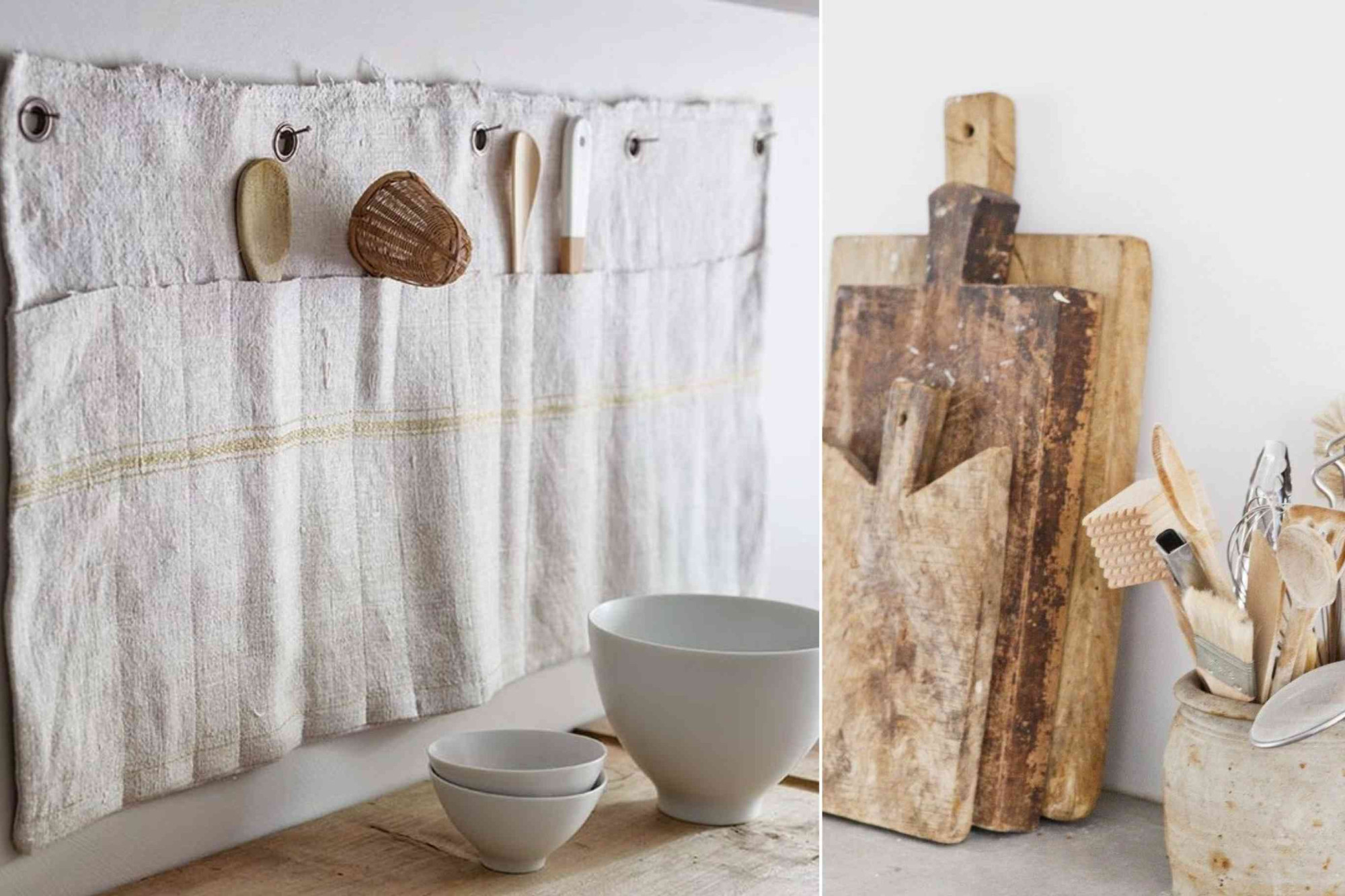
Useful kitchen storage does not always have to be hidden behind cupboard doors. Everyday utensils, chopping boards and cooking tools can remain accessible while still keeping the kitchen organised.
A fabric wall organiser is a simple example. Deep pockets can hold wooden spoons, brushes and smaller utensils that would otherwise take up drawer or worktop space. It can be hung from hooks and removed easily when it needs cleaning.
Chopping boards are particularly suitable for open storage. Instead of stacking them flat inside a cupboard, several boards can stand together against a wall. Different sizes remain easy to reach and the wood adds some warmth to a simple kitchen.
Jars and pots can serve the same purpose for utensils used every day. Keeping frequently used tools together beside the preparation area means they are available without filling the entire worktop.
The important distinction is between what is used regularly and what is not. Everyday objects can stay visible, while appliances, extra tableware and less frequently used items are better stored elsewhere.
Open storage also works well in smaller kitchens where adding another wall cabinet would make the room feel crowded. Hooks, pockets and containers use areas that might otherwise remain empty.
A kitchen does not need to hide every practical object. Sometimes the things used for cooking can simply become part of the room.
#KitchenStorage #KitchenIdeas #OpenStorage #KitchenDesign #RivieraDuMonde
Les Couleurs de la Côte D'Azur @rivieradumonde
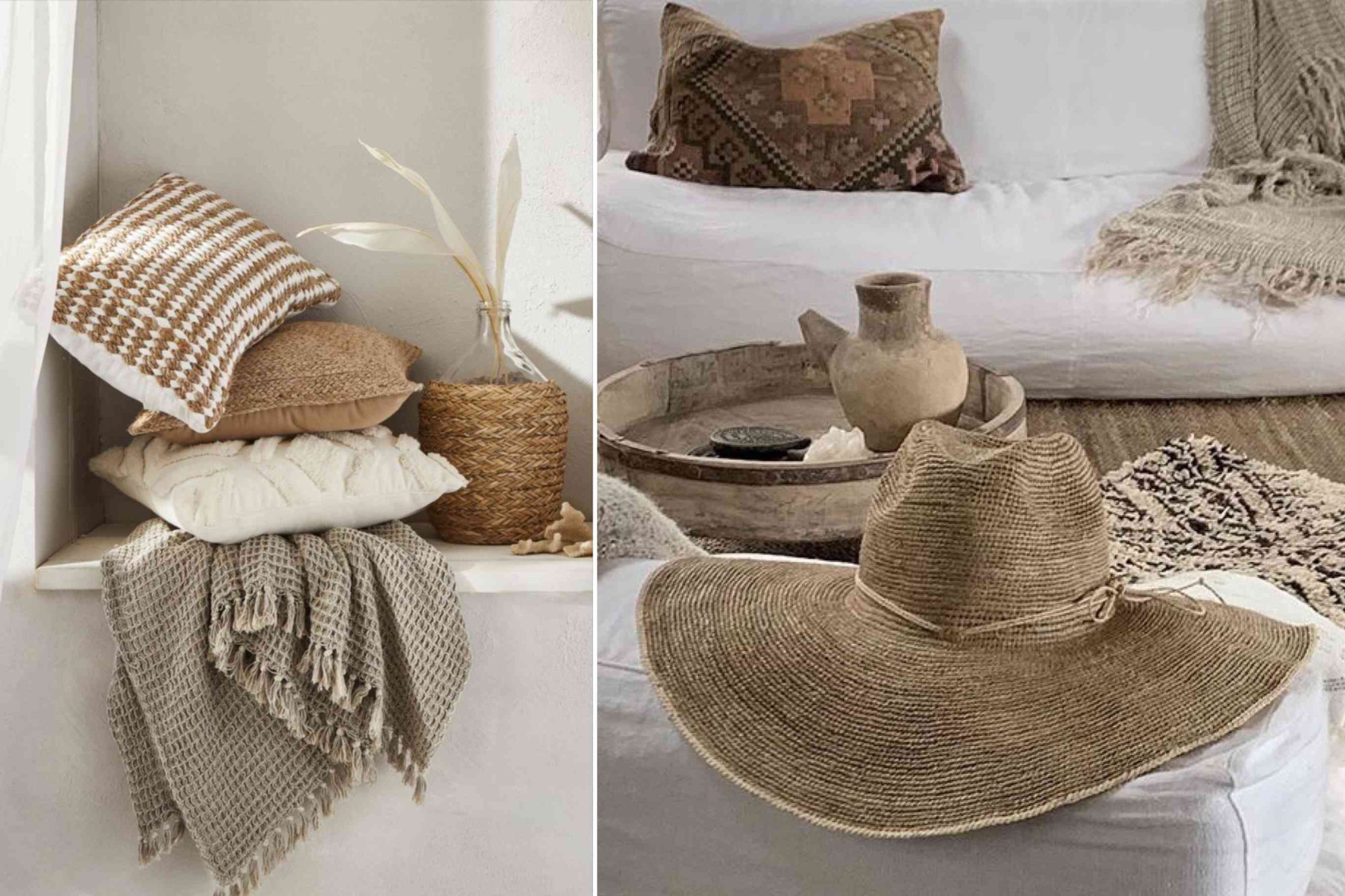
Throws and extra cushions are most useful when they are easy to reach. They do not always need to disappear into a cupboard when they are not being used.
A deep windowsill can hold a small stack of cushions and a folded throw. A basket beside the sofa can keep blankets together, while a bench at the end of a bed can provide space for textiles used in the evening.
How they are stored can be informal. Throws can be loosely folded or draped over the edge of a seat, while cushions can be stacked rather than arranged perfectly. This keeps the room practical and makes it easy to take what is needed.
It also allows textiles to change with daily life. A lightweight throw might move from the bedroom to the terrace, while an extra cushion can be used on a window seat or taken outside.
Not every textile needs to be on display. Keeping a limited number within reach avoids filling chairs and sofas with pieces that constantly have to be moved.
This approach works particularly well in rooms designed for relaxing. The objects that make a space more comfortable remain visible and available instead of being treated purely as decoration.
A home can still feel organised without everything being put away.
#HomeTextiles #LivingRoomIdeas #InteriorTextiles #HomeComfort #RivieraDuMonde
Les Couleurs de la Côte D'Azur @rivieradumonde
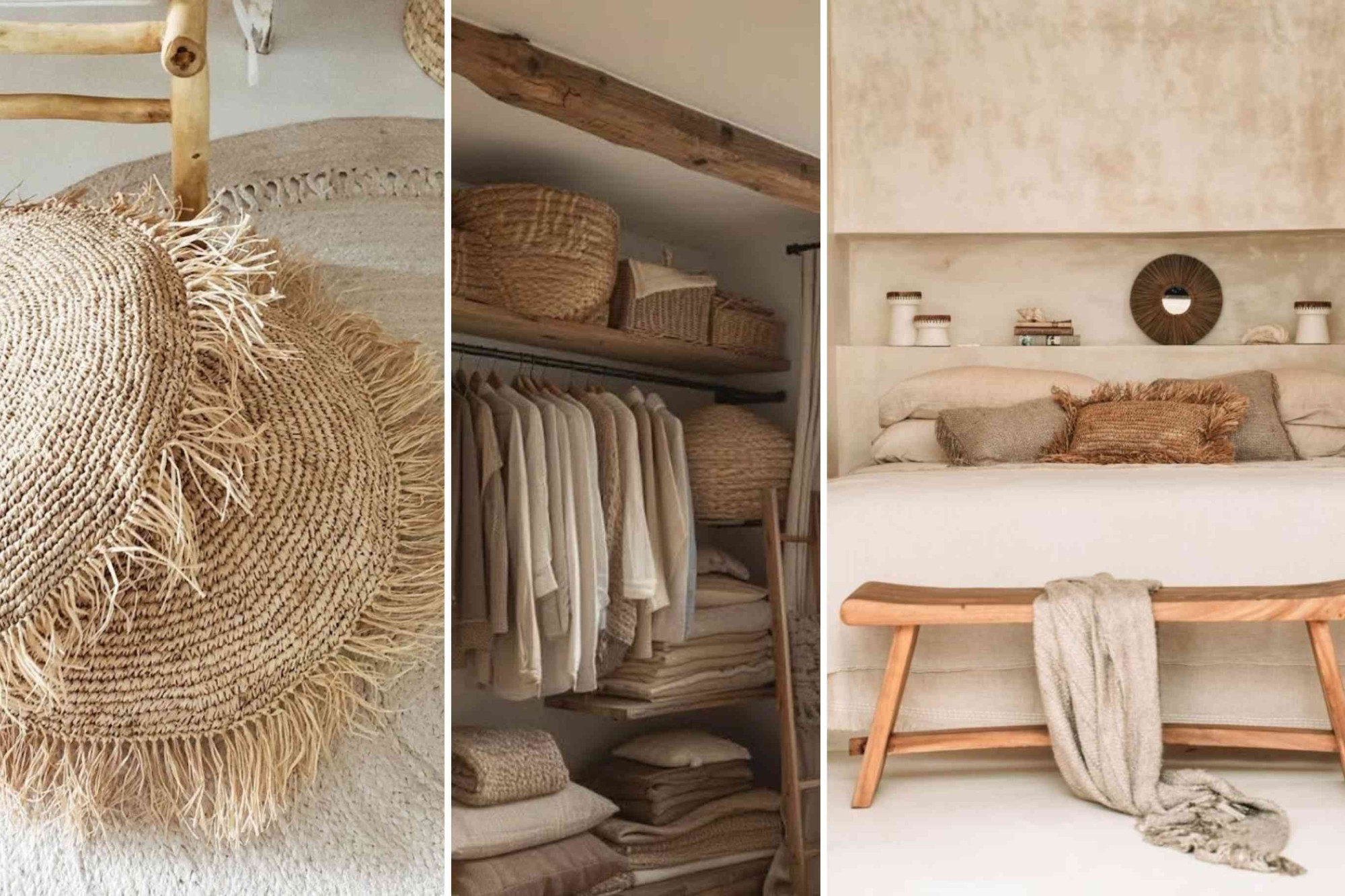
A wardrobe does not always need doors. Open rails and shelves can work particularly well when the clothes and textiles used most often are kept together and easy to reach.
Hanging space can be combined with shelves above and below. Baskets on the upper shelf are useful for smaller items that do not need to remain visible, while folded knitwear, towels or bed linen can occupy the lower shelves.
The amount of clothing on display makes a difference. An open wardrobe works best when there is enough space between garments and shelves are not completely filled. Less frequently used pieces can still be stored elsewhere.
Baskets are useful for creating order without adding drawers. Different sizes can separate accessories, seasonal pieces or smaller textiles while keeping the overall storage system flexible.
Open storage can also make good use of an alcove or an awkward section of a bedroom. A rail and several shelves may be enough to turn an otherwise unused wall into practical wardrobe space.
Curtains can be added when the contents occasionally need to be concealed. They require less space than conventional doors and can easily be changed with the rest of the room.
The result can be simple: the clothes that are actually worn remain accessible while baskets and shelves take care of everything that does not need to be on display.
#OpenWardrobe #BedroomStorage #StorageIdeas #BedroomDesign #RivieraDuMonde
Les Couleurs de la Côte D'Azur @rivieradumonde
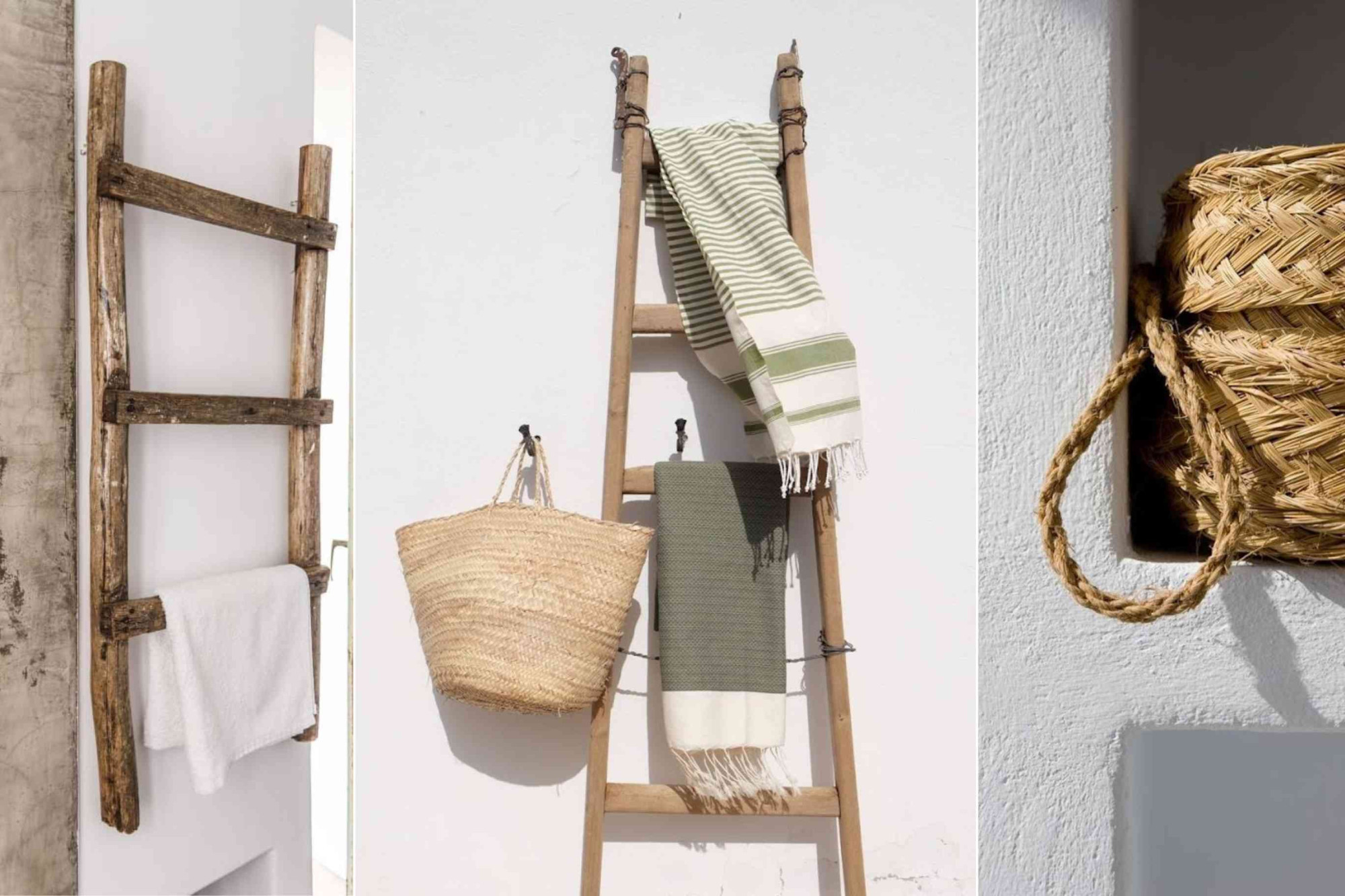
A simple wooden ladder can provide useful storage without taking up much floor space. Leaned against a wall, the rungs become a place for towels, throws, clothes or other textiles that are used regularly.
In a bathroom, a ladder can replace a conventional towel rail. Several towels can hang separately and remain easy to reach, while the ladder itself only needs a narrow section of wall.
The same idea works in a bedroom. Clothes that will be worn again, a scarf or a lightweight throw can be placed over the rungs instead of ending up on a chair.
A ladder can also be combined with other simple storage. A basket placed beside it can hold smaller items, while hooks can provide a place for bags or accessories.
Older wooden ladders are particularly suited to this use because they often have enough character to remain visible without needing additional decoration. A newer ladder can work just as well when its proportions and finish suit the room.
It is worth keeping the arrangement limited. When every rung is completely covered, the ladder quickly loses its practical advantage and becomes difficult to use.
For rooms where a fitted rail or additional furniture is unnecessary, a ladder provides a flexible alternative that can easily be moved when the space changes.
#LadderStorage #StorageIdeas #BathroomIdeas #BedroomStorage #RivieraDuMonde
Les Couleurs de la Côte D'Azur @rivieradumonde
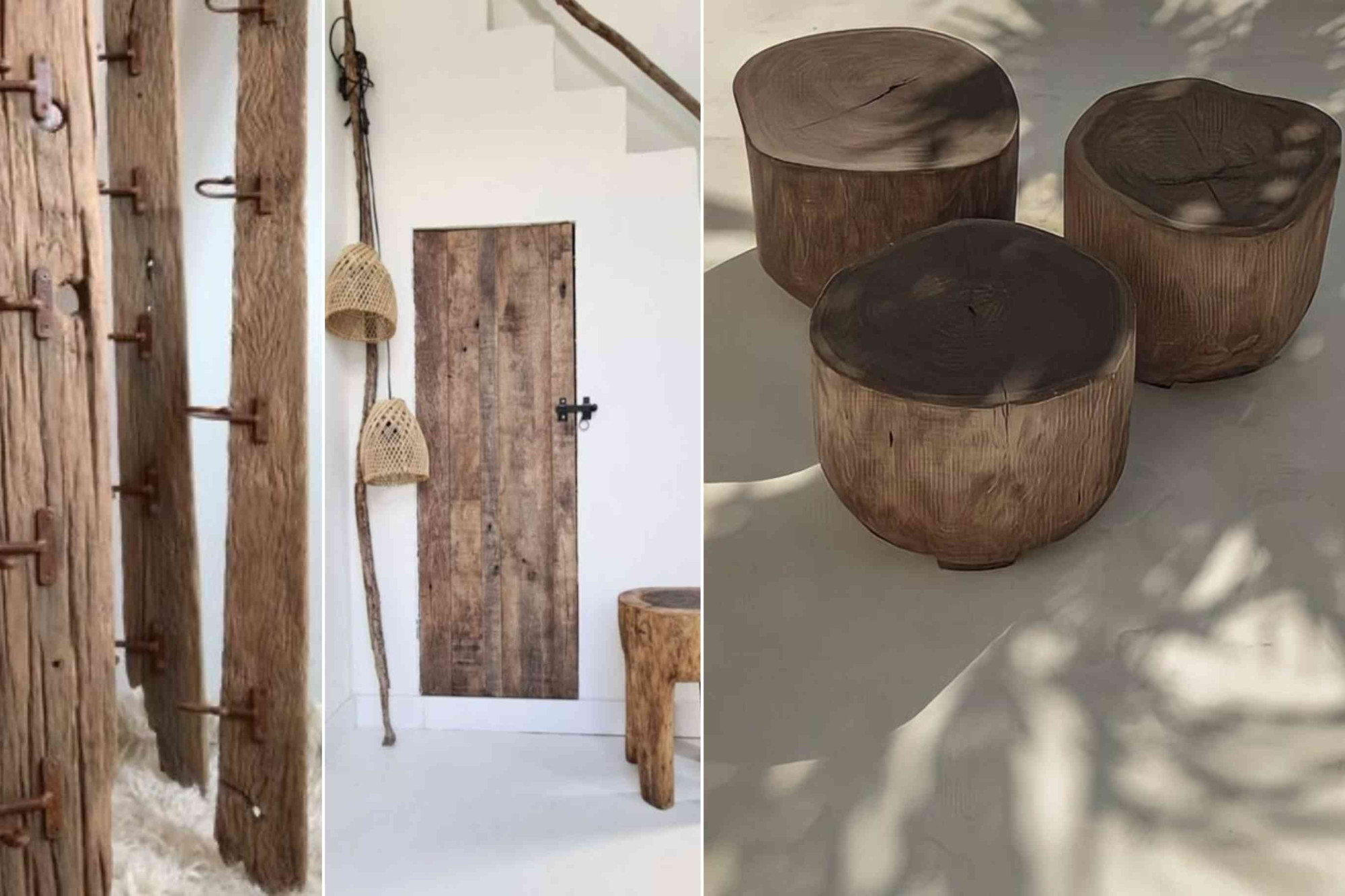
Wooden furniture does not always need to be built from straight boards and perfectly identical parts. A section of trunk or a substantial piece of timber can become a stool, side table or bench while much of its original shape remains visible.
This works particularly well for smaller furniture. A solid wooden stool beside a sofa can double as a side table. In a bedroom, the same piece can replace a conventional bedside table, while several together can provide informal seating around a low table.
The irregularity is part of what makes these pieces useful in an interior. Tops do not have to be perfectly round and several stools do not need to be identical. Small differences in height, grain and shape can make a group more interesting.
Because the furniture already has a strong material presence, it usually needs little decoration around it. It can sit comfortably beside white walls, stone floors, linen and other simple finishes.
These pieces can also work well in areas where conventional furniture feels too formal. A wooden block beside a bath, on a covered terrace or in an entrance can provide a useful surface without requiring much space.
The finish can remain relatively simple. Keeping the grain, marks and natural variations visible allows the wood itself to provide most of the character.
Instead of shaping every piece of timber into the same standard form, furniture can sometimes start with the shape that is already there.
#SolidWoodFurniture #WoodenFurniture #FurnitureDesign #NaturalInteriors #RivieraDuMonde
Les Couleurs de la Côte D'Azur @rivieradumonde
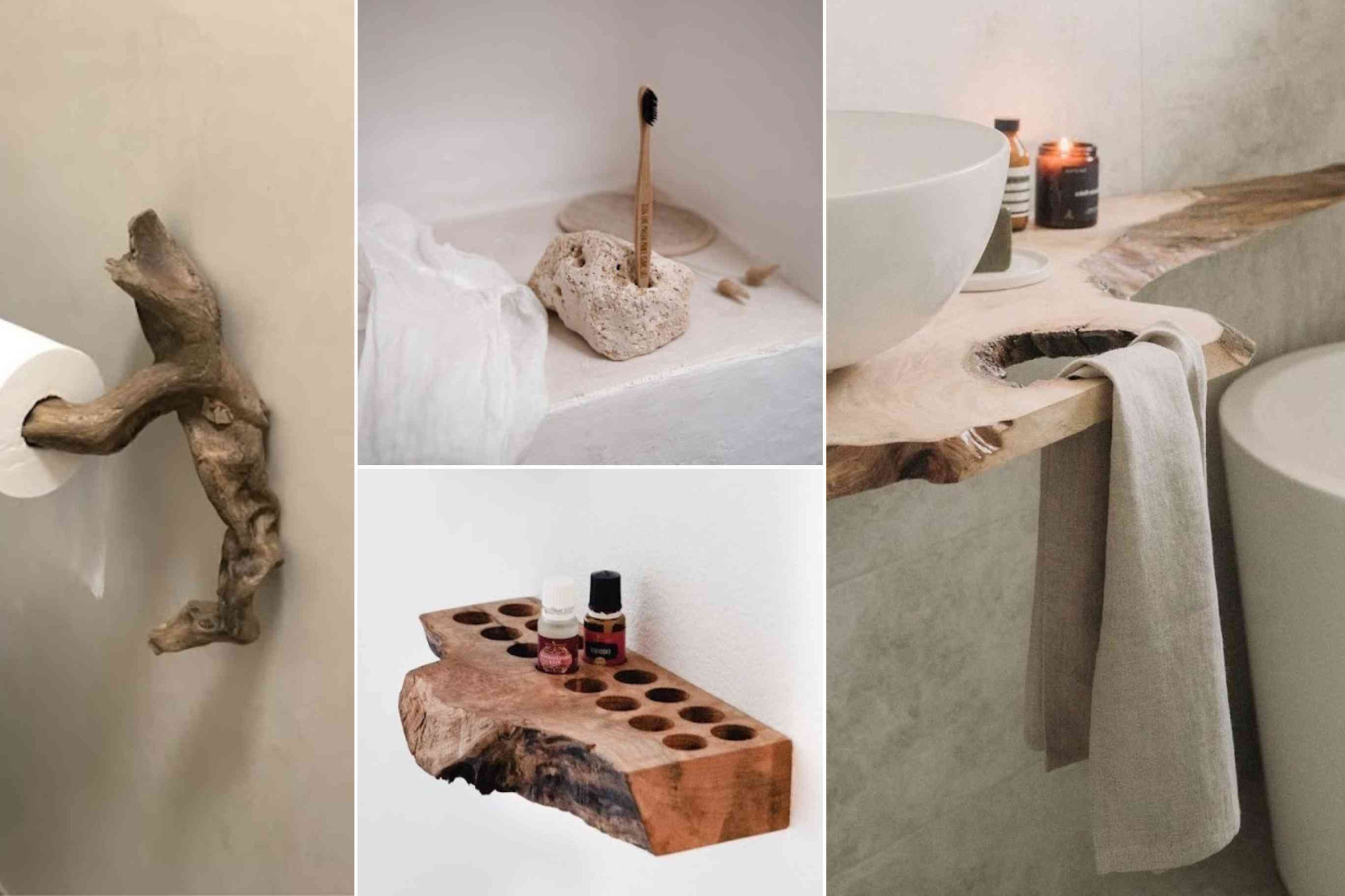
Some of the most useful bathroom accessories can be made from very simple materials. A piece of wood, a branch or an interesting stone can often be adapted without turning it into a complicated DIY project.
A sturdy branch can become a toilet roll holder by fixing it securely to the wall. Its irregular shape is part of the design, so there is little need to alter the wood itself.
A flat piece of timber can be used beside the basin. Small holes drilled into the surface can hold bottles or essential oils upright, while a larger opening can provide space for a towel.
Stone can be useful for smaller objects. A piece with a natural opening or hollow can hold a toothbrush, while a heavier stone can provide a stable base for frequently used bathroom items.
The material should always suit its location. Wood used close to water needs an appropriate finish and objects placed around a basin should be easy to lift and clean underneath.
There is no need to make a complete matching bathroom set. One handmade detail is often enough, particularly in a simple bathroom where the material itself can stand out.
Before buying another accessory, it can be worth looking at a piece of wood or stone and considering whether it could already do the job.
#DIYBathroom #BathroomIdeas #DIYHome #BathroomDesign #RivieraDuMonde
Les Couleurs de la Côte D'Azur @rivieradumonde
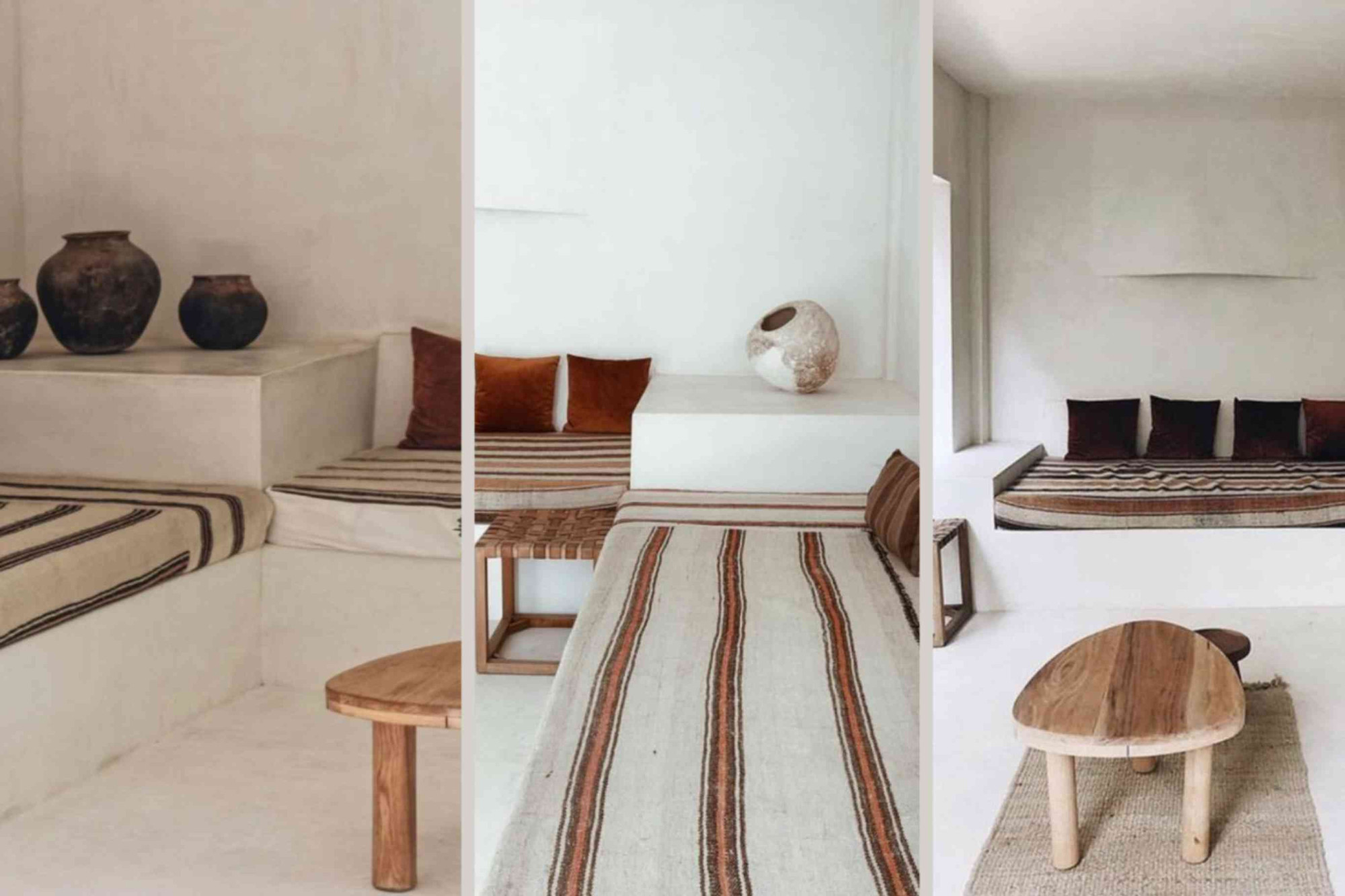
Built-in seating does not always need fitted upholstery. A long woven textile can cover the seat in one continuous piece and bring colour and pattern into an otherwise simple room.
This works particularly well on long benches and deep seating areas. Instead of making several separate seat cushions, one textile can follow the full length of the bench and visually connect the different sections.
Striped designs are useful for this because they emphasise the length of the seating. The pattern can introduce rust, brown, black or another accent colour while the walls and larger surfaces remain neutral.
The textile does not necessarily need to cover everything. Leaving part of the plastered or wooden base visible keeps the construction of the bench part of the interior.
A few plain cushions can then provide back support without competing with the pattern underneath. Picking one or two colours from the textile is enough to connect them.
This approach also makes it easier to change the room. A removable textile can be cleaned, replaced or exchanged for another design without altering the built-in seating itself.
It is a simple way to combine permanent architecture with something that can change over time.
#BuiltInSeating #InteriorTextiles #WovenTextiles #InteriorIdeas #RivieraDuMonde
Les Couleurs de la Côte D'Azur @rivieradumonde
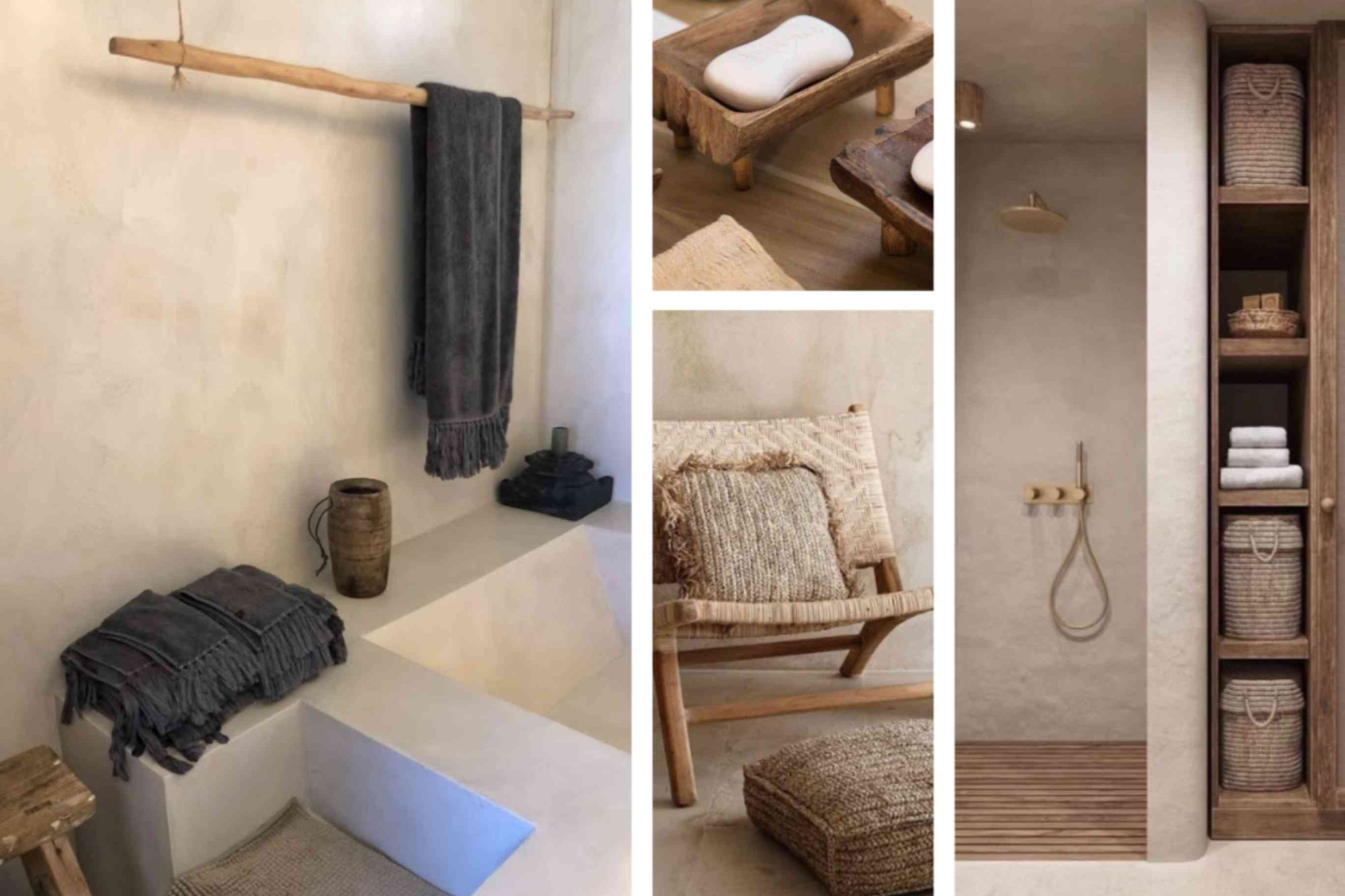
Bathroom storage does not have to mean hiding everything behind closed doors. Towels, baskets and products used every day can remain visible when each item has a clear place.
Narrow shelving is particularly useful. A tall open cupboard can use a small section of wall for folded towels, baskets and toiletries without requiring a large bathroom cabinet.
Baskets help separate smaller items. Products that would otherwise create clutter on shelves can be grouped together while remaining easy to take out when needed.
Towels can also become part of the storage arrangement. A simple wooden rail above the bath provides space for the towel currently in use, while clean towels can remain folded on a shelf or bench nearby.
The area around a bath or shower can provide additional space. A built-in ledge can hold a few products and a small stool can keep soap or a towel off the floor without adding permanent furniture.
It helps to keep only frequently used items visible. Extra products, cleaning supplies and larger quantities of towels can still be stored elsewhere.
Open bathroom storage works when it reflects what is actually used. A towel should be close to the bath, everyday products close to the basin or shower and spare items organised where they can be reached easily.
#BathroomStorage #BathroomIdeas #OpenStorage #BathroomDesign #RivieraDuMonde
Les Couleurs de la Côte D'Azur @rivieradumonde
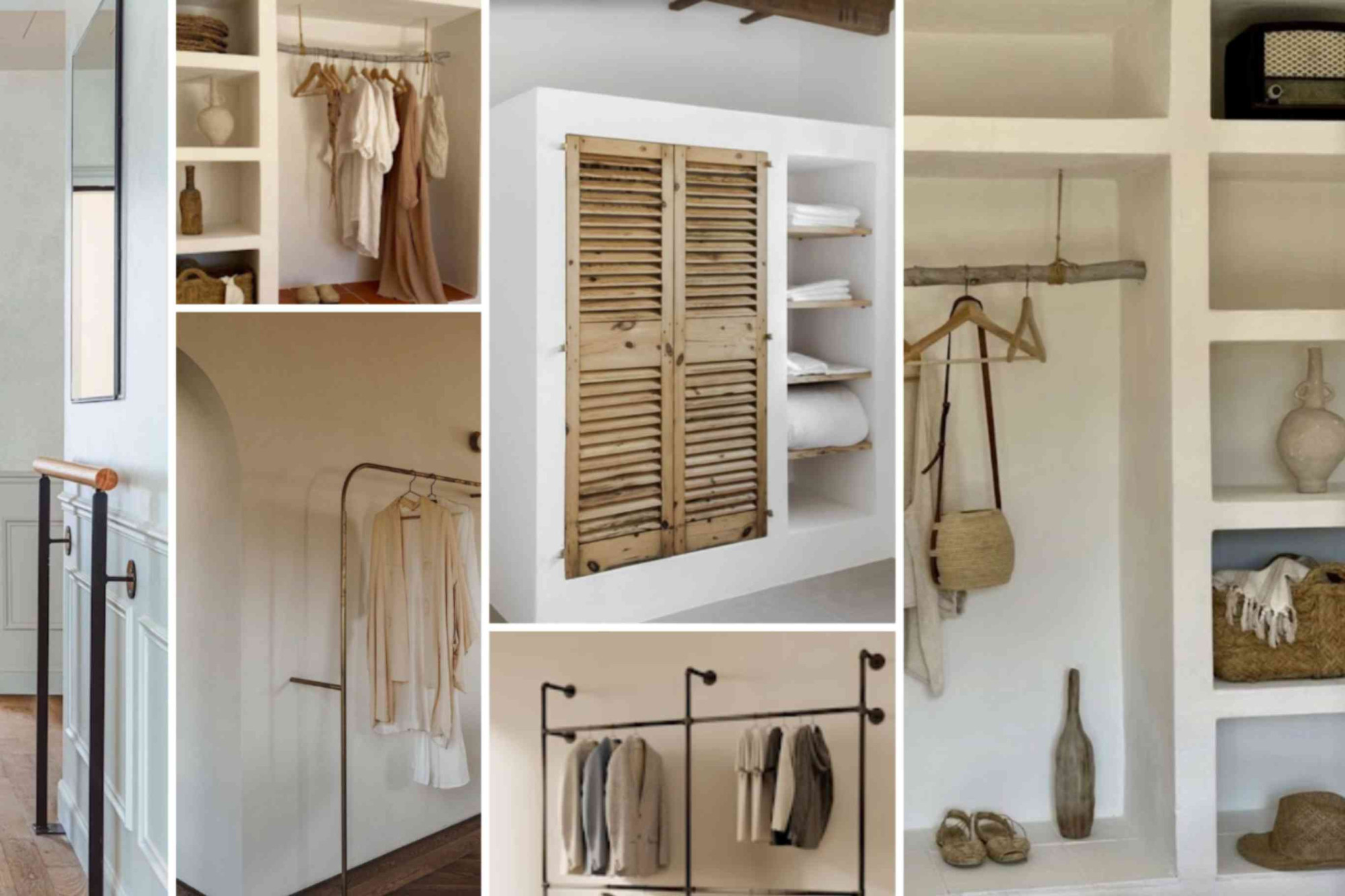
An alcove can provide enough space for a wardrobe without requiring a separate piece of furniture. Even a relatively shallow opening can accommodate a rail, shelves and storage for everyday clothes.
A hanging rail is usually the simplest starting point. It can run across the full width of the alcove or occupy only one section, leaving room beside it for shelves.
The height of the space can also be used. Shelves above the rail are useful for baskets, folded linen or items that are not needed every day. Lower shelves can hold shoes or folded clothing.
Not every wardrobe needs to be completely enclosed. Leaving the alcove open keeps everything accessible and works particularly well for a smaller selection of clothes.
When some concealment is preferred, there are several alternatives to conventional wardrobe doors. A curtain requires very little space, while shutters can close only part of the storage and leave adjacent shelves open.
An existing architectural niche can work in the same way. Adding a simple rail and a few hooks may be enough to turn an empty section of wall into useful clothing storage.
The important part is to design the storage around what actually needs to fit inside it. A wardrobe for shirts and dresses requires a different arrangement from one mainly used for folded clothes, shoes and accessories.
Using the dimensions that are already available can make an alcove surprisingly useful without adding another large cabinet to the room.
#WardrobeIdeas #AlcoveStorage #BedroomStorage #StorageIdeas #RivieraDuMonde
Les Couleurs de la Côte D'Azur @rivieradumonde
Wooden furniture and finishes do not all need to match. A room can combine pale timber, darker pieces and weathered wood without looking disconnected.
A useful starting point is to avoid repeating exactly the same finish everywhere. Light wooden cupboard doors can form the larger background, while an older table or darker shutter introduces contrast.
The condition of the wood can vary too. Smooth new timber can sit beside pieces with visible marks, faded colour or an older surface. This prevents a room with a lot of wood from becoming too uniform.
Other materials help separate the different tones. Plaster walls, linen upholstery, stone and woven fibres create neutral areas between wooden elements and give each piece some visual space.
Scale also matters. When a large surface such as cabinetry is finished in wood, smaller wooden objects do not need to copy it. A side table, stool or old door can have its own colour and character.
Even within one piece of furniture, variations in the grain and tone can remain visible rather than being covered with an opaque finish.
The aim is not to collect as many different woods as possible. A few variations are enough to make the interior feel less coordinated as a set and more naturally put together over time.
#WoodInteriors #MixingWoods #InteriorMaterials #InteriorDesign #RivieraDuMonde
Les Couleurs de la Côte D'Azur @rivieradumonde
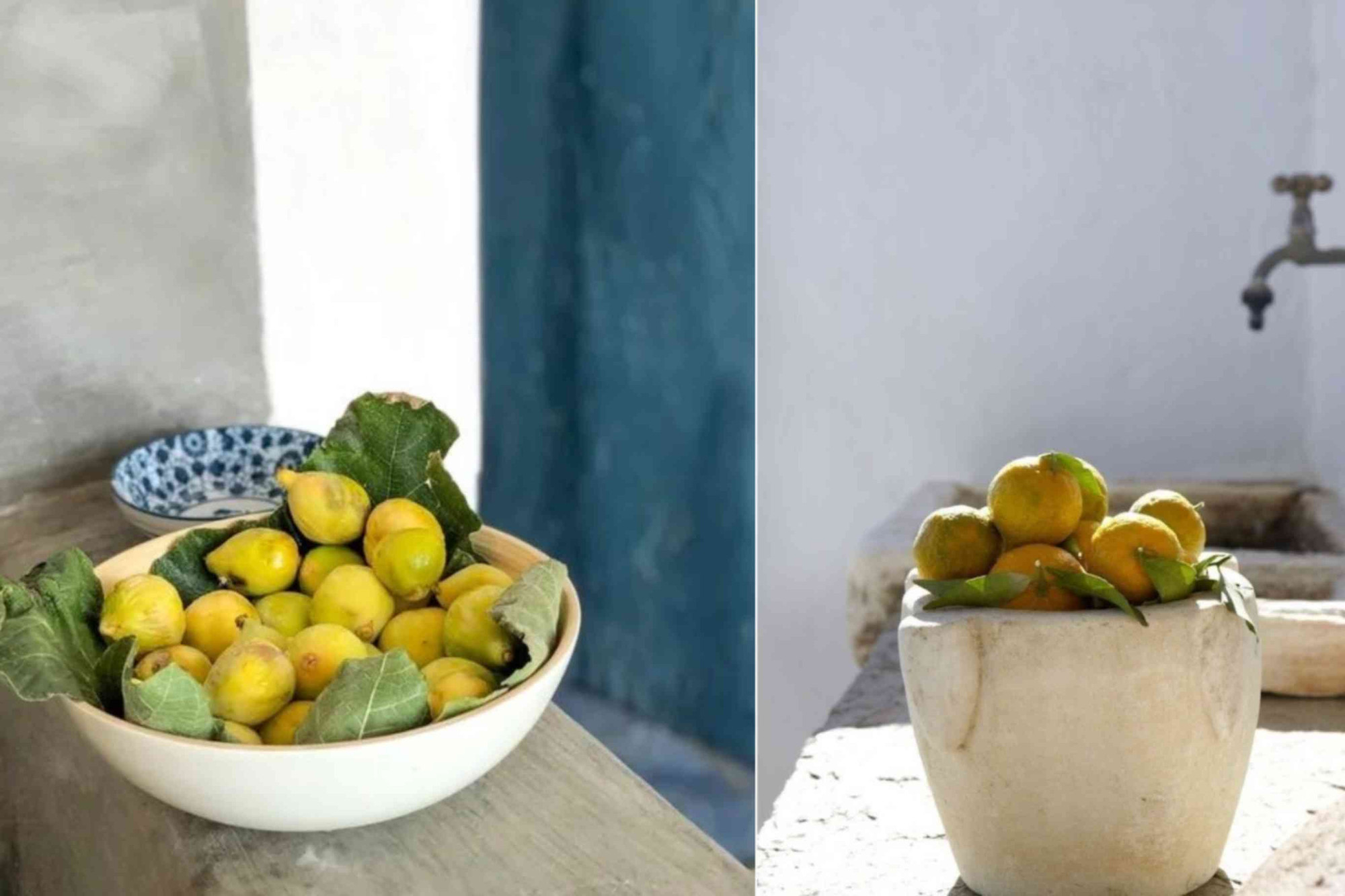
A bowl of fruit can bring colour into a kitchen without adding another decorative object. Lemons, oranges, figs or other seasonal fruit can remain visible and become part of the room at the same time.
The container makes a difference. A simple ceramic bowl keeps the attention on the fruit, while a larger stone or terracotta vessel can give a small collection more presence.
Fruit works particularly well in interiors with a restrained colour palette. Yellow lemons stand out against white plaster and natural stone, while oranges introduce warmer tones beside timber and neutral ceramics.
There is no need to create a perfect arrangement. A bowl filled naturally or a few pieces placed in a smaller vessel often looks more appropriate in a kitchen than something carefully styled.
Leaves can be left attached when available. They add another colour and make freshly picked fruit particularly attractive on a table or worktop.
The display can also change throughout the year. Citrus can make way for figs, pears, pomegranates or whatever is locally available, allowing a small part of the kitchen to change with the season.
Because the fruit will actually be eaten, the display remains functional. Colour becomes part of the interior through something that already belongs in the kitchen.
#KitchenStyling #ColourAtHome #KitchenIdeas #SeasonalLiving #RivieraDuMonde
Les Couleurs de la Côte D'Azur @rivieradumonde
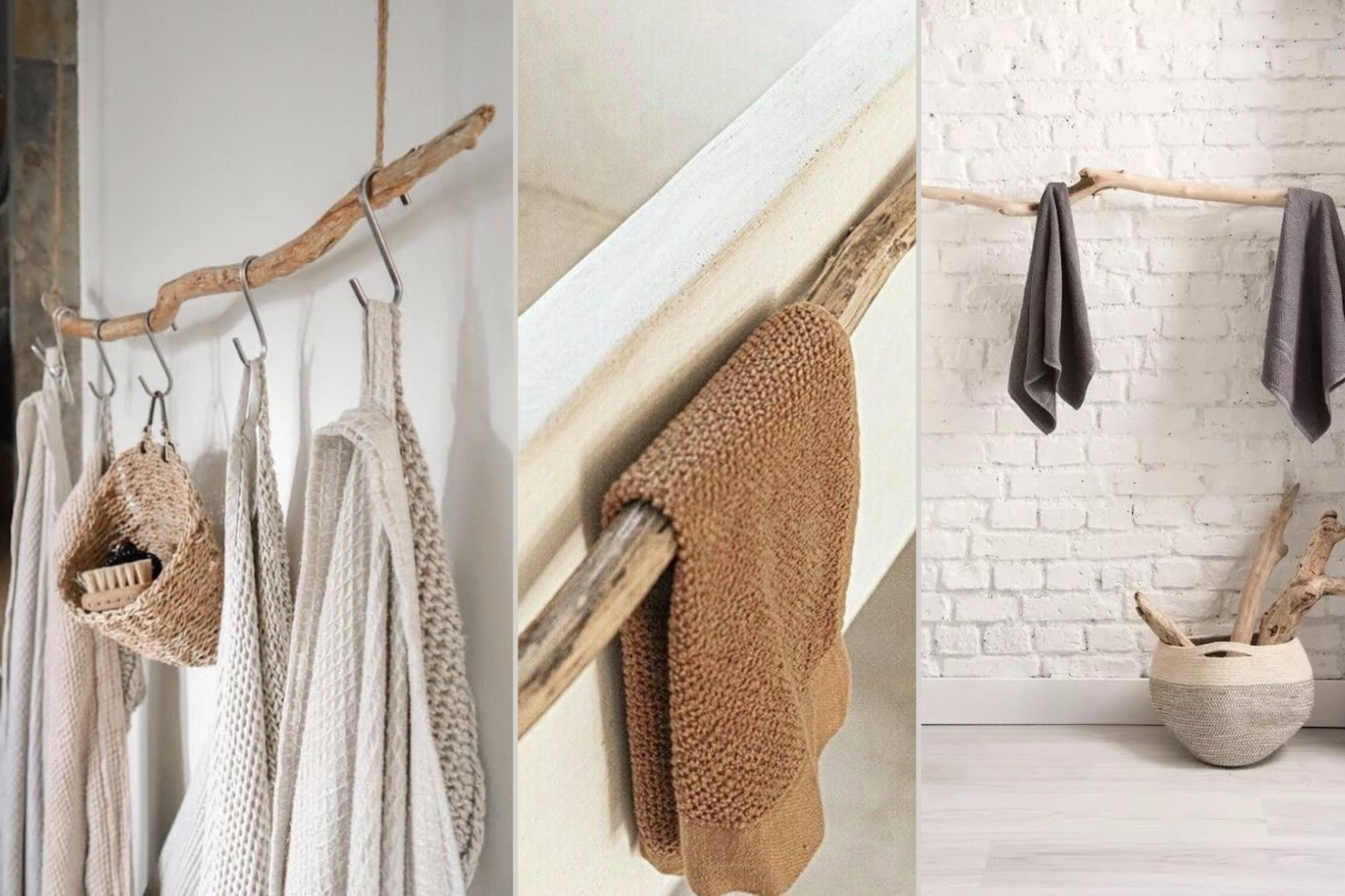
A sturdy branch can replace a conventional rail in several places around the home. Mounted against a wall or suspended from the ceiling, it creates a simple place for towels, clothes and lightweight storage.
In a bathroom, a horizontal branch can hold several towels without requiring individual rails. Hooks can be added when smaller items or baskets need their own place.
The same idea can work in a bedroom or entrance. A suspended branch can provide hanging space for a small selection of clothes, scarves or bags, particularly when a full wardrobe is unnecessary.
In the kitchen, shorter versions can hold tea towels, utensils or lightweight baskets. The function changes depending on where the rail is placed.
The branch itself does not need to be perfectly straight. A slightly irregular shape is often what makes it interesting, although there should still be enough straight sections for objects to hang comfortably.
It can be left untreated when appropriate or lightly sanded for a smoother surface. Secure fixing is important, particularly when the rail will carry wet towels or clothing.
Rather than adding another standard fitting, a simple piece of wood can provide the same function while becoming an individual detail within the room.
#BranchRail #DIYHome #StorageIdeas #NaturalInteriors #RivieraDuMonde