Home & Design @atelierdumonde
Reclaimed timber can give shelving a completely different character from newly finished wood. Old beams and boards bring visible grain, uneven surfaces, previous fixing marks and variations in colour that become part of the finished piece.
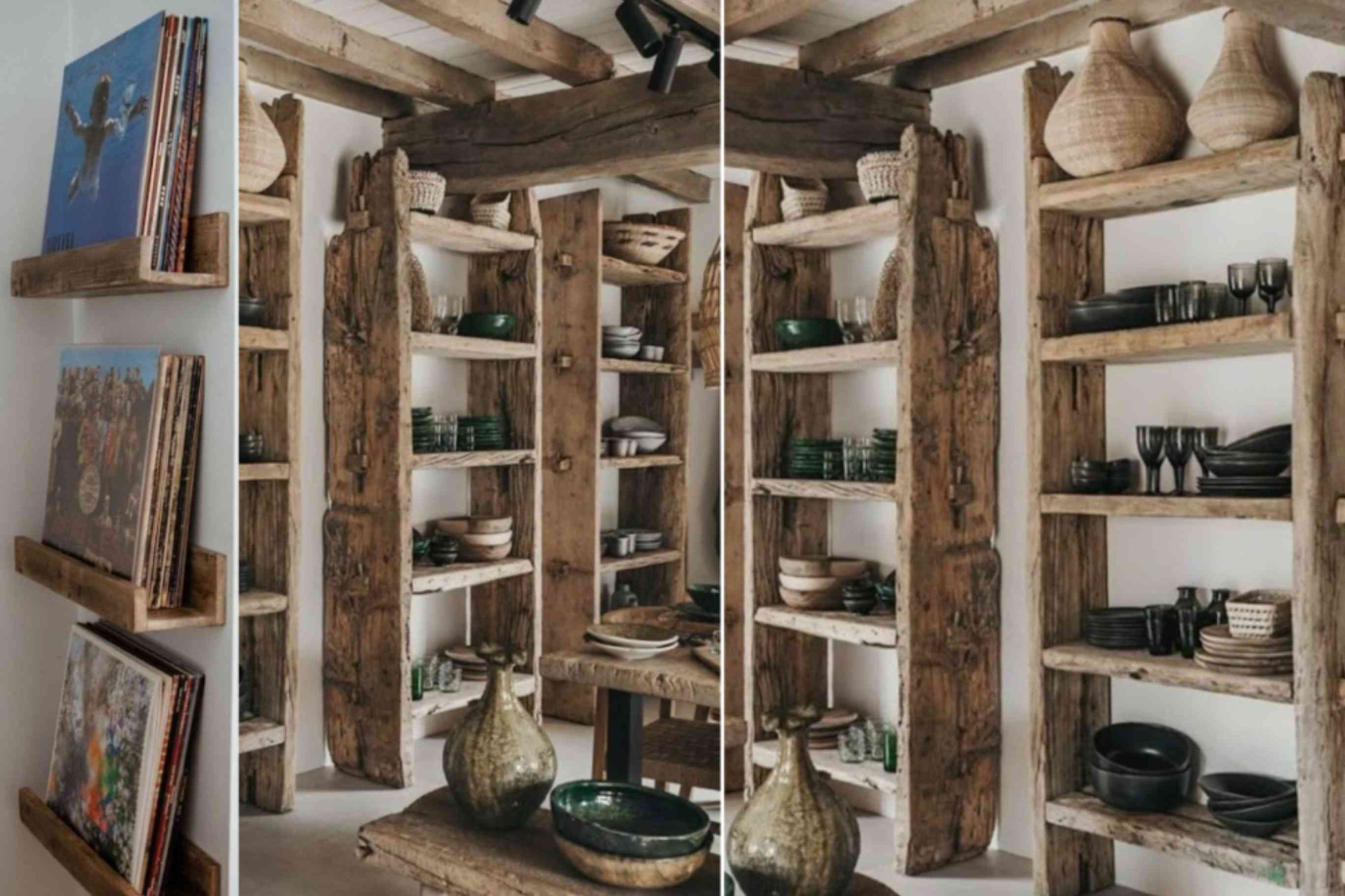
Open shelving is particularly suited to reclaimed wood. Thick boards can be mounted directly against a wall or incorporated into a freestanding structure, creating storage for ceramics, glassware, books and decorative objects.
The wood itself can determine much of the design. Instead of cutting every board to identical dimensions, differences in width and thickness can remain visible. Larger structural pieces can form the sides, while narrower boards become shelves.
In kitchens and dining spaces, this type of shelving works well for objects that are used regularly. Plates, bowls, glasses and serving pieces remain accessible and their different shapes and finishes add another layer to the interior.
Smaller reclaimed boards can serve a different purpose. A shallow ledge is enough to display books, magazines, records or artwork without the depth of a conventional bookshelf. Several ledges placed vertically make use of narrow sections of wall.
The contrast with the objects on display is also important. Dark ceramics, clear glass, woven baskets and smoother contemporary pieces stand out against rough aged timber, allowing old and new materials to sit together.
Reclaimed wood should still be prepared for its new function. Loose material needs to be removed and surfaces that come into frequent contact with hands or tableware should be cleaned and smoothed where necessary.
Keeping the original marks visible gives the timber a second use without removing the characteristics it acquired during its first.
Want to see how reclaimed timber works throughout an interior?
Discover Reclaimed Wood in Alpine Interiors →
#ReclaimedWood #OpenShelving #InteriorDesign #NaturalMaterials #AtelierDuMonde