Travel Never Goes Out of Style
Les Couleurs du Monde Magazine - Where’s Your Next Escape? Discover our editions. Contact: info@lescouleursdumonde.com
Travel & Escapes @travelwithcouleursdumonde
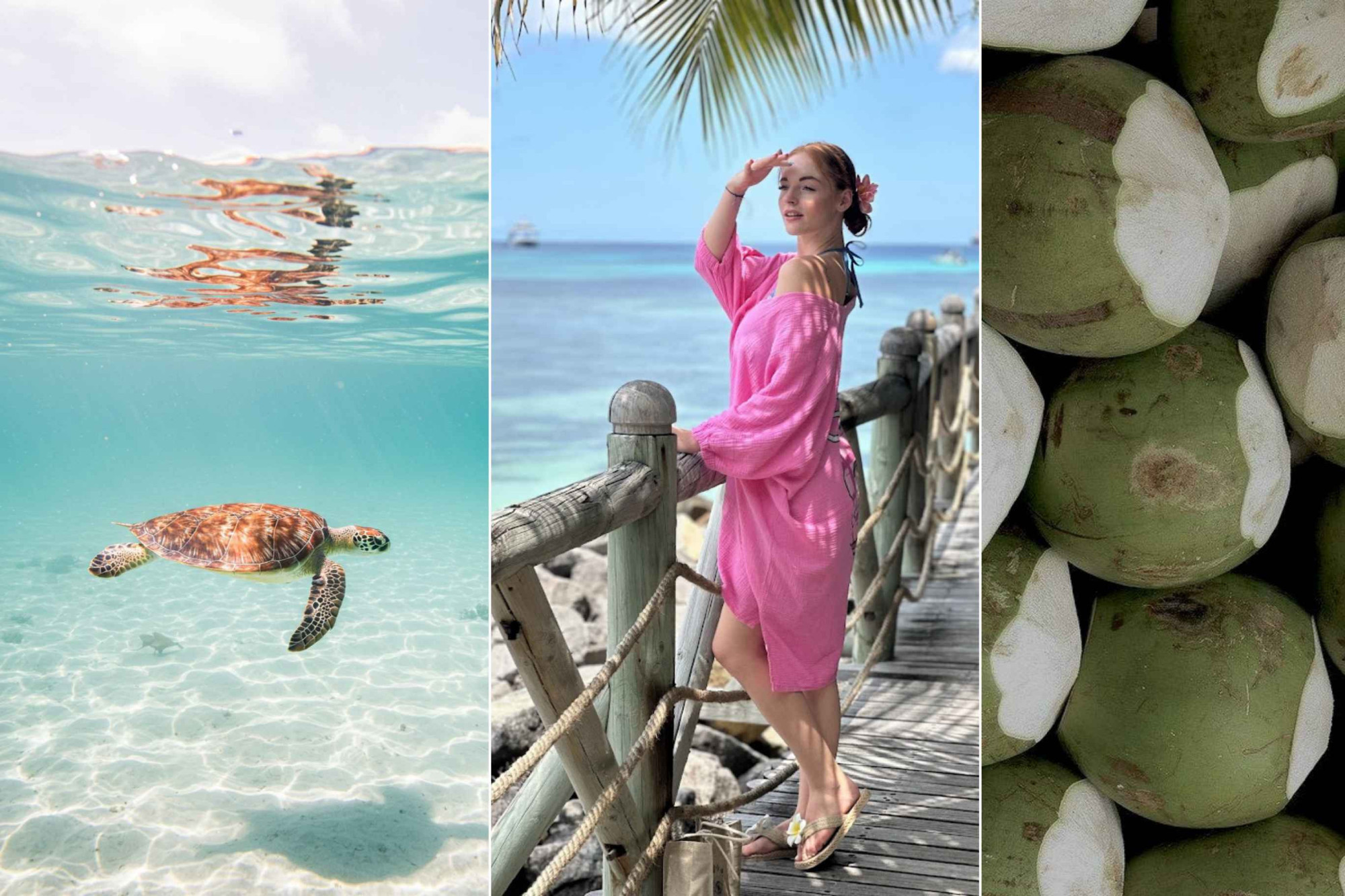
The Seychelles may look like a classic tropical escape, but there is considerably more variety between the islands than the photographs of white beaches suggest.
Mahé is the largest island and the main arrival point, combining beaches with mountainous interiors, local markets and the small capital of Victoria. Praslin has a quieter character and is home to the Vallée de Mai, where the distinctive coco de mer palm grows naturally.
La Digue changes the pace again. Bicycles are a common way to get around and huge granite formations create some of the Seychelles' most recognisable coastal scenery.
The surrounding Indian Ocean is just as important. Snorkelling and boat trips reveal coral, tropical fish and sea turtles, while conservation projects across the archipelago protect habitats both on land and in the water.
With more than one island worth exploring, choosing the right location for your stay can make a significant difference to the trip.
→ Planning a stay in the Seychelles?
Find stays in the Seychelles with Les Couleurs du Monde Travel.
#Seychelles #IndianOcean #IslandTravel #Mahe #Praslin #LaDigue #TravelAndEscapes #TravelWithLesCouleursDuMonde
Travel & Escapes @travelwithcouleursdumonde
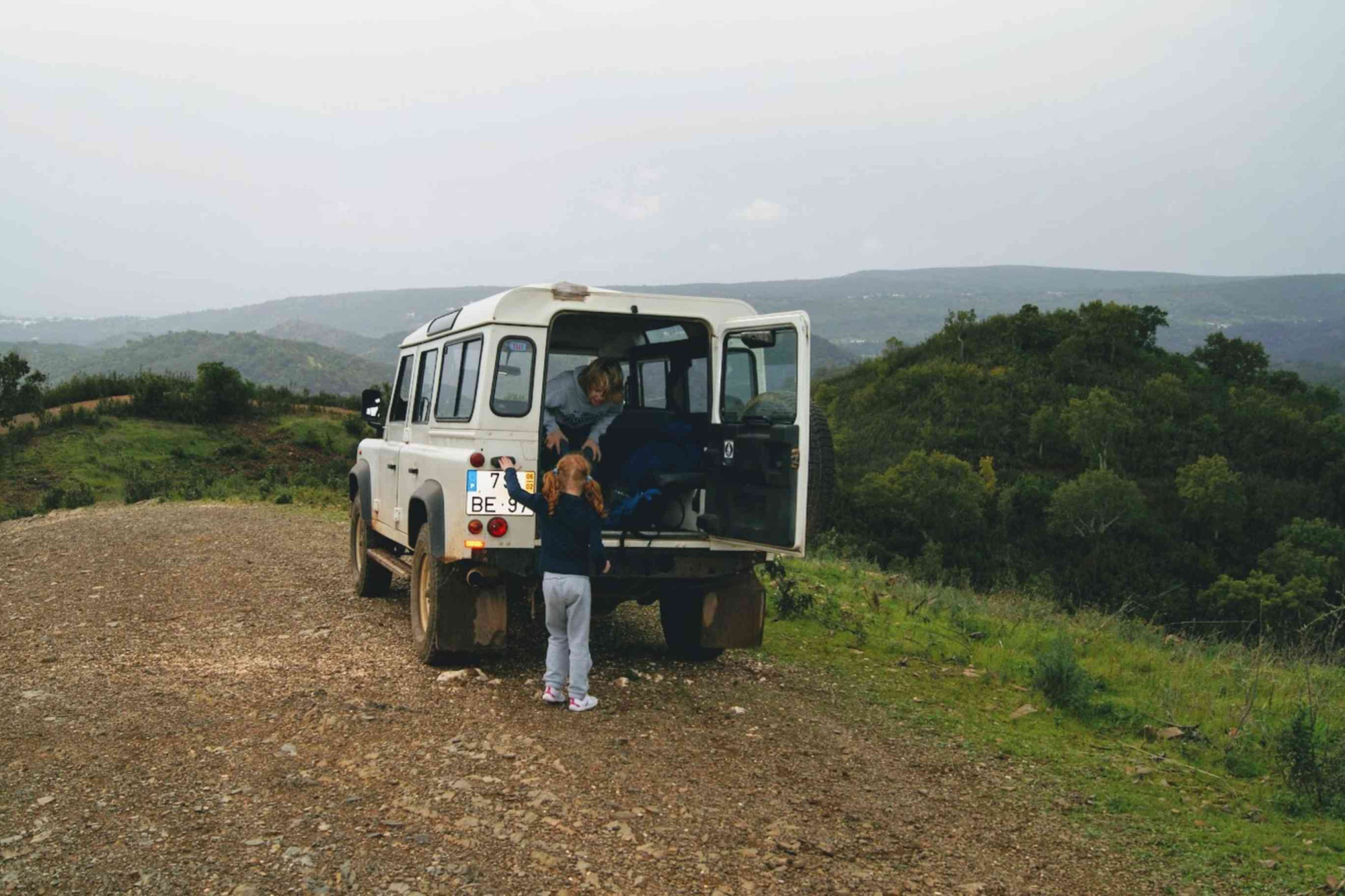
The Algarve is usually associated with its coastline, but travelling inland quickly changes the experience. Away from the beaches, roads and tracks lead through rolling hills, woodland and small villages where tourism is considerably less visible.
A 4x4 is particularly suited to exploring these rural areas. Instead of moving between the Algarve's familiar coastal stops, a day can be spent following quieter routes through the interior, stopping at viewpoints and discovering landscapes that are easily missed when travelling mainly along the coast.
This also makes an interesting starting point for a longer journey through southern Portugal. Continue north and the landscape gradually opens into the Alentejo, known for vineyards, cork oak forests, historic towns and a much lower population density.
One of the region's essential stops is Évora, a UNESCO World Heritage city and European Capital of Culture 2027. Its Roman temple, historic centre and surrounding wine country make it a natural contrast to the Algarve and an interesting next chapter of the same Portuguese journey.
#Algarve #Portugal #Alentejo #Évora #RoadTripPortugal #TravelAndEscapes #TravelWithLesCouleursDuMonde
Travel & Escapes @travelwithcouleursdumonde
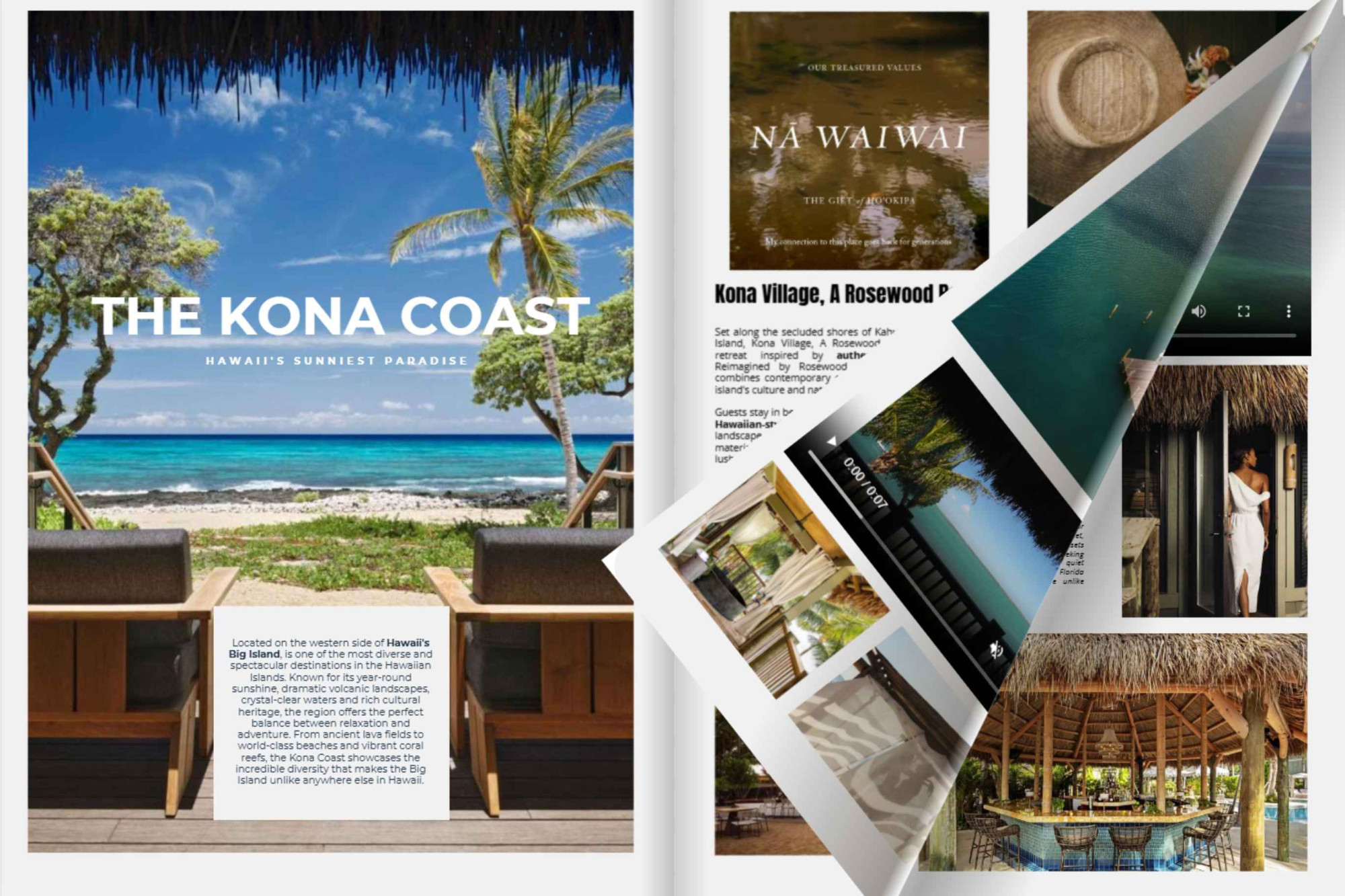
The Kona Coast stretches along the western side of Hawaii's Big Island, where black lava fields meet surprisingly clear blue water. Its sunnier climate makes this one of the island's most popular areas to stay, but the landscape is very different from the classic image of a tropical island.
Days here can move between snorkelling, small beaches and drives through volcanic scenery. The coast is also closely connected to Hawaiian history and culture, something worth making part of a trip rather than focusing entirely on the resorts.
One of the area's most interesting stays takes a particularly strong approach to that connection, combining contemporary hospitality with Hawaiian traditions and a setting directly beside the Pacific.
Want to know where we stayed, what makes the Kona Coast different and why this part of the Big Island deserves more time?
→ Discover the Kona Coast and our featured stay in the fifth edition of Les Couleurs du Monde Magazine.
Read the feature in our fifth edition
Shop for the Destination
The colours of the Green Isles bikini fit naturally into a Kona Coast wardrobe, particularly for days spent around the water.
→ Shop the Green Isles Top
→ Shop the Green Isles Bottom
#KonaCoast #Hawaii #BigIsland #IslandTravel #TravelAndEscapes #TravelWithLesCouleursDuMonde
Travel & Escapes @travelwithcouleursdumonde
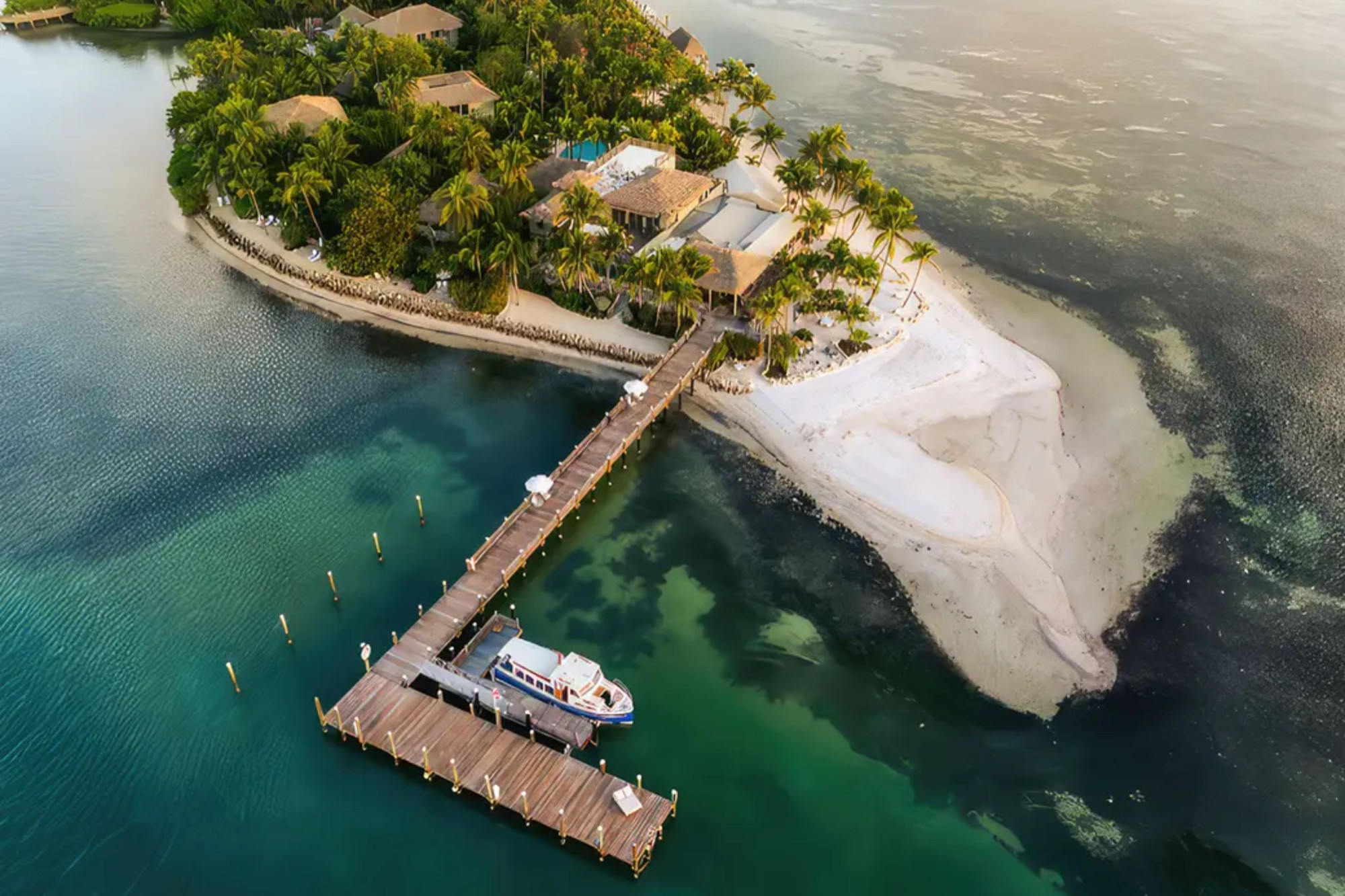
The Florida Keys begin south of Miami and continue across a long chain of islands towards Key West. The Overseas Highway connects them, turning the journey itself into an important part of the experience.
Some travellers come for diving and snorkelling, others for boating, fishing or simply moving between the different islands. The further south you travel, the landscape gradually changes, with stretches of open water, mangroves and smaller communities along the route.
There are also some exceptional places to stay. Hidden among the Lower Keys are private-island retreats that make it possible to experience this part of Florida away from the busier stops.
Which islands are worth visiting, where should you stop along the Overseas Highway and what is it like to stay on a private island in the Keys?
→ Discover the Florida Keys and our featured island stay in Les Couleurs du Monde Magazine.
#FloridaKeys #Florida #IslandTravel #KeyWest #TravelAndEscapes #TravelWithLesCouleursDuMonde
Travel & Escapes @travelwithcouleursdumonde
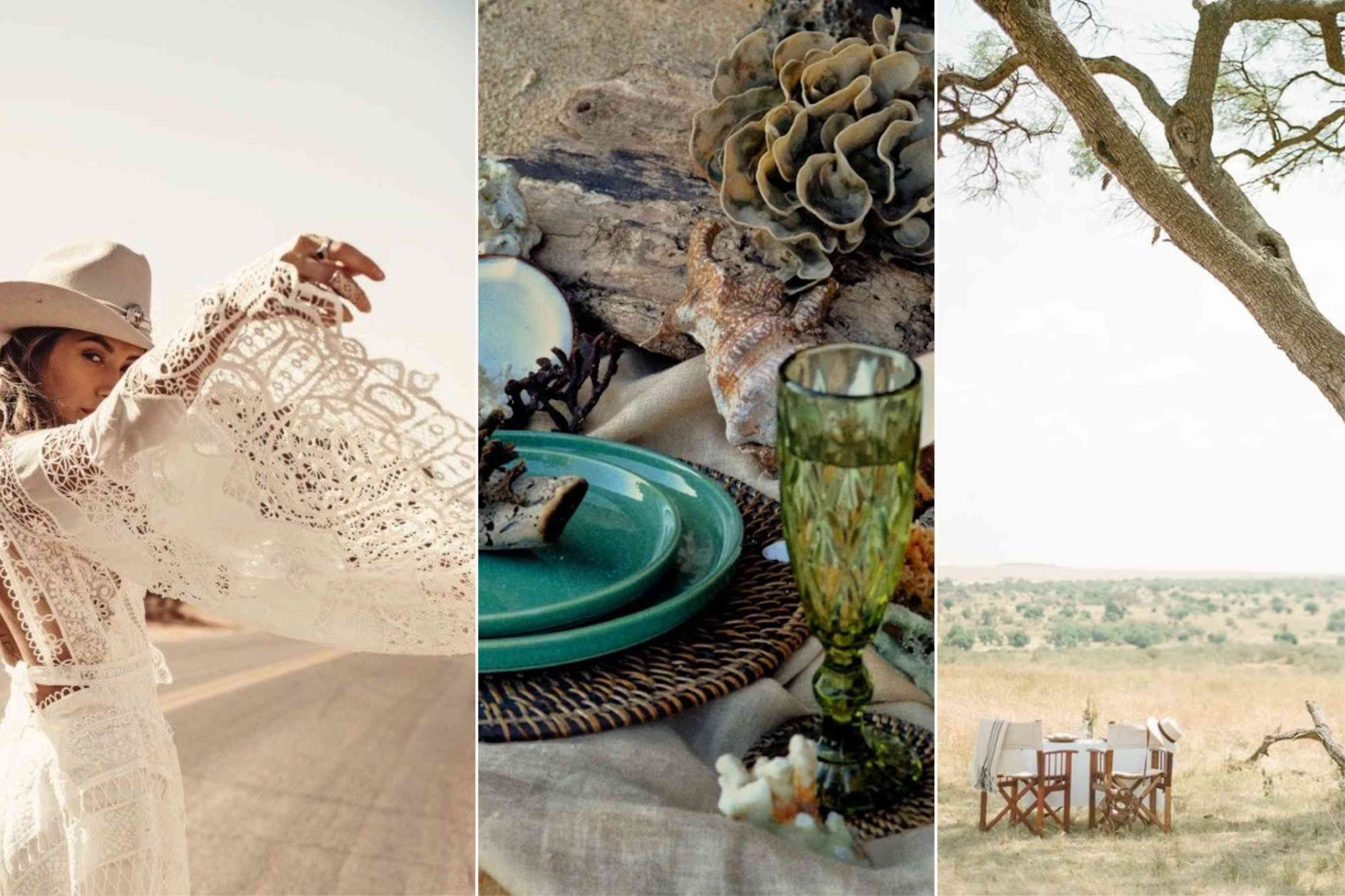
Susafa is a historic masseria in central Sicily where the surrounding landscape remains an important part of the experience. Set among wheat fields and olive groves, the estate has been restored as a countryside retreat while retaining much of its original rural character.
The property has remained connected to the same family for generations, with farming continuing to play an important role. Ingredients grown on the estate and sourced from nearby producers are used in the restaurant, where Sicilian cooking and seasonal produce are central to the menu.
Days at Susafa can include time by the pool, walks through the surrounding landscape and experiences connected to food and the estate. Cooking classes, wine tastings and seasonal harvests provide a closer look at the agricultural traditions that continue to shape life here.
The interiors follow the same understated approach. Natural stone, wood, linen and handcrafted details sit within the restored buildings, keeping the connection with the original masseria visible throughout the stay.
There is much more to discover about the history of Susafa, its farm-to-table philosophy and life on the estate.
→ Discover the full Susafa story in Les Couleurs du Monde magazine.
#LesCouleursduMonde #Susafa #Sicily #Italy #CountrysideTravel #TravelAndEscapes
Travel & Escapes @travelwithcouleursdumonde
The area around Artà is a good choice for travellers looking for a quieter side of Mallorca without giving up access to the coast, restaurants and places to explore.
The historic town of Artà sits in the northeast of the island. Its narrow streets contain traditional stone houses, independent shops and restaurants, while the hilltop Santuari de Sant Salvador provides views across the town and surrounding countryside. The weekly market is another reason to visit, bringing local produce, food and crafts into the centre.
Nature is close by. Parc Natural de la Península de Llevant, just outside Artà, protects a large area of mountains and coastline with walking routes through a much less developed part of Mallorca. Along the coast, smaller coves provide an alternative to the island's larger resort beaches.
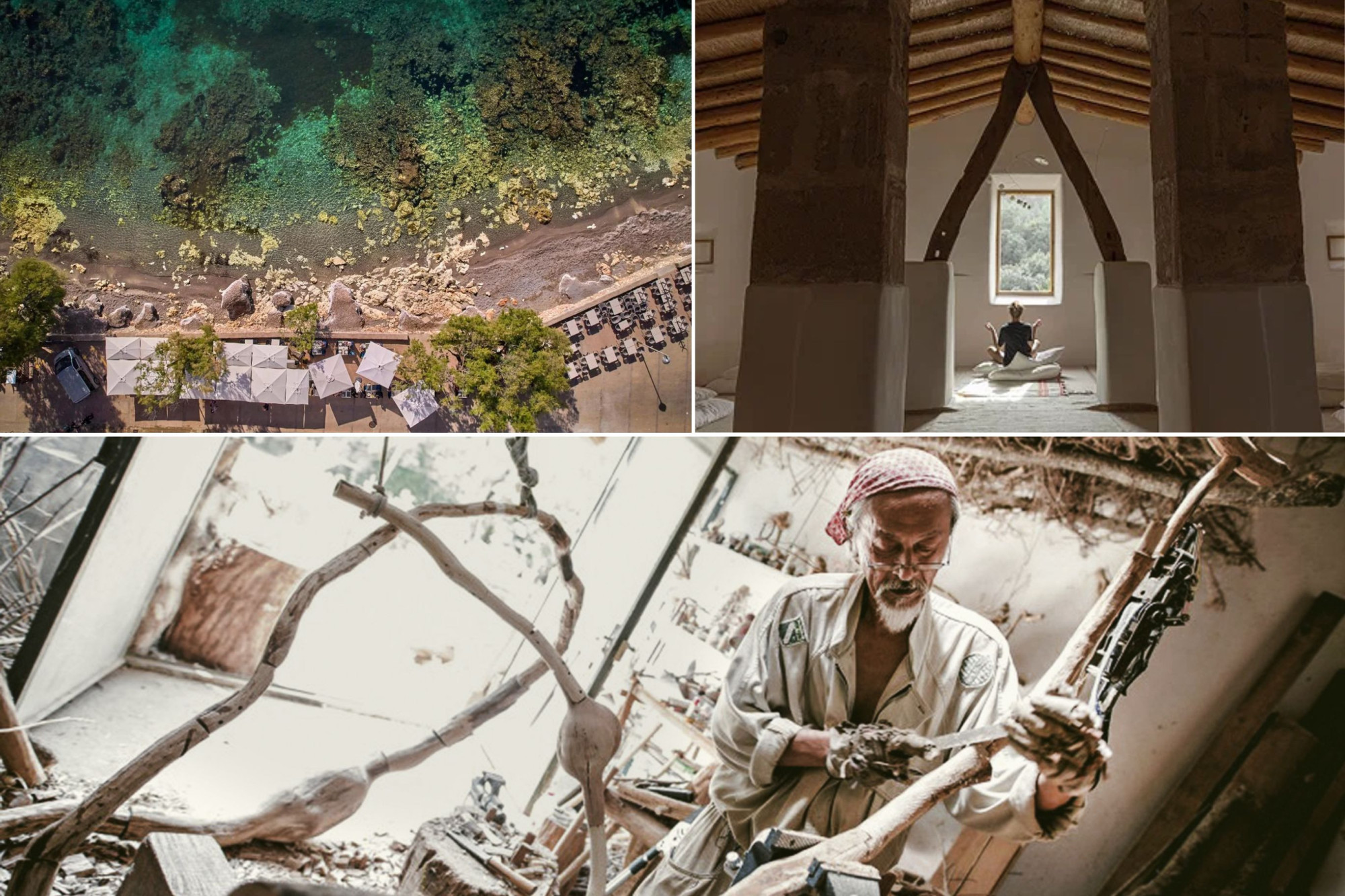
A stay at Es Racó d'Artà fits particularly well with this part of the island. Hidden within the countryside outside Artà, the property combines traditional Mallorcan architecture with restrained contemporary interiors and natural materials. Its rooms and suites are distributed throughout the landscape, with gardens, olive groves and surrounding countryside forming an important part of the experience.
The region also retains a strong connection with craftsmanship. The magazine introduces Hiroshi, a Japanese artist based in Mallorca whose work uses reclaimed branches, wood, earth, paper and natural pigments. His work is an interesting example of how the island continues to attract international creatives while maintaining a close relationship with its landscape and materials.
Food provides another reason to explore beyond Mallorca's coastal resorts. Around Artà, menus draw on seasonal vegetables, olive oil, seafood, local cheeses and wines. Small producers, markets and independent restaurants make it possible to discover Mallorcan ingredients without turning the trip into a dedicated food itinerary.
Together, Artà, Es Racó d'Artà and the surrounding countryside show a part of Mallorca where the destination is about more than beaches. Architecture, nature, food, craftsmanship and a strong local identity can all be explored within a relatively small area.
#Mallorca #Artà #EsRacóDArtà #MallorcaTravel #BalearicIslands #Spain #TravelWithLesCouleursDuMonde
Travel & Escapes @travelwithcouleursdumonde
Airelles Gordes, La Bastide occupies one of the most distinctive locations in Provence, directly within the hilltop village of Gordes and overlooking the Luberon Valley.
The property is housed within historic buildings inspired by an 18th-century Provençal residence. Inside, the traditional character continues through antique furniture, patterned fabrics, paintings and decorative objects. The rooms and suites are individually designed, so the experience feels closer to staying in a grand Provençal home than in a standardised luxury property.
The setting is a major part of the stay. Terraces look across the Luberon while the gardens and outdoor swimming pool provide quieter spaces away from the village streets. The Airelles Spa adds treatment rooms and relaxation areas, making it possible to spend a full day at the property without needing to plan an excursion.
Food is another important part of La Bastide. Guests can choose between different restaurants and terraces, from breakfast overlooking the valley to Provençal dishes built around regional ingredients. Dining outdoors is particularly appealing during the warmer months when the terraces become an extension of the hotel.
The location in Gordes also puts several recognised Provençal destinations within easy reach. The Abbaye Notre-Dame de Sénanque, surrounded by lavender fields in early summer, is only a short drive away. Roussillon, known for its ochre landscape and colourful buildings, is another worthwhile stop while exploring the Luberon.
For travellers who want to combine a luxury stay with one of Provence's most recognisable villages, La Bastide provides both without requiring a choice between the two. Gordes begins directly outside while much of the Luberon can be explored on day trips before returning to the property for the evening.
→ Discover Airelles Gordes, La Bastide in Les Couleurs du Monde Magazine.
#AirellesGordes #Gordes #Provence #Luberon #SouthOfFrance #ProvenceTravel #TravelWithLesCouleursDuMonde
Travel & Escapes @travelwithcouleursdumonde
Domaine des Gipières is a restored 16th-century Provençal bastide set in the countryside of the Haut-Var, close to Aups and Lac de Sainte-Croix. Its location is one of its strongest features: the estate sits within nearly 100 hectares of largely unspoilt landscape, creating a very different experience from staying in one of Provence's busier towns or villages.
Accommodation is spread across the estate rather than concentrated in a conventional hotel building. Guests can choose from self-catering cottages, a cosy tiny house and woodland retreats, giving each stay a greater sense of independence and privacy. The interiors retain a clear Provençal character, with stone walls, timber, natural materials and simple furnishings.
Much of the experience takes place outside. A panoramic swimming pool overlooks the surrounding countryside, while the estate also has a sauna, hammam, pétanque court and children's playground. Walking and cycling can easily become part of the day without having to leave the property.
Domaine des Gipières is also particularly interesting for travellers with horses. The estate has 10 donkeys and horses as well as paddocks and other equestrian facilities. Guests can stay with their own horse, opening up the possibility of exploring the surrounding Haut-Var countryside on horseback.
Its position also makes it a useful base for discovering this part of Provence. Aups, known for its Provençal market, is nearby while Lac de Sainte-Croix and the Verdon area can be reached for days centred around swimming, walking and exploring the landscape.
Domaine des Gipières shows another side of a Provençal stay: less focused on being in the centre of a famous village and more on having space, nature and facilities directly around you.
Read more about Domaine des Gipières in Les Couleurs du Monde Magazine→
#DomaineDesGipières #Provence #HautVar #Aups #LacDeSainteCroix #ProvenceTravel #TravelWithLesCouleursDuMonde
Travel & Escapes @travelwithcouleursdumonde
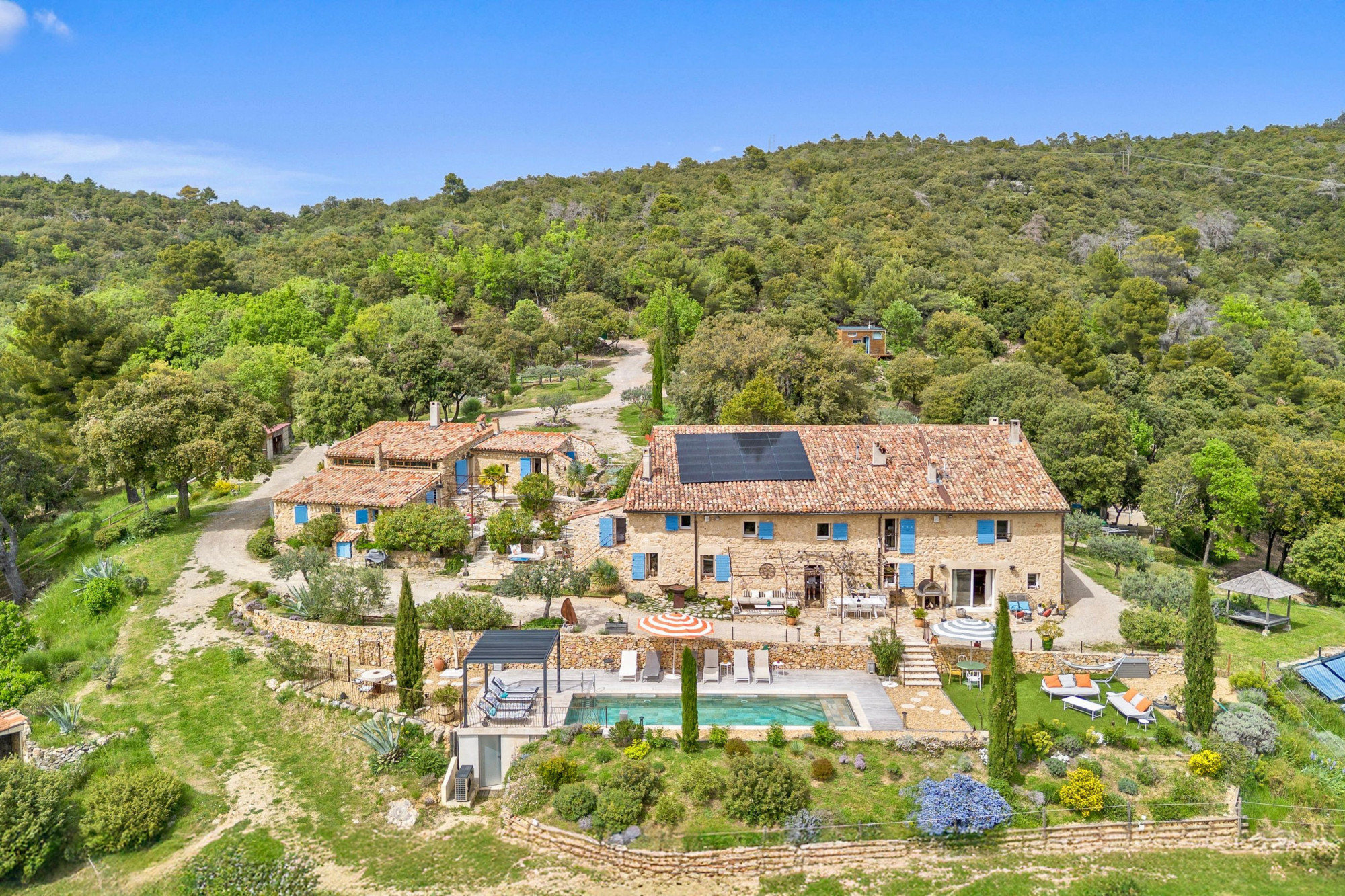
Lisbon is one of those European capitals where simply moving between neighbourhoods reveals much of what makes the city distinctive. The steep streets, patterned calçada pavements, azulejo-covered façades and yellow trams create a recognisable setting, but each part of Lisbon has its own character.
Alfama is a good place to begin. Its narrow streets climb between the Sé de Lisboa, small squares and viewpoints overlooking the Tagus. Miradouro das Portas do Sol is one of the best-known stops in this part of the city, while Castelo de São Jorge sits higher above the historic centre.
The famous Tram 28 is another way to connect several neighbourhoods. Its route passes through areas including Graça and Alfama before continuing through Baixa and Chiado towards Estrela and Campo de Ourique. Along the way it passes landmarks such as the cathedral and streets lined with traditional tiled buildings.
The small vehicles seen throughout the city have also become part of modern Lisbon. Tuk-tuks are widely used for guided tours, particularly through the older districts where the hills and narrow streets make covering several neighbourhoods on foot more demanding. Some tours connect Alfama, Mouraria, Bairro Alto and Praça do Comércio with stops at the city's miradouros.
Continue towards Baixa for the more formal side of Lisbon, including Praça do Comércio beside the Tagus. From here, Chiado and Bairro Alto are within walking distance, bringing together cafés, shops, restaurants and evening life. For another side of the city, Belém adds the Jerónimos Monastery, the Belém Tower and the tradition of the pastel de nata.
Lisbon works particularly well as a city break because there is no single area that needs to dominate the trip. A morning in Alfama, lunch around Chiado, an afternoon beside the river and an evening in Bairro Alto can all feel like different parts of the same destination.
Planning a stay in Lisbon?
Find stays in Lisbon with Les Couleurs du Monde Travel.
Want to discover more of Portugal?
Continue from Lisbon to Évora and the Alentejo.
Discover another side of Portugal in our second edition →
#Lisbon #Portugal #TravelWithLesCouleursDuMonde #CityBreak #Alfama #TravelInspiration
Travel & Escapes @travelwithcouleursdumonde
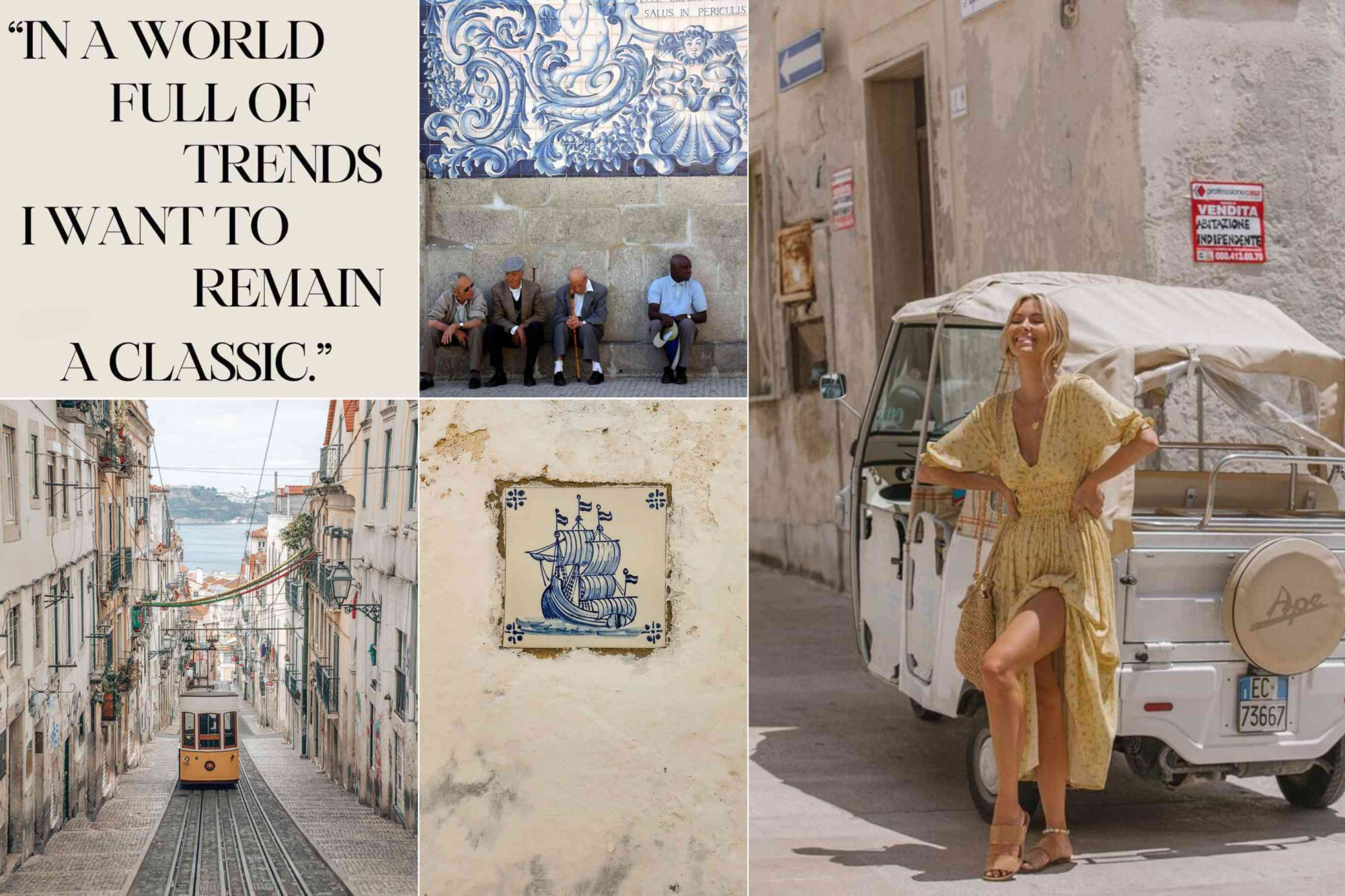
Food is one of the easiest ways to experience Lisbon, especially when you combine the classics with the places locals visit throughout the day.
Start with the pastel de nata, found in bakeries and cafés across the city. Pastéis de Belém is the famous address near the Jerónimos Monastery, while Manteigaria is another popular option if you are staying closer to the centre.
Seafood is equally important. Grilled sardines are closely associated with Lisbon, particularly during the summer and the Festas de Lisboa in June. Bacalhau appears in many forms, from traditional main dishes to pastéis de bacalhau, small cod fritters that work well as a snack.
For lunch or dinner, look for a traditional tasca serving straightforward Portuguese dishes. Petiscos, Portugal's answer to small sharing plates, are useful if you want to try several flavours during one meal. Octopus, clams, prawns, cured meats and local cheeses regularly appear on menus.
The Time Out Market Lisboa at Mercado da Ribeira is a completely different experience, bringing numerous restaurants and food concepts together in one place. It can be particularly useful on a short trip when you want to sample different sides of Lisbon's food scene without travelling across the city.
Drinks are part of the experience too. Try ginjinha, Lisbon's traditional sour-cherry liqueur, or order a glass of Portuguese wine with dinner. Even a simple bica, the local name for an espresso, at a neighbourhood café gives you another small introduction to everyday Lisbon.
Rather than searching for one definitive Lisbon restaurant, use the city as your menu. Stop for coffee in the morning, have seafood for lunch, try a few petiscos later in the day and leave room for another pastel de nata.
Planning a stay in Lisbon?
Find stays in Lisbon with Les Couleurs du Monde Travel.
#Lisbon #Portugal #LisbonFood #PortugueseFood #TravelWithLesCouleursDuMonde #TravelInspiration
Travel & Escapes @travelwithcouleursdumonde
A day in Lisbon can easily be built around the city itself, moving between neighbourhoods and stopping whenever something looks interesting.
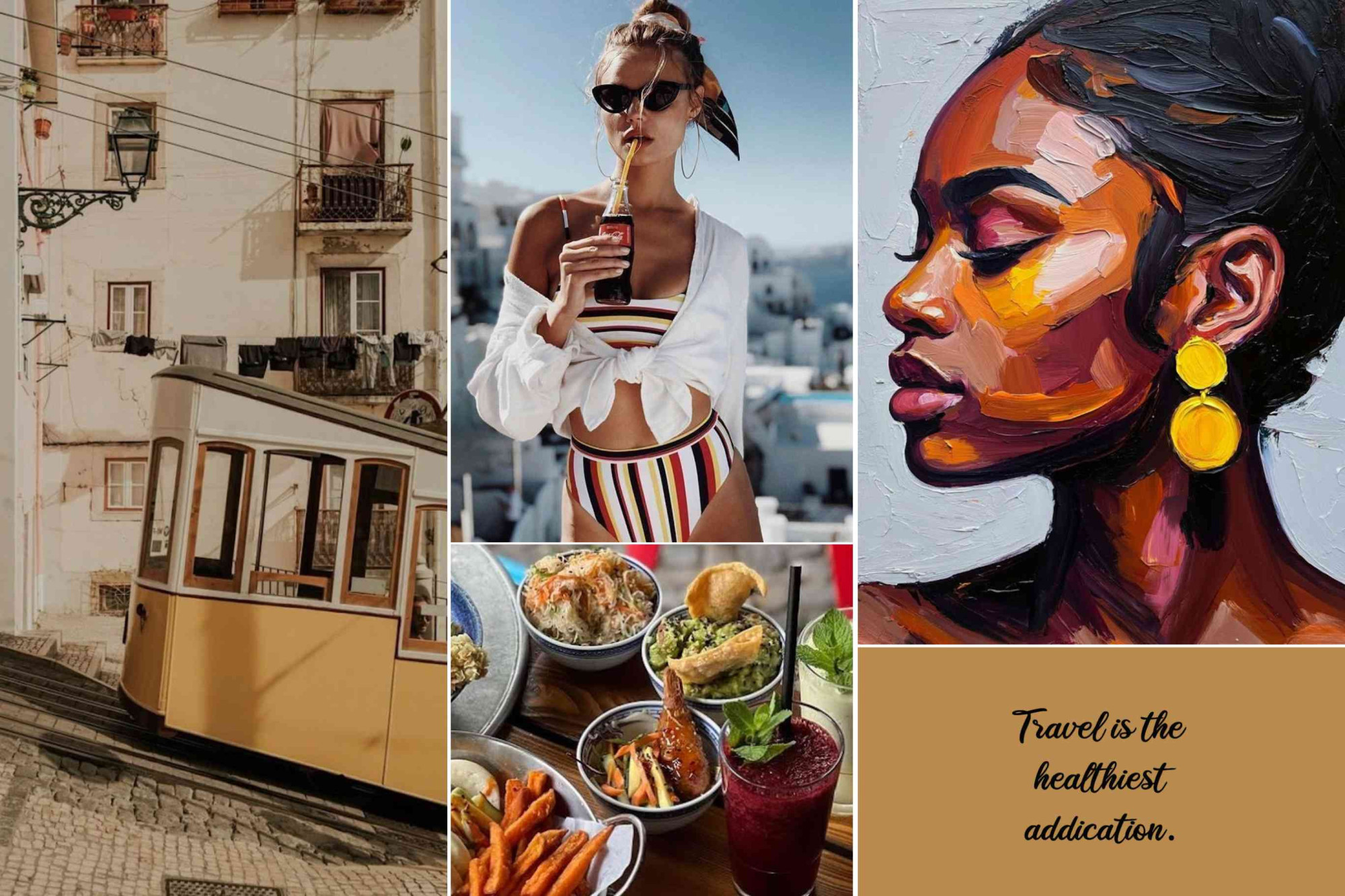
Start in Baixa, where the streets lead towards Praça do Comércio and the Tagus. From here, walk towards Chiado or take one of Lisbon's historic funiculars. The Elevador da Bica, which runs along the steep Rua da Bica de Duarte Belo, is one of the city's most recognisable sights.
Coffee and a pastel de nata make an easy morning stop. You will find them throughout Lisbon, so there is little need to travel across the city for one particular bakery. If you are around Chiado, Manteigaria is a convenient well-known address.
Continue towards Alfama, where tiled façades, narrow streets and small squares change the character of the city. The neighbourhood is also home to several viewpoints, including Miradouro de Santa Luzia and Portas do Sol, both overlooking the rooftops and the Tagus.
Leave some time for shopping during the afternoon. Alongside international stores, Lisbon has Portuguese fashion, ceramics, textiles and accessories worth looking for. Traditional azulejos are everywhere in the architecture, while contemporary designers regularly reinterpret Portuguese colours, patterns and materials in a very different way.
Later, stop for an ice cream, drink or coffee before dinner. Lisbon's warmer months make it easy to spend much of the day outside, moving between terraces and neighbourhood streets instead of planning every stop in advance.
For dinner, return towards Chiado and Bairro Alto or stay around Alfama for a more traditional setting. It is a simple way to experience several sides of Lisbon in one day without turning the city into a checklist of attractions.
Planning a stay in Lisbon?
Find stays in Lisbon with Les Couleurs du Monde Travel.
Looking for more style inspiration for evenings away?
Discover Dressing Up Without a Dress Code →
#Lisbon #Portugal #Lisboa #CityBreak #TravelWithLesCouleursDuMonde #TravelInspiration
Travel & Escapes @travelwithcouleursdumonde
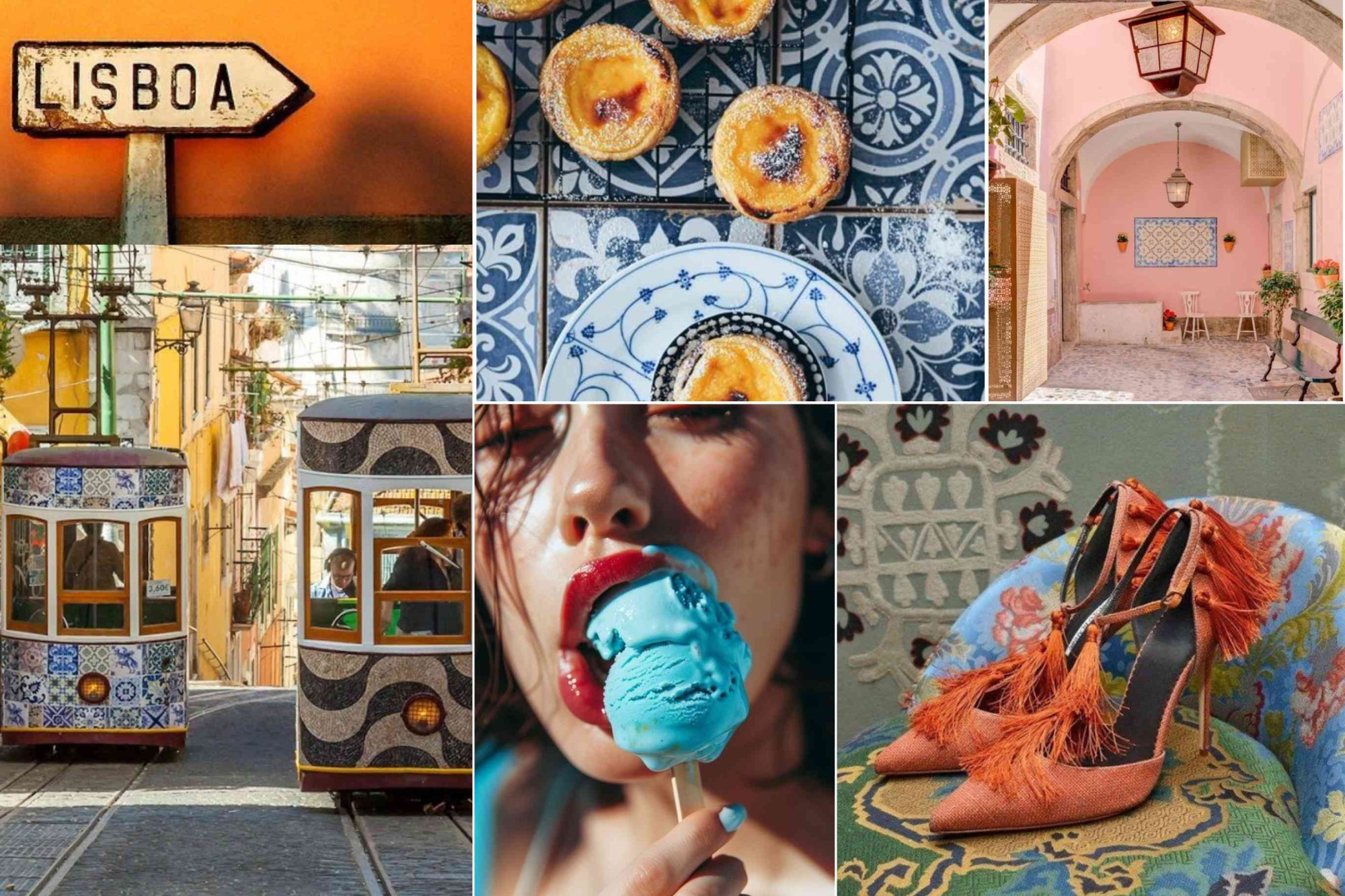
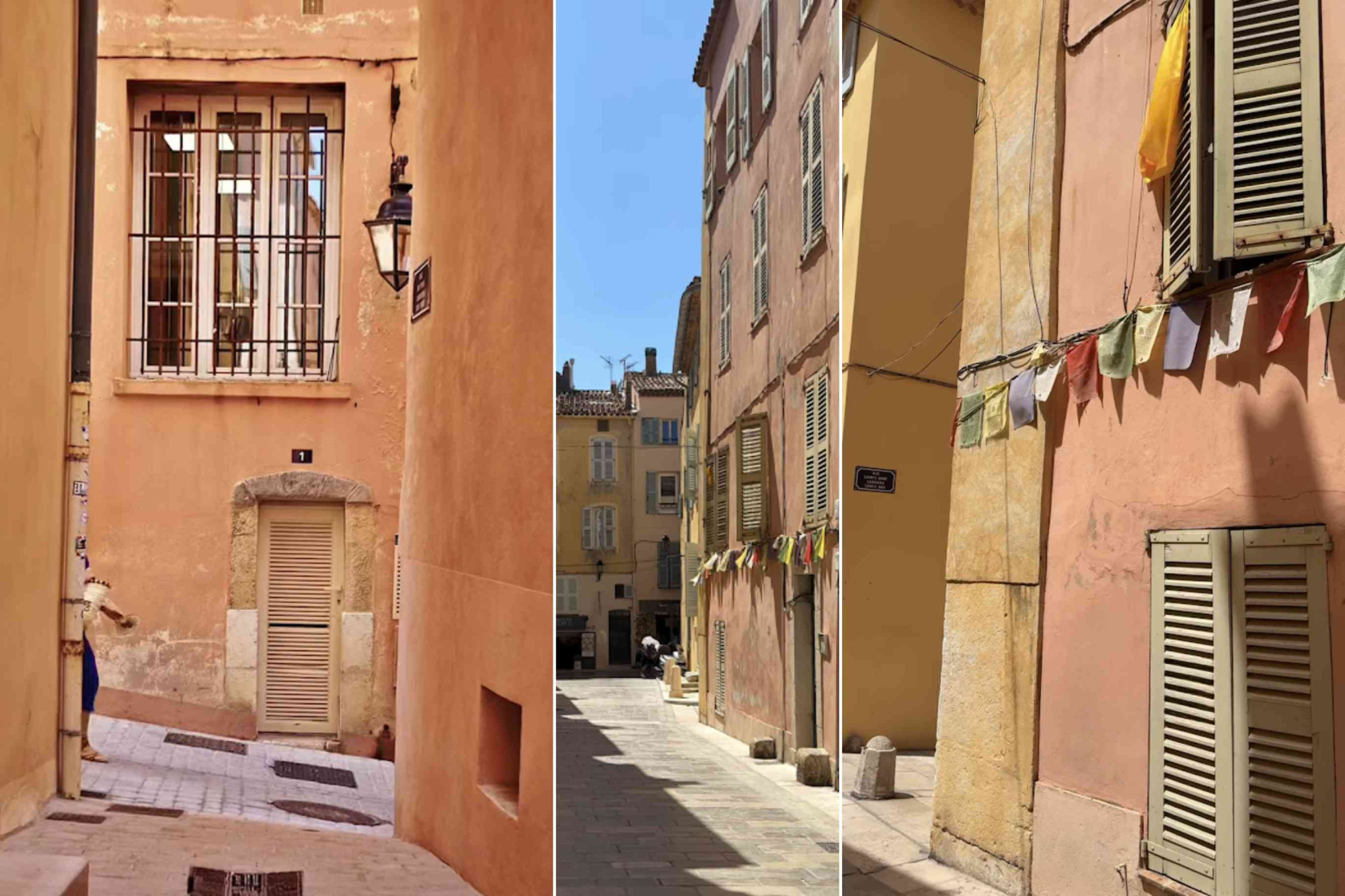
Colour is an important part of the architecture in the old streets of Saint-Tropez. Houses are painted in muted shades of ochre, salmon, pale yellow and terracotta, with the Mediterranean sun gradually softening the original tones.
Traditional shutters provide contrast. Grey-green, beige and faded blue appear regularly, while simple stone surrounds around doors and windows reveal the age and construction of many of the buildings.
The narrowness of the streets also affects how these colours are experienced. Some façades remain in shade for much of the day, while others receive direct sunlight, making the same colour appear completely different from one side of a street to another.
Look closely and the buildings are rarely perfectly finished. Weathered plaster, older paintwork and small architectural changes made over time remain visible. These details are part of the character of the historic centre.
The palette continues through neighbourhoods such as La Ponche, but it can also be seen in the streets leading between the Vieux Port and Place des Lices. Walking is the best way to notice the differences between individual buildings.
It is one of the simplest details to look for while exploring Saint-Tropez: instead of concentrating only on shops and well-known addresses, pay attention to the façades, shutters and changing combinations of colour from one street to the next.
Where to Stay
Hôtel des Lices, Saint-Tropez
A practical choice for staying close to the historic centre, with Place des Lices and the old streets within easy walking distance.
Planning a stay in Saint-Tropez?
Find stays in Saint-Tropez with Les Couleurs du Monde Travel.
#SaintTropez #CotedAzur #MediterraneanArchitecture #OldTown #FrenchRiviera
Travel & Escapes @travelwithcouleursdumonde
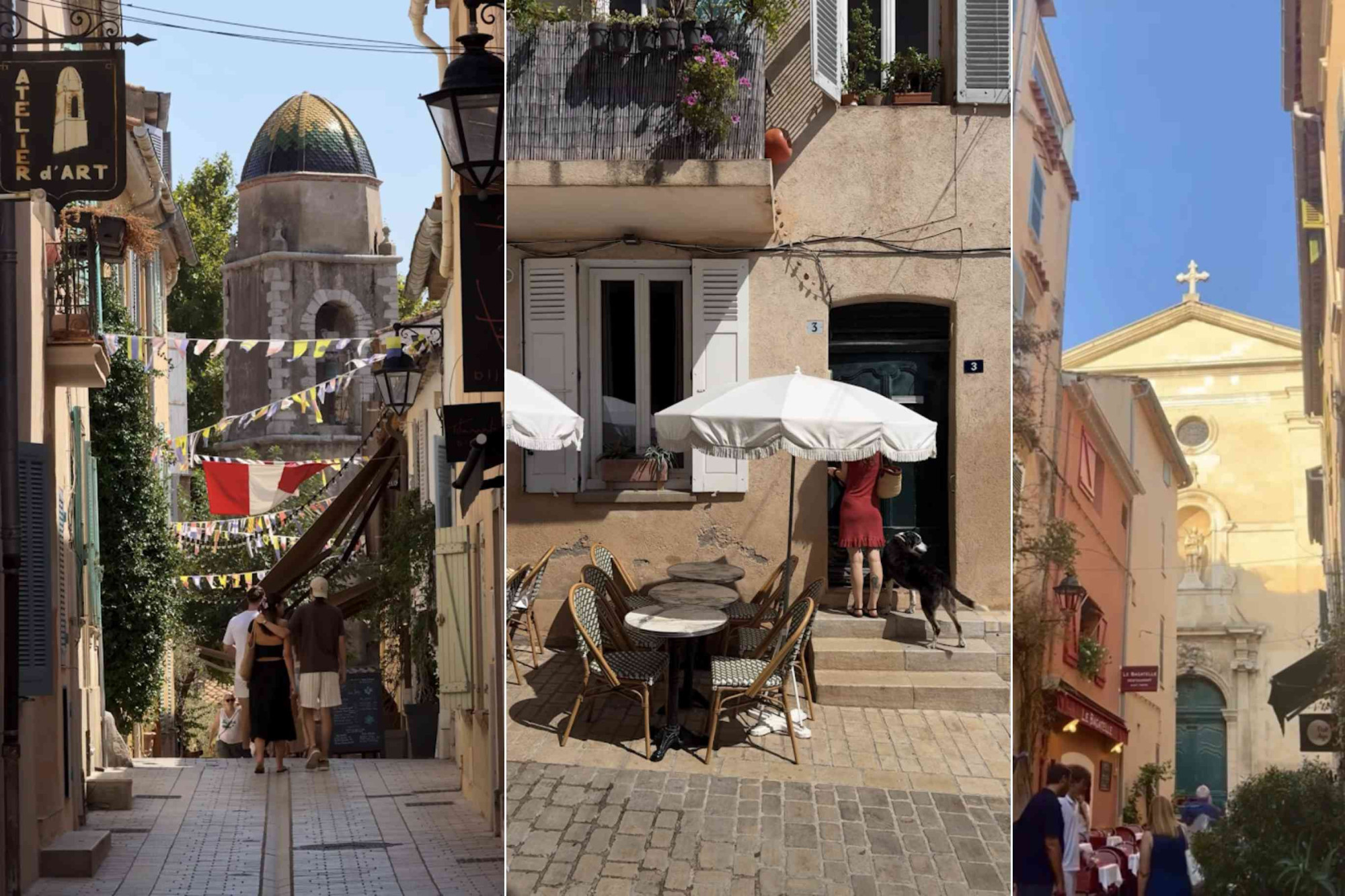
The historic centre of Saint-Tropez contains several churches and chapels that are easy to miss when exploring its narrow streets. Their towers and façades appear unexpectedly between houses, cafés and small squares.
The most recognisable is Notre-Dame-de-l’Assomption, the parish church whose ochre and sienna bell tower has become one of the visual landmarks of Saint-Tropez. Built in the Italian Baroque style, the present church dates largely from the 18th century.
Smaller religious buildings are scattered through the old centre too. The Chapelle de la Miséricorde, for example, can be recognised by its distinctive tiled dome rising above the surrounding streets. Built for the Brotherhood of Black Penitents, it is another reminder of the village's religious and architectural history.
Part of the interest comes from how these buildings are incorporated into Saint-Tropez today. They are surrounded by restaurant terraces, boutiques, homes and galleries rather than standing in a separate historic district.
The compact centre makes it easy to encounter several of them during the same walk. Start around the Vieux Port and continue through the old streets towards La Ponche and Place des Lices, looking above the façades as you go.
These buildings provide another way to understand Saint-Tropez before its beaches, fashion and international reputation became the images most closely associated with the village.
Where to Stay
Airelles Pan Deï Palais, Saint-Tropez
A small luxury hotel in the centre of Saint-Tropez, particularly interesting for its courtyard garden, pool and location close to Place des Lices.
Planning a stay in Saint-Tropez?
Find stays in Saint-Tropez with Les Couleurs du Monde Travel.
#SaintTropez #CotedAzur #FrenchRiviera #Architecture #Heritage
Travel & Escapes @travelwithcouleursdumonde
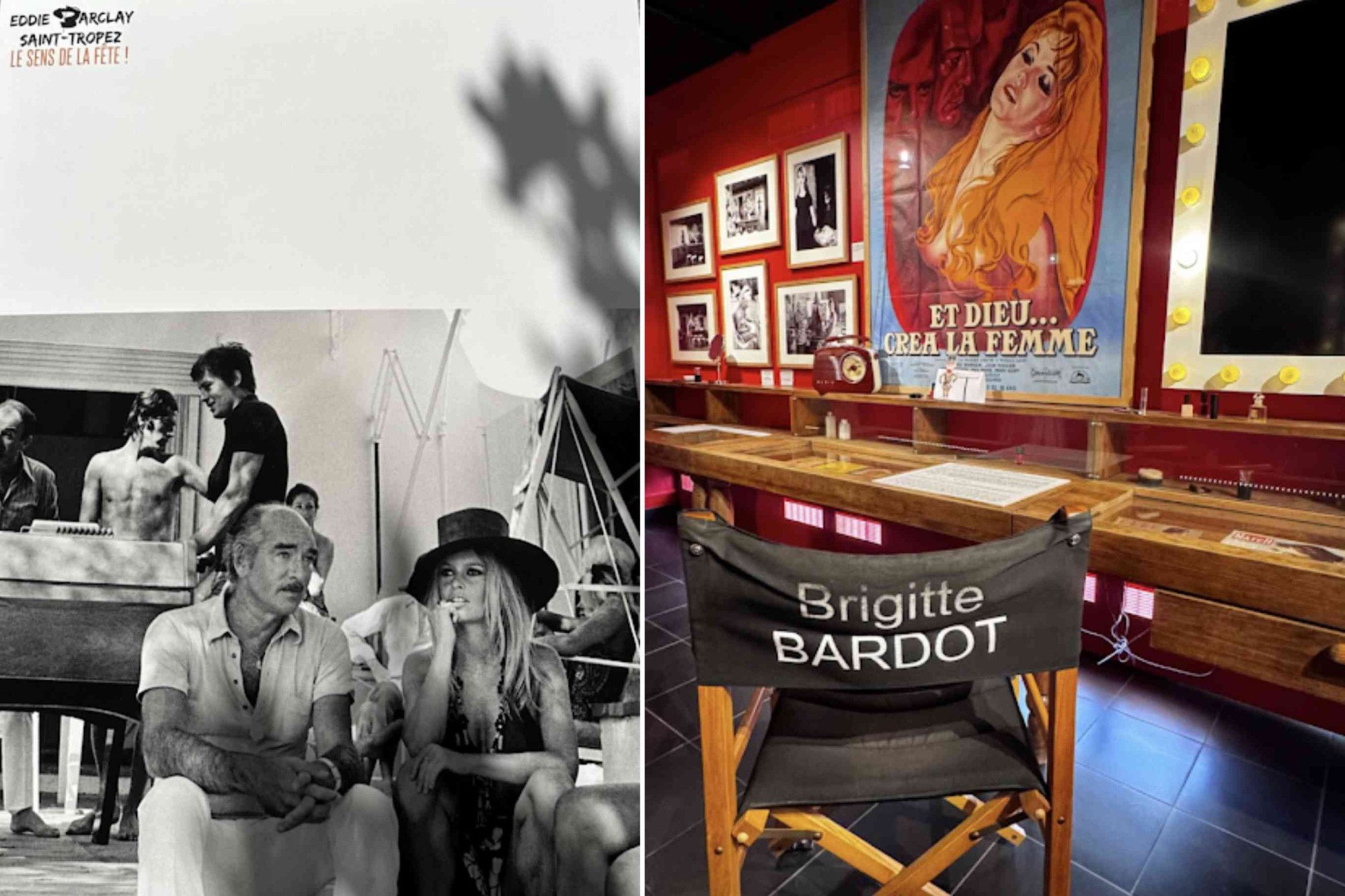
Brigitte Bardot is one of the figures most closely connected with the modern image of Saint-Tropez. Her relationship with the village became internationally known following the release of Roger Vadim's And God Created Woman (Et Dieu… créa la femme) in 1956.
The film was largely shot in and around Saint-Tropez and presented a Mediterranean setting that looked very different from the polished resorts already established elsewhere on the Côte d'Azur. Beaches, harbour scenes and village streets became part of the film's visual identity.
Bardot subsequently made Saint-Tropez part of her own life. Her presence attracted photographers, actors, musicians and other personalities, contributing to the growing international attention surrounding what had previously been a relatively small Provençal fishing village.
Her connection with cinema continued there too. Photographs taken during productions around Saint-Tropez document an era when film sets, celebrities and local life regularly crossed paths.
Today, this history can be explored at the Musée de la Gendarmerie et du Cinéma, located in the former gendarmerie building near the port. The museum covers filmmaking in Saint-Tropez and includes material connected with Bardot as well as the famous Gendarme de Saint-Tropez films starring Louis de Funès.
It provides useful context for understanding why cinema became such an important part of the identity of Saint-Tropez. Long before social media made destinations internationally recognisable overnight, films and photographs were already carrying images of the village around the world.
Where to Stay
Hôtel de Paris Saint-Tropez
Located opposite the former gendarmerie and only a short walk from the Vieux Port, it is particularly convenient for exploring the cinema museum and historic centre on foot.
Planning a stay in Saint-Tropez?
Find stays in Saint-Tropez with Les Couleurs du Monde Travel.
#BrigitteBardot #SaintTropez #FrenchCinema #CotedAzur #CinemaHistory
Travel & Escapes @travelwithcouleursdumonde
Paris changes noticeably in spring, when daily life starts moving back onto the streets, terraces and gardens. It is a good season for exploring the city without needing a tightly planned itinerary.
Start with one of the city's gardens. The Jardin du Luxembourg and Jardin des Tuileries are obvious choices, while smaller squares and residential streets can be just as interesting when magnolias, cherry blossom and other spring flowers are in bloom.
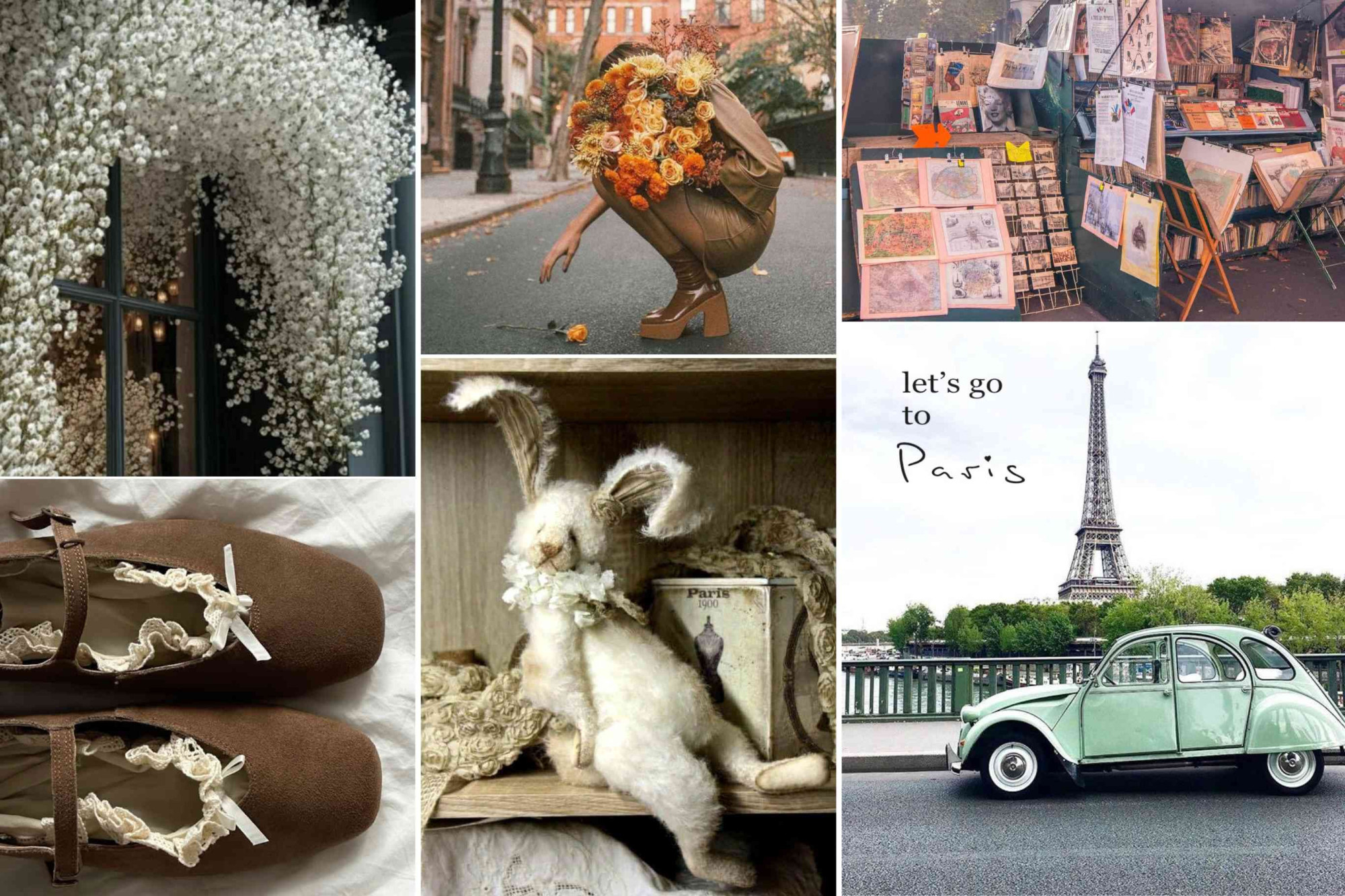
From the Tuileries, it is easy to continue towards Saint-Germain-des-Prés and the Left Bank. The bouquinistes along the Seine remain one of the most recognisable features of Paris, with their green boxes filled with second-hand books, prints, postcards and illustrations. They are worth browsing even when you are not looking for anything specific.
Spring also suits Paris's renewed interest in feminine, romantic fashion. Ballet flats and Mary Janes work naturally with lighter dresses, skirts and cropped trousers, while vintage shops and independent boutiques make neighbourhoods such as the Marais interesting for an afternoon of shopping.
Leave part of the day unplanned. Buy flowers from a neighbourhood florist, stop at a pâtisserie, browse a small bookshop or take a seat on a café terrace. These everyday stops are as much a part of a Paris trip as visiting the Louvre or seeing the Eiffel Tower.
Towards evening, walk along the Seine or cross to Île Saint-Louis before dinner. With daylight stretching further into the evening, spring gives you more time to explore different parts of the city before deciding where to end the day.
Planning a stay in Paris?
Find stays in Paris with hotel.eu
Discover More of Paris
From Notre-Dame and the Louvre to Montmartre, the Eiffel Tower and Versailles, explore another side of the city in our second edition.
Discover Paris in our second edition →
Travelling by electric car?
Hotel.eu’s Charge the Gap initiative supports the installation of EV charging stations at participating hotels across Europe.
Discover Charge the Gap in our second edition →
#Paris #ParisInSpring #France #CityBreak #TravelWithLesCouleursDuMonde #TravelInspiration
Travel & Escapes @travelwithcouleursdumonde
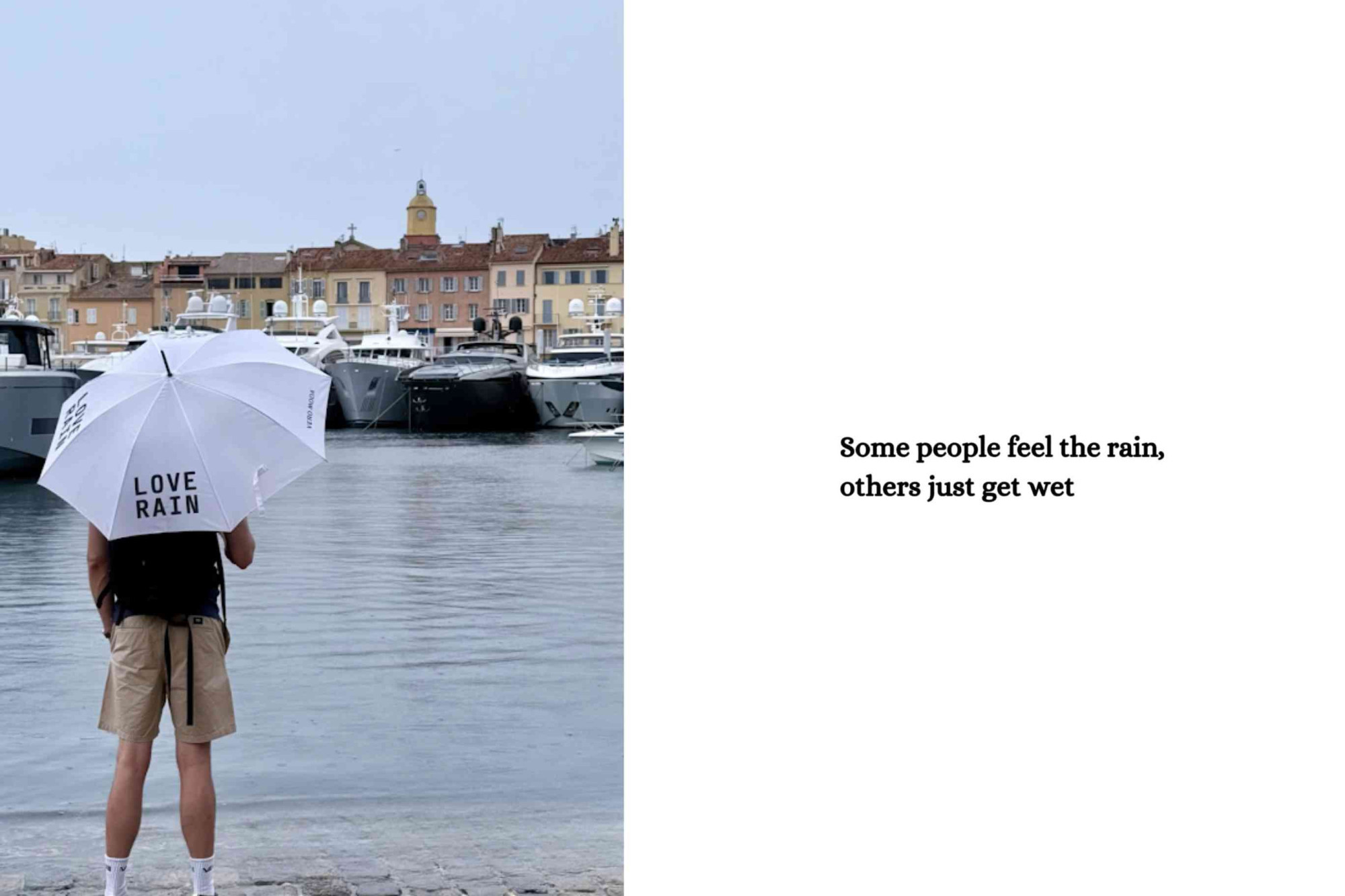
A rainy day in Saint-Tropez is a good opportunity to explore parts of the village that can easily be overlooked when the weather is centred around the beach.
Start around the Vieux Port, where the cafés remain an easy meeting point even when the terraces are quieter. From here, the streets of the old centre are only a few minutes away.
For an indoor visit, the Musée de l’Annonciade is particularly interesting. Located close to the harbour, its collection reflects the importance of Saint-Tropez to artists including Paul Signac, Henri Matisse and Pierre Bonnard.
Another option is the Musée de la Gendarmerie et du Cinéma, which explores the village's relationship with film and includes its well-known connections with Louis de Funès and Brigitte Bardot.
Rain is also a good excuse to spend more time exploring the boutiques and galleries around the centre or to stop for a longer lunch instead of heading towards Pampelonne.
If the weather clears later in the day, everything remains within walking distance. La Ponche, the port and Place des Lices can easily be added without needing to reorganise the entire day.
Saint-Tropez may be strongly associated with sunshine, beaches and outdoor life, but a day of rain can reveal a surprisingly cultural side of the village.
Hôtel de Paris Saint-Tropez
Its central location makes it convenient in less predictable weather, with the port, shops, restaurants and Musée de la Gendarmerie et du Cinéma all nearby.
Planning a stay in Saint-Tropez?
Find stays in Saint-Tropez with Les Couleurs du Monde Travel.
#SaintTropez #CotedAzur #FrenchRiviera #RainyDay #SaintTropezTravel
Travel & Escapes @travelwithcouleursdumonde
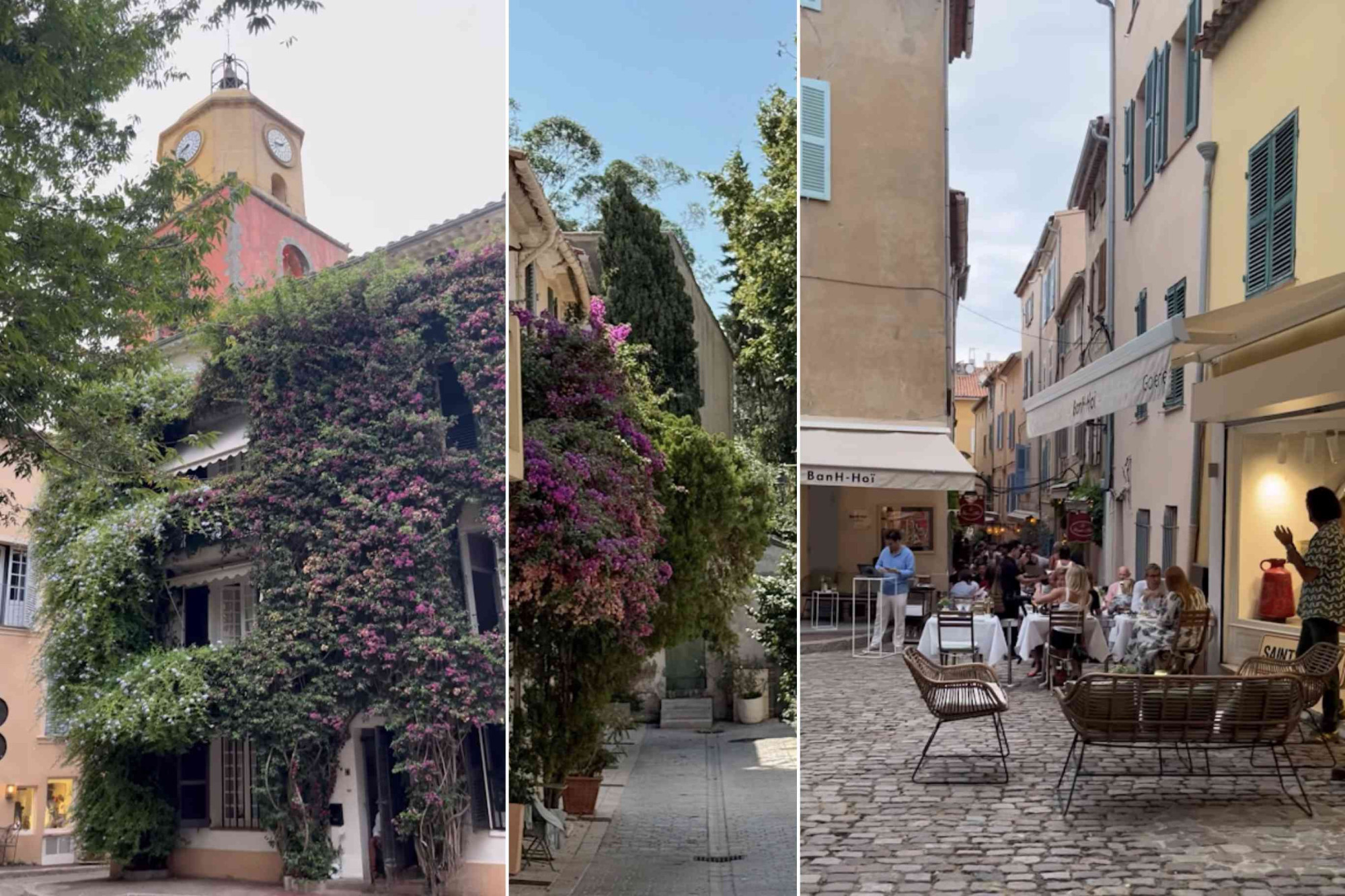
Bougainvillea is one of the plants that immediately adds colour to the streets and gardens of Saint-Tropez. During the warmer months, it climbs across façades, walls and pergolas, sometimes covering almost an entire building.
Although the plant originates from South America, it has become strongly associated with Mediterranean destinations. The warm climate, abundant sunlight and relatively dry summers of the Côte d’Azur provide conditions in which established plants can grow particularly well.
What appears to be the flower is actually something slightly different. The bright pink, purple, red, orange or white parts are bracts, specialised leaves surrounding the plant's much smaller flowers. It is these bracts that create the large areas of colour.
In Saint-Tropez, bougainvillea works particularly well with the architecture of the old village. Deep magenta against a faded ochre wall, for example, creates a very different effect from the same plant against a white façade. Traditional shutters, terracotta roofs and Mediterranean greenery add further colours around it.
You will encounter bougainvillea beyond the streets too. Hotels, restaurants and private gardens use it around entrances, terraces and courtyards, where mature plants can provide both colour and a sense of enclosure.
Its long flowering period is another reason it has become such a familiar sight in southern destinations. Through summer and into the warmer part of autumn, it can continue to bring strong colour to otherwise simple architecture.
Planning a stay in Saint-Tropez?
Find stays in Saint-Tropez with Les Couleurs du Monde Travel.
#Bougainvillea #SaintTropez #CotedAzur #MediterraneanGardens #LesCouleursDuMonde
Travel & Escapes @travelwithcouleursdumonde
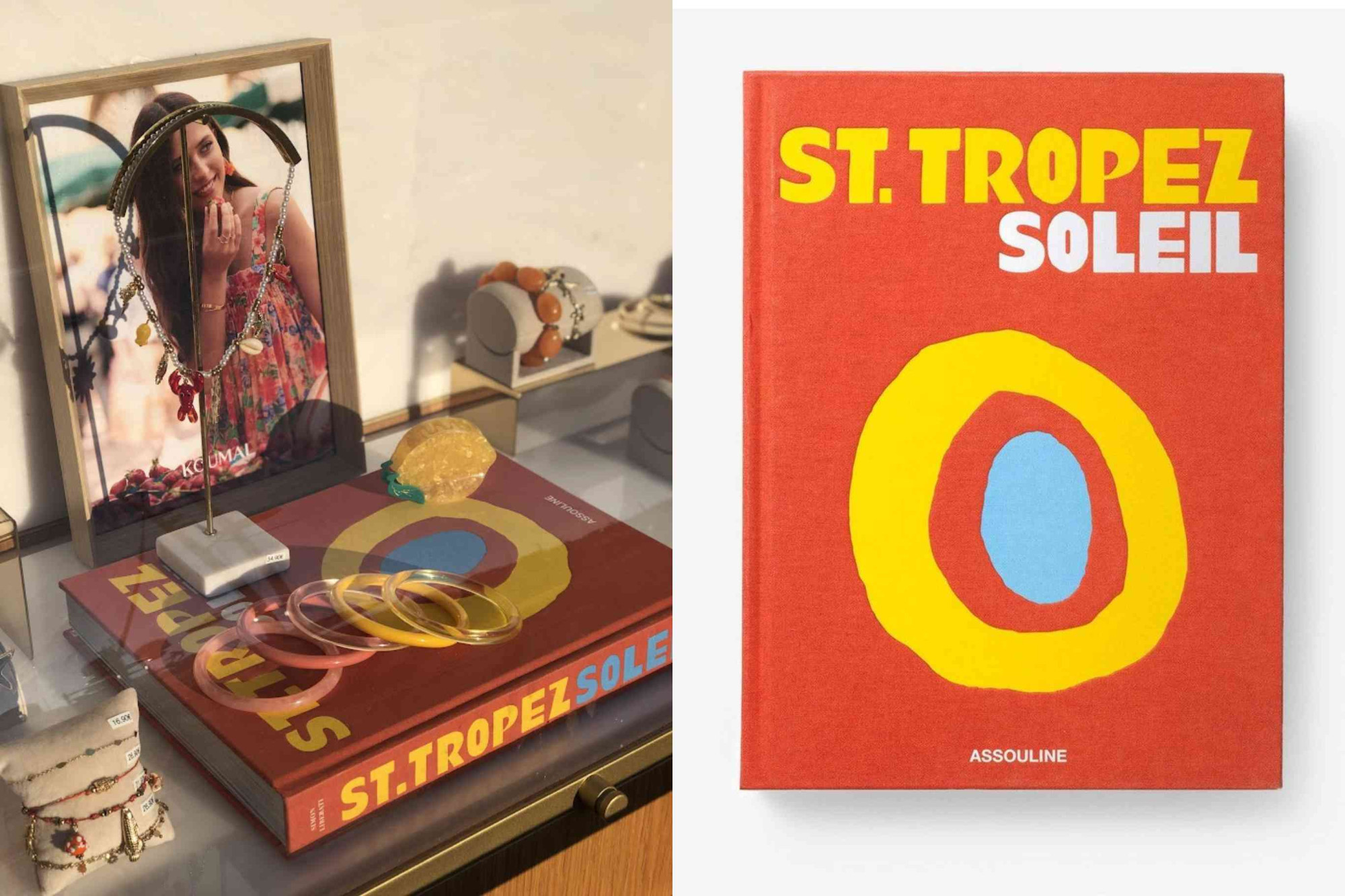
Colour is one of the details that gives Saint-Tropez its distinctive character. Walk from the old streets towards the port and the same shades appear repeatedly in architecture, landscapes, fashion and everyday objects.
Warm tones dominate the historic centre. Façades move between faded pink, ochre, peach and terracotta, softened by decades of Mediterranean sun. Pale shutters in grey, green and blue provide a quieter contrast.
Then there is the Mediterranean itself. Deep blue water around the Gulf, lighter turquoise close to the shore and an almost uninterrupted blue summer sky create the background against which the warmer colours of the village stand out.
Yellow appears everywhere in smaller details: sunlight on stone walls, parasols, flowers and summer accessories. Red and coral bring stronger accents, particularly in fashion, art and graphic interpretations of the Côte d'Azur.
Saint-Tropez style follows much the same principle. White and natural linen sit alongside colourful jewellery, printed dresses, woven accessories and the occasional strong summer colour.
Perhaps that is why Saint-Tropez has been interpreted so frequently by painters, photographers, fashion designers and illustrators. Its identity is not connected to one colour, but to a particular combination of Mediterranean shades that continues to make the destination immediately recognisable.
Planning a stay in Saint-Tropez?
Find stays in Saint-Tropez with Les Couleurs du Monde Travel.
#SaintTropez #LesCouleursDuMonde #CotedAzur #MediterraneanStyle #FrenchRiviera
Travel & Escapes @travelwithcouleursdumonde
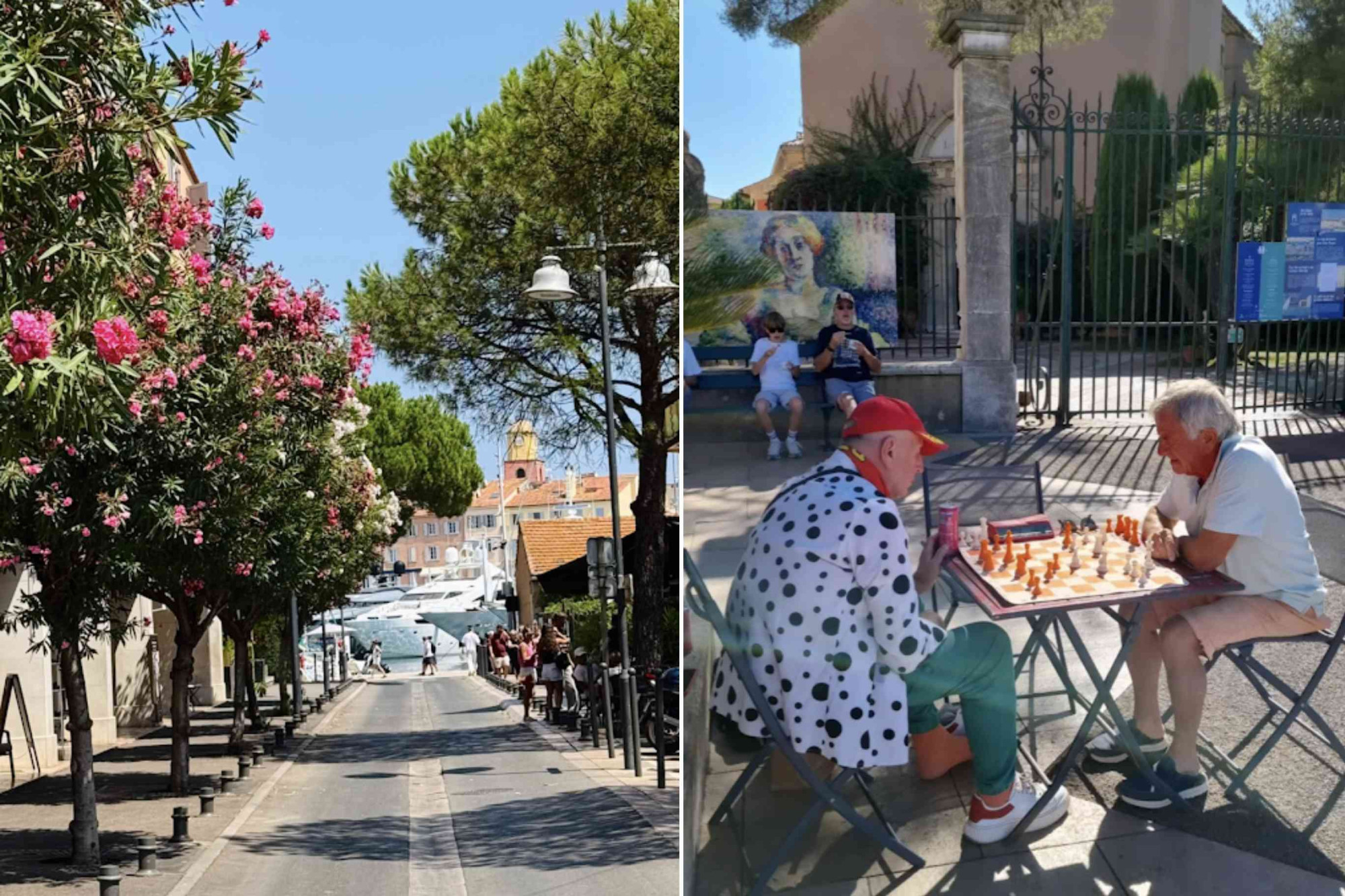
Some of the most memorable moments in Saint-Tropez have very little to do with the places found in a travel guide. Walk through town in the morning and another side of the village gradually becomes visible.
Residents stop to talk in the street, cafés serve their regular customers and people meet beneath the trees for a game of chess or simply to spend some time outside. These small routines continue even when thousands of visitors arrive during the summer.
The contrast is particularly noticeable only a few streets from the Vieux Port. One moment you are surrounded by yachts, restaurants and busy terraces, and a few minutes later you can find a quiet corner where daily village life carries on.
Saint-Tropez is compact enough for these different worlds to exist almost side by side. Its international reputation has changed the village enormously, but it has never completely removed its local character.
Early morning is one of the best times to notice it. Before the busiest part of the day begins, walk without a particular destination, stop for coffee and pay attention to what is happening around you rather than moving directly between sights.
It is a side of Saint-Tropez that photographs of Pampelonne and the Vieux Port rarely show, but one that helps explain why Saint-Tropez remains a village as well as a destination.
Planning a stay in Saint-Tropez?
Find stays in Saint-Tropez with Les Couleurs du Monde Travel.
#SaintTropez #LocalLife #CotedAzur #Provence #FrenchRiviera
Travel & Escapes @travelwithcouleursdumonde
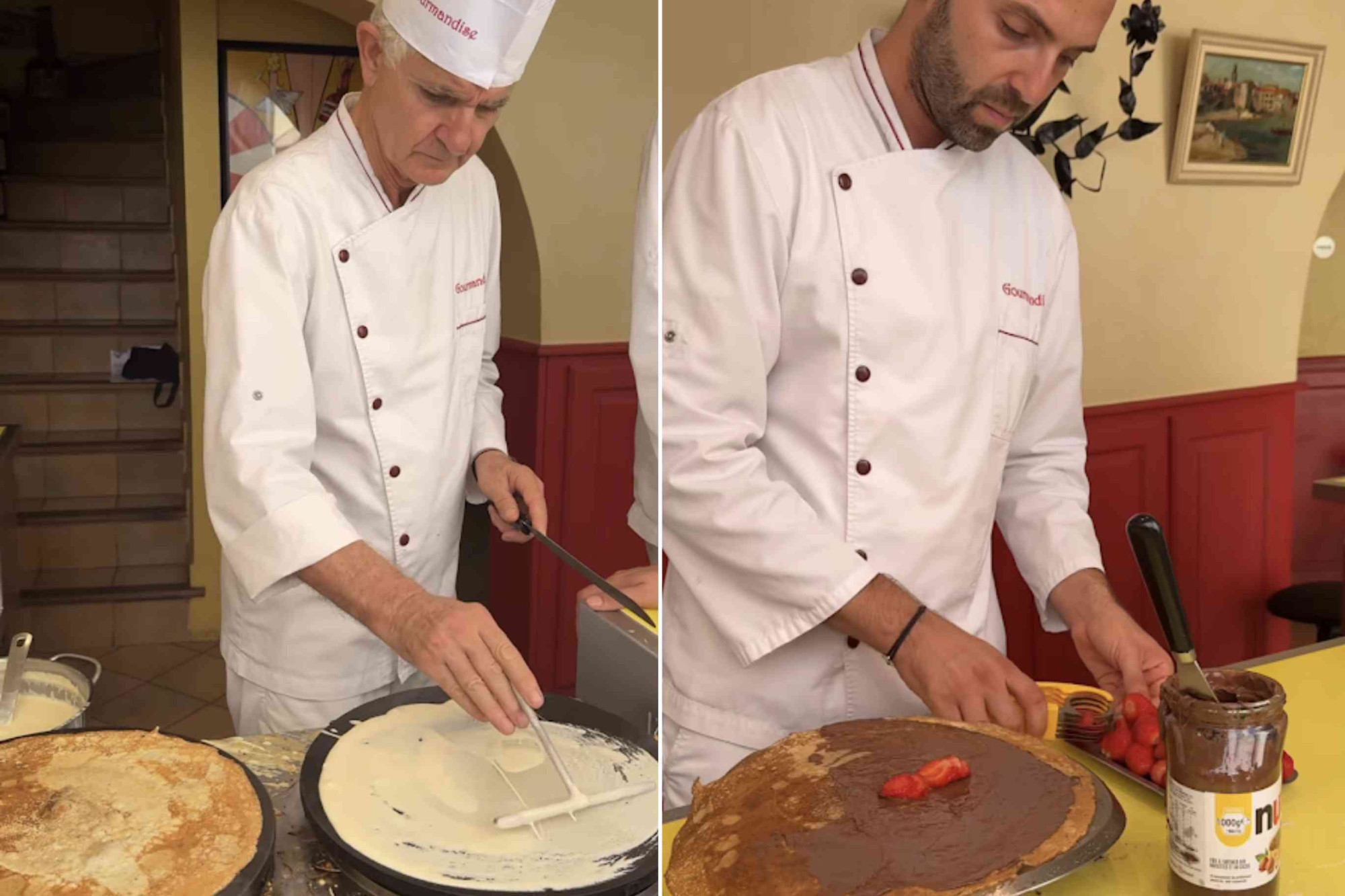
Not every food stop in Saint-Tropez needs to become a long lunch or dinner. Sometimes a freshly prepared crêpe in the middle of the afternoon is exactly enough before continuing through town.
At Crêperie Gourmandise, the crêpes are prepared in front of you on the traditional round griddle. The thin batter cooks quickly before the chosen filling is added and the crêpe is folded and served.
For something simple, sugar, lemon or jam keeps things classic. Chocolate spread is another familiar choice, while strawberries and other additions turn it into more of a dessert.
It is also a nice example of the French goûter, the small afternoon snack traditionally eaten between lunch and dinner. During a long summer day, when dinner in Saint-Tropez may not begin until much later, that pause can be particularly welcome.
What makes an address like this useful is its simplicity. Stop while exploring the centre, watch your crêpe being made and continue afterwards towards the port, Place des Lices or the old streets.
Alongside beach restaurants, glamorous dinners and Provençal markets, small everyday food stops are also part of experiencing Saint-Tropez.
Planning a stay in Saint-Tropez?
Find stays in Saint-Tropez with Les Couleurs du Monde Travel.
#CreperieGourmandise #SaintTropez #FrenchCrepes #CotedAzur #FrenchRiviera
Travel & Escapes @travelwithcouleursdumonde
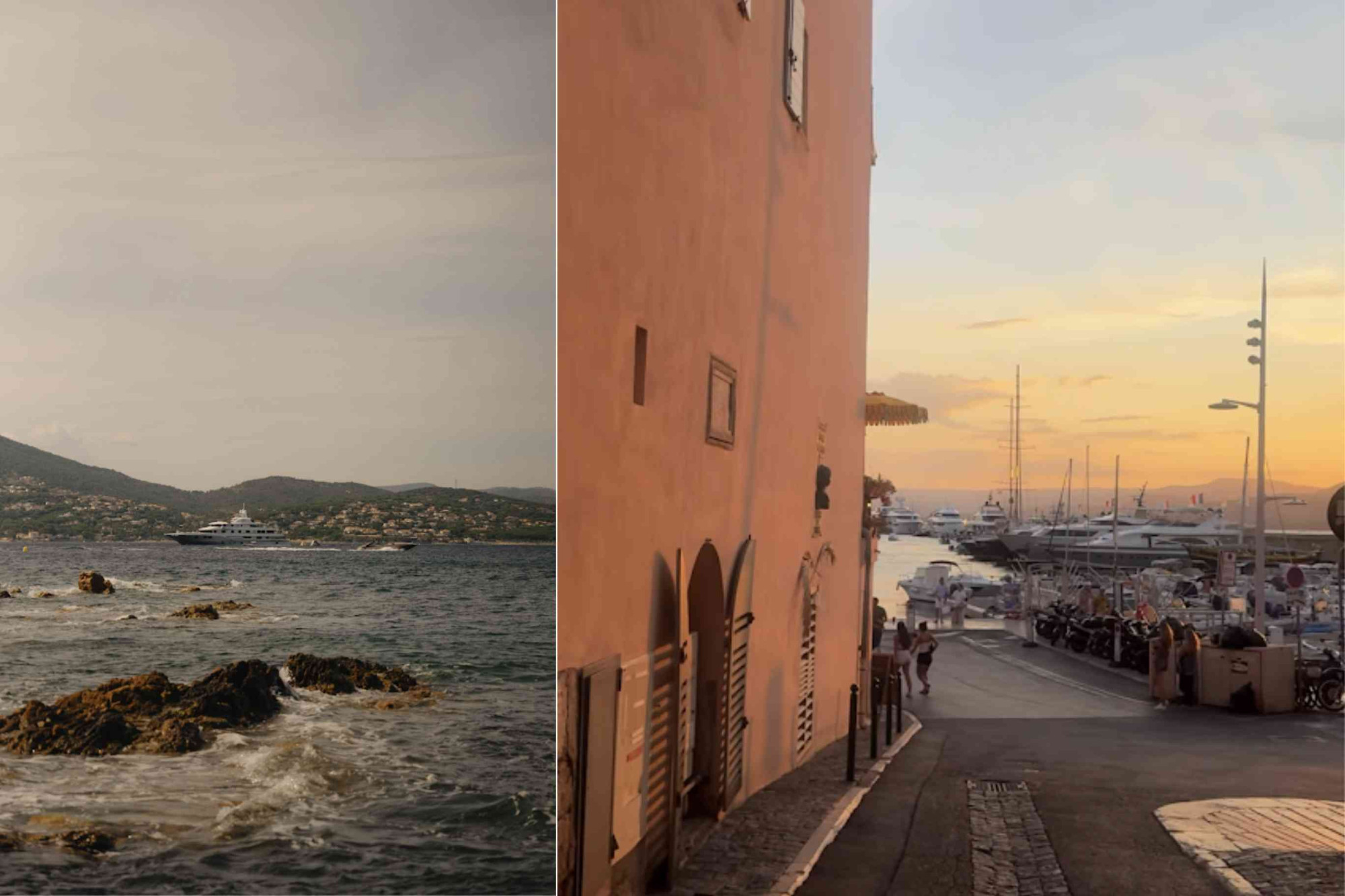
One of the nicest short walks in Saint-Tropez connects the quieter waterfront of La Ponche with the activity of the Vieux Port. It requires little planning and can easily be added before dinner or at the end of an afternoon in town.
Start around La Ponche, where the houses of the old quarter stand directly beside the Mediterranean. Small stretches of beach, rocks and access points to the water make this part of the village feel surprisingly removed from the harbour nearby.
From here, continue through the narrow streets and passages of the old town. The route regularly opens towards the sea before disappearing again between the pastel façades.
As you approach the port, the atmosphere gradually changes. The streets become busier, boats and yachts come back into view and cafés and restaurants begin to fill for the evening.
The walk is particularly enjoyable in the late afternoon. The heat begins to ease and the light across the Golfe de Saint-Tropez becomes softer, while there is still enough daylight to explore the streets along the way.
Once you reach the Vieux Port, continue along the quays or find a terrace for an aperitif before dinner.
What makes the route interesting is the contrast. Within a relatively short walk, Saint-Tropez moves from rocks, sea and old fishermen's houses to one of the most animated harbours on the Côte d'Azur.
Planning a stay in Saint-Tropez?
Find stays in Saint-Tropez with Les Couleurs du Monde Travel.
#LaPonche #SaintTropez #VieuxPort #CotedAzur #FrenchRiviera
Travel & Escapes @travelwithcouleursdumonde
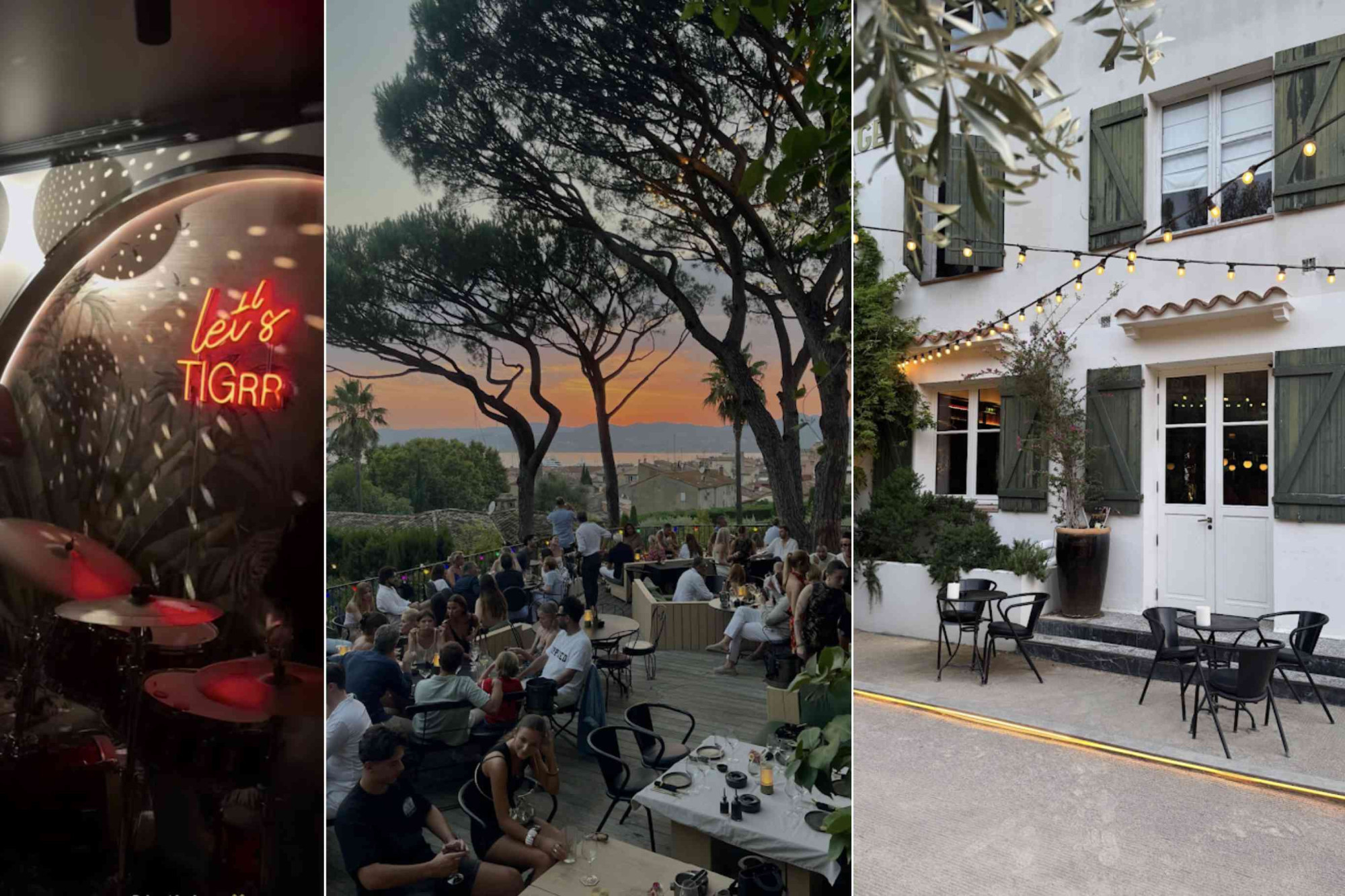
Le TIGrr is the kind of Saint-Tropez address where it is worth arriving before sunset and staying into the evening. Its elevated location provides a broad view across the rooftops, Mediterranean landscape and water beyond.
The terrace is an important part of the experience. In the early evening, tables sit beneath the umbrella pines while the last daylight falls across the Gulf. As the sun disappears, the atmosphere gradually changes.
The menu brings together Asian influences, with dishes designed to be shared across the table. It makes the restaurant particularly suited to a longer dinner with friends rather than a quick meal between other plans.
Music becomes increasingly important as the evening progresses. DJs and live performances are part of the identity of Le TIGrr, allowing dinner to move naturally into drinks and a livelier late-evening atmosphere without changing location.
The setting still feels distinctly Saint-Tropez. Mature Mediterranean trees surround the terrace, the old village lies below and the Gulf remains visible in the distance.
For a summer evening, the timing is part of the experience. Book around sunset, begin with drinks on the terrace, stay for dinner and let the evening continue as the music takes over.
Planning the evening
Arrive · before sunset
Start · drinks overlooking the Gulf
Dinner · Asian-inspired dishes to share
Later · music, DJs and drinks
Setting · above Saint-Tropez with views towards the sea
Where to Stay
Hôtel Ermitage, Saint-Tropez
Staying here puts Le TIGrr in the same property, while Place des Lices, the Vieux Port and the historic centre are all within walking distance. The hotel has 23 rooms and is known for individually designed interiors and views over the bay.
#LeTIGrr #SaintTropez #SaintTropezNightlife #CotedAzur #FrenchRiviera
Travel & Escapes @travelwithcouleursdumonde
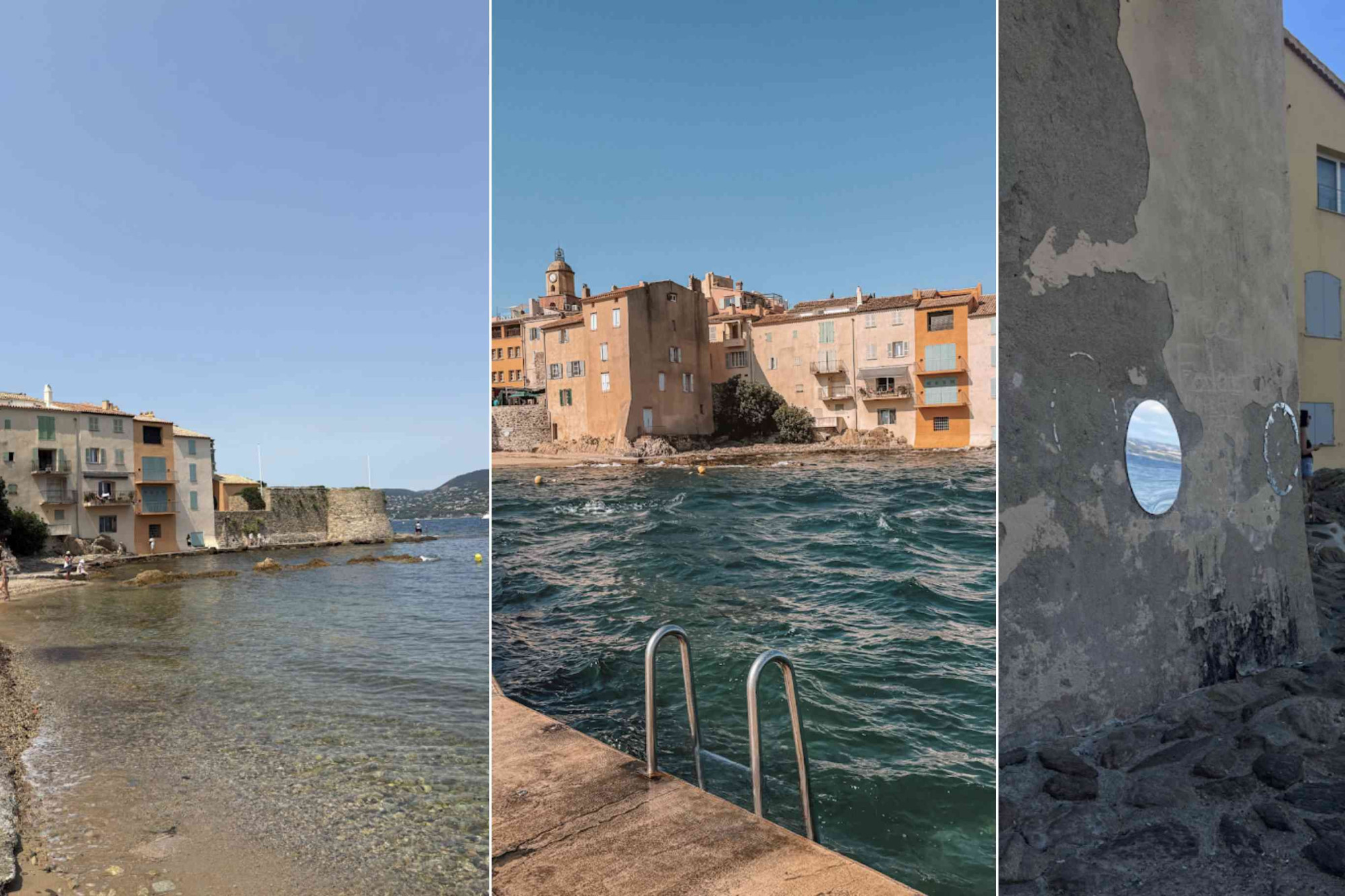
La Ponche is one of the few places in Saint-Tropez where a swim can become part of exploring the old town. There is no need to drive towards Pampelonne or spend the day at a beach club. The Mediterranean is directly accessible from this historic quarter.
The small Plage de la Ponche sits between the old houses and the sea. It is very different from the broad sandy beaches associated with Ramatuelle. The beach is compact, the shoreline is close to the buildings and the old village remains visible from the water.
Around it, ladders and steps provide access from the rocks and waterfront. Locals and visitors use these simple swimming spots for a quick dip, particularly when the sea is calm.
Morning is a good time to come. The streets of La Ponche are quieter, the small beach has yet to become busy and you can combine a swim with breakfast or coffee in the centre afterwards.
You can also make it part of a walk. Start around the Vieux Port, continue through the narrow streets of La Ponche and follow the waterfront before returning through the old town.
It is a very different experience from spending a full day on Pampelonne. Here, swimming is simply woven into life in the village.
Where to Stay
Hôtel La Ponche, Saint-Tropez
Located in the historic La Ponche quarter, Hôtel La Ponche is just steps from the small beach and waterfront. Its location makes it particularly suited to visitors who want to stay in the old town and combine morning swims with exploring Saint-Tropez on foot.
Planning a stay in Saint-Tropez?
Find stays in Saint-Tropez with Les Couleurs du Monde Travel.
Looking for a Mediterranean wardrobe?
Discover Aurales and its bohemian collection in our second edition →
#LaPonche #SaintTropez #SwimmingSaintTropez #CotedAzur #FrenchRiviera
Travel & Escapes @travelwithcouleursdumonde
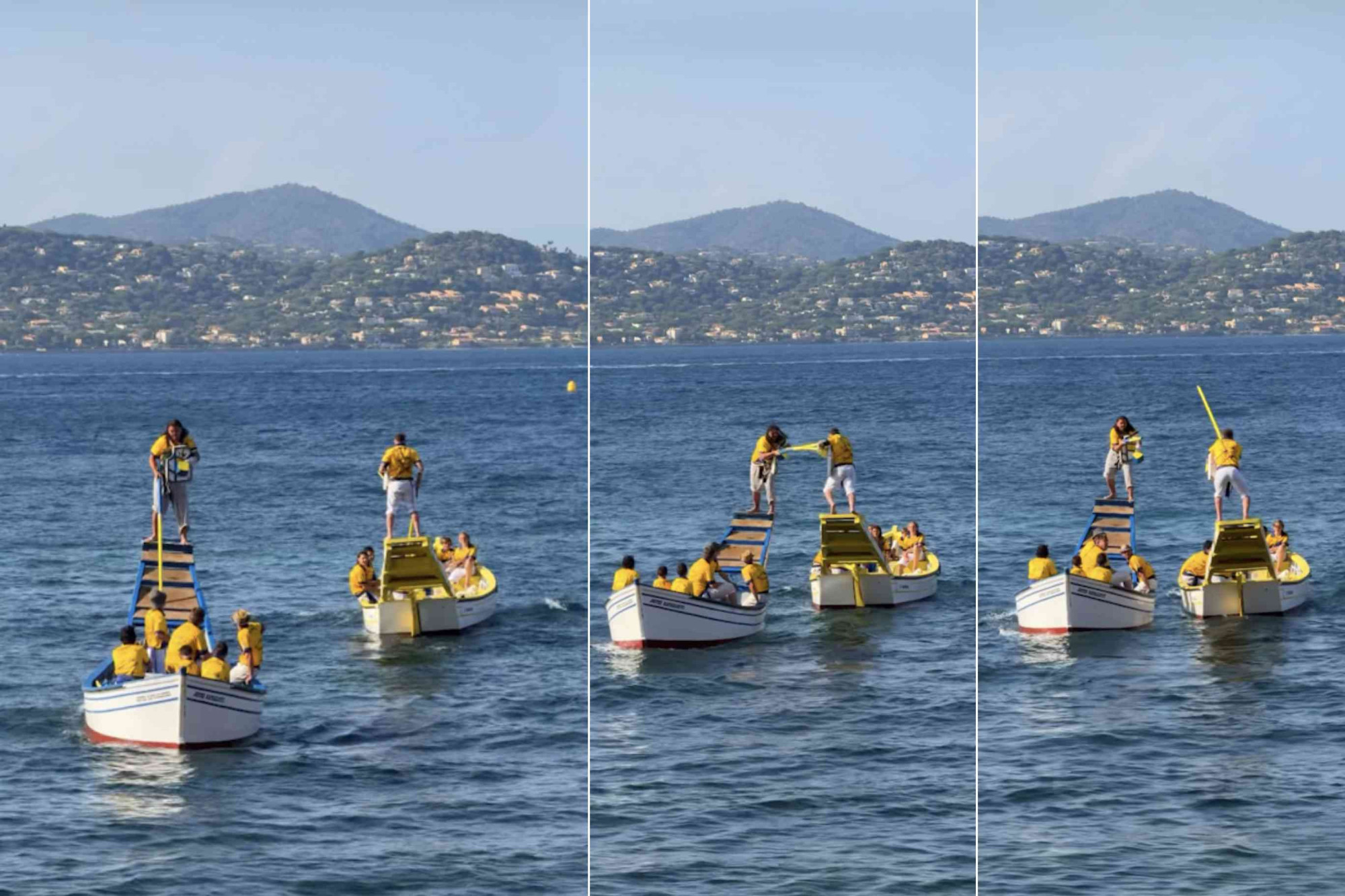
The maritime character of Saint-Tropez extends far beyond the large yachts seen in the Vieux Port each summer. For generations, boats have connected the village with fishing, trade, sailing and everyday life around the Mediterranean.
Traditional wooden boats can still be seen around the Gulf. Among the most characteristic are the colourful pointus, small Mediterranean fishing boats recognisable by their pointed bow and stern.
The connection with the sea is also kept alive through local associations, regattas and maritime gatherings. During these events, the Gulf becomes a meeting place for very different types of boats, from traditional vessels to classic sailing yachts.
Saint-Tropez has become particularly associated with sailing. Events such as Les Voiles de Saint-Tropez bring an international fleet to the village, but smaller local traditions are equally interesting for understanding the area's relationship with the Mediterranean.
That contrast is worth noticing when visiting the harbour. A traditional fishing boat can be moored only a short distance from a modern superyacht, while classic sailing boats cross the same water beyond the port.
It is a combination that says a great deal about Saint-Tropez today: an international destination whose identity is still closely connected to its maritime past.
Where to Stay
Hôtel Sube, Saint-Tropez
Located directly on the Vieux Port, Hôtel Sube is particularly suited to this article because its rooms and terraces overlook the harbour and its boats. It also puts the old town and La Ponche within easy walking distance.
Planning a stay in Saint-Tropez?
Find stays in Saint-Tropez with Les Couleurs du Monde Travel.
#SaintTropez #MaritimeTraditions #GolfedeSaintTropez #CotedAzur #Mediterranean
Travel & Escapes @travelwithcouleursdumonde
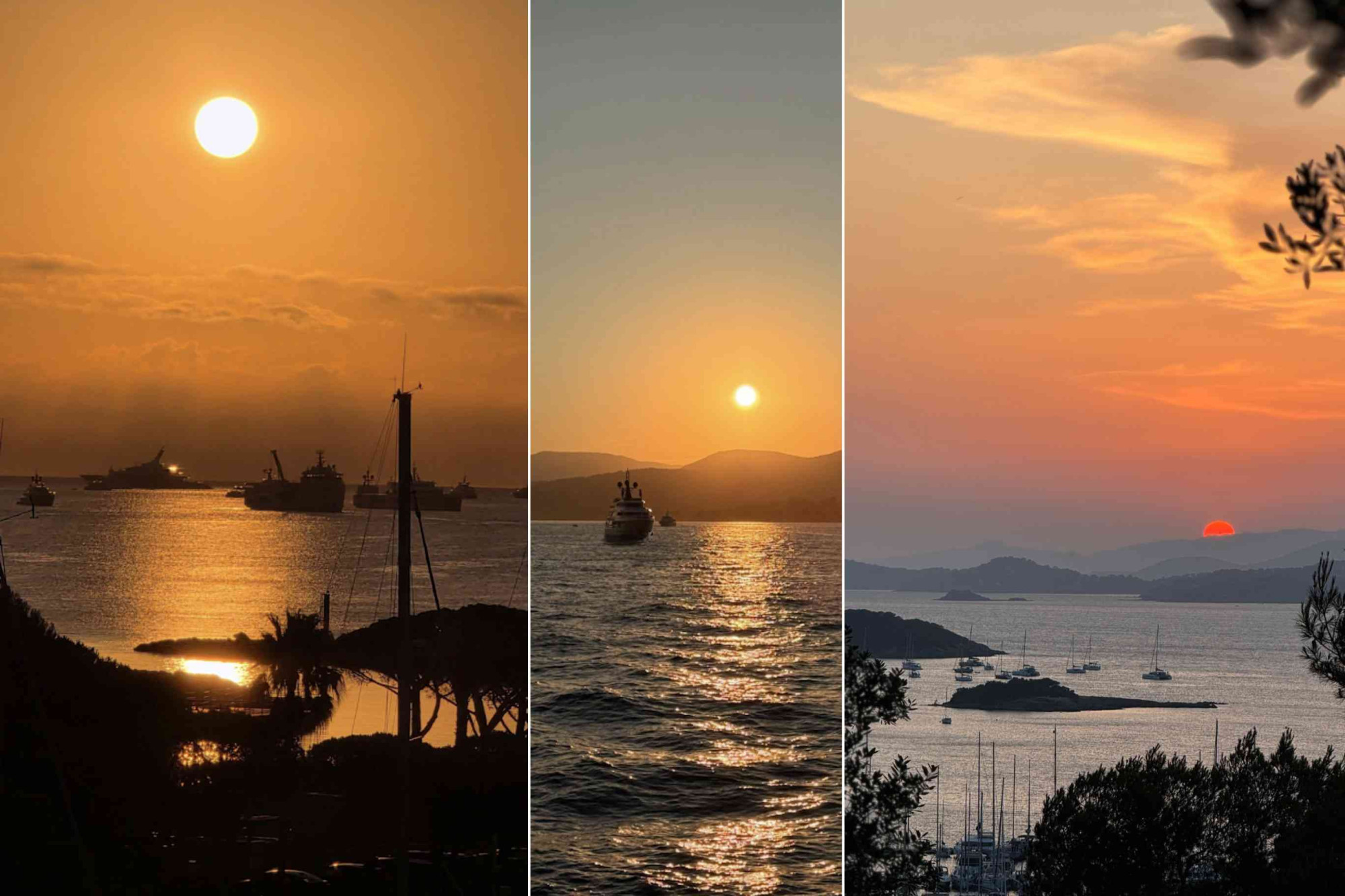
The last hours of daylight are one of the best times to experience the Golfe de Saint-Tropez. As the sun moves lower, the coastline becomes less defined and the attention shifts towards the water, the boats and the hills surrounding the Gulf.
The geography of the area makes sunset particularly interesting. Saint-Tropez sits within a wide gulf rather than directly facing an uninterrupted horizon. Depending on where you are, the sun disappears behind distant hills while the Mediterranean continues to reflect the remaining light.
From elevated viewpoints, the effect is even more visible. The coastline appears in layers, with wooded headlands in the foreground and the hills of the Var fading gradually into the distance.
On the water, sailing boats and yachts create constantly changing silhouettes. Some are returning to port, others remain anchored for the evening and during summer the Gulf can stay active well after the sun has disappeared.
You do not need a specific sunset destination to enjoy it. A terrace overlooking the Gulf, a coastal road, a beach or somewhere higher above the water can all offer a completely different view.
It is also worth staying a little longer after sunset. The colours continue to change, lights begin appearing around the coastline and the boats become small points of light across the water.
Around the Golfe de Saint-Tropez, sunset is less about one famous viewpoint and more about finding your own place to watch the day end.
Where to Stay
Château de la Messardière, Saint-Tropez
Its elevated position above Saint-Tropez provides wide views across the surrounding landscape and towards the Mediterranean.
Planning a stay in Saint-Tropez?
Find stays in Saint-Tropez with Les Couleurs du Monde Travel.
#GolfedeSaintTropez #SaintTropez #GoldenHour #CotedAzur #FrenchRiviera
Travel & Escapes @travelwithcouleursdumonde
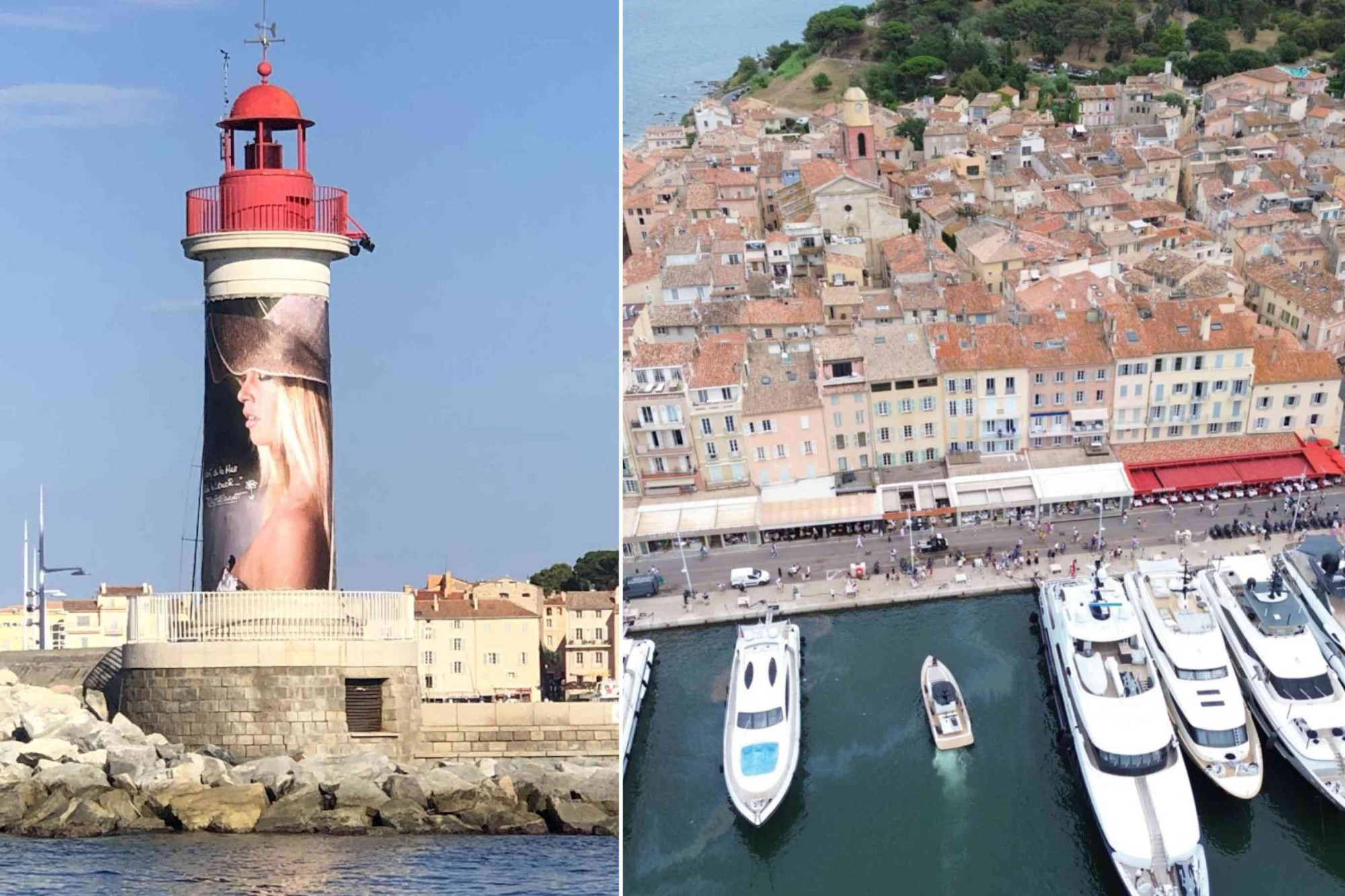
Arriving in Saint-Tropez from the water gives the Vieux Port a completely different perspective. Before the cafés, pastel façades and church tower come fully into view, the lighthouse at the end of the harbour wall is one of the first landmarks encountered.
The harbour has always been central to Saint-Tropez. Long before superyachts became part of its summer image, this was a working Mediterranean port connected with fishing, maritime trade and navigation along the Provençal coast.
The lighthouse continues that maritime identity. Positioned at the entrance to the port, it guides vessels approaching the harbour and has become part of the familiar silhouette of Saint-Tropez from the sea.
Once inside, the contrast is striking. Traditional façades line the quays while fishing boats, sailing boats and some of the world's largest yachts share the same relatively compact harbour.
The aerial view makes that relationship particularly clear. The Vieux Port sits directly against the historic centre, with La Ponche, Notre-Dame-de-l’Assomption and the terracotta rooftops only a short walk from the water.
For visitors arriving by boat from Sainte-Maxime or elsewhere around the Golfe de Saint-Tropez, this is also one of the nicest introductions to the village. Instead of approaching through traffic and busy streets, Saint-Tropez gradually appears from across the water.
The lighthouse may be a small landmark, but it represents something fundamental about the town: Saint-Tropez has always faced the sea.
Planning a stay in Saint-Tropez?
Find stays in Saint-Tropez with Les Couleurs du Monde Travel.
#SaintTropez #VieuxPort #GolfedeSaintTropez #CotedAzur #FrenchRiviera
Travel & Escapes @travelwithcouleursdumonde
Stopping at a café is one of the easiest ways to slow down a day in Saint-Tropez. The centre is compact and largely explored on foot, making its terraces natural stopping points throughout the day.
In the morning, cafés begin filling while shops are opening and deliveries are still moving through the streets. Order a coffee and croissant and the town gradually becomes busier around you.
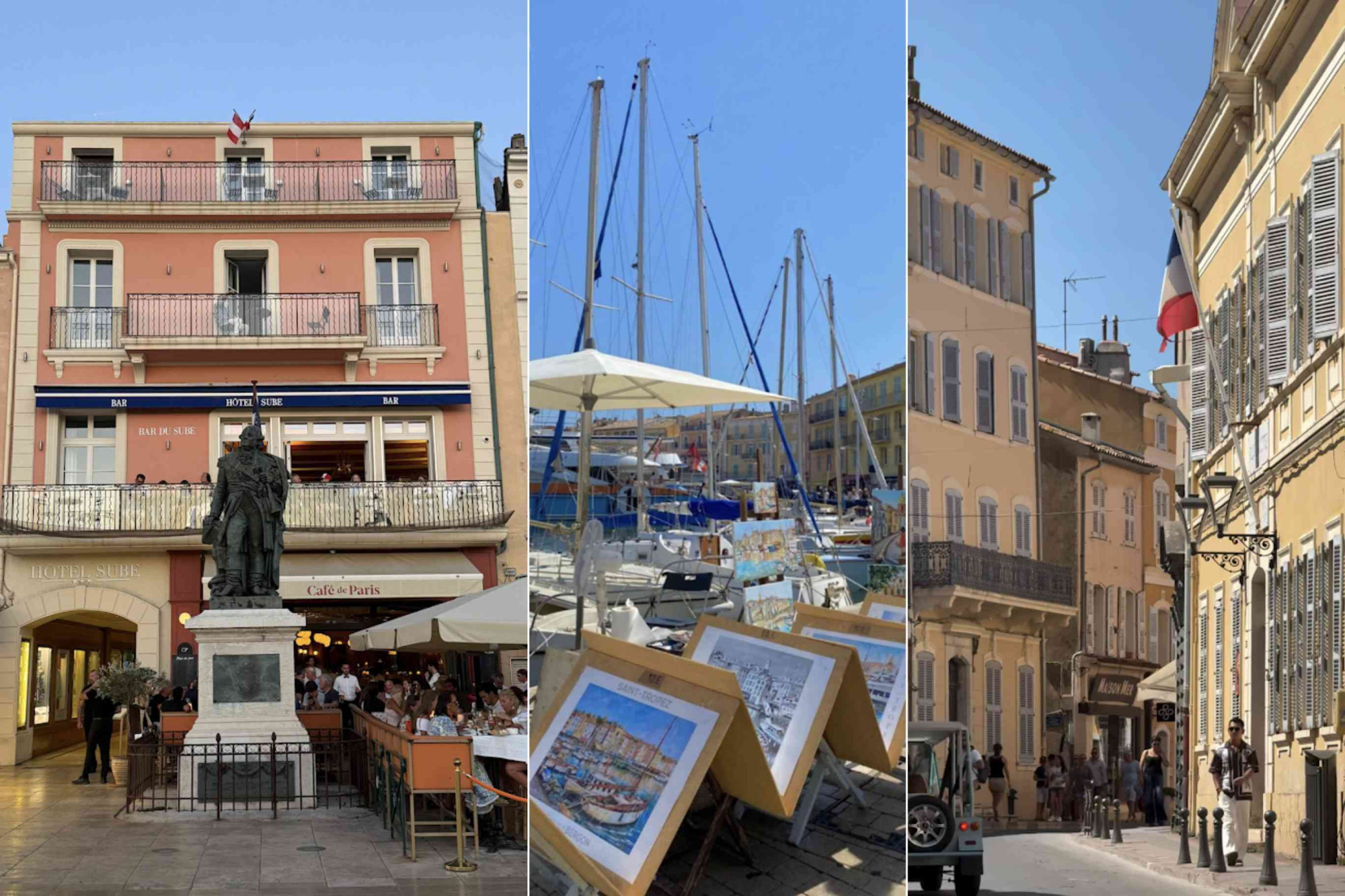
Around the Vieux Port, terraces have a more animated character. Boats arrive and leave, visitors walk along the quays and artists display their work nearby. Sitting here is as much about watching Saint-Tropez as it is about what you order.
Move a few streets inland and the atmosphere changes. Smaller terraces appear between traditional façades, shops and residential buildings, sometimes with only a handful of tables outside.
One of the pleasures of Saint-Tropez is that there is no particular time reserved for the café. Morning coffee can become an aperitif before lunch, while late afternoon is ideal for taking a break before the village changes pace again for the evening.
There is also no need to seek out only the famous addresses. Choose a terrace because you like its location, order something simple and stay for a while. Watching the town go by is part of experiencing Saint-Tropez itself.
Planning a stay in Saint-Tropez?
Find stays in Saint-Tropez with Les Couleurs du Monde Travel.
#SaintTropez #CafeCulture #CotedAzur #FrenchRiviera #Provence
Travel & Escapes @travelwithcouleursdumonde
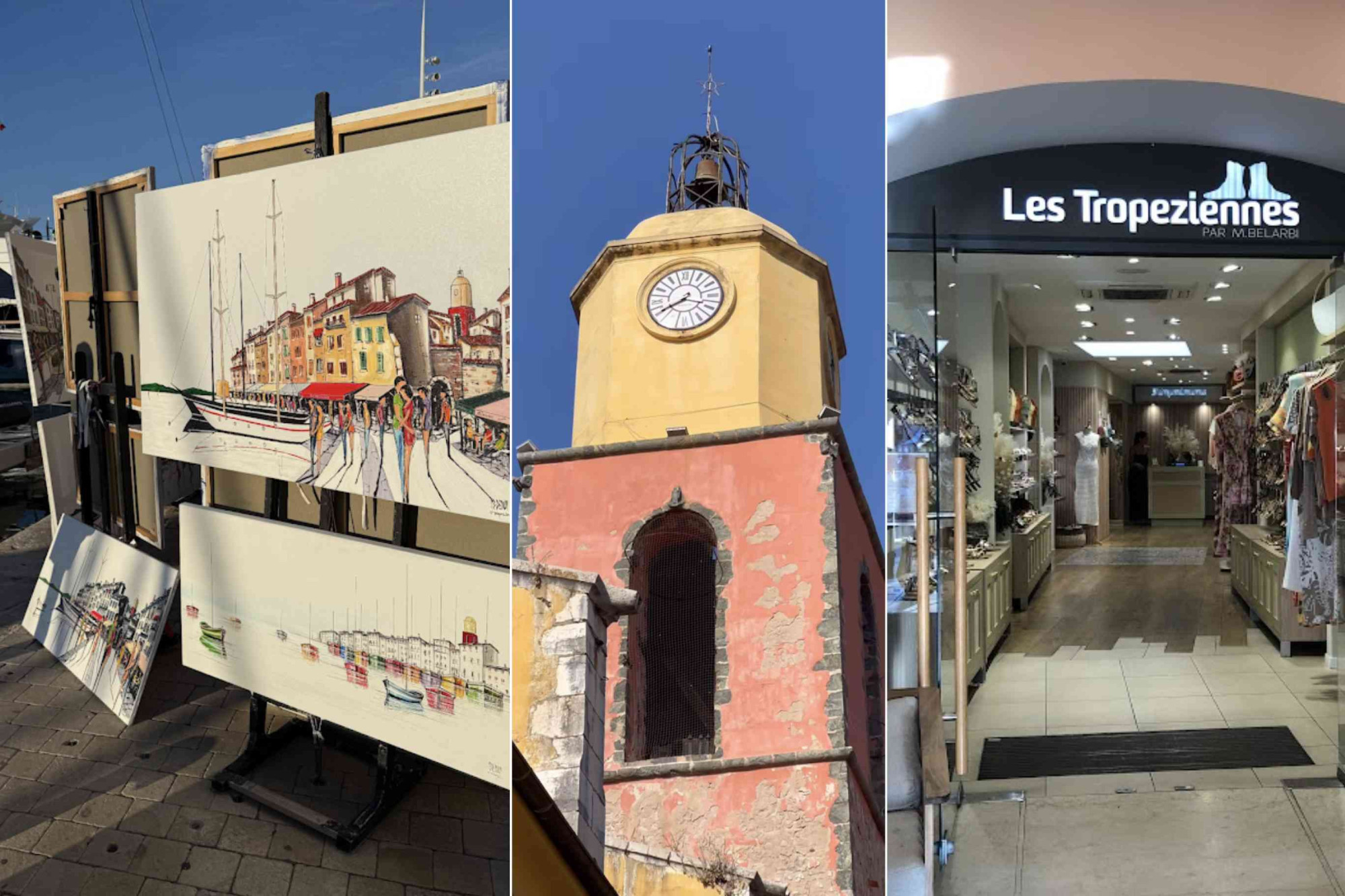
The best things to bring home from Saint-Tropez are pieces that reflect something you actually encountered while staying there. Around the old town and Vieux Port, there are several alternatives to conventional tourist souvenirs.
Art is an obvious place to start. Painters continue to display views of the harbour, colourful façades, boats and surrounding coastline. Styles vary considerably, from traditional Mediterranean scenes to more contemporary interpretations, making an original artwork or print a personal reminder of the destination.
Fashion offers another possibility. Saint-Tropez has developed its own recognisable summer wardrobe, with sandals, woven bags, lightweight dresses, hats and beachwear appearing throughout the boutiques of the centre.
Les Tropéziennes par M. Belarbi is one of the names closely associated with this southern French aesthetic, particularly through its sandals and warm-weather footwear.
Smaller decorative pieces can also have a connection to the village. Illustrations of the harbour, ceramics, postcards and objects featuring landmarks such as the distinctive bell tower of Notre-Dame-de-l'Assomption are easy to find while walking through town.
Food is another option. A box from La Tarte Tropézienne, Provençal products or something selected at one of the local markets can bring a little of the region home, although naturally these souvenirs tend not to last quite as long.
Rather than looking for a souvenir shop specifically, keep an eye out while exploring. Some of the most interesting pieces are found naturally between the port, markets, galleries and small boutiques of the old town.
What to look for
Local art · paintings and prints of Saint-Tropez
Fashion · sandals, hats, woven bags and Riviera pieces
Illustrations · vintage-inspired posters and postcards
Local products · Provençal food and market finds
Something personal · a piece connected to a place you visited
Inspired by the harbour of Saint-Tropez?
Discover The Maritime Side of the Vieux Port →
#SaintTropez #CotedAzur #SaintTropezShopping #FrenchRiviera #Provence
Travel & Escapes @travelwithcouleursdumonde
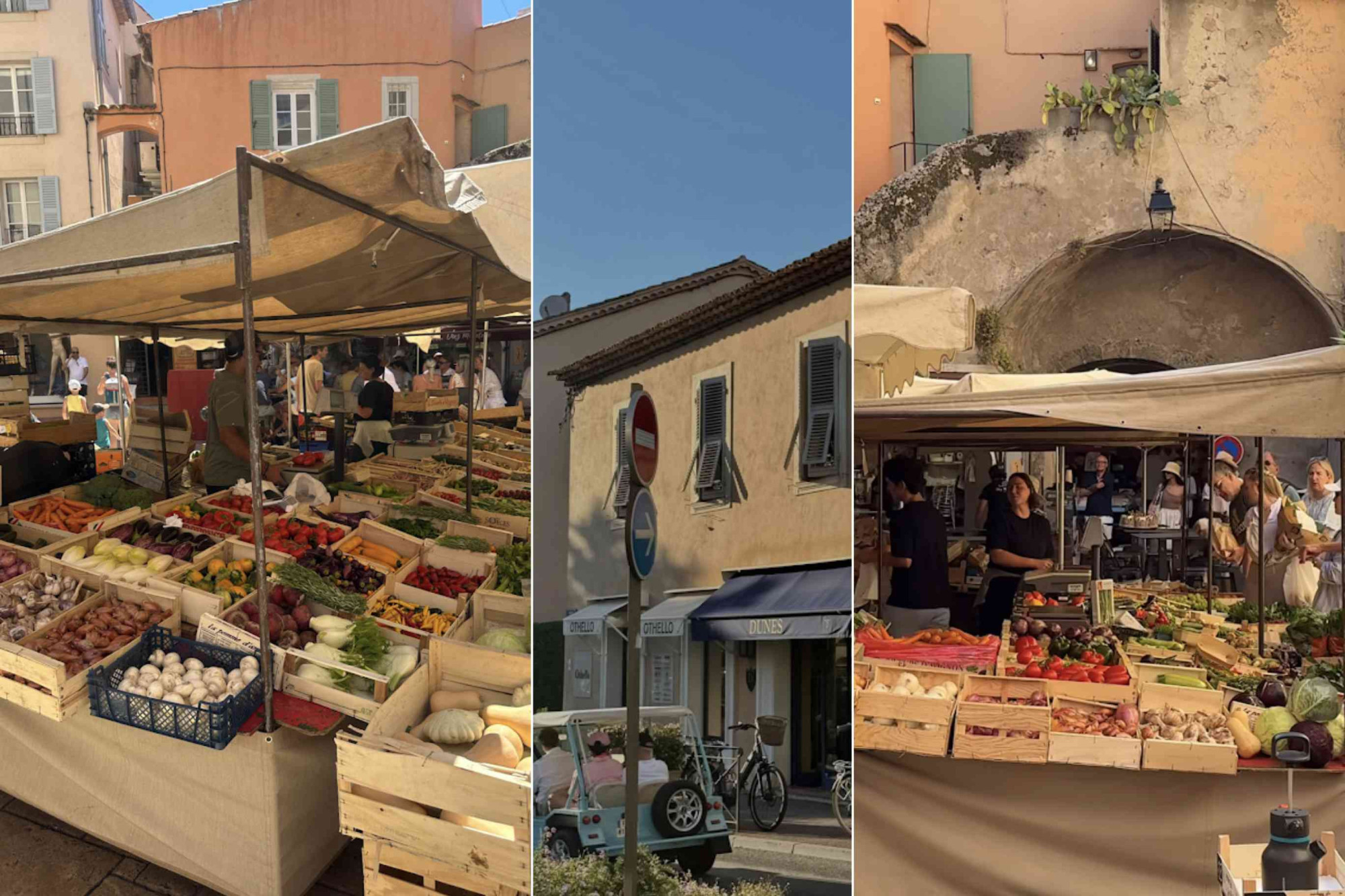
Place aux Herbes is a small daily market in the historic centre of Saint-Tropez, just a short walk from the Vieux Port. Unlike the larger market held twice a week at Place des Lices, this is an intimate neighbourhood market that can easily become part of a morning in the old town.
The stalls focus largely on food and local produce. Depending on the season, expect colourful displays of tomatoes, courgettes, aubergines, peaches, melons, berries and other fruit and vegetables.
Flowers and plants bring additional colour to the square, while cheeses, regional products and wines offer plenty of inspiration for lunch, an aperitif or a picnic by the sea.
Nearby is the fish market, another long-established part of food life in Saint-Tropez. Together, the two make this small corner of town particularly worth visiting in the morning.
The market also works well as a starting point for exploring the old centre. Pick up fruit for the beach, browse the stalls and continue towards the harbour, La Ponche or the surrounding streets.
For visitors staying in Saint-Tropez, Place aux Herbes is useful as well as picturesque. It is somewhere to actually shop for the day rather than simply a market to visit.
Practical Information
When · Every morning
Hours · approximately 8:00 AM to 1:00 PM
Find · seasonal fruit and vegetables, flowers, cheeses, wine and regional products
Nearby · fish market, Vieux Port and old town
Want to discover more around Saint-Tropez?
Discover The Golfe de Saint-Tropez →
#PlaceAuxHerbes #SaintTropez #ProvencalMarket #CotedAzur #FrenchRiviera
Travel & Escapes @travelwithcouleursdumonde
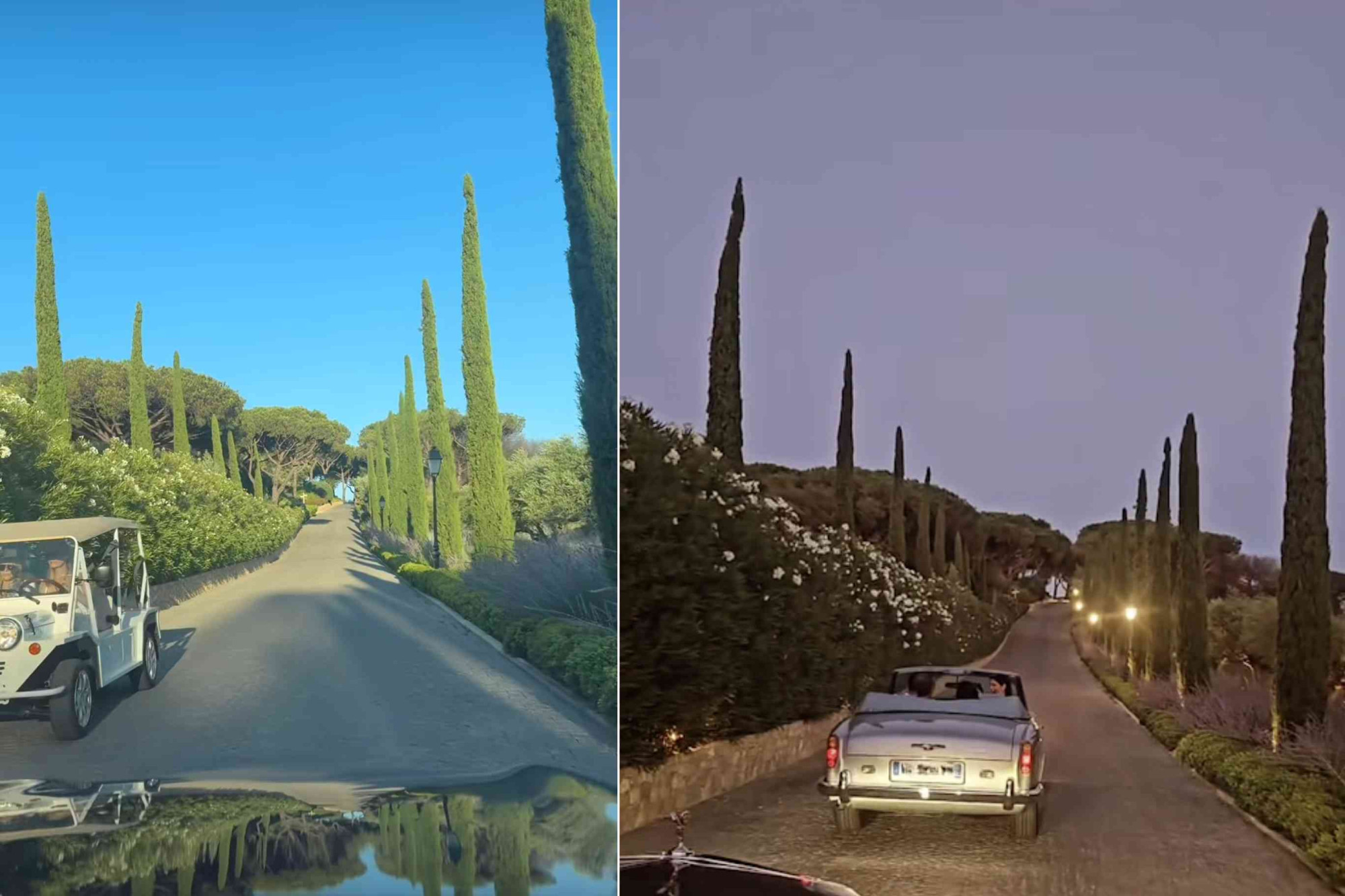
The arrival at Château de la Messardière immediately introduces the setting of this Saint-Tropez hotel. A long driveway lined with tall cypress trees leads through the landscaped grounds, gradually leaving the busier roads of the peninsula behind.
The château occupies an elevated estate between Saint-Tropez and Pampelonne, surrounded by extensive gardens and Mediterranean vegetation. Its location makes it possible to stay close to both the village and the beaches while returning to a much greener setting.
The gardens are an important part of the property. Umbrella pines, cypress trees, olive trees and flowering plants surround the buildings and terraces, while the elevated position opens up views across the surrounding landscape and towards the sea.
Château de la Messardière itself dates back to the 19th century and today forms part of the Airelles collection. The historic architecture has been combined with contemporary hospitality, restaurants, pools, spa facilities and spaces designed around outdoor living.
Its position also works particularly well for a Saint-Tropez stay. Mornings can be spent in the village, afternoons around Pampelonne and evenings back at the château, without having to choose between the coast and the countryside.
And perhaps that is why the driveway feels so appropriate. Arriving here is not simply about reaching a hotel. The landscape already creates the transition from Saint-Tropez outside the gates to the atmosphere of the château itself.
Staying here
Location · between Saint-Tropez and Pampelonne
Setting · landscaped Mediterranean estate
Character · historic château with contemporary luxury
Ideal for · combining Saint-Tropez, Pampelonne and time at the hotel
Worth noticing · the gardens and cypress-lined approach
Planning a day by the sea during your stay?
Discover A Day at Pampelonne →
#ChateaudelaMessardiere #SaintTropez #Airelles #CotedAzur #FrenchRiviera