Home & Design @atelierdumonde
Dried palm leaves can become architectural elements in an interior rather than simply sitting in a vase. Their length, movement and natural texture make them particularly suited to wall pieces and larger hanging decorations.
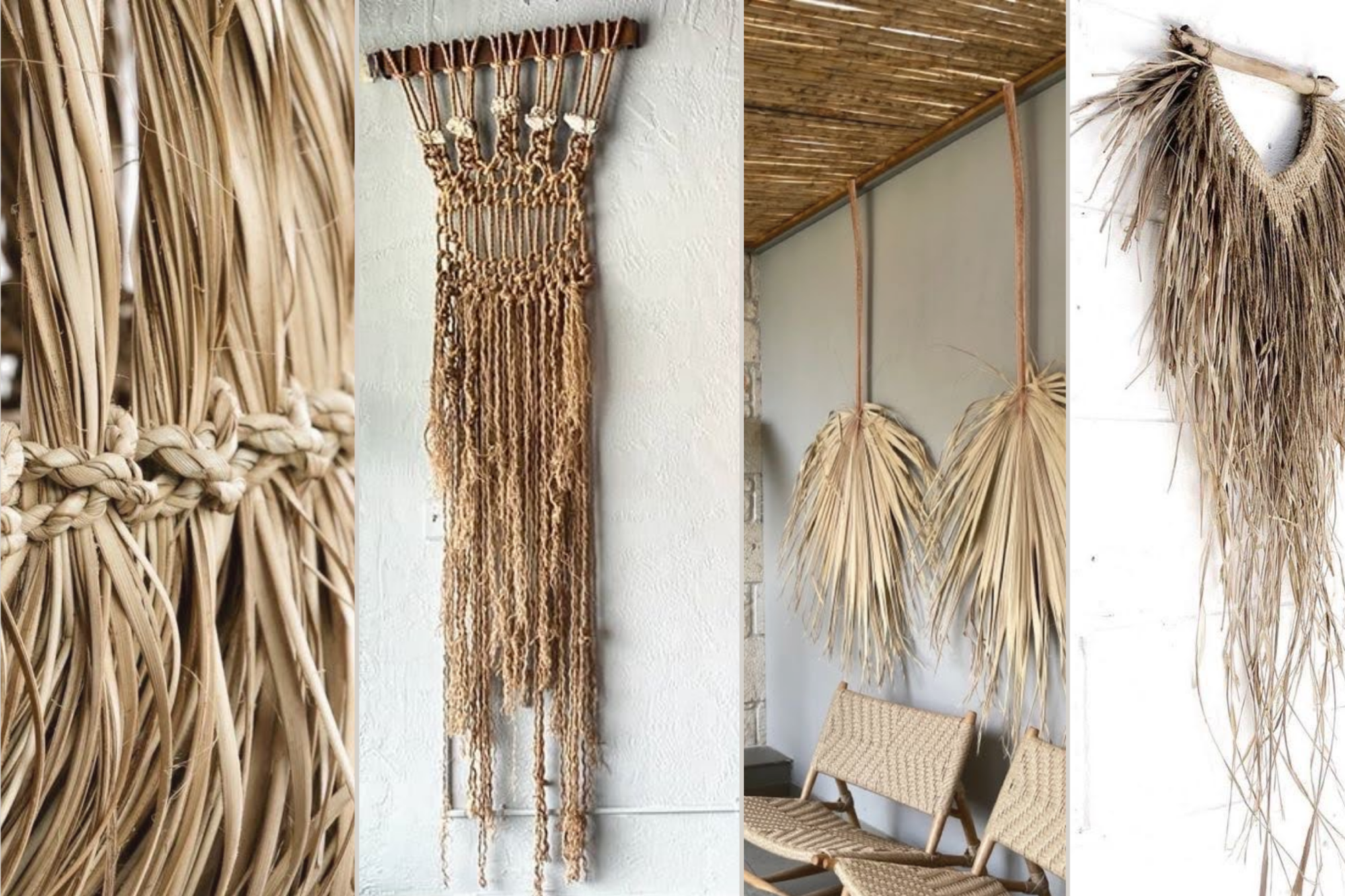
One of the simplest approaches is to keep the leaf almost intact. Once properly dried, a large palm frond can be suspended from a wooden rail or branch. Several leaves placed side by side create a larger composition while preserving their individual shapes.
Palm fibres can also be worked by hand. Sections of dried leaf can be divided into strands and knotted in much the same way as other natural fibres. Simple repeated knots create structure while the loose ends retain the irregular character of the original material.
For a more detailed wall hanging, palm fibre can be combined with jute, rope or macramé. A wooden branch provides the upper support, while different lengths and knotting techniques create the composition underneath.
The material also works well at a larger scale. Oversized palm leaves suspended from a ceiling or mounted high on a wall can fill an empty space without introducing heavy furniture or solid decorative panels. In covered terraces and warm-climate interiors, they connect naturally with reed ceilings, woven furniture and unfinished wood.
Trimming changes the appearance considerably. A palm leaf can retain its natural outline, be cut into a more defined shape or be divided into smaller sections for several pieces.
Because dried palm already has variations in beige, straw and muted brown, colour is rarely necessary. Its strength lies in the lines, fibres and shadows created by the material itself.
Inspired to bring more botanical details into the interior?
Discover Botanical Motifs →
#PalmLeafDecor #NaturalMaterials #WallDecor #FibreArt #AtelierDuMonde