Travel Never Goes Out of Style
Les Couleurs du Monde Magazine - Where’s Your Next Escape? Discover our editions. Contact: info@lescouleursdumonde.com
Côte D'Azur @lescouleursdecotedazur
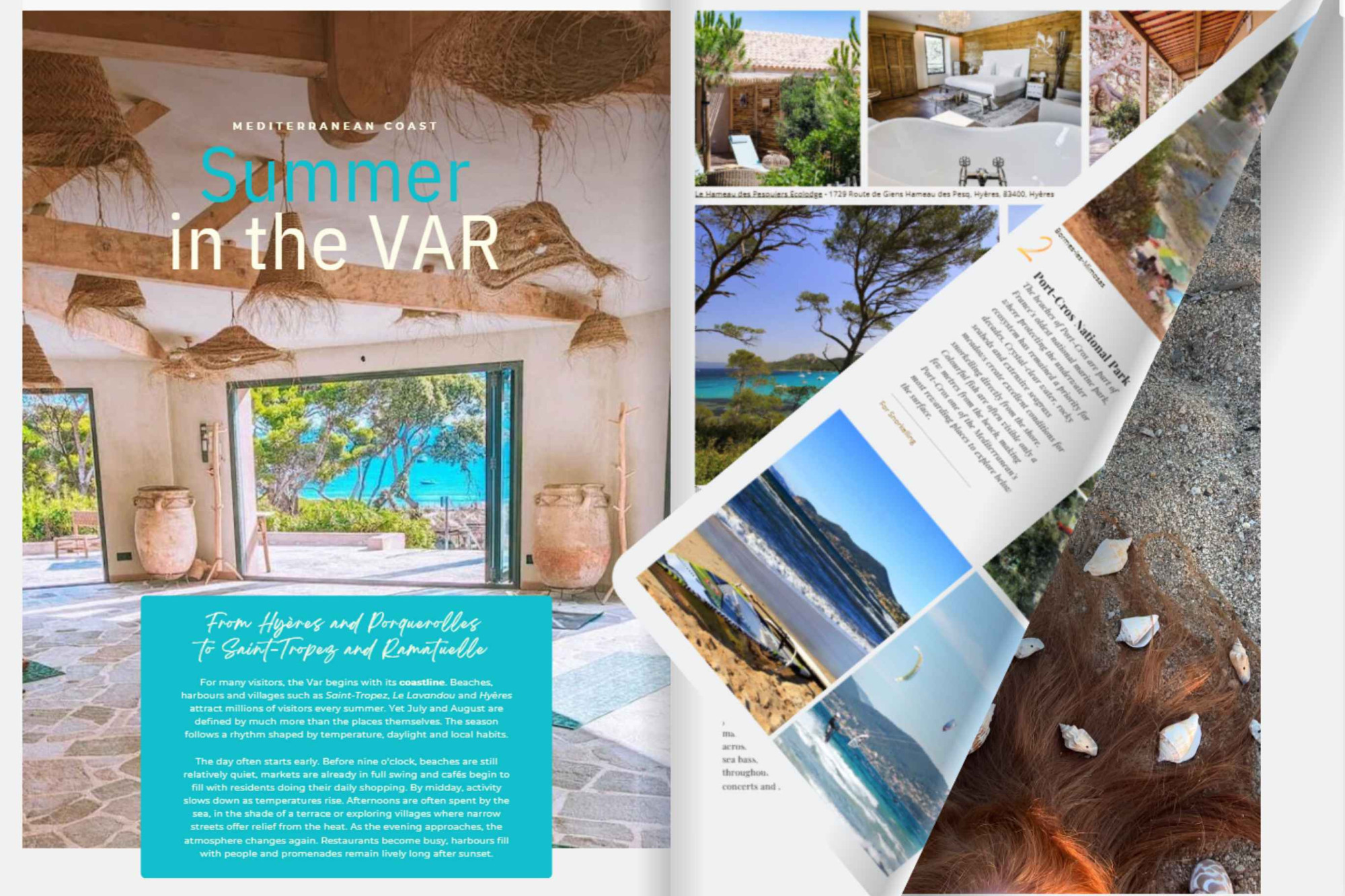
Summer in the Var | From the Îles d'Hyères to Saint-Tropez
The Var brings together some of the most distinctive coastal landscapes of southern France, from protected Mediterranean islands and historic fishing villages to vineyards, forested hills and internationally recognised seaside destinations.
Its appeal lies in the differences between these places. The coastline around Hyères has a different character from the Golfe de Saint-Tropez, while the villages inland reveal another side of Provence.
Hyères and the Islands of the Mediterranean
Hyères is an interesting starting point for exploring the western Var. Its medieval centre, botanical gardens and surrounding beaches provide several reasons to spend time beyond the waterfront.
Off the coast lie the Îles d'Hyères, including Porquerolles, Port-Cros and Île du Levant.
Porquerolles is known for its sandy beaches, cycling routes and vineyards. Plage Notre-Dame, reached by walking or cycling from the village, is one of its most recognisable coastal locations.
Port-Cros offers a different experience. As part of Port-Cros National Park, the island is particularly interesting for its protected natural environment, walking trails and marine biodiversity.
These islands provide an opportunity to experience the Mediterranean away from the larger mainland resorts.
From Le Lavandou to the Golfe de Saint-Tropez
Further east, Le Lavandou is known for its succession of beaches, including Saint-Clair, Aiguebelle and Cavalière.
Nearby Bormes-les-Mimosas combines a historic hillside village with access to the coast and the Fort de Brégançon area.
Around Saint-Tropez, the landscape changes again.
Pampelonne Beach, in the commune of Ramatuelle, stretches for several kilometres and is associated with the development of the Riviera's beachclub culture.
The village of Ramatuelle itself is worth exploring for its narrow streets, traditional Provençal architecture and elevated position above the coast.
The Villages and Vineyards Inland
The Var's interior is an important part of its identity.
The Massif des Maures extends behind the coast, with wooded hills, cork oak forests and villages connected by winding roads.
Grimaud, Gassin and La Garde-Freinet offer different perspectives on the region's history and landscape.
Wine production is another important part of the local economy. The Côtes de Provence appellation covers a substantial part of the Var, with vineyards producing rosé, red and white wines.
Visiting a wine estate or a village market adds another dimension to a coastal holiday, connecting the Mediterranean landscape with the agricultural traditions of Provence.
Discover More in the Magazine
Our Summer in the Var feature in the fifth edition of Les Couleurs du Monde Magazine brings together places to visit, coastal experiences and inspiration for exploring the region.
From Hyères and Porquerolles to Saint-Tropez and Ramatuelle, the feature offers a closer look at this part of Mediterranean France.
→ Read Summer in the Var in Les Couleurs du Monde Magazine, Edition 05
Plan Your Stay
Explore hotels, boutique accommodation and countryside retreats across the Var with Les Couleurs du Monde Travel.
→ Find stays with Les Couleurs du Monde Travel
#LesCouleursDuMonde #TheVar #CotedAzur #FrenchRiviera #SouthOfFrance #Porquerolles #SaintTropez #Coastal
Côte D'Azur @lescouleursdecotedazur
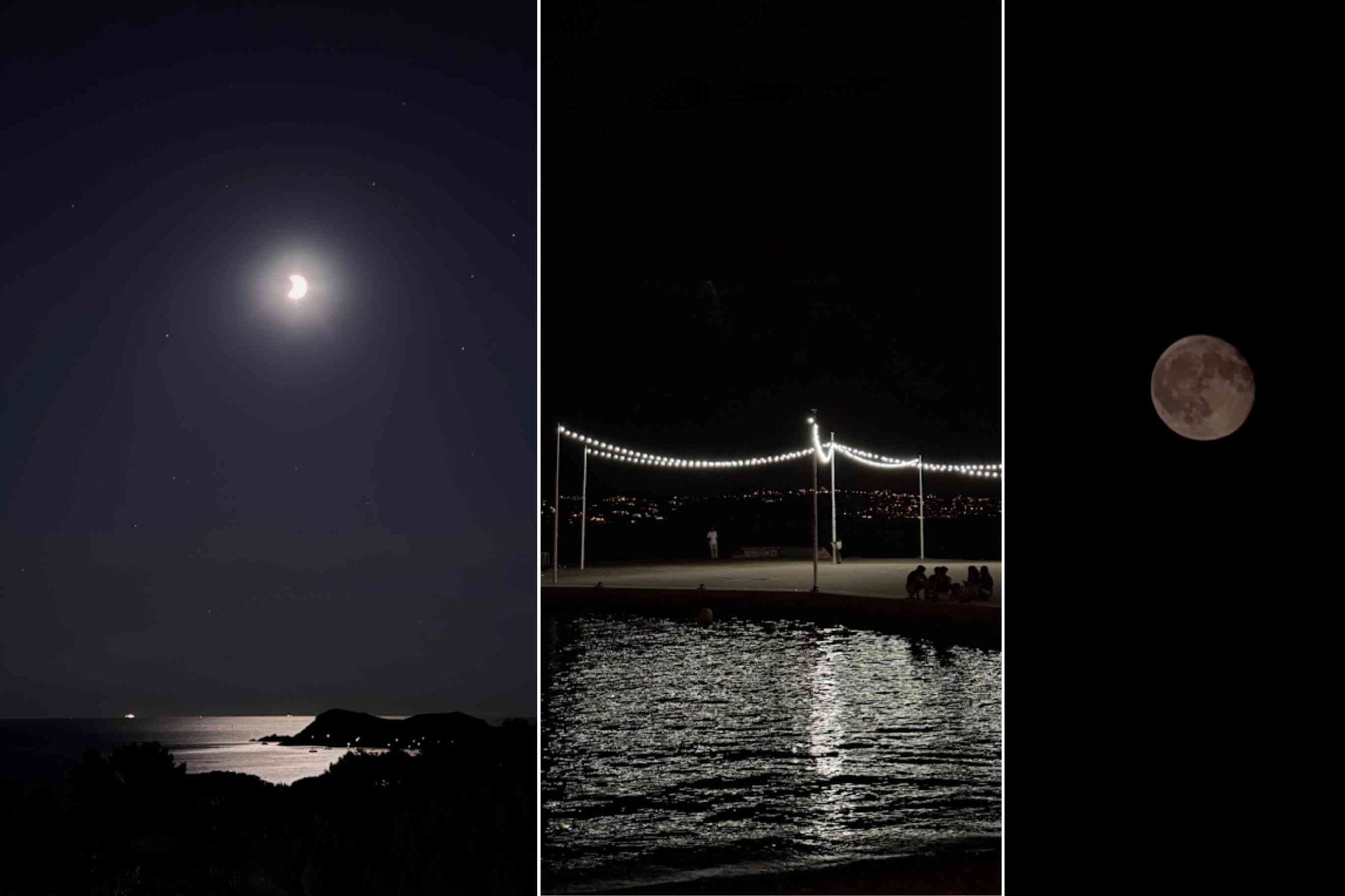
Moonlight Over the Mediterranean
Saint-Tropez has a particularly appealing atmosphere after sunset, when the narrow streets of the old village become quieter and the restaurants along the waterfront prepare for an evening of dining beside the Mediterranean.
Away from the busy harbour terraces and fashionable beachclubs, the historic quarter of La Ponche offers a more intimate setting, with small squares, traditional buildings and the sea just a few steps away.
La Ponche, the Historic Heart of Saint-Tropez
Before Saint-Tropez became an internationally recognised holiday destination, La Ponche was closely connected to the town's fishing community.
Its narrow streets lead towards a small beach between the historic waterfront buildings and the Tour du Portalet, one of the surviving defensive towers associated with the town's maritime past.
Today, the neighbourhood retains much of its original character. Pastel-coloured façades, small restaurants and passages opening towards the sea make it an attractive area to explore on foot.
As the evening progresses, the lights from the waterfront buildings reflect across the water, creating a setting that feels quite different from the lively harbour nearby.
Dinner Beside the Mediterranean
An evening in La Ponche is particularly suited to a relaxed dinner, with restaurants offering Mediterranean cuisine and tables close to the waterfront.
A meal might begin with a glass of local rosé, followed by fresh fish, seasonal vegetables or seafood prepared with olive oil and lemon.
The pleasure lies partly in the surroundings. The small beach, the historic buildings and the sound of the sea create a distinctive setting for spending an evening together.
For a different atmosphere, the nearby streets around Place des Lices and the old port offer a wider selection of restaurants and terraces.
A Walk Through the Old Village
After dinner, the historic centre is particularly enjoyable on foot.
The streets around Rue de la Citadelle lead towards the higher parts of the village, while the waterfront provides views of the illuminated harbour.
A walk towards the Tour du Portalet offers another perspective on the coastline and the historic quarter.
These short distances make it easy to enjoy several parts of Saint-Tropez during one evening, without needing to travel between locations.
Stay Inspiration | Hôtel Le Y, Saint-Tropez
Tucked away in the narrow streets of Saint-Tropez's historic centre, Hôtel Le Y is an intimate boutique hotel just a short walk from La Ponche and the old harbour.
Its central location makes it particularly appealing for a romantic stay, with evening dinners beside the Mediterranean and walks through the old village within easy reach.
#SaintTropez #CotedAzur #FrenchRiviera #RomanticEscapes #LaPonche #MediterraneanEvenings #Coastal #LesCouleursDeLaRiviera
Côte D'Azur @lescouleursdecotedazur
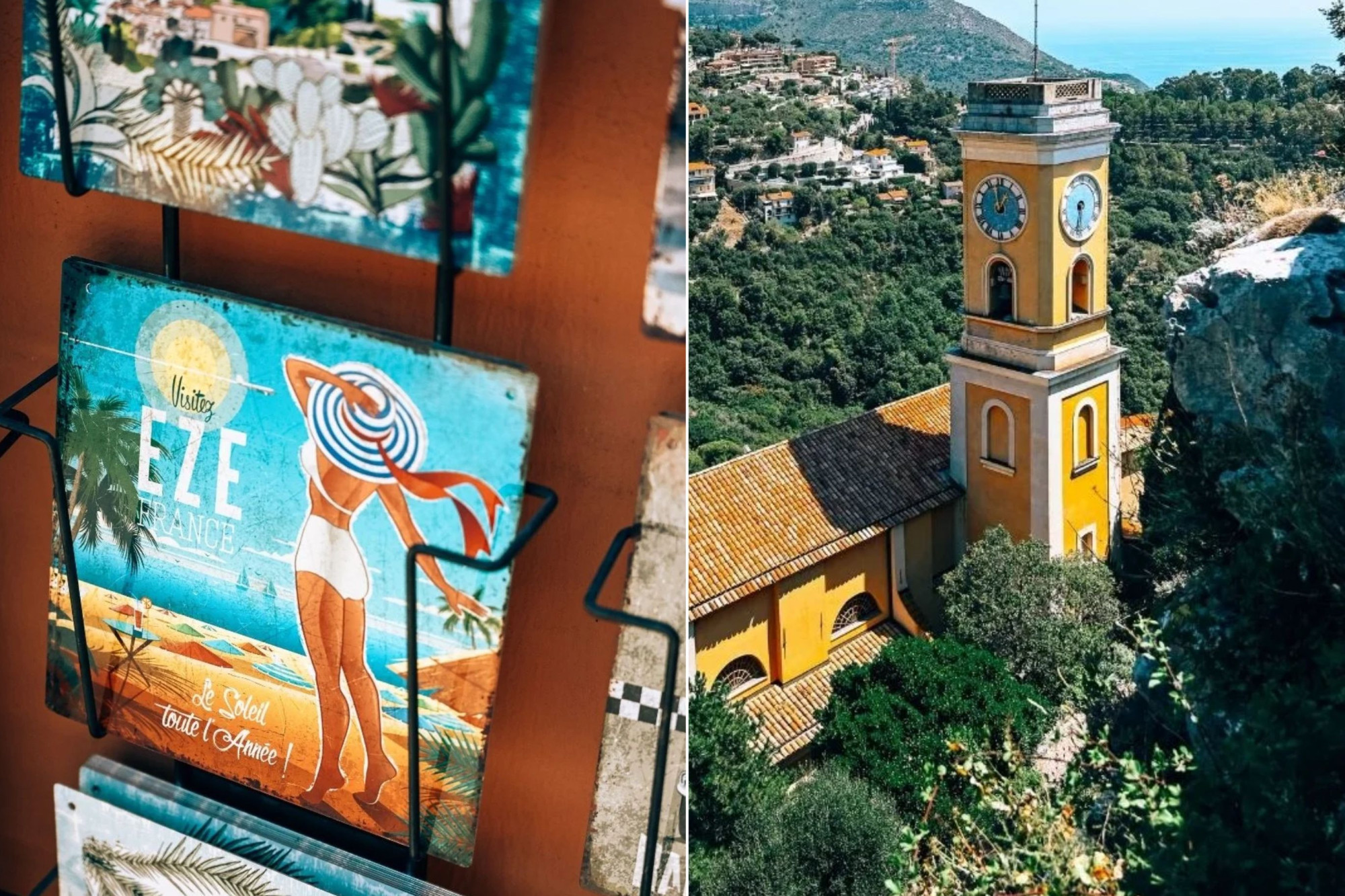
Èze Village | A Medieval Village Above the Mediterranean
Perched approximately 400 metres above the Mediterranean, Èze is one of the French Riviera's most recognisable hilltop villages, with narrow stone streets, historic buildings and views extending across the coastline.
Located between Nice and Monaco, the village has developed around its medieval foundations while retaining much of its original street layout.
A Village Built for Protection
The elevated position of Èze was historically important for defence and observation. Its narrow passages, stone stairways and closely grouped buildings reflect the practical requirements of a fortified settlement.
The village changed hands during periods of regional conflict, particularly when the County of Nice was contested between neighbouring powers.
In 1706, during the War of the Spanish Succession, the fortifications of Èze were destroyed on the orders of Louis XIV.
Today, the remains of the former castle form part of the Jardin Exotique, a botanical garden overlooking the Mediterranean.
The Church of Notre-Dame de l'Assomption
One of the village's most distinctive landmarks is the ochre-yellow church of Notre-Dame de l'Assomption.
Built in the eighteenth century, the church is recognised for its Italian Baroque influence and prominent clock tower.
Its warm façade stands out against the surrounding stone buildings and green hillsides, making it an important feature of the village skyline.
Artists, Perfume and Local Craftsmanship
Èze has developed a reputation for its small galleries, artisan boutiques and workshops.
The narrow streets contain shops specialising in ceramics, jewellery, decorative objects and locally inspired artwork.
Perfume is another important part of the village's identity. Fragonard operates a perfume factory in Èze, where visitors can learn about fragrance production and the traditions of the perfume industry in southern France.
Exploring Èze on Foot
The historic village is best explored on foot. Its pedestrian streets connect small squares, galleries and viewpoints, with occasional openings towards the Mediterranean.
The Jardin Exotique is particularly worth visiting for its collection of succulent plants and panoramic views.
For visitors interested in walking, the Nietzsche Path connects Èze Village with Èze-sur-Mer below. The steep trail is associated with philosopher Friedrich Nietzsche, who spent time walking in the area during the 1880s.
Together, the village, garden and surrounding paths offer several ways to appreciate the relationship between Èze and its coastal landscape.
Discover More in the Magazine
Explore the architecture, atmosphere and distinctive character of Èze in the fifth edition of Les Couleurs du Monde Magazine.
Our feature takes a closer look at this remarkable hilltop village and its place along the French Riviera.
→ Continue exploring Èze in the magazine
Stay Inspiration | Château Eza, Èze
Situated within the medieval village, Château Eza is a boutique hotel occupying historic stone buildings overlooking the Mediterranean.
Its rooms and terraces offer views across the coastline, while its location allows guests to explore the village early in the morning or later in the evening, when the streets are quieter.
The hotel's intimate setting and historic character make it particularly suitable for a stay centred on the cultural heritage of Èze.
#EzeVillage #CotedAzur #FrenchRiviera #MedievalVillages #Coastal #CulturalHeritage #ChateauEza #LesCouleursDeLaRiviera
Côte D'Azur @lescouleursdecotedazur
On the Water | The Active Side of the French Riviera
The Côte d'Azur is as much a destination for enjoying the Mediterranean as it is for relaxing beside it, with watersports ranging from high-speed boat rides to kayaking along quieter stretches of coastline.
Different parts of the Riviera offer different experiences, from the open waters of the Golfe de Saint-Tropez to the sheltered bays around Antibes and the rocky coastline near Théoule-sur-Mer.
A Little More Adrenaline
For visitors looking for an energetic experience, towable inflatable rides are among the most accessible activities offered by coastal watersports centres.
Participants sit or lie on specially designed inflatable equipment attached to a motorboat, travelling across the water as the boat changes direction and speed.
Other popular activities include wakeboarding and waterskiing, which require greater balance and coordination.
These experiences are available at various locations along the coast, particularly around larger beach resorts and established watersports centres.
Exploring the Coast at a Slower Pace
Not every watersport involves speed.
Stand-up paddleboarding and kayaking provide opportunities to explore smaller coves, rocky headlands and sections of coastline that are less accessible from the road.
Around Cap d'Antibes, the shoreline offers views of rocky formations, Mediterranean vegetation and sheltered inlets.
The Estérel coastline, between Saint-Raphaël and Théoule-sur-Mer, is particularly recognisable for its red volcanic rock formations contrasting with the blue Mediterranean.
Guided kayak excursions are an interesting way to experience these landscapes while learning more about the local coastal environment.
Choosing the Right Experience
Conditions along the Mediterranean vary according to wind, waves and boat traffic.
Motorised activities generally operate within designated areas and under the supervision of professional providers.
For kayaking and paddleboarding, sheltered bays are usually preferable, particularly for beginners.
Morning sessions may offer calmer conditions, although local forecasts and advice from watersports operators should always determine whether an activity is suitable.
A Different Perspective on the Riviera
Experiencing the Côte d'Azur from the water reveals details that are easy to miss from the beach.
Cliffs, small coves, harbour entrances and the changing colours of the seabed become part of the experience.
Whether choosing an energetic ride behind a speedboat or a quieter excursion along the coast, watersports provide another way to explore the Mediterranean landscape.
#CotedAzur #FrenchRiviera #Watersports #MediterraneanSea #OutdoorActivities #Coastal #SaintTropez #LesCouleursDeLaRiviera

Côte D'Azur @lescouleursdecotedazur
Saint-Tropez | From Artists' Harbour to Tarte Tropézienne
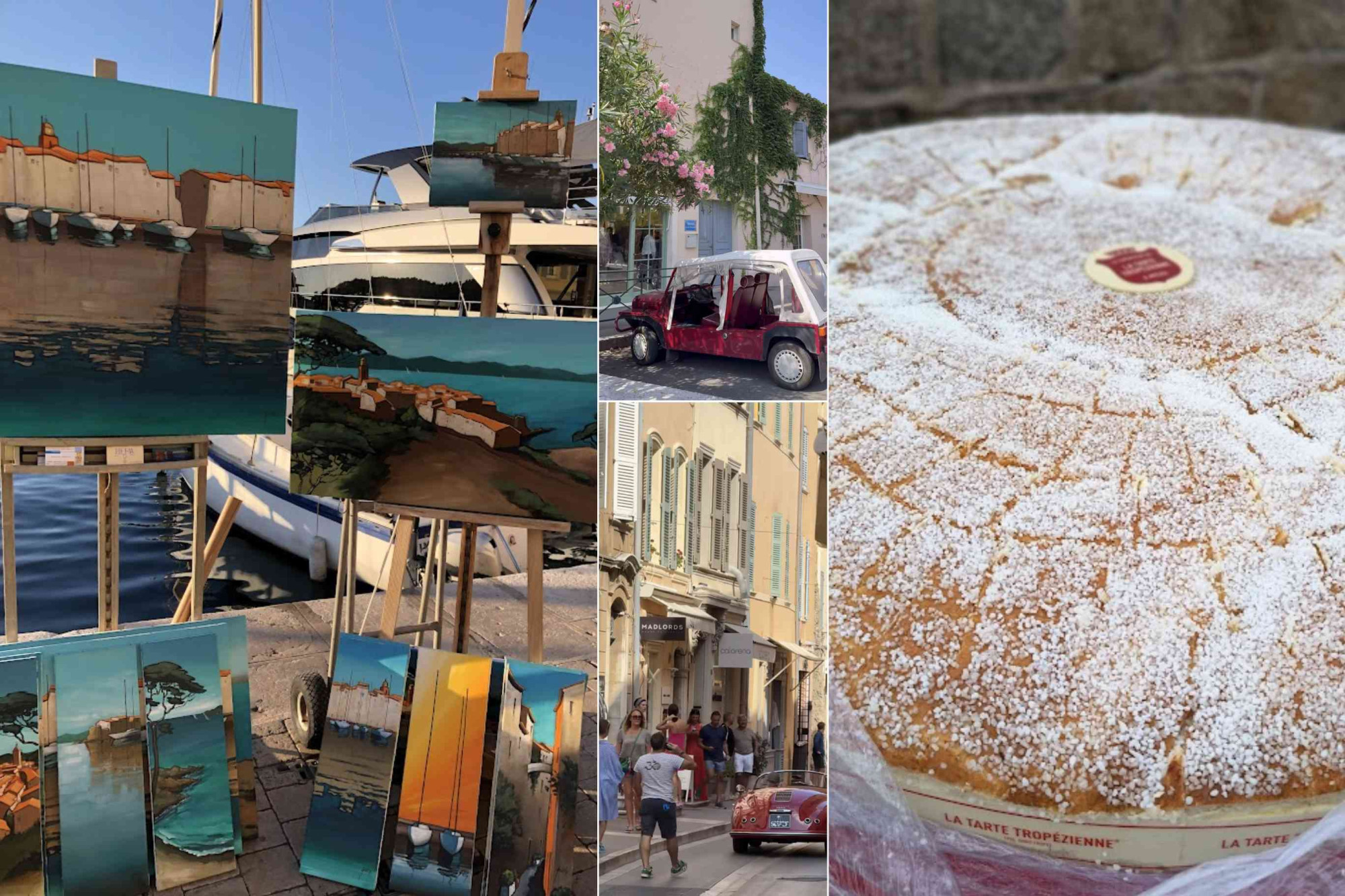
Before Saint-Tropez became an international holiday destination, its harbour attracted painters, writers and creative figures who helped establish the town's cultural identity. Their influence remains visible today, alongside local traditions that have become part of Saint-Tropez's heritage.
The Harbour That Inspired Artists
In 1892, painter Paul Signac arrived in Saint-Tropez and was captivated by the Mediterranean light and colours. He later established a home and studio here, attracting artists including Henri Matisse, Pierre Bonnard and Albert Marquet.
The harbour, fishing boats and surrounding coastline became subjects for painters exploring new approaches to colour and composition.
Today, artists continue to display their work along the waterfront, maintaining a connection with the town's artistic past.
The Musée de l'Annonciade
Located in a former chapel near the harbour, the Musée de l'Annonciade preserves an important collection of modern art.
Its paintings by Signac, Matisse and their contemporaries illustrate the development of Neo-Impressionism and Fauvism, movements that helped establish Saint-Tropez as an artistic destination.
For visitors interested in art, the museum offers an opportunity to understand the town through the artists who worked here.
The Story of La Tarte Tropézienne
In 1955, Polish-born pastry chef Alexandre Micka created a brioche filled with cream, inspired by a family recipe.
During the filming of And God Created Woman in Saint-Tropez, Brigitte Bardot tasted the pastry and reportedly suggested the name La Tarte Tropézienne.
The dessert combines soft brioche, a distinctive cream filling and a topping of sugar crystals. It became one of the town's most recognisable culinary specialities.
Today, the original pastry remains a popular part of a visit to Saint-Tropez, available in traditional and individual sizes.
A Different Side of Saint-Tropez
The paintings displayed around the harbour and the patisseries found throughout the old town reveal two sides of Saint-Tropez's cultural history.
Both connect the town's present-day identity with the artists and local businesses that helped shape its reputation.
#SaintTropez #CotedAzur #FrenchRiviera #ArtAndCulture #TarteTropezienne #MediterraneanArt #LocalHeritage #LesCouleursDeLaRiviera
Côte D'Azur @lescouleursdecotedazur
The Lemons of Menton
The Citron de Menton is a regional citrus fruit with a protected geographical origin, specific cultivation requirements and an exceptionally aromatic peel. Its characteristics are closely connected to the terraced hillsides surrounding Menton, between the Mediterranean and the mountains.
Cultivated on the Hillsides
The lemons are grown within five designated communes around Menton, where traditional stone terraces, known as restanques, make cultivation possible on steep slopes.
Unlike lemons harvested early for long-distance distribution, the Citron de Menton develops its colour naturally on the tree. Growers select and pick individual fruits by hand as they reach maturity, sometimes returning to the same tree several times.
The fruit is neither waxed nor chemically treated after harvesting, preserving the natural surface of its peel.
What Makes the Flavour Different?
The peel contains aromatic oils with pronounced citrus notes, making it particularly valuable in pastry-making and confectionery.
Finely grated zest can flavour madeleines, lemon cakes and shortbread, while strips of peel are used for candied fruit and marmalade. The juice provides acidity for fish dishes, sauces and desserts, without the pronounced bitterness associated with some other lemons.
The Protected Geographical Indication (PGI), granted in 2015, establishes requirements for production and geographical origin. Only lemons meeting these conditions may be marketed under the protected name Citron de Menton.
La Maison du Citron
La Maison du Citron is a family business connected to citrus cultivation in the hills around Menton. Its work includes growing citrus fruit and producing specialities such as preserves, syrups and confectionery.
The shop in Menton brings these products together, illustrating how the local lemon is used in different forms rather than being sold exclusively as fresh fruit.
Stay Inspiration | La Petite Maison, Menton
Situated in Menton's historic old town, La Petite Maison is an intimate guesthouse with just two suites. Its location provides a convenient base for exploring the pedestrian streets, local food shops and Mediterranean waterfront, with the surrounding citrus-growing hills forming part of the wider destination.
#Menton #CotedAzur #FrenchRiviera #CitronDeMenton #RegionalProduce #MediterraneanFood #TableAndTaste #Coastal

Côte D'Azur @lescouleursdecotedazur
The Colours of Port Grimaud
The pastel-coloured houses of Port Grimaud are among the most recognisable features of this waterfront village on the Gulf of Saint-Tropez. Shades of ochre, pale yellow, terracotta, pink and cream give individual buildings their identity while creating a consistent architectural appearance along the canals.
Port Grimaud was developed from the 1960s onwards by architect François Spoerry, who drew inspiration from traditional Mediterranean villages. Rather than repeating identical façades, he introduced variations in building heights, rooflines, windows and exterior colours.
A Mediterranean Colour Palette
The colours reflect shades associated with traditional Provençal architecture. Warm ochres and terracotta tones recall mineral pigments and lime-based exterior finishes, while lighter creams and pale yellows provide contrast.
These variations are particularly noticeable along the waterfront, where neighbouring houses have different colours but share similar architectural proportions.
The painted wooden shutters introduce another layer of colour. Soft greens, muted blues and neutral tones complement the façades, while traditional roof tiles provide a consistent warm finish across the buildings.
Colour as Part of the Architecture
In Port Grimaud, colour contributes to the identity of individual houses. Variations in façade tones, balconies, shutters and entrances make neighbouring properties recognisable without disrupting the overall appearance of the village.
The effect is reinforced by the arrangement of buildings along the canals. Reflections in the water bring the different colours together, while changes in daylight alter how the façades appear throughout the day.
A Coordinated Village
Port Grimaud's appearance is the result of a planned architectural concept rather than the gradual development of an old fishing village.
The combination of traditional building forms, varied façades and a Mediterranean colour palette gives the village a distinctive visual identity. It also demonstrates how colour can introduce individuality within a coordinated architectural setting.
#PortGrimaud #CotedAzur #FrenchRiviera #MediterraneanArchitecture #ColourPalette #HomeAndDesign #CoastalLiving #Coastal

Côte D'Azur @lescouleursdecotedazur
The Everyday Market Basket
The traditional food basket of the Côte d'Azur contains several regional specialities that reflect the area's Mediterranean agriculture and culinary heritage. Bread, olives, vegetables and locally prepared dishes remain important elements of the food culture around Nice and the surrounding coastal towns.
Bread and Local Specialities
Alongside the traditional French baguette, Provençal bakeries prepare fougasse, a flatbread made with olive oil and sometimes flavoured with olives, rosemary or anchovies.
Another regional speciality is pissaladière, particularly associated with Nice. This savoury tart is prepared with slowly cooked onions, anchovies and small black olives. Unlike pizza, its traditional version contains no tomato sauce or cheese.
Both are practical choices for a picnic or a simple lunch, particularly when accompanied by fresh tomatoes and seasonal vegetables.
The Olive Tradition
The small black olives of Nice are an important regional product. The Olive de Nice has a protected designation of origin and is produced from the Cailletier variety, cultivated in the Alpes-Maritimes.
These olives are appreciated for their delicate flavour and are used in salads, tapenades and traditional local dishes. The same variety also produces olive oil with a protected geographical identity.
Socca | A Niçoise Speciality
One of the most characteristic foods of Nice is socca, a thin preparation made from chickpea flour, water, olive oil and salt.
The batter is spread onto a large round metal tray and traditionally cooked at a high temperature in a wood-fired oven. The result is a lightly crisp surface with a soft interior.
Socca is served hot, usually with freshly ground black pepper. It is particularly associated with the markets and small food establishments of Nice, where it is prepared in large trays and sold in individual portions.
Together, these products illustrate the regional differences within French food culture. The Côte d'Azur has its own ingredients, protected agricultural products and preparations that remain closely connected to the area in which they originated.
#CotedAzur #FrenchRiviera #NicoiseCuisine #RegionalFood #Socca #Fougasse #TableAndTaste #Coastal

Côte D'Azur @lescouleursdecotedazur
The Historic Quarter of Saint-Tropez
Just a few minutes from the Vieux Port, La Ponche reveals the Saint-Tropez that existed before luxury yachts, beach clubs and international tourism became part of the town's identity. Once home to fishing families, this historic waterfront quarter remains one of the most distinctive parts of the old village.
Its narrow streets follow the irregular layout of the original settlement, with pastel-coloured houses, wooden shutters and small passages leading towards the Mediterranean. Around Place de l'Ormeau, the neighbourhood retains an intimate scale that contrasts with the busy harbour nearby.
At the water's edge lies Plage de la Ponche, a small beach enclosed by the historic buildings of the quarter. It has a particular place in the town's history, appearing in photographs and films that helped establish the international image of Saint-Tropez.
The neighbourhood also reflects the town's artistic and cinematic heritage. Saint-Tropez attracted painters and writers long before its rise as a fashionable resort, while the films of the 1950s and 1960s introduced its streets and coastline to a much wider audience.
Cinema remains part of the cultural life of La Ponche. Les Nuits de La Ponche brings open-air film screenings to the historic quarter, offering visitors an opportunity to experience cinema in the surroundings of the old village. Programme dates vary and are worth checking when planning a summer visit.
La Ponche is easily explored on foot. From the harbour, follow the streets towards Place de l'Ormeau and continue to the waterfront. The nearby Citadelle de Saint-Tropez provides another perspective on the town, with its maritime history and views across the Gulf.
For visitors interested in the history and character of Saint-Tropez, La Ponche is an essential part of the village, connecting its fishing heritage with the artists, filmmakers and cultural influences that shaped its reputation.
From the Magazine
Contemporary fashion and creative projects continue to form part of the Saint-Tropez story. Our first edition features Kasteel Rouge 0.0 in Saint-Tropez, offering a different perspective on the town's contemporary identity.
Explore Kasteel Rouge 0.0 in our magazine →
#LaPonche #SaintTropez #CotedAzur #FrenchRiviera #HistoricVillages #ArtAndCulture #Coastal #LesCouleursDeLaRiviera
Côte D'Azur @lescouleursdecotedazur
Watersports at Sunset
Pampelonne Beach is known for its beach clubs and long sandy shoreline, but the coastline around Saint-Tropez also offers plenty of opportunities for those who prefer to spend their time on the water.
Wakesurfing, wakeboarding, paddleboarding and kayaking are among the activities available in the wider Gulf of Saint-Tropez. Each offers a different experience, from the speed and technique of board sports to exploring the coastline at a slower pace.
Wakesurfing has become a popular choice for those interested in trying something different. Unlike wakeboarding, where the rider holds a tow rope, wakesurfing involves riding the continuous wave created behind a specially equipped boat after releasing the rope. Lessons generally begin with an introduction to balance and technique, making the activity accessible to beginners with appropriate instruction.
Late afternoon sessions can be particularly appealing. With the sun lower over the Mediterranean, the coastline takes on a different appearance, and a watersports excursion becomes an interesting way to finish a day at the beach.
For visitors planning an activity, local watersports centres around Saint-Tropez, Sainte-Maxime and the surrounding coastline offer lessons and supervised sessions, depending on the season and sea conditions.
Pampelonne and the wider Gulf of Saint-Tropez offer more than a traditional beach holiday. Combining time on the sand with an activity on the water adds variety to a coastal stay and introduces a different perspective on this part of the French Riviera.
#Pampelonne #SaintTropez #CotedAzur #FrenchRiviera #Watersports #Wakesurfing #OutdoorActivities #Coastal

Côte D'Azur @lescouleursdecotedazur
The Boutique Streets of Saint-Tropez
Shopping in Saint-Tropez extends well beyond the international fashion boutiques associated with the French Riviera. The village centre brings together designer collections, independent shops and local businesses specialising in products closely connected to the destination.
Rue François Sibilli, Rue Gambetta, Rue Georges Clemenceau and Rue du Général Allard are among the principal shopping streets. Their boutiques occupy individual buildings throughout the centre, creating a shopping district that can be explored on foot rather than within a conventional retail complex.
International fashion houses contribute to the destination's reputation, particularly through summer clothing, accessories and resort collections. Alongside them, smaller businesses offer a different selection, including leather goods, jewellery, home accessories and beachwear.
One of the most characteristic local products is the Tropezian leather sandal. Atelier Rondini, established in 1927, and K. Jacques, founded in 1933, are two names associated with sandal-making in Saint-Tropez. Their designs are recognised for leather straps, flat soles and styles suited to warm-weather dressing.
The smaller streets are equally interesting for their architecture. Boutiques are integrated into traditional buildings with painted shutters, narrow entrances and planted façades. This gives the shopping district a character quite different from the larger luxury shopping destinations along the Côte d'Azur.
For visitors interested in independent labels and regional craftsmanship, it is worth exploring the side streets as well as the main shopping addresses. The selection ranges from established local makers to contemporary fashion and decorative objects.
Saint-Tropez's shopping culture reflects both sides of the destination: its international fashion reputation and the smaller businesses that remain part of village life.
#SaintTropez #CotedAzur #FrenchRiviera #SaintTropezShopping #FrenchFashion #LocalBoutiques #StyleAndFashion #Coastal

Côte D'Azur @lescouleursdecotedazur
A Table at Sénéquier
Few cafés are as closely associated with Saint-Tropez as Sénéquier, whose distinctive red terrace has become a recognisable feature of the Vieux Port. Positioned along Quai Jean Jaurès, it is a place for coffee, lunch, pastries and an aperitif overlooking the harbour.
The story began in 1887, when Marie and Martin Sénéquier opened a pâtisserie on Place aux Herbes. The business became known for its traditional confectionery, particularly white nougat made with almonds, pistachios and Provençal honey.
The café on the harbour followed in 1930. Its terrace gradually became a meeting place for artists, writers, actors and visitors as Saint-Tropez gained international recognition during the 1950s and 1960s.
The Red Terrace
The terrace remains Sénéquier's defining feature. Red awnings, chairs and tables create a distinctive visual identity against the pastel façades of the harbour.
Its position facing the boats makes it a popular address for the French tradition of taking an aperitif before dinner. A glass of rosé, a spritz or another preferred drink can be enjoyed while watching the activity around the port.
A Pâtisserie Tradition
Alongside its café and brasserie service, Sénéquier retains its association with Provençal confectionery. White nougat, candied fruits and its own version of the tarte tropézienne are among the house specialities.
The nougat is particularly connected to the establishment's origins, combining almonds, pistachios and honey in a recipe that remains part of its identity.
Sénéquier continues to bring together two sides of Saint-Tropez: its traditional village businesses and its reputation as an international Mediterranean destination.
Address: 29 Quai Jean Jaurès, Saint-Tropez
#SaintTropez #Senequier #CotedAzur #FrenchRiviera #FrenchCafeCulture #TableAndTaste #Coastal

Côte D'Azur @lescouleursdecotedazur
From the Harbour to the Citadel
One of the best ways to explore Saint-Tropez is to leave the busy waterfront and follow the streets uphill towards the Citadel. This short walking route connects the harbour, the old village and several viewpoints overlooking the Gulf of Saint-Tropez.
Begin at the Vieux Port and walk towards the Tour du Portalet, at the edge of the historic waterfront. From here, continue into La Ponche, passing through the narrow streets around Place de l'Ormeau and the Church of Notre-Dame-de-l'Assomption.
Rather than returning directly to the harbour, follow the streets uphill towards Rue de la Citadelle. The route gradually leaves the commercial centre behind, passing residential houses, planted gardens and quieter corners of the village.
The Citadelle de Saint-Tropez is the main destination. Situated above the old town, the fortress offers views across the rooftops, the harbour and the Gulf. Its grounds also provide an opportunity to see Saint-Tropez from a higher perspective, with umbrella pines framing parts of the coastline.
Visitors interested in the town's maritime connections can enter the Musée d'Histoire Maritime, housed within the Citadel. Alternatively, the surrounding public viewpoints make the uphill walk worthwhile on their own.
Return towards the centre via Rue de la Citadelle and continue to Place des Lices. On Tuesday and Saturday mornings, the square hosts the Provençal market, while its cafés provide a convenient place to finish the walk.
Walking route: Vieux Port → Tour du Portalet → La Ponche → Rue de la Citadelle → Citadelle de Saint-Tropez → Place des Lices.
Allow approximately 1.5 to 2 hours for a relaxed walk, with additional time for the museum, photographs or a café stop. The route includes uphill sections, so comfortable footwear is recommended.
#SaintTropez #CotedAzur #FrenchRiviera #WalkingRoutes #CitadelleDeSaintTropez #LaPonche #TravelAndEscapes #Coastal

Côte D'Azur @lescouleursdecotedazur
French Identity in Saint-Tropez
Saint-Tropez is internationally associated with Mediterranean holidays, but its public spaces also reflect a strong connection to French civic and maritime traditions. Along the waterfront, national flags, monuments and commemorative sites form part of the town's everyday surroundings.
The French tricolour is displayed at public buildings and memorials throughout France. Its blue, white and red colours represent the French Republic and are particularly visible during national commemorations, including Bastille Day on 14 July.
In Saint-Tropez, the relationship with the sea gives these public symbols an additional context. The town's maritime connections remain visible through anchors, plaques and monuments positioned near the waterfront.
These sites are reminders that the harbour has served different purposes over time, including fishing, commercial activity and maritime transport. Today, they exist alongside restaurants, private yachts and visitors exploring the coastline.
National celebrations are another part of local life. On 14 July, French towns and villages mark the national holiday with ceremonies and public events. In coastal destinations such as Saint-Tropez, the waterfront frequently provides a setting for seasonal festivities.
For visitors interested in French culture, these details offer another perspective on the destination. They also demonstrate how civic traditions remain present in places that are better known internationally for tourism.
#SaintTropez #CotedAzur #FrenchRiviera #FrenchCulture #BastilleDay #MaritimeHeritage #ArtAndCulture #Coastal

Côte D'Azur @lescouleursdecotedazur
The Art of a Holiday Souvenir
Among the boutiques and waterfront cafés of Saint-Tropez, paintings of the harbour, colourful façades and village streets offer an alternative to conventional holiday souvenirs. Buying an original work from a local artist is also an opportunity to take home something with a personal connection to the destination.
The paintings displayed around the harbour range from small watercolours to larger works in acrylic or oil. Some artists favour detailed representations of familiar landmarks, while others interpret the village through expressive brushwork, simplified shapes and Mediterranean colours.
For visitors interested in purchasing a painting, the distinction between an original artwork and a reproduction is worth understanding.
Original Art or Reproduction?
An original painting is created directly by the artist, making it a unique work. A print reproduces an existing image and may be produced in an open or limited edition.
Limited-edition prints are commonly numbered and signed, although a signature alone does not establish their authenticity or value.
When buying a painting, it is useful to ask about the medium, the artist and whether the work is an original or a reproduction.
For higher-value purchases, a receipt identifying the artist, title, dimensions and materials provides a useful record.
Choosing a Piece That Lasts
A small painting can be easier to transport than a large canvas, particularly when travelling by air.
Works on paper should be protected from moisture, bending and direct sunlight. Unframed watercolours or drawings can be transported in a rigid portfolio or protective sleeve.
For canvas paintings, it is important to check whether the paint has fully dried before packaging.
Beyond practical considerations, choosing artwork is a matter of personal preference. A familiar harbour scene may recall a particular visit, while an abstract interpretation of the coastline can work as a decorative piece long after the holiday.
Art as Part of the Travel Experience
Buying directly from an artist also creates an opportunity to learn about the work itself.
A conversation about the location depicted, the technique used or the inspiration behind a composition adds context that is rarely available with a mass-produced souvenir.
For those exploring Saint-Tropez, the paintings displayed around the harbour are worth a closer look, even without the intention to buy.
They offer an opportunity to encounter contemporary interpretations of the village and perhaps find an original piece to take home.
#SaintTropez #CotedAzur #FrenchRiviera #LocalArtists #OriginalArt #ArtAndCulture #TravelDiscoveries #LesCouleursDeLaRiviera

Côte D'Azur @lescouleursdecotedazur
The Peacocks of Saint-Tropez
Among the more unexpected sights in Saint-Tropez are the peacocks that occasionally wander through gardens, terraces and streets. Their presence is connected to the town's historic Citadel, where the birds have been part of local life since the 1950s.
According to local accounts, the first peacocks were brought from India by members of the French Navy. Their distinctive calls reportedly made them useful as natural alarm birds around the Citadel.
Over the years, the population declined. By 2015, only one peacock reportedly remained. In 2017, six additional birds were introduced to help restore the population, with new chicks appearing the following year.
Peafowl spend much of their time on the ground, searching for seeds, insects and vegetation. Although they can fly short distances, they prefer walking through open spaces and resting in sheltered areas. Males are recognised by their iridescent blue plumage and elaborate feather displays.
The area around the Citadel remains the location most closely associated with Saint-Tropez's peacocks, although they can occasionally be spotted elsewhere in the village.
These free-roaming birds are an unusual part of local life and a reminder that Saint-Tropez has stories extending well beyond its famous harbour and beaches.
#SaintTropez #CotedAzur #FrenchRiviera #Peacocks #LocalWildlife #OutdoorAndNature #Coastal

Côte D'Azur @lescouleursdecotedazur
The Little Streets of Saint-Tropez
Much of Saint-Tropez's character is found in the smaller streets that connect its harbour, shopping district and residential neighbourhoods. Here, traditional village houses stand alongside independent boutiques, small restaurants and café terraces, creating a different experience from the busy waterfront.
Around Rue Gambetta, Rue du Général Allard and the streets leading towards Place de l'Ormeau, visitors encounter a mix of local businesses and traditional architecture. Pastel-coloured façades, painted shutters, climbing plants and narrow passages are characteristic details of the village centre.
Some streets are primarily residential, while others accommodate fashion boutiques, art galleries and small shops. Their compact proportions make it easy to explore several different areas within a short walk.
The smaller squares are particularly interesting. A few café tables, a shaded entrance or a restaurant terrace can occupy spaces between the buildings, creating places to stop away from the larger establishments along the harbour.
Shopping is also part of exploring these streets. Independent fashion boutiques display dresses, accessories and beachwear, while other shops specialise in jewellery, decorative objects and regional products.
The appeal of walking through Saint-Tropez lies partly in these contrasts. A busy shopping street may lead into a quiet residential passage, while a narrow lane can open onto a small square or a view towards the sea.
#SaintTropez #CotedAzur #FrenchRiviera #VillageLife #HistoricStreets #TravelAndEscapes #Coastal

Côte D'Azur @lescouleursdecotedazur
At Casa Amor on Pampelonne Beach, Dolce & Gabbana has taken its distinctive design language beyond fashion and into the world of hospitality. The collaboration transforms a beach club into a setting where Italian craftsmanship, decorative traditions and Mediterranean leisure come together.
The partnership forms part of Dolce & Gabbana's DG Resort project, which brings the fashion house's recognisable prints and colours to selected beach destinations.
At Casa Amor, the central design element is the Carretto Siciliano, a decorative motif inspired by Sicily's traditional painted carts. These carts were historically used for transporting goods and became known for their elaborate painted panels, ornamental patterns and vivid colours.
Dolce & Gabbana has incorporated this visual heritage into its fashion collections and extended it to beach furnishings, textiles and decorative installations.
The collaboration is particularly interesting because Casa Amor already has a strong identity of its own. Its rustic wooden furniture, woven materials and informal Mediterranean setting provide a contrast to the colourful Sicilian patterns.
Rather than creating an entirely new venue, the fashion house introduces its visual identity into an established restaurant and beach club.
This approach has become increasingly important in luxury hospitality. Fashion brands collaborate with hotels, restaurants and beach clubs to create physical environments that express their design philosophy. Visitors encounter the brand through furniture, table settings, decorative objects and the overall surroundings, rather than through clothing alone.
For the fashion house, it is an opportunity to reach travellers in a setting associated with leisure and lifestyle. For the hospitality venue, the collaboration introduces a distinctive visual identity that connects it with an internationally recognised designer.
Casa Amor is one example of how the boundaries between fashion, interior design and travel are becoming less defined.
Casa Amor
Chemin de Matarane, Plage de Pampelonne
83350 Ramatuelle, France
#CasaAmor #DolceGabbana #SaintTropez #Pampelonne #CotedAzur #FashionAndHospitality #LuxuryFashion #LesCouleursDeLaRiviera

Côte D'Azur @lescouleursdecotedazur
Plage des Graniers
Saint-Tropez has a small beach just beyond its historic centre that is easy to overlook when planning a visit to the town. Plage des Graniers lies below the Citadel, surrounded by pine trees, Mediterranean vegetation and a sheltered stretch of coastline.
Unlike Pampelonne, which requires travelling towards Ramatuelle, Les Graniers can be reached on foot from the village. The route passes the seaside cemetery before continuing towards the beach, offering a different perspective on the Saint-Tropez peninsula.
The beach itself is relatively small, with a sandy shoreline bordered by rocks. Its setting is particularly attractive for visitors who want to combine a morning exploring the old town with an afternoon beside the Mediterranean.
One of its distinctive features is the beach restaurant, Les Graniers. Set among the coastal vegetation, the restaurant specialises in Mediterranean cooking, including fresh fish, seafood and dishes prepared over a wood fire. Its informal setting makes it an interesting alternative to the larger beach establishments along Pampelonne.
The beach also connects with the Sentier du Littoral, the coastal walking path that follows the peninsula. Continuing along the route reveals rocky sections of shoreline and views across the Mediterranean.
There are a few practical details worth knowing. The public beach is free to access throughout the year, although its limited size means space can be difficult to find during busy summer days. Dogs are not permitted on the beach.
Plage des Graniers is particularly interesting for travellers who want to experience the coast without organising a separate excursion from Saint-Tropez. A walk from the centre, lunch by the water and time on the beach can easily be combined in one visit.
Plage des Graniers
Chemin des Graniers, 83990 Saint-Tropez, France
#PlageDesGraniers #SaintTropez #CotedAzur #FrenchRiviera #CoastalWalks #MediterraneanBeaches #Coastal #LesCouleursDeLaRiviera

Côte D'Azur @lescouleursdecotedazur
Hôtel Le Yaca | A Historic Address in Saint-Tropez
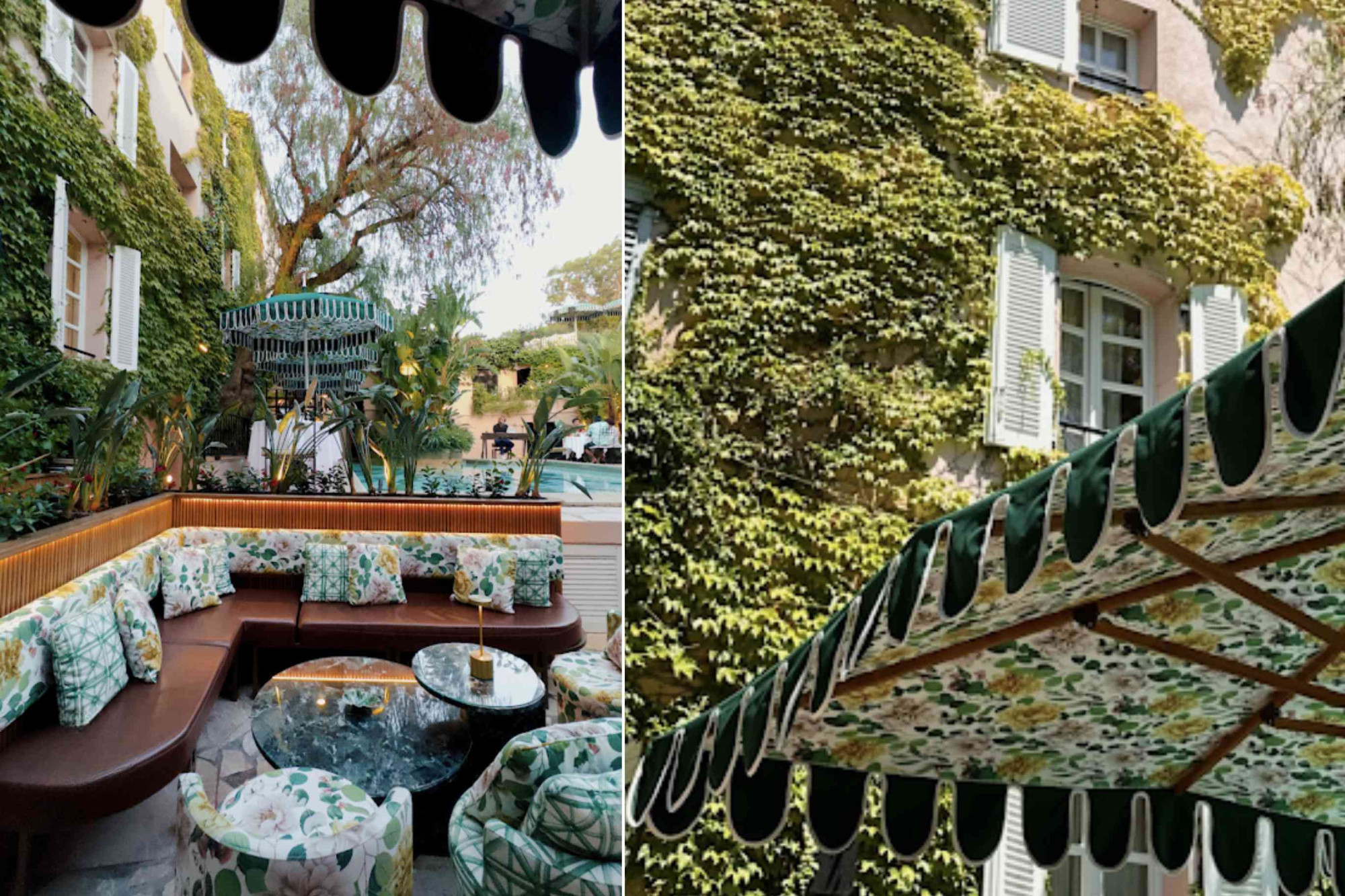
Behind a discreet entrance in the old village of Saint-Tropez, Hôtel Le Yaca occupies an eighteenth-century residence whose history, gardens and carefully designed interiors distinguish it from the larger hotels along the Riviera.
Located near the Citadel and La Ponche, the five-star hotel combines historic architecture with contemporary hospitality, just a short walk from the harbour.
A Residence with a Remarkable Past
The history of Le Yaca dates to 1722, when the building was constructed as a private residence.
During the twentieth century, Philippe Tallien, a former dancer with the Ballets de Monte-Carlo, transformed the property into an elegant hotel.
It became associated with the international visitors who contributed to Saint-Tropez's reputation, welcoming figures including Rita Hayworth, Greta Garbo and Orson Welles.
The building's original character remains an important part of its identity, with historic stonework and intimate spaces incorporated into the hotel.
A Mediterranean Garden in the Old Village
One of Le Yaca's defining features is its secluded garden, arranged around a heated outdoor swimming pool.
Palm trees, cacti, fig trees and other Mediterranean plants create a green setting enclosed by the hotel's historic buildings.
The garden also accommodates Le Patio, the hotel's Italian restaurant, where guests can dine beside the pool.
Its leafy surroundings provide an interesting contrast to the narrow streets and lively waterfront just outside the property.
Interiors with a Distinctive Identity
The hotel's interiors were renovated by designer Monica Damonte in 2017.
Rather than adopting a uniform contemporary style, the design combines decorative fabrics, carefully selected furniture and individual details.
Rubelli textiles, Frette linens, marble bathrooms and furniture by recognised designers contribute to the character of the rooms.
Art is also part of the hotel's identity, with works and design pieces by artists including Nathalie Decoster displayed throughout the property.
The result is an interior that connects the residence's history with a more contemporary interpretation of Riviera hospitality.
Staying at Le Yaca
Le Yaca offers rooms, suites and villas, together with a restaurant, bar and garden swimming pool.
Its central location makes it particularly convenient for exploring La Ponche, the historic harbour, galleries and restaurants on foot.
For guests interested in architecture, interior design and smaller luxury hotels, Le Yaca offers a distinctive address within the historic centre of Saint-Tropez.
Stay Inspiration | Hôtel Le Yaca, Saint-Tropez
Set within a historic residence near La Ponche, Hôtel Le Yaca combines individually designed accommodation with a secluded Mediterranean garden and poolside dining.
Address: 1 Boulevard d'Aumale, 83990 Saint-Tropez, France
#HotelLeYaca #SaintTropez #CotedAzur #FrenchRiviera #BoutiqueHotels #InteriorDesign #Coastal #LesCouleursDeLaRiviera
Côte D'Azur @lescouleursdecotedazur
James Perse | California Living on the French Riviera
James Perse has built a recognisable design identity around understated clothing, natural materials and the relaxed lifestyle of coastal California. In Saint-Tropez, these influences find a natural connection with the Mediterranean setting.
The brand's aesthetic extends from its clothing collections to furniture, architecture and the presentation of its retail spaces.
From Los Angeles to the Riviera
Founded by James Perse in Los Angeles, the label began with a focus on high-quality basics, particularly T-shirts made from carefully selected fabrics.
The collections later expanded into knitwear, relaxed tailoring, dresses and accessories, maintaining an emphasis on comfort, fit and restrained design.
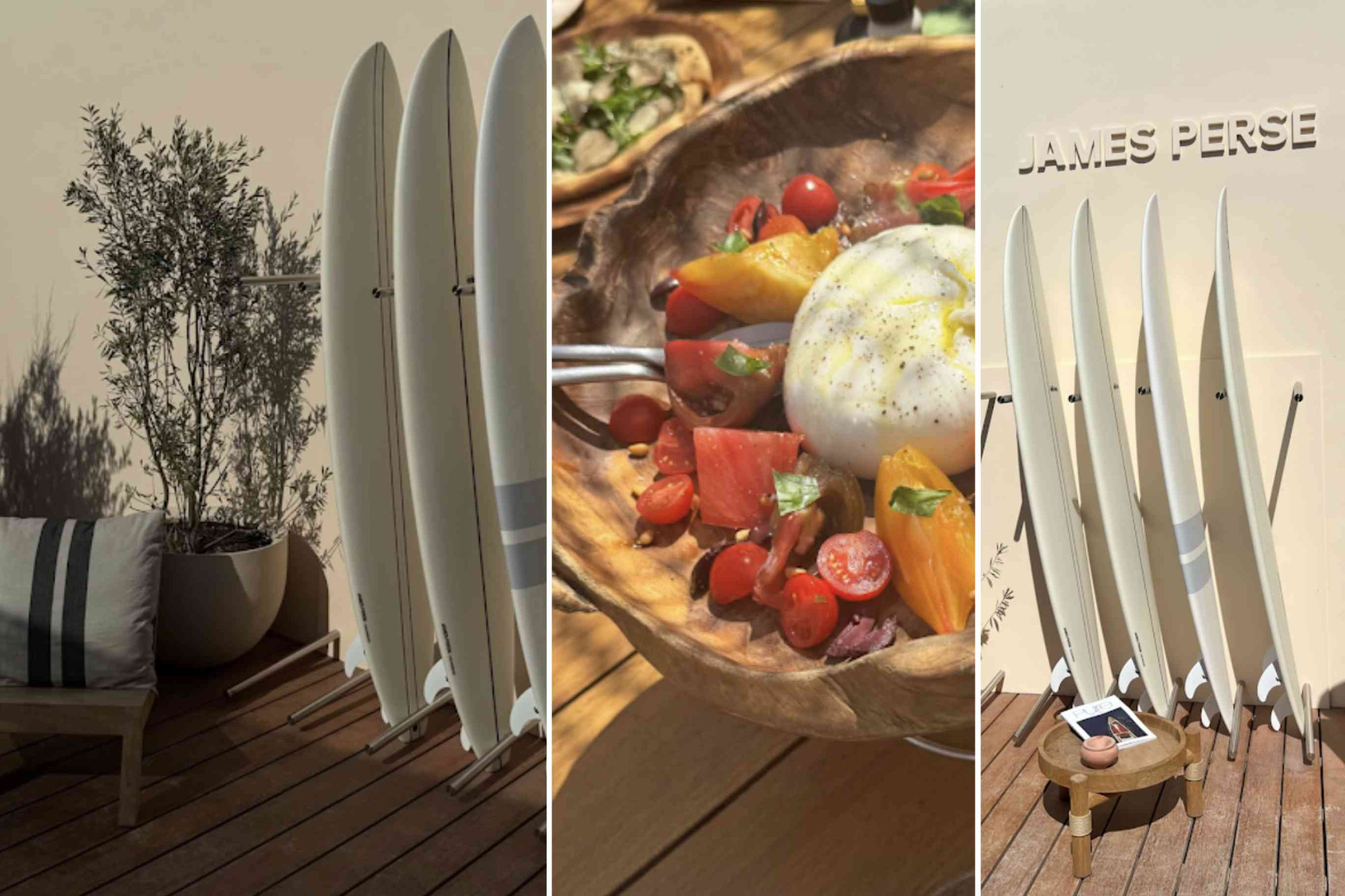
The influence of California's coastal culture is visible throughout the brand, from its neutral colour palette to the use of surfboards and natural textures in its interiors.
A Lifestyle Expressed Through Design
James Perse stores are designed to communicate the same aesthetic as the clothing.
Wooden furniture, simple seating, pale walls and carefully selected decorative objects create spaces that resemble contemporary coastal homes.
Surfboards are a recurring feature, reflecting the brand's connection to Southern California's beach culture.
The combination of these elements creates a recognisable identity that extends beyond fashion.
In Saint-Tropez, the same approach feels particularly relevant. The Mediterranean setting shares certain characteristics with the Californian coast, including outdoor living, informal dining and a close relationship with the sea.
The Appeal of Understated Design
An important part of the James Perse aesthetic is the attention given to fabric, proportion and material.
Cotton jersey, soft knitwear and relaxed silhouettes form the foundation of the collections, while interiors favour wood, linen and other natural finishes.
The result is a consistent visual language across clothing, furniture and retail design.
Rather than introducing a different concept for each location, James Perse maintains a recognisable identity while allowing its stores to respond to their surroundings.
James Perse in Saint-Tropez
The Saint-Tropez setting brings together the brand's Californian influences and the distinctive character of the French Riviera.
Its combination of fashion, surf culture and contemporary design offers an interesting example of how a clothing label can communicate a broader lifestyle through its physical spaces.
9 place de la Garonne, 83990 Saint-Tropez, France
#JamesPerse #SaintTropez #CotedAzur #FrenchRiviera #CaliforniaStyle #CoastalDesign #LifestyleDesign #LesCouleursDeLaRiviera
Côte D'Azur @lescouleursdecotedazur
Riviera Style of the 1950s
The visual identity of Loulou Ramatuelle draws inspiration from the French Riviera of the 1950s, when seaside holidays, colourful parasols and outdoor dining became closely associated with Mediterranean resort culture.
Located on Pampelonne Beach, Loulou interprets this period through its interiors, graphic details and approach to hospitality. Yellow-and-white striped menus, playful illustrations, whitewashed timber and nautical references establish a recognisable identity throughout the property.
The restaurant's design recalls the beach establishments of an earlier Riviera, with wooden structures inspired by fishermen's cottages and fabric sails providing shade. Natural materials and simple furnishings keep the emphasis on outdoor living.
The graphic identity is equally important. The illustrated character appearing on the menus and signage gives Loulou a personality that extends from the restaurant tables to the beach. These details connect the different areas of the establishment without relying on elaborate decoration.
The culinary offering follows a Mediterranean direction under the supervision of executive chef Benoît Dargère. Ingredients from southern France, Italy and Sicily feature in dishes such as sea bream carpaccio, linguine alle vongole, antipasti and seafood preparations.
Loulou also brings together several elements of traditional Riviera hospitality. Guests can reserve a table for lunch, spend time on the beach and enjoy an aperitivo later in the afternoon. The restaurant and beach operate as one destination, with views towards the Mediterranean and Pointe du Capon.
The result is a contemporary interpretation of mid-century Riviera style, demonstrating how a carefully developed visual identity can give a beach restaurant a character of its own.
Loulou Ramatuelle
962 Chemin des Tamaris
Plage de Pampelonne, 83350 Ramatuelle
#LoulouRamatuelle #Ramatuelle #SaintTropez #CotedAzur #FrenchRiviera #HospitalityDesign #BeachClubDesign #Coastal

Côte D'Azur @lescouleursdecotedazur
Sunset on the Gulf of Saint-Tropez
As the sun begins to set over the Gulf of Saint-Tropez, Plage de la Bouillabaisse becomes one of the most appealing places to spend the final hours of the day beside the Mediterranean.
Situated at the entrance to Saint-Tropez, near the boundary with Gassin, this sandy beach looks across the water towards the wooded hills of the Massif des Maures.
A Different View of Saint-Tropez
Unlike Pampelonne, which faces the open Mediterranean, La Bouillabaisse overlooks the sheltered gulf.
Sailing boats and yachts anchor offshore, while the coastline opposite forms a distinctive backdrop of hills and small coastal settlements.
Its west-facing outlook is particularly important. As the sun descends behind the Massif des Maures, the water reflects shades of gold, orange and pink.
The view changes throughout the evening, with the silhouettes of anchored boats becoming increasingly prominent against the fading light.
From an Afternoon Swim to Sunset
La Bouillabaisse combines a public beach with established seaside restaurants and beach facilities.
Visitors can spend the afternoon swimming, enjoy a drink overlooking the gulf or stay for dinner as the sun sets.
Restaurants along the beachfront provide opportunities for Mediterranean dining, while the public sections remain accessible without booking a beach lounger.
The atmosphere is different from the larger beachclub destinations around Ramatuelle, making La Bouillabaisse an attractive alternative for visitors who prefer to remain close to Saint-Tropez.
An Evening Worth Staying For
One of the pleasures of La Bouillabaisse is the opportunity to watch the coastline change as daylight disappears.
The anchored boats, distant hills and reflections across the water create a memorable setting for an evening by the sea.
For visitors exploring Saint-Tropez, it is a particularly worthwhile place to return to at sunset, when the beach offers one of the finest views across the gulf.
Plage de la Bouillabaisse
83990 Saint-Tropez, France
#PlageDeLaBouillabaisse #SaintTropez #CotedAzur #FrenchRiviera #MediterraneanSunset #Coastal #TravelAndEscapes #LesCouleursDeLaRiviera

Côte D'Azur @lescouleursdecotedazur
The Italian Lunch Tradition
At Gigi Ramatuelle, lunch is designed to be enjoyed without rushing. Set beneath the pine trees near Pampelonne Beach, the restaurant brings Italian food traditions to the French Riviera, with generous dishes, outdoor tables and an atmosphere inspired by the Italian dolce vita.
The menu centres on familiar Italian recipes, prepared with an emphasis on ingredients and sharing. Classics associated with Gigi include vitello tonnato, thinly sliced veal served with a tuna-based sauce, linguine alle vongole with clams and veal Milanese with its crisp breadcrumb coating.
These dishes reflect different regions of Italy, from the Piedmontese origins of vitello tonnato to the seafood traditions of the country's coastal areas.
The setting encourages a leisurely lunch. Tables are arranged in the garden beneath mature pine trees, with natural materials and comfortable seating creating the atmosphere of an Italian summer residence. The small vintage Fiat adds a playful reference to Italy's motoring heritage.
Gigi is also conceived as a destination for spending several hours rather than simply stopping for a meal. Alongside the restaurant, the property includes a swimming pool, Bellini Bar, private cabanas and spaces for families.
This approach reflects a familiar aspect of Italian hospitality: the pleasure of gathering around a table, ordering several courses and allowing a meal to become an important part of the day.
For visitors to Ramatuelle, Gigi offers an alternative to the beach clubs of Pampelonne, combining Italian cuisine with a garden setting and facilities for a longer afternoon.
Gigi Ramatuelle
1050 Chemin des Barraques
83350 Ramatuelle, France
#GigiRamatuelle #Ramatuelle #SaintTropez #CotedAzur #ItalianCuisine #MediterraneanDining #TableAndTaste #Coastal

Côte D'Azur @lescouleursdecotedazur
Dinner at Pan Deï Palais in Saint-Tropez
Behind a discreet entrance on Rue Gambetta, Pan Deï Palais offers one of Saint-Tropez's more intimate dining settings, with a garden terrace, live music and a menu combining Mediterranean ingredients with Asian influences.
The restaurant, Les Délices du Pan Deï, occupies the courtyard of a historic residence, just a short walk from Place des Lices and the harbour.
A Residence with an Indian Heritage
Pan Deï Palais was built in 1835 by General Jean-François Allard for his wife, Bannu Pan Deï, an Indian princess whom he met while serving in Punjab.
Their story remains central to the character of the property. Indian-inspired furnishings, decorative textiles and architectural details reflect its origins.
Today, the former residence is part of the Airelles collection, with a secluded garden and swimming pool surrounded by the buildings of the original house.
Mediterranean Ingredients, Asian Influences
At Les Délices du Pan Deï, chef Paul Benimelli brings together French Mediterranean cooking and flavours from India and other parts of Asia.
The cuisine combines regional produce with aromatic herbs, spices and carefully prepared sauces.
Among the restaurant's featured dishes are Iberian pork pluma with chimichurri and poached lobster served in a Thai-inspired broth.
The menu reflects the history of the property while introducing a contemporary interpretation of international cuisine.
Dinner in the Garden
The restaurant opens onto a sheltered terrace beside the pool, with tables arranged among Mediterranean vegetation.
As evening arrives, the courtyard becomes a setting for candlelit dining and music. The hotel's evening programme includes live jazz, DJ performances and other musical events.
The combination of a small dining space, attentive service and carefully presented dishes creates an experience that feels closer to a private dinner than a conventional restaurant visit.
Pan Deï Palais
52 Rue Gambetta
83990 Saint-Tropez, France
#PanDeiPalais #SaintTropez #CotedAzur #FrenchRiviera #MediterraneanDining #FineDining #TableAndTaste #LesCouleursDeLaRiviera

Côte D'Azur @lescouleursdecotedazur
Moroccan Flavours in Saint-Tropez
A few streets from Place des Lices, Salama introduces a different culinary tradition to Saint-Tropez. Moroccan recipes, aromatic spices and dishes intended for sharing form the basis of a menu that brings together North African and Mediterranean influences.
The restaurant occupies the former Villa Romana, a well-known address in Saint-Tropez. Its interior combines warm plaster tones, decorative niches, timber ceilings and intimate seating areas. The setting provides a fitting backdrop for a cuisine in which hospitality and sharing have an important place.
One of the most interesting dishes on the menu is chicken pastilla. Traditionally associated with Moroccan celebrations, this delicate pastry combines shredded chicken, eggs, onions and spices with the sweetness of almonds and cinnamon. The contrast between savoury filling, crisp pastry and gentle sweetness is central to the dish.
Salama also serves several interpretations of couscous, including a vegetable version, couscous royal with different meats and méchoui prepared with lamb shoulder. The latter is designed for sharing, with the meat served alongside fine semolina, vegetables, chickpeas and raisins.
For those interested in slow-cooked dishes, the menu includes lamb tajine with prunes and almonds, chicken with preserved lemon and olives and mourouzia, a Moroccan lamb preparation seasoned with ras el hanout. These recipes demonstrate how dried fruit, preserved citrus and spice blends contribute different layers of flavour to Moroccan cooking.
The meal can begin with smaller dishes such as zaalouk, prepared with aubergine, tomato, coriander and preserved lemon, or briouates filled with cheese or chicken. Traditional Moroccan pastries and fresh mint tea provide a familiar conclusion.
Salama's appeal lies in the opportunity to explore these dishes together. Ordering several starters followed by a couscous or lamb preparation for the table allows diners to experience different combinations of ingredients and cooking methods.
For visitors to Saint-Tropez, it is an interesting address for discovering Moroccan food traditions within the town's varied restaurant scene.
Salama Saint-Tropez
1 Chemin des Conquettes, 83990 Saint-Tropez
#SalamaSaintTropez #SaintTropez #CotedAzur #MoroccanCuisine #MediterraneanFood #Couscous #TableAndTaste #LesCouleursDeLaRiviera

Côte D'Azur @lescouleursdecotedazur
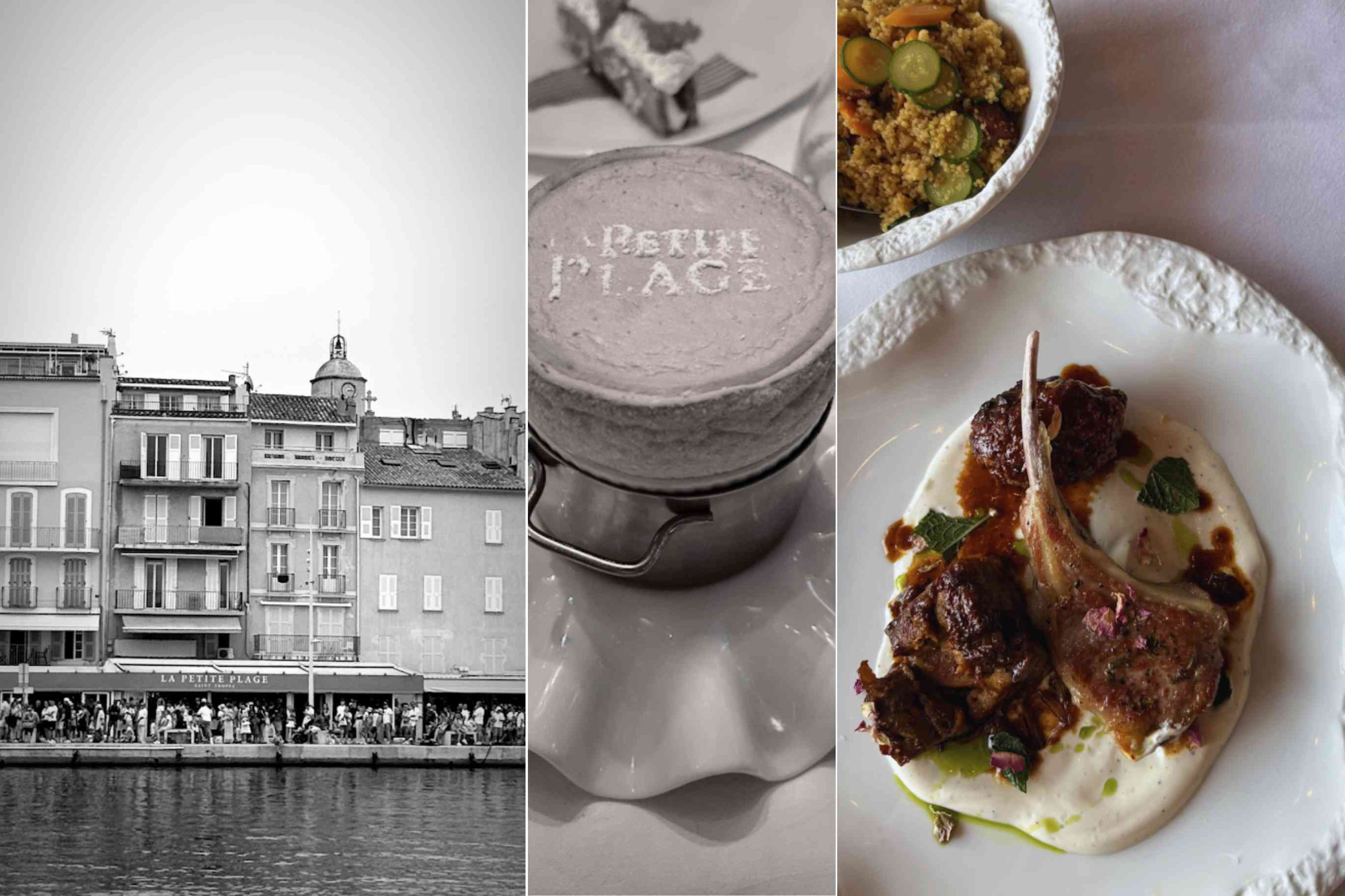
La Petite Plage | Mediterranean Dining in Saint-Tropez
Overlooking the historic harbour of Saint-Tropez, La Petite Plage brings together Mediterranean cuisine, contemporary French gastronomy and one of the town's most recognisable waterfront settings.
Located along Quai Jean Jaurès, the restaurant offers a different dining experience from the traditional Provençal bistros found throughout the old town.
A Mediterranean Approach to French Cuisine
The restaurant's culinary identity has been associated with Michelin-starred chef Éric Frechon, whose approach combines classical French techniques with Mediterranean ingredients.
Fresh seafood, seasonal vegetables, aromatic herbs and carefully prepared meat dishes form an important part of this style of cooking.
Rather than relying on elaborate presentations alone, the emphasis is on balanced combinations, contrasting textures and the quality of the ingredients.
Dishes may bring together roasted meat with a smooth vegetable purée, grilled seafood with herbs or seasonal vegetables prepared in different ways.
Dining Beside the Harbour
La Petite Plage is particularly recognisable for its interior, designed to evoke a relaxed Mediterranean beach atmosphere.
Natural materials, pale colours and sand beneath the tables create a distinctive contrast with the yachts and historic buildings visible along the harbour.
The restaurant's position makes it particularly appealing for an evening meal, when the waterfront becomes one of the liveliest parts of Saint-Tropez.
Its atmosphere combines the setting of a beach restaurant with the service and presentation associated with contemporary French dining.
A Restaurant with Its Own Identity
La Petite Plage represents a particular side of Saint-Tropez's restaurant culture, where the location, interior design and culinary experience are closely connected.
The combination of Mediterranean ingredients, carefully composed dishes and the historic harbour setting gives the restaurant a recognisable identity within the town's dining scene.
La Petite Plage
Quai Jean Jaurès, Saint-Tropez, France
#LaPetitePlage #SaintTropez #CotedAzur #FrenchRiviera #MediterraneanCuisine #FrenchGastronomy #TableAndTaste #LesCouleursDeLaRiviera
Côte D'Azur @lescouleursdecotedazur
Bringing the Beach Indoors
A restaurant with sand beneath your feet is an unexpected find along the harbour of Saint-Tropez. At La Petite Plage, the interior takes its inspiration from Mediterranean beach life, using materials and decorative elements normally associated with outdoor settings.
The sand-covered floor is the defining feature. It changes the experience of entering the restaurant and immediately establishes a connection with its name. Against this pale, textured surface, upholstered dining chairs, wooden furniture and carefully dressed tables create an interesting contrast between informal beach surroundings and restaurant comfort.
Overhead, an extensive arrangement of vibrant pink bougainvillea brings colour to the otherwise neutral interior. The flowers cover much of the ceiling, creating a decorative canopy that becomes one of the restaurant's most recognisable features.
Large woven pendant lamps hang among the flowers. Their sculptural shapes introduce another natural texture, while warm lighting gives the dining room a different character in the evening. The combination of pale upholstery, timber, woven materials and vivid flowers keeps the design visually interesting without relying on an extensive colour palette.
What makes the interior particularly successful is the way these elements work together. The sand provides an unusual foundation, the flowers introduce a strong visual identity and the furniture maintains the comfort expected of a restaurant.
La Petite Plage is an interesting example of how a hospitality interior can take a familiar Mediterranean concept and reinterpret it through material choices, scale and atmosphere.
La Petite Plage
Quai Jean Jaurès, Saint-Tropez, France
#LaPetitePlage #SaintTropez #CotedAzur #InteriorDesign #HospitalityDesign #MediterraneanInteriors #NaturalMaterials #LesCouleursDeLaRiviera

Côte D'Azur @lescouleursdecotedazur
Swimming in the Heart of Saint-Tropez
A day at the beach in Saint-Tropez does not necessarily require a trip to Pampelonne. Within walking distance of the Vieux Port, several small stretches of shoreline offer direct access to the Mediterranean, including the waterfront around La Ponche.
Plage de la Ponche is one of the most distinctive examples. Surrounded by the houses of the historic quarter, this compact beach is integrated into the village rather than separated from it. Narrow passages lead from the surrounding streets towards the water, making it possible to combine a walk through Saint-Tropez with a swim.
Nearby, Plage de la Fontanette provides another small public beach close to the old town. Both are considerably smaller than the sandy beaches along the peninsula, but their central location makes them convenient for visitors staying in the village.
The waterfront around La Ponche also includes stone quays and places where people sit beside the sea. These areas are part of the neighbourhood's everyday character, although they should not automatically be treated as designated swimming areas. Visitors should use recognised beach access points and respect local restrictions.
The practical advantage is the proximity to the town itself. A morning at the market on Place des Lices, lunch in the old centre and an afternoon beside the Mediterranean can all be combined without a car.
Facilities are more limited than at the larger beaches, and space can be scarce during the summer. Bringing water, a towel and suitable footwear is sensible, particularly where the shoreline is rocky.
For travellers who prefer exploring Saint-Tropez on foot, the small beaches around La Ponche offer an accessible alternative to spending an entire day at a beach club.
#LaPonche #SaintTropez #PlageDeLaPonche #CotedAzur #FrenchRiviera #MediterraneanBeaches #Coastal #LesCouleursDeLaRiviera

Côte D'Azur @lescouleursdecotedazur
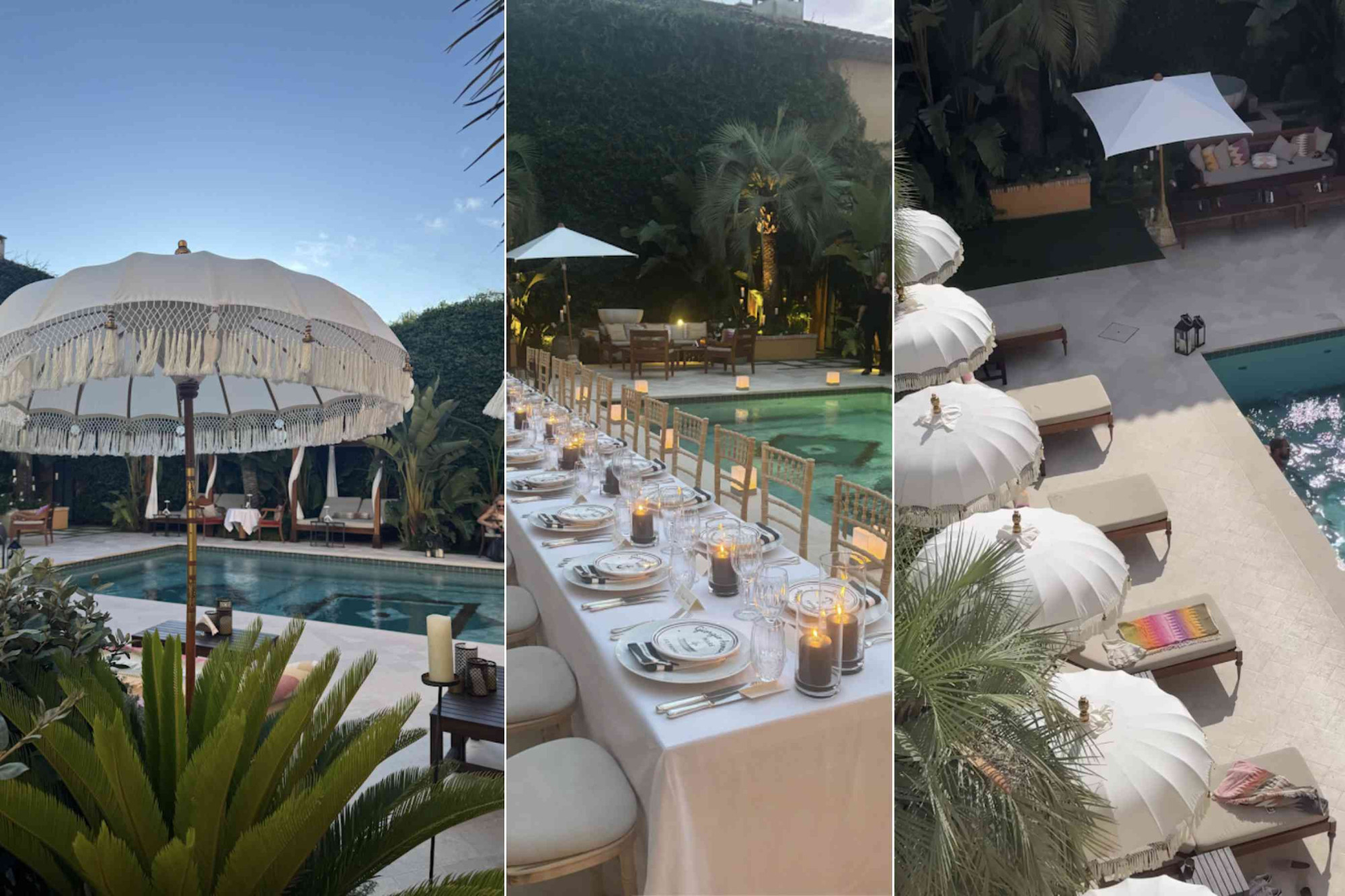
A Historic Residence in Saint-Tropez
Behind a discreet façade on Rue Gambetta in Saint-Tropez stands a residence with an unusual history. Built in 1835, Pan Deï Palais was originally the home of French General Jean-François Allard and his Indian wife, Bannu Pan Deï. Today, the property is part of the Airelles collection of luxury hotels.
Allard had served in Napoleon's army before travelling to India, where he entered the service of Maharaja Ranjit Singh in Punjab. His marriage to Bannu Pan Deï brought together two different cultural backgrounds, an influence that remains visible throughout the residence.
The building was designed as a family home rather than a hotel. Its conversion into an intimate property with just ten rooms and two suites has preserved the scale of a private residence, while introducing contemporary facilities and services.
Indian influences appear in the interiors through carved wooden furniture, decorative textiles, traditional motifs and carefully selected artworks. These elements sit alongside the architecture of a nineteenth-century Mediterranean townhouse.
One of the most distinctive features is the enclosed garden. Hidden from the surrounding streets, it contains a mosaic swimming pool, palm trees, shaded seating areas and a terrace used for breakfast, dining and private gatherings.
The garden also plays an important role in the hotel's hospitality. During the day, it provides a private outdoor space for guests. In the evening, the setting changes as tables are prepared for dinner and the restaurant welcomes visitors.
Pan Deï Palais offers an interesting example of how a historic family residence can be adapted into a contemporary hotel while retaining the cultural influences that shaped its original identity.
Stay Inspiration | Airelles Pan Deï Palais, Saint-Tropez
Located close to Place des Lices, Airelles Pan Deï Palais offers 12 individually designed rooms and suites, a garden swimming pool, a hammam and restaurant dining. Its central location makes it convenient for exploring the old town, harbour and surrounding streets on foot.
→ Explore Airelles Pan Deï Palais
#PanDeiPalais #Airelles #SaintTropez #CotedAzur #BoutiqueHotels #HistoricHotels #DesignStays #Coastal