Home & Design @atelierdumonde
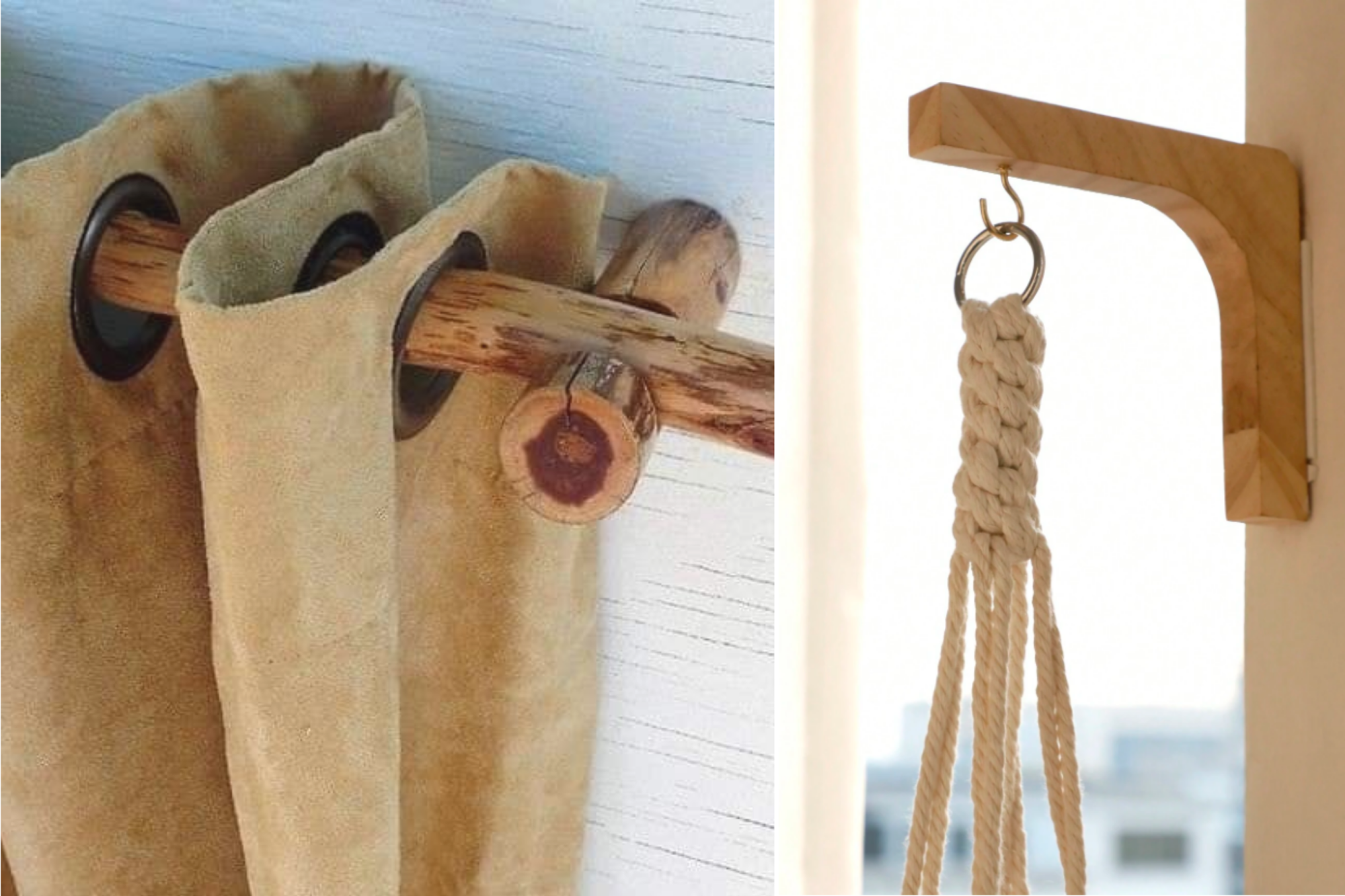
A straight branch can replace a conventional curtain pole and make the support itself part of the interior. It is a particularly simple way to introduce natural wood into a room without adding another piece of furniture or decoration.
The first step is choosing the right branch. It should be relatively straight, dry and strong enough to support the weight of the curtain. Small irregularities can remain, but any protruding twigs should be removed so the curtain rings can move freely.
After cleaning the wood, sand the areas that will come into contact with the fabric. The bark can be removed for a smoother finish or retained in places when its surface is stable.
Large eyelet curtains are particularly practical because they can slide directly over the branch. This keeps the construction simple and leaves much of the natural wood visible between the folds of fabric.
The supports can also become part of the design. Simple wooden brackets work well with a branch rail and create a consistent material palette. The same brackets can be used elsewhere for shelves or hanging systems.
This principle can extend to other textile applications. A shorter wooden support can hold a macramé piece, hanging planter or decorative rope object, while longer branches can be used for lightweight room dividers and fabric panels.
The combination of untreated wood and natural textiles works particularly well with linen, cotton, canvas and loosely woven fabrics. Rather than hiding the hardware, the construction becomes a visible part of how the textile is displayed.
Looking for more ways to use curtains for light and shade?
Discover Shade in Sunny Homes →
#CurtainDesign #NaturalWood #InteriorDetails #NaturalMaterials #AtelierDuMonde