Home & Design @atelierdumonde
Driftwood is particularly suited to signs and decorative objects because every piece already has its own shape, surface and weathered finish. Combined with ceramic pieces, painted letters or simple hanging elements, it can bring a coastal reference into a home, terrace or outdoor space.
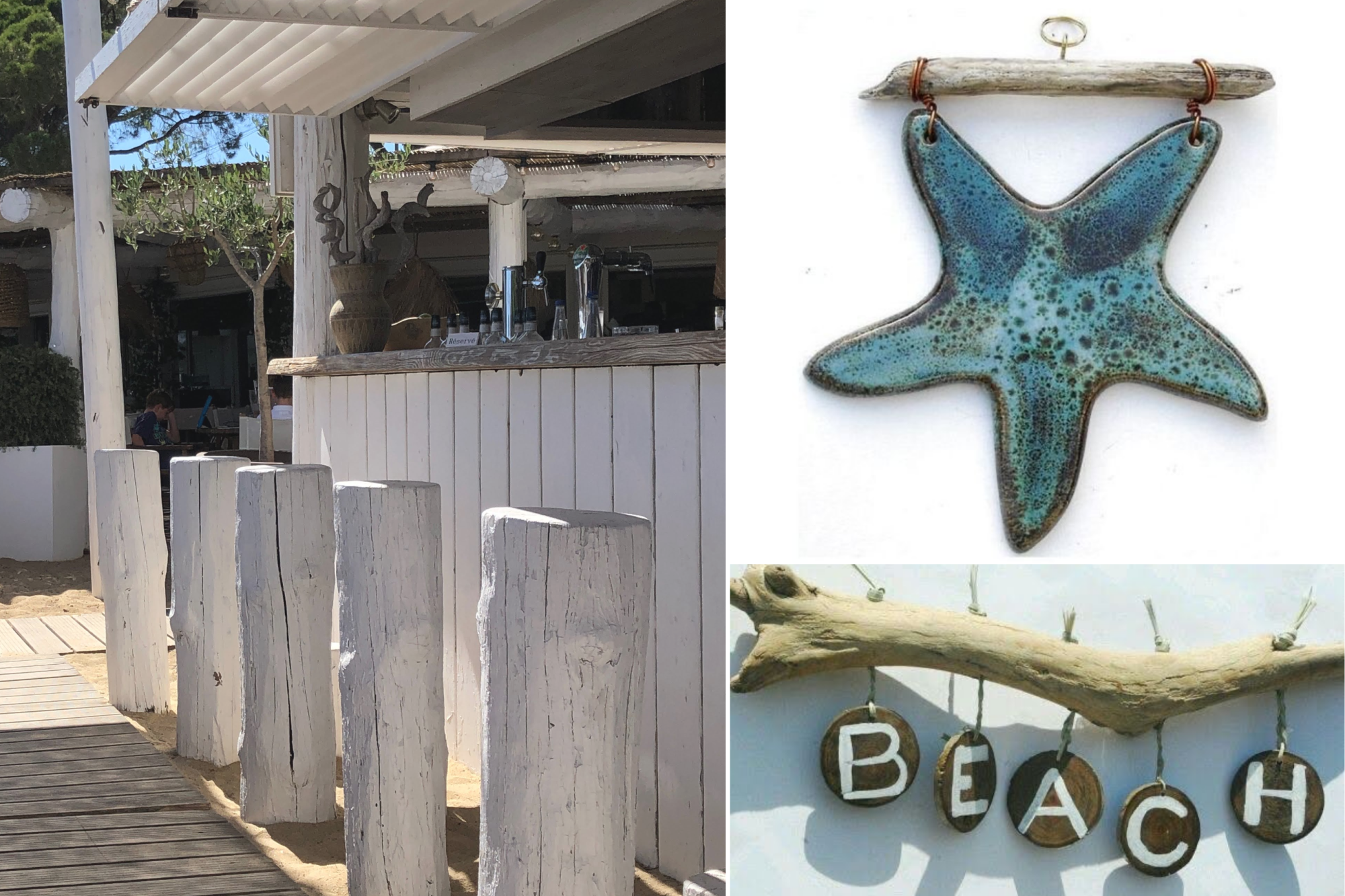
A long piece of driftwood can form the top of a hanging sign. Small ceramic shapes, shells or wooden pieces can be suspended underneath using cord, wire or small metal rings. The branch remains visible and becomes part of the composition rather than simply acting as a support.
For a simple word sign, individual wood slices can be painted with one letter each. Drill a small hole at the top, attach each piece to a length of cord and hang them underneath a branch. Words such as Beach, Sea or the name of a favourite coastal place work particularly well.
Ceramics introduce colour. A handmade starfish, fish or shell in glazed blue, turquoise or white creates a stronger contrast with pale driftwood and can become the central element of the piece.
The same idea can be scaled up considerably. Large weathered timber posts can mark an entrance, define the edge of a terrace or create a transition between a beach bar, garden and shoreline. Whitewashing the timber keeps the grain and irregular surface visible while connecting it with Mediterranean architecture.
This is also where smaller decorative pieces and larger spatial design begin to share the same language. Weathered timber, white surfaces, marine shapes and blue ceramics can appear in a small handmade sign and return in the architecture or outdoor furniture around it.
Driftwood therefore works at very different scales, from an object made at the worktable to substantial pieces used in coastal interiors and hospitality spaces.
Interested in how natural materials become part of art?
Discover Natural Materials in Sculpture →
#DriftwoodDesign #CoastalDesign #CoastalInteriors #BeachStyle #AtelierDuMonde