Home & Design @coastalliving
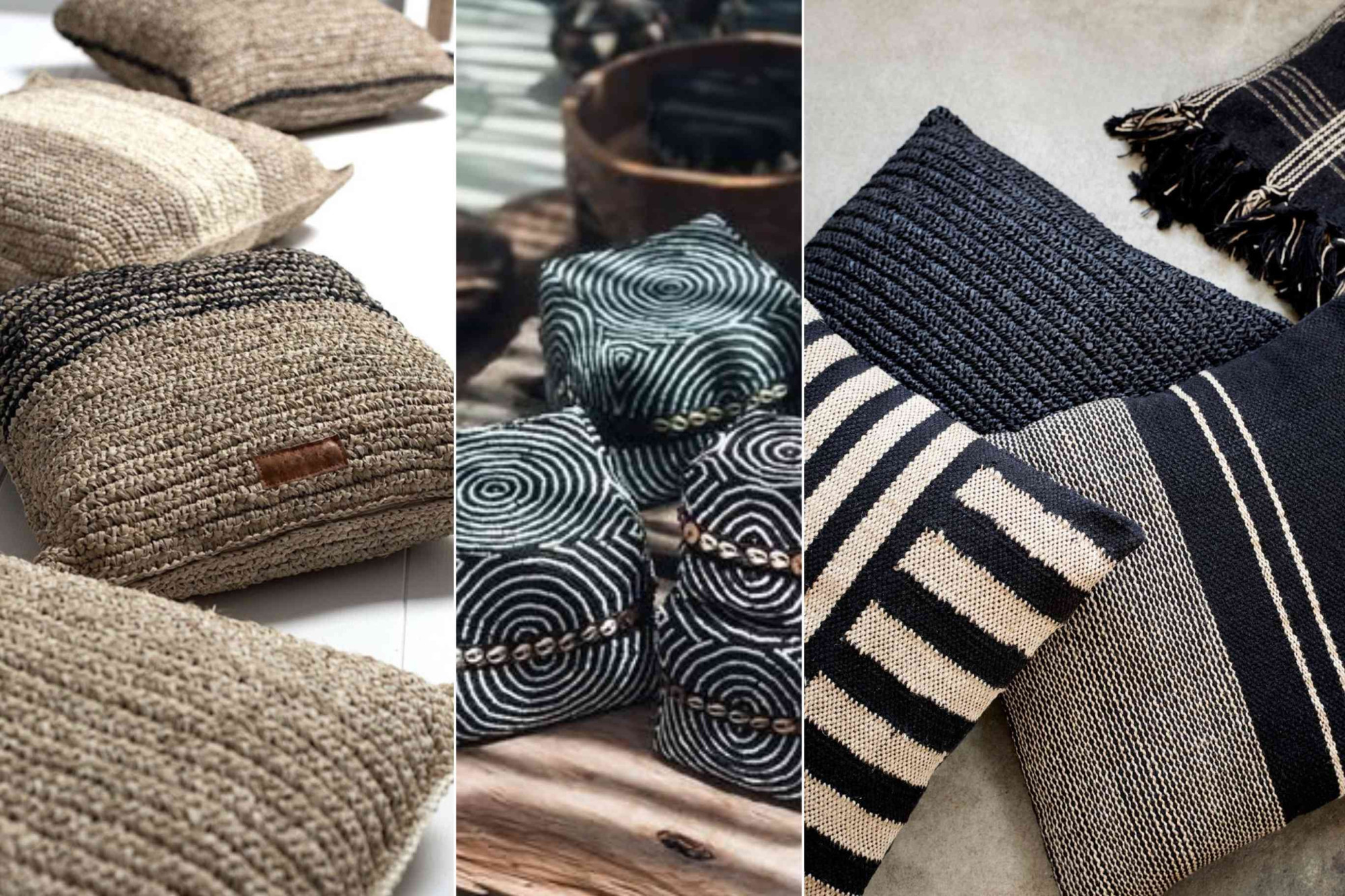
Cushions do not need to come from the same collection to work together. Combining different textures, patterns and sizes can make a sofa or bed look more considered than using several identical cushions.
A simple starting point is to choose one element that connects them. This can be a colour, as in a combination of black, cream and grey, or a material that appears several times. The patterns themselves can then be different.
Stripes work well beside smaller repetitive patterns because the designs do not compete in the same way. A plain knitted or woven cushion can be added between them to give the stronger patterns some space.
Texture is equally useful. A chunky weave beside a smoother textile creates variation even when both cushions have almost the same colour. This is particularly effective in neutral interiors where there are fewer strong colours to create contrast.
Different sizes also make a group feel less uniform. Larger cushions can form the base, with one or two smaller pieces in front. There is no need to fill an entire sofa. A few well-chosen cushions can be enough.
The same principle can be used throughout a room. A striped cushion on a chair can relate to a patterned cushion on the sofa without repeating it exactly.
Instead of looking for a matching set, think of cushions as individual textile pieces that share just enough colour, texture or pattern to belong together.
Looking for another way to bring texture into your style?
Discover Leather Fringed Basket →
#CushionStyling #InteriorTextiles #TextileDesign #InteriorIdeas #RivieraDuMonde