Home & Design @interiorsanddesign
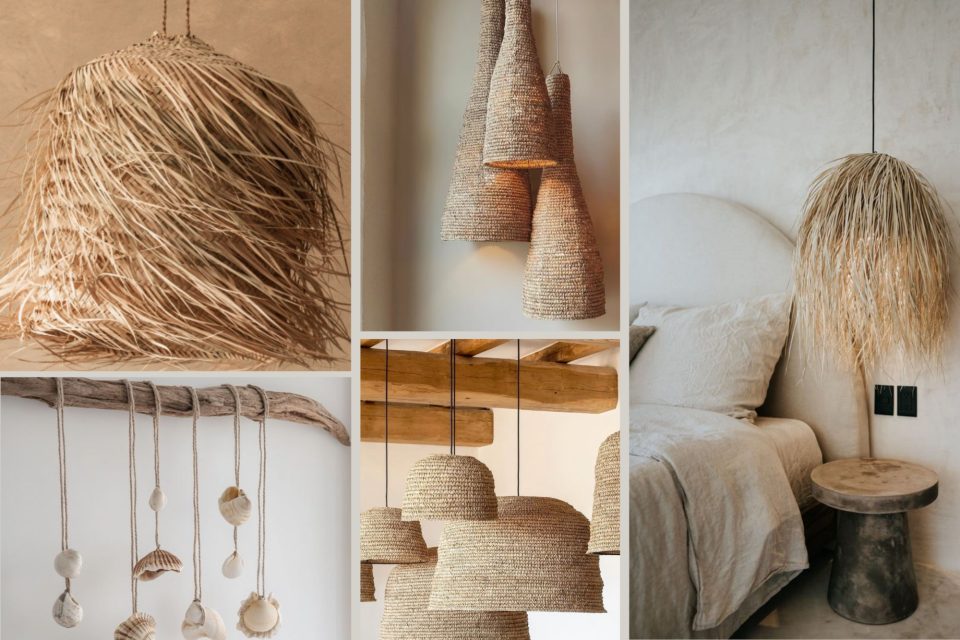
Woven lighting brings texture into a room without adding heavy materials or strong colours. Materials such as raffia, palm leaves, rattan and other plant fibres are used to create shades that remain visually light while giving a space more character.
The open structure of woven fibres also influences the light itself. Depending on the weave, light can filter through the shade and create subtle patterns and shadows across walls, ceilings and surrounding surfaces.
Scale plays an important role. A large woven pendant can become a focal point above a dining table or seating area, while smaller pendants work well in groups or beside a bed. Irregular fibres and visible weaving give each piece its own texture and character.
Woven lighting also shows how traditional techniques can work within contemporary interiors. Changing the weave, density, shape and proportions can produce very different designs, from simple rounded shades to larger sculptural pieces.
In neutral interiors, woven lighting works particularly well alongside plaster walls, timber, linen and stone. It adds another natural material to the room while bringing warmth and texture to an otherwise restrained palette.
Inspired by woven lighting for a special setting?
Discover Statement Lighting for Weddings & Events →
#NomadesDuMonde #WovenLighting #LightingDesign #InteriorDesign #LesCouleursDuMonde