Home & Design @interiorsanddesign
A Moroccan rug can change a room without requiring the rest of the interior to follow a Moroccan style. Its pattern, texture and scale are strong enough to give a space character while still working alongside very simple furniture and architecture.
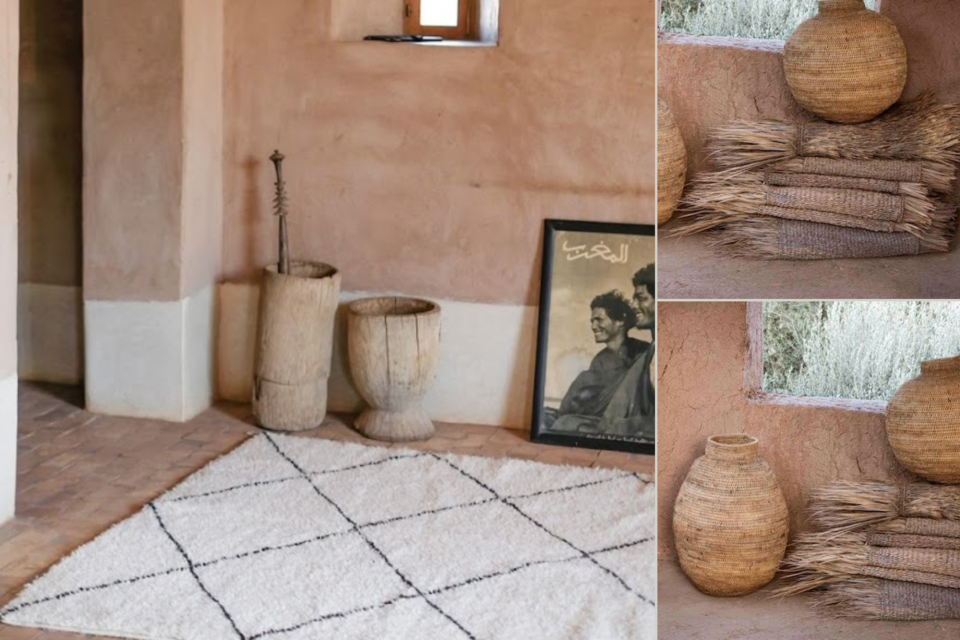
The familiar cream rug with dark geometric lines is closely associated with Beni Ourain weaving. Traditionally made from wool, these rugs are known for their deep pile and graphic patterns, with individual pieces showing variations in line, proportion and composition.
Their appeal in contemporary interiors comes partly from that balance. The surface is soft and tactile, while the pattern is visually simple. Against clay-coloured walls, timber, stone or plaster, the rug introduces contrast without dominating the room.
Scale is important when choosing one. A larger rug can connect several pieces of furniture and make a seating area feel more complete. Smaller versions work beside a bed, in an entrance or in a quiet corner where the texture can stand on its own.
Moroccan rugs also sit naturally alongside baskets, woven objects and handmade ceramics. These pieces do not need to match. Differences in weave, colour and shape give the interior a collected quality and allow each object to retain its own identity.
For a home outside Morocco, the most interesting approach is not to recreate a complete Moroccan interior. One well-chosen rug can bring craftsmanship, pattern and warmth into a very different architectural setting.
Curious to discover where these rugs come from?
Discover Moroccan Rugs in Marrakech →
#MoroccanRugs #BeniOurain #InteriorDesign #MoroccanDesign #NomadesDuMonde