Weddings & Events @lalaland
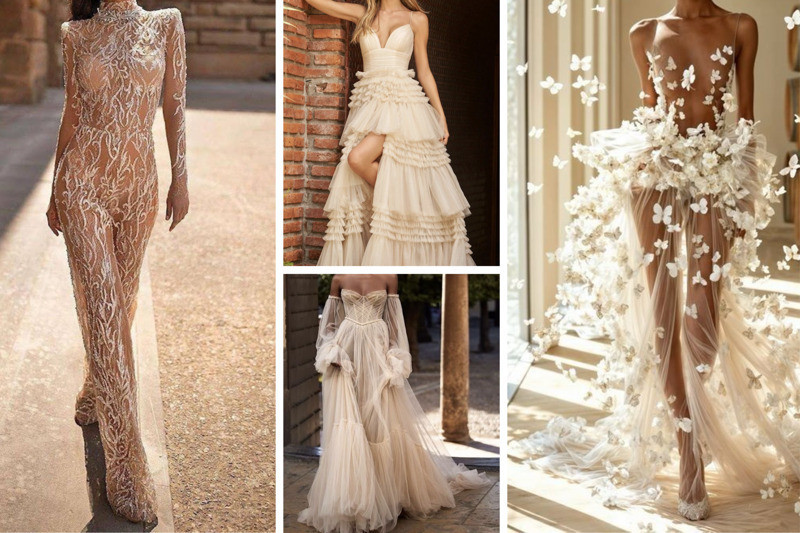
White and ivory wedding dresses can look completely different depending on the fabrics and details used in the design. Lace, layers of tulle, embroidery, pleating and three-dimensional flowers bring depth to a dress even when the colour palette remains almost entirely neutral.
Lace is one of the most familiar examples, but contemporary bridal designs use it in very different ways. Fine patterns can create an almost transparent layer over the body, while heavier embroidery gives the fabric a more graphic appearance.
Tulle creates a different effect. Several light layers can build volume without the visual weight of a heavier fabric. Ruffles, gathered sections and tiered skirts make that volume more visible and introduce movement when the dress is worn.
Three-dimensional flowers take texture even further. Fabric petals and floral appliqués can be concentrated around a bodice, scattered across a skirt or used to create an entire section of the dress. From a distance they form part of the silhouette, while closer up the individual details become visible.
Combining textures can be particularly effective. A relatively simple bodice can sit above a highly detailed skirt, or sheer fabric can provide a quiet background for embroidery and appliqué.
The amount of detail also changes how accessories are approached. A heavily textured dress may need little additional jewellery, while a simpler lace gown leaves more room for statement earrings, shoes or a veil.
Texture becomes especially noticeable in photographs. Side light, movement and close-up images reveal layers and details that may be less apparent when looking at the complete dress from a distance.
For bridal designers, these techniques make it possible to work almost entirely within white, cream and ivory while still creating dresses with very different identities.
Looking for accessories to complement a simpler look?
Discover Statement Accessories →
#BridalFashion #WeddingDress #BridalDesign #WeddingFashion #BridalDetails #Lalaland