
Travel Never Goes Out of Style
Les Couleurs du Monde Magazine - Where’s Your Next Escape? Discover our editions. Contact: info@lescouleursdumonde.com
Ibiza @lescouleursdibiza
A Stay Near Santa Eulària
Located in Siesta, a residential neighbourhood near Santa Eulària des Riu, Nativo Hotel Ibiza offers an alternative to the island's busy beach clubs and nightlife districts.
The four-star hotel is part of the NCalma Hotels collection and has 99 rooms arranged around landscaped outdoor spaces.
Its design draws on the Japanese concept of wabi-sabi, combining simple architectural forms, natural textures and an appreciation of imperfect surfaces. Woven furnishings, sandy tones and informal seating areas contribute to the hotel's relaxed atmosphere.
Two ground-floor swimming pools are surrounded by palm trees, loungers and hammocks, while an adults-only rooftop pool offers views towards the Mediterranean.
Choosing Your Room
Nativo offers five accommodation categories, with different options depending on how guests prefer to spend their time.
The Dreamer rooms, measuring approximately 20 to 33 m², provide a comfortable choice for travellers planning to explore the island throughout the day.
For additional space, the Bohême rooms measure between 38 and 56 m² including the terrace, with a king-size bed and views towards the pool or central garden.
The Terrace rooms include a private outdoor area with a hydromassage bathtub, while the Swim Up rooms provide direct access to a swimming pool.
Choosing a room with its own terrace or pool access is particularly worthwhile for guests who intend to spend more time at the hotel.
Dining and Exploring the East Coast
Nativo has two restaurants with different dining concepts.
The ground-floor Nativo Restaurant serves dishes inspired by local ingredients, with seating beside the pool.
On the rooftop, Humo specialises in cooking over fire, combining Latin American influences with grilled fish, meat and vegetables.
The hotel's location also makes it a convenient base for exploring eastern Ibiza. Santa Eulària offers a marina, seafront promenade, restaurants and independent shops.
For a beach day, Cala Llonga provides a sheltered bay with restaurants close to the sand. Further north, Cala Nova is known for its wider beach and surf conditions when the wind and swell are suitable.
A rental car is useful for exploring smaller coves and inland villages, although Santa Eulària itself is accessible from the hotel without a long drive.
Stay Inspiration
Nativo Hotel Ibiza | Siesta, Santa Eulària
A contemporary hotel with natural interiors, several swimming pools and accommodation options that include private terraces or direct pool access.
A suitable base for travellers who want to explore Ibiza's eastern coastline while staying in a quieter residential setting.
Style for the Destination
Lightweight cover-ups and kimonos are practical additions to an Ibiza wardrobe, particularly for moving between the pool, beach and informal lunches.
#TravelAndEscapes #LesCouleursIbiza #NativoIbiza #SantaEularia #IbizaHotels #BoutiqueStays #IslandLiving #StayInspiration #LesCouleursDuMonde
Ibiza @lescouleursdibiza
The Beach Cover-Up: An Ibiza Essential
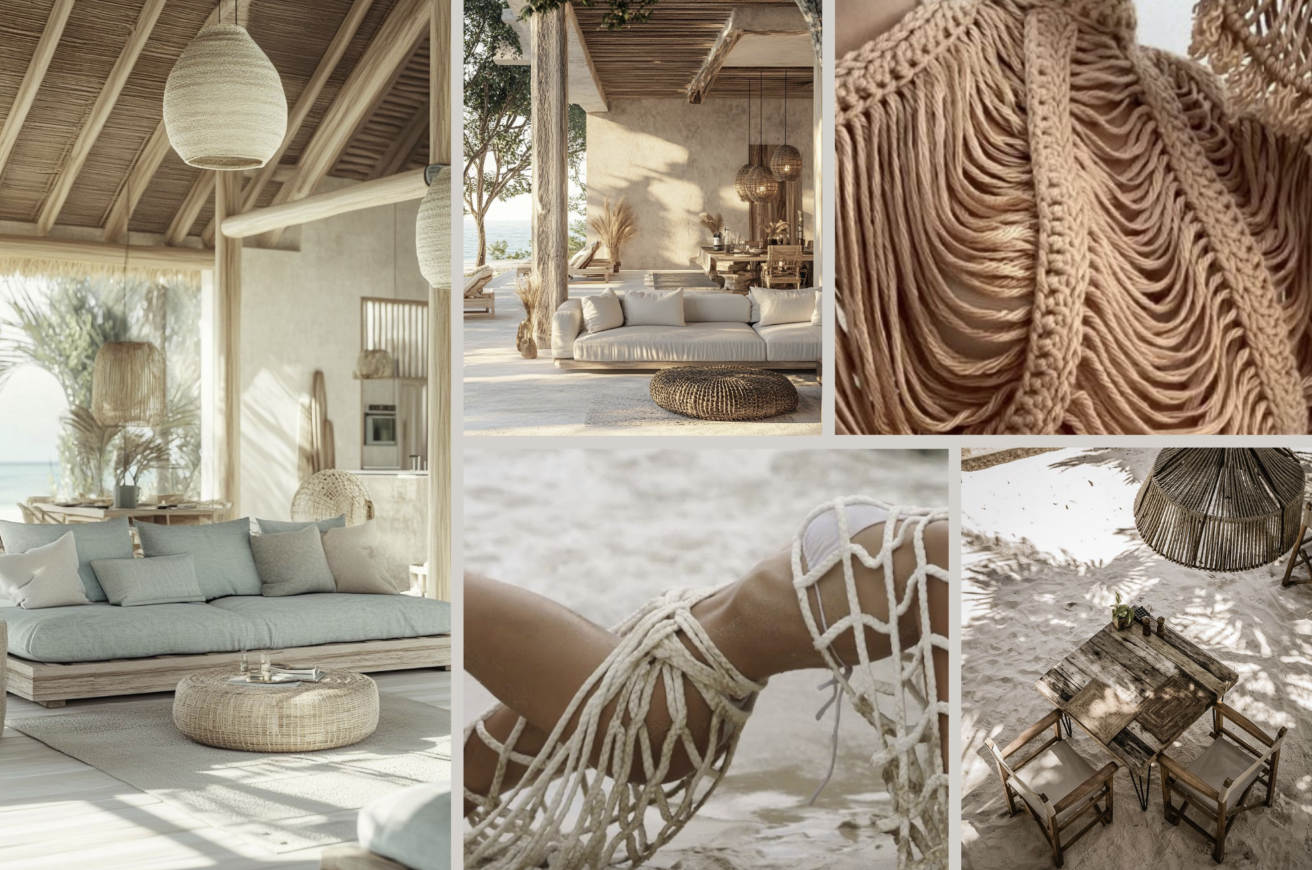
A well-chosen cover-up is one of the most versatile pieces in an Ibiza beach wardrobe, providing a lightweight layer over swimwear without requiring a complete change of outfit.
Kaftans, tunics and open-front kimonos offer different silhouettes. A loose cotton kaftan provides coverage while allowing air to circulate, while a linen tunic creates a more structured appearance. Open-weave designs and crochet introduce texture, making the fabric itself an important decorative element.
Length also makes a difference. Short cover-ups work well with swimwear and flat sandals, while longer designs provide additional coverage for beachside restaurants and casual lunches.
White, cream and sand remain familiar colours in Ibiza's beach fashion. Warmer shades such as tobacco, terracotta and camel provide alternatives that combine easily with natural accessories.
For regular beach use, fabric composition matters. Lightweight cotton and linen are breathable, while loosely woven garments require more careful handling, particularly around jewellery and rough surfaces.
Shop | Cover-Ups & Kimonos
Explore kaftans, tunics and lightweight layering pieces in the Les Couleurs du Monde Shop, including designs in neutral and earthy tones.
#Ibiza #IbizaStyle #BeachCoverUps #Kaftans #Resortwear #Coastal #LesCouleursDIbiza

Ibiza @lescouleursdibiza
Outdoor Dining in Ibiza
Outdoor dining is an important part of Mediterranean living, with terraces and courtyards designed to accommodate long meals throughout the warmer months.
In Ibiza, pergolas constructed from timber and reeds provide shade while allowing natural light to filter through. The resulting patterns change throughout the day, adding visual interest to otherwise simple architectural surfaces.
Solid wooden tables are particularly suited to these settings. Their natural grain and irregular edges contrast with smooth plaster walls and stone flooring, while woven pendant lights introduce additional texture.
Seating arrangements also influence how an outdoor dining area is used. Long communal tables encourage shared meals, while smaller arrangements provide more intimate spaces for breakfast or dinner.
Practical details are equally important. Shade, ventilation and durable materials help ensure that outdoor dining areas remain comfortable and functional in Ibiza's Mediterranean climate.
Stay Inspiration | Aguamadera, Ibiza
Located near Cala Llonga in Santa Eulària des Riu, Aguamadera is a boutique retreat surrounded by Mediterranean vegetation.
The property combines whitewashed architecture, natural materials and outdoor spaces designed for dining and relaxation. Its restaurant focuses on seasonal ingredients, making food an important part of the guest experience.
#Ibiza #OutdoorDining #MediterraneanLiving #IbizaInteriors #OutdoorDesign #Countryside #LesCouleursDIbiza

Ibiza @lescouleursdibiza
The Rural Side of Ibiza: Life Beyond the Coast
Ibiza's countryside reveals an important part of the island's history, shaped by agriculture, traditional farmhouses and a landscape of cultivated fields, orchards and woodland.
Away from the coastal resorts, narrow roads connect small villages, family farms and rural estates. Olive trees, almond groves, fig trees and traditional stone walls remain characteristic features of the landscape.
Understanding this agricultural heritage offers another perspective on Ibiza and the communities that have lived and worked on the island.
The Traditional Ibizan Finca
The traditional casa payesa, Ibiza's rural farmhouse, developed around the practical needs of agricultural life.
These buildings are recognised for their thick whitewashed walls, small windows, flat roofs and simple geometric construction. Rooms were traditionally added as families grew or agricultural activities required additional space.
The architecture was adapted to the Mediterranean climate. Thick walls helped moderate indoor temperatures, while small openings reduced direct exposure to summer heat.
Today, many former farmhouses have been restored as private residences, boutique hotels and agroturismo properties, preserving elements of the island's rural architectural heritage.
Agriculture and the Island's Landscape
Agriculture has played an important role in shaping Ibiza's interior.
Olive and almond trees, vineyards and cultivated vegetable plots form part of a landscape influenced by generations of farming.
Traditional agricultural practices also depended on animals. Donkeys and mules were used to transport goods and assist with work on farms, particularly before mechanised equipment became widely available.
Although farming methods have changed, agricultural land continues to contribute to the character of Ibiza's countryside.
Exploring Rural Ibiza
The northern part of the island provides particularly interesting opportunities to explore its rural character.
Around Sant Miquel de Balansat, Sant Joan de Labritja and Santa Agnès de Corona, country roads pass traditional farmhouses, orchards and agricultural terraces.
The area is suitable for exploring by car, with opportunities to stop in small villages, visit local restaurants and observe the changing landscape.
Rural accommodation provides a different perspective on the island. Staying in a restored finca allows visitors to experience traditional architecture and spend time in surroundings shaped by Ibiza's agricultural history.
Stay Inspiration | Agroturisme Can Planells, Ibiza
Located near Sant Miquel de Balansat in northern Ibiza, Agroturisme Can Planells is a family-run countryside hotel set within a traditional finca.
The accommodation occupies the original farmhouse and converted agricultural buildings, retaining elements of their rural character.
Surrounded by gardens and cultivated land, the property offers a base for exploring northern Ibiza's villages, countryside and nearby beaches.
Breakfast includes local and farm-sourced produce, providing a connection to the agricultural traditions discussed in this article.
→ Explore Agroturisme Can Planells
#Ibiza #RuralIbiza #IbizaCountryside #TraditionalFincas #Agroturismo #FarmStays #Countryside #LesCouleursDIbiza

Ibiza @lescouleursdibiza
The Mediterranean Patio
In Ibiza, the patio is an important part of Mediterranean domestic architecture, providing a sheltered space for everyday activities, social gatherings and time spent outdoors. Its design responds to the island's warm summers, strong sunlight and the need for comfortable spaces throughout the day.
Architecture Designed Around Shade
Traditional Mediterranean courtyards and terraces use surrounding walls, covered sections and carefully positioned openings to control exposure to sunlight.
A sheltered patio can remain usable during the hottest hours when an exposed terrace becomes uncomfortable. Pergolas, timber beams and reed coverings provide additional shade while allowing air to circulate.
The orientation of a courtyard also matters. Walls and neighbouring buildings create different patterns of sunlight throughout the day, influencing where seating and planting are positioned.
In Ibiza, these principles continue to inform the design of contemporary houses and boutique accommodation.
Why Built-In Seating Works
One of the most recognisable features of Mediterranean outdoor spaces is the built-in bench.
Constructed from masonry and finished with plaster or lime-based coatings, these benches become part of the architecture rather than separate pieces of furniture.
They are particularly useful in compact courtyards, where seating can follow the perimeter walls without obstructing circulation.
Loose cushions and removable upholstery introduce comfort while allowing fabrics to be stored during wet weather.
The result is an outdoor arrangement that requires relatively little furniture and makes effective use of the available space.
Planting for a Mediterranean Climate
The plants surrounding a patio influence both its appearance and its practical use.
Olive trees, rosemary, lavender and other drought-tolerant Mediterranean species are well suited to sunny conditions once established.
Cacti and succulents, although many originate outside the Mediterranean, are also used in contemporary Ibizan gardens for their sculptural forms and relatively modest water requirements.
Their placement requires consideration. A large cactus may work as a focal point in a protected corner, while aromatic shrubs are better suited to planting areas beside paths and terraces.
The most successful patio gardens combine suitable plant species with careful attention to drainage, soil conditions and available shade.
The Patio in Contemporary Ibiza
Architects and designers working on the island continue to reinterpret these practical principles.
Fixed seating, shaded dining areas, textured wall finishes and simple planting schemes create outdoor rooms that remain closely connected to the interior.
The patio also offers an alternative to large, exposed terraces. Its proportions, enclosure and relationship to neighbouring rooms can make it particularly suitable for reading, dining and informal gatherings.
These qualities explain why sheltered outdoor spaces remain an important element of residential design in Ibiza.
Stay Inspiration | Can Sastre Boutique Hotel, Ibiza
Located near Santa Gertrudis, Can Sastre Boutique Hotel offers a contemporary interpretation of Mediterranean outdoor living.
Its sheltered terraces, built-in seating and reed-covered pergolas illustrate how architectural shade and carefully arranged outdoor spaces contribute to the character of a boutique stay.
The property provides a relevant example of the design principles explored in this article.
→ Explore Can Sastre Boutique Hotel
#Ibiza #MediterraneanPatio #OutdoorLiving #MediterraneanArchitecture #IbizaInteriors #DesignStays #Countryside #LesCouleursDIbiza

Ibiza @lescouleursdibiza
Everyday Life on a Traditional Ibizan Farm
Before Ibiza became an international holiday destination, much of the island's population depended on agriculture, livestock and the resources produced by their own land.
Traditional farmhouses, known as cases pageses, were working family homes. Their rooms, courtyards and surrounding agricultural buildings were organised around the practical demands of rural life.
Many of the objects now associated with Ibiza's rustic interior style originally served a specific household or agricultural purpose.
A Household Built Around Farming
Rural families traditionally cultivated a variety of crops, including cereals, vegetables, olives, almonds and figs.
Farming was closely connected to household life. Produce was grown for family consumption, with surpluses exchanged or sold locally.
Livestock also formed part of the agricultural economy. Chickens provided eggs, while goats and sheep supplied milk and other products. Donkeys and mules were valuable working animals, used for transport and agricultural tasks.
The farmhouse was therefore more than a residence. It functioned as the centre of a small agricultural operation.
Everyday Objects and Their Original Purpose
Many familiar decorative objects found in contemporary Ibizan interiors have their origins in practical rural traditions.
Woven baskets were used to carry harvested produce, transport household goods and store everyday items. Their size and construction depended on their intended purpose.
Ceramic vessels provided containers for water, oil and other household provisions. Traditional pottery was valued for its durability and usefulness rather than purely for its appearance.
Wooden furniture was generally simple and functional. Tables, benches and storage pieces were designed for everyday use, with materials selected according to local availability.
Today, these objects are frequently incorporated into restored fincas and contemporary homes, where their original functions have been replaced by decorative ones.
The Relationship Between Home and Land
The surrounding land was an essential part of the traditional farmhouse.
Fields, orchards, vegetable gardens and areas for livestock were connected to the household's daily activities.
Agricultural work followed the seasons. Almond harvesting, olive gathering, cereal cultivation and food preservation required different tasks throughout the year.
These routines shaped family life and the organisation of rural communities.
Although Ibiza's economy has changed considerably, traditional agricultural landscapes remain visible in areas such as Santa Eulària des Riu, Sant Joan de Labritja and Santa Agnès de Corona.
Exploring these parts of the island provides an opportunity to understand the relationship between Ibiza's rural architecture and the people who originally lived there.
Stay Inspiration | La Finca Agroturismo Can Bet, Ibiza
Located in the countryside of Santa Eulària des Riu, La Finca Agroturismo Can Bet offers accommodation in a rural setting.
Its location makes it a suitable base for exploring Ibiza's agricultural landscape, traditional villages and countryside roads.
A stay in this part of the island provides an opportunity to experience a quieter rural environment and explore the heritage of Ibiza's farming communities.
→ Explore La Finca Agroturismo Can Bet
#Ibiza #RuralIbiza #IbizaHeritage #TraditionalFinca #AgriculturalHeritage #FarmStays #Countryside #LesCouleursDIbiza

Ibiza @lescouleursdibiza
Beyond the Boutiques: Ibiza's Creative Shopping Culture
Ibiza's shopping culture reflects the island's history as a meeting place for local artisans, international designers and creative communities. Beyond its established fashion boutiques, the island offers an interesting mix of traditional craftsmanship, independent labels, vintage clothing and decorative objects.
The most rewarding places to explore are not necessarily the largest shopping streets. Small independent shops, historic neighbourhoods and artisan markets provide a closer look at the influences that have shaped Ibiza's distinctive style.
Exploring La Marina and Dalt Vila
The neighbourhood of La Marina, situated below the fortified old town of Dalt Vila, is one of the most interesting areas for independent shopping.
Its narrow streets contain boutiques selling clothing, jewellery, accessories and decorative objects. The surrounding architecture, with traditional façades and small pedestrian passages, adds another dimension to the experience.
Walking towards Dalt Vila reveals a different side of Ibiza. The historic upper town is recognised as part of the island's UNESCO World Heritage Site, with Renaissance fortifications and buildings reflecting several periods of Mediterranean history.
Together, these neighbourhoods offer an opportunity to combine shopping with an exploration of Ibiza's architectural heritage.
The Influence of Ibiza's Creative Communities
Ibiza's fashion identity developed significantly during the 1960s and 1970s, when international artists, musicians and alternative communities became part of the island's cultural landscape.
The Adlib fashion movement, established in the early 1970s, became closely associated with white cotton garments, embroidery, lace and relaxed silhouettes.
Its influence remains visible in contemporary Ibiza fashion, although the island's designers now work with a much broader range of materials, colours and styles.
Vintage denim, embroidered bags, colourful jewellery and decorative accessories reflect this diversity. Many independent boutiques combine different influences rather than following a single aesthetic.
Where to Explore Local Craftsmanship
Ibiza's markets provide another perspective on the island's creative culture.
Las Dalias, near Sant Carles de Peralta, is one of the island's best-known markets. Established in 1985, it brings together traders selling clothing, jewellery, accessories, artwork and decorative objects.
Punta Arabí, near Es Canar, is another established market associated with Ibiza's alternative shopping culture.
Visitors interested in ceramics, textiles or jewellery can compare different techniques, materials and styles. However, it is worth asking where an object was produced, as not everything sold in Ibiza is made locally.
The distinction between locally produced craftsmanship and internationally sourced decorative pieces is particularly relevant when looking for objects that represent the island's creative community.
Stay Inspiration | La Torre del Canónigo, Ibiza
Located within the historic walls of Dalt Vila, La Torre del Canónigo occupies restored buildings in Ibiza's old town.
The boutique hotel provides a convenient base for exploring the surrounding historic neighbourhoods, with La Marina's independent shops, galleries and restaurants accessible on foot.
Its location also allows guests to experience Ibiza Town outside the busiest daytime hours, when the streets take on a different character.
→ Explore La Torre del Canónigo
#Ibiza #IbizaOldTown #DaltVila #IbizaShopping #LocalCraftsmanship #IbizaDesign #MediterraneanCulture #LesCouleursDIbiza
