Home & Design @mountainliving
Wool textiles can vary considerably depending on the fibre, yarn and technique used to produce them. These differences determine not only how a textile looks, but also its weight, softness, durability and suitability for different applications in the home.
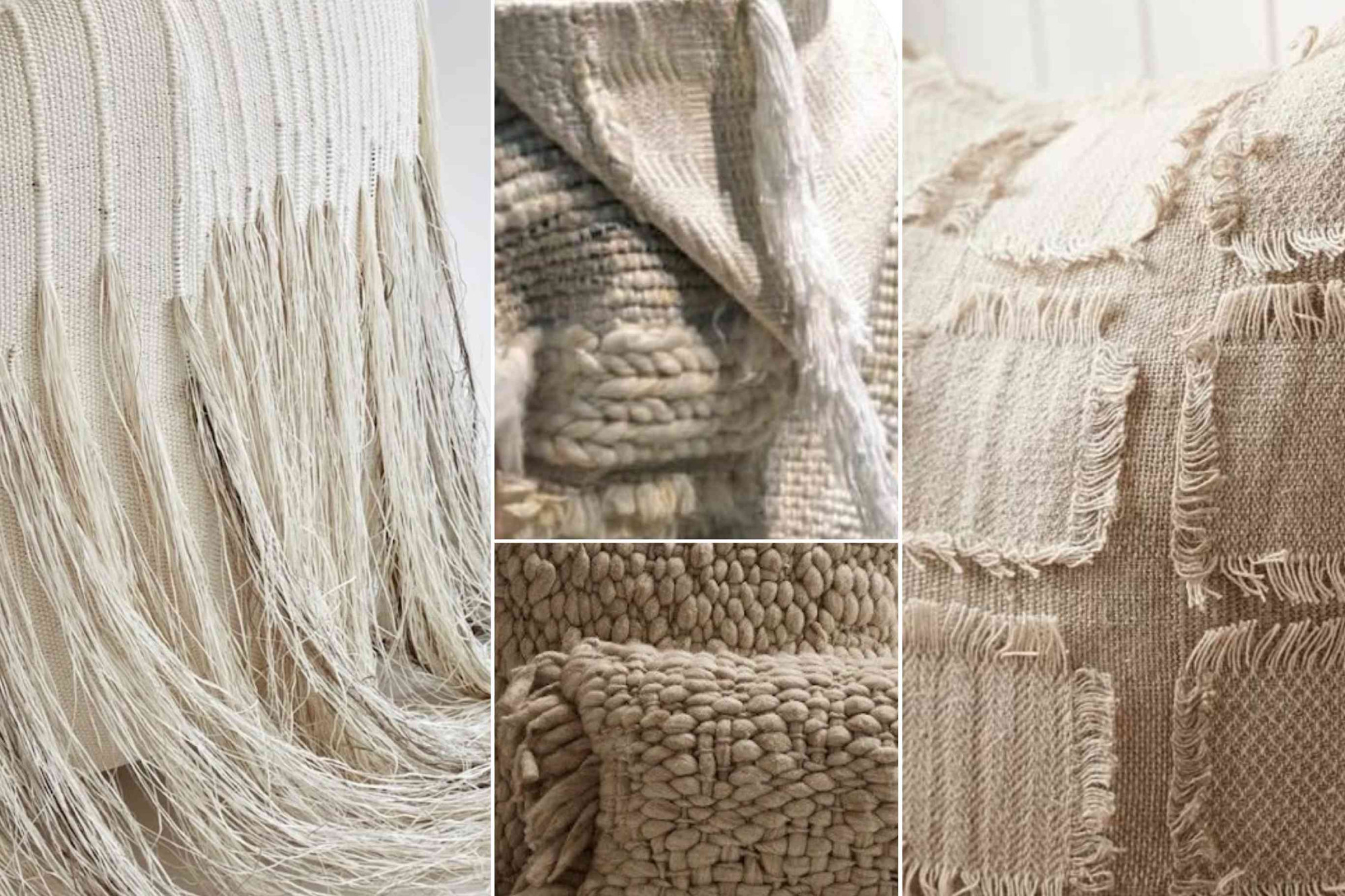
Fine woven wool produces a relatively smooth and structured surface. It is commonly used for blankets, upholstery and lighter interior textiles where durability and a more uniform finish are important.
Chunkier yarns create a very different result. Thick knitted or woven wool produces a more pronounced surface and is often used for throws, cushions and decorative textiles. Because of its volume, relatively small amounts can add substantial texture to an interior.
Fringes and unfinished-looking edges provide another type of detail. They can be created during weaving or added afterwards and are frequently used on blankets, rugs and wall textiles.
The fibre itself also influences the finished product. Sheep breed, fibre length and processing method can affect softness, colour and texture. Undyed wool can range naturally from cream and beige to grey and brown.
For alpine interiors, wool is particularly relevant because of its long connection with sheep farming and textile production in mountain regions. Choosing locally produced or traceable wool can create a direct link between an interior product and the region where its material originates.
Looking for more inspiration with textiles at Christmas?
Discover Christmas Textiles →
#WoolTextiles #TextileDesign #NaturalMaterials #AlpineInteriors #WoolDesign #AlpineduMonde