Style & Fashion @safaristyle
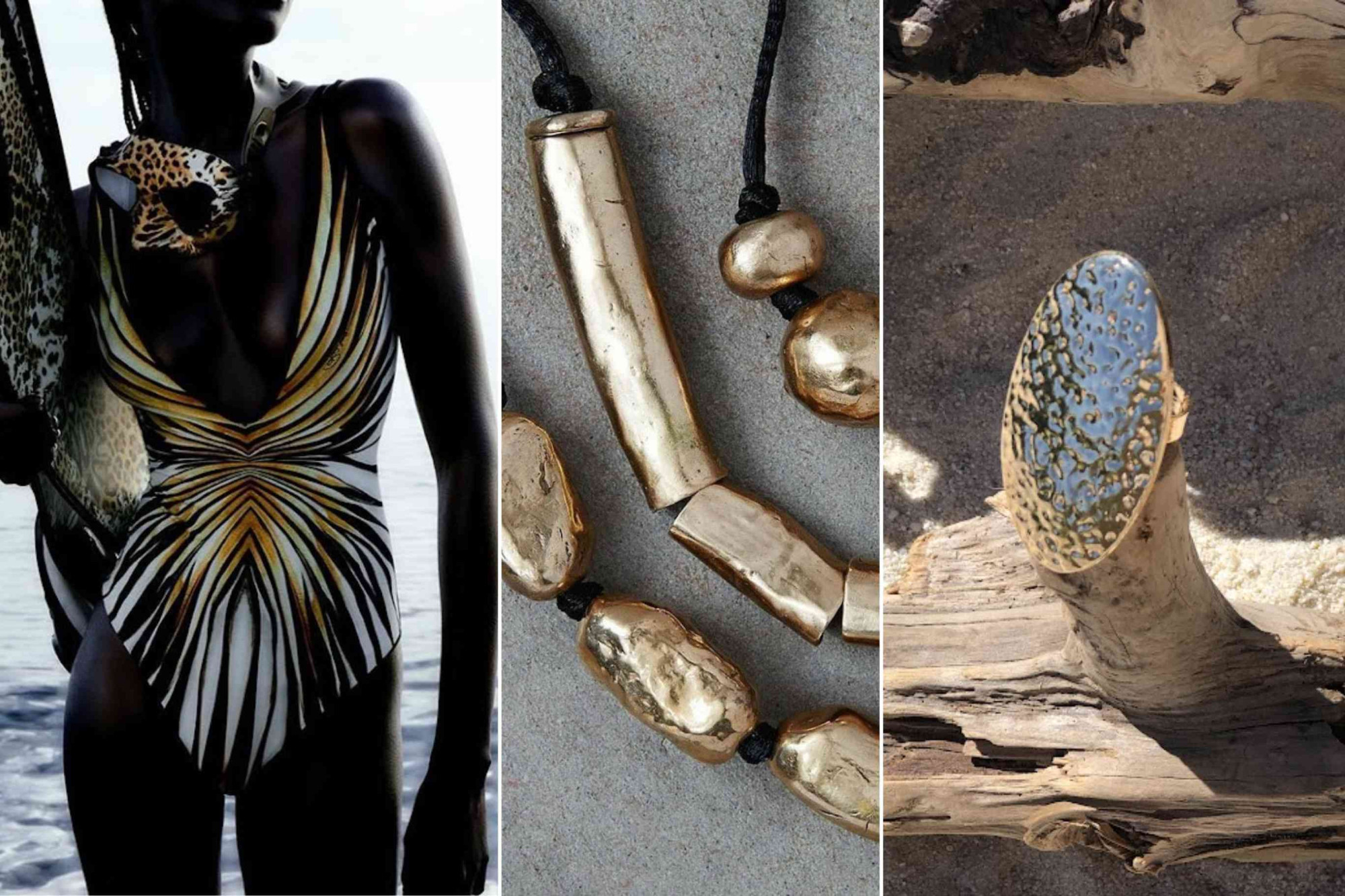
Sculptural jewellery is defined as much by shape and volume as by the material from which it is made. Instead of relying on small stones or delicate chains, these pieces use form itself as the main decorative element.
Large metal beads, irregular pendants and substantial cuffs are typical examples. Their surfaces are rarely perfectly smooth or symmetrical. Hammering, casting and hand-finishing can leave subtle variations that make the metal react differently to light.
Scale is an important part of the design. A single oversized pendant can replace several smaller necklaces, while large earrings or a broad cuff can become the main accessory in an otherwise simple outfit.
Organic shapes have become particularly prominent in this type of jewellery. Rounded forms, uneven edges and elongated pieces can reference pebbles, seeds, shells and other shapes found in nature without reproducing them literally.
Metal choice changes the character of a piece. Polished gold creates a more refined finish, while brushed, hammered and aged metals have a less uniform surface. Silver, bronze and mixed metallic tones can also be combined within the same piece.
Because sculptural jewellery already has a strong visual presence, it works particularly well with simple clothing. Open necklines, plain fabrics and restrained colours provide enough space for larger forms to stand out.
The appeal lies in treating jewellery almost as a small object of design. Shape, weight, surface and proportion become just as important as decoration.
Exploring jewellery made from natural materials?
Discover Shell Jewellery →
#SculpturalJewellery #StatementJewellery #JewelleryDesign #FashionAccessories #LesCouleursSauvages