Style & Fashion @safaristyle
Ecru, ivory, oatmeal and natural cotton may look like variations of white, but many of these shades originate from fibres that have not been heavily bleached or dyed.
Natural cotton, linen and wool each have their own underlying colour. Depending on the fibre and the way it is processed, this can range from warm cream and pale beige to slightly grey or yellow undertones. The result is less uniform than a bright optical white.
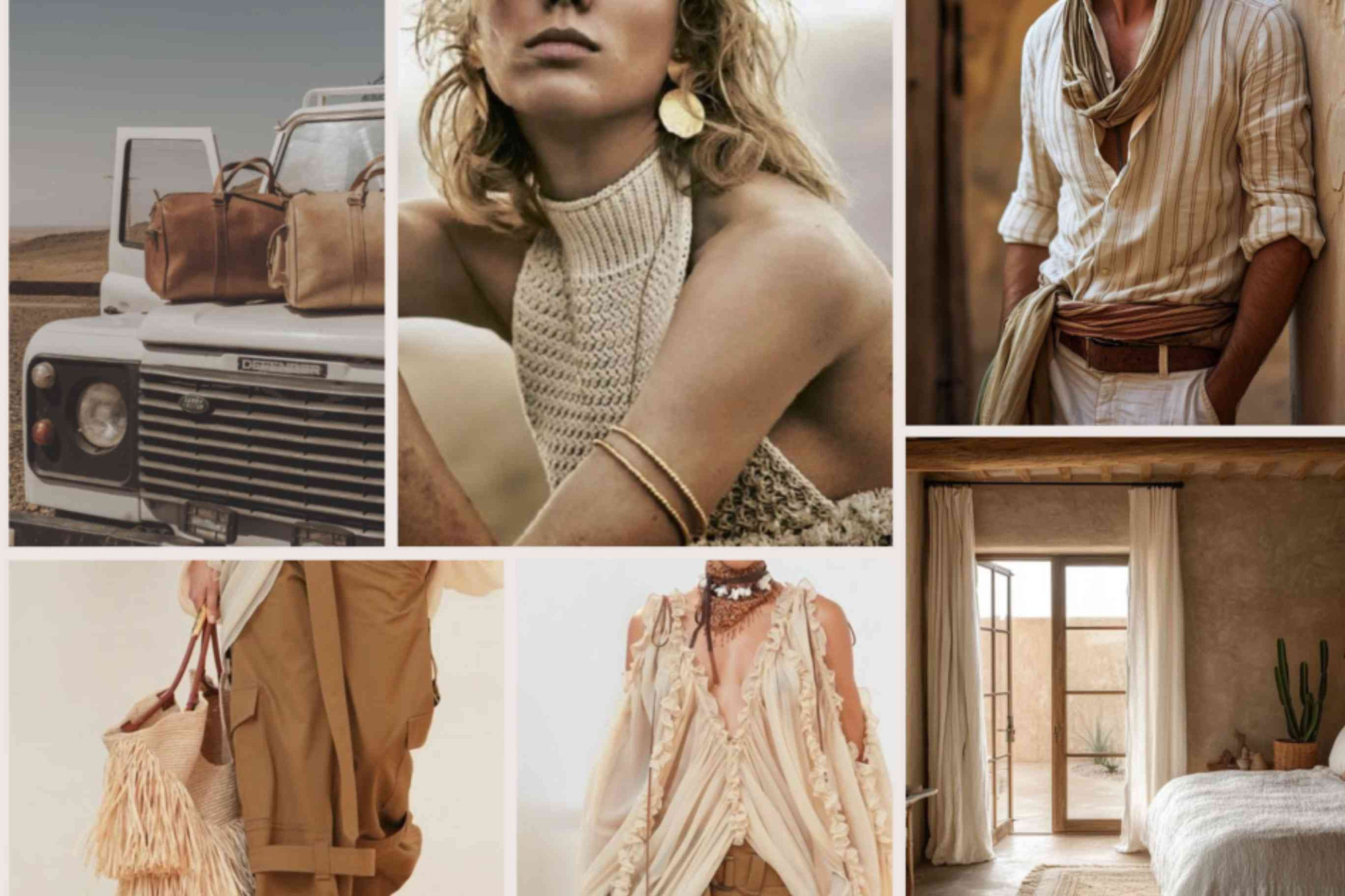
This difference becomes particularly visible when several natural fabrics are worn together. An ecru linen shirt can look warmer beside cotton trousers, while crochet and loosely woven knits create additional variation through texture and shadow.
The finish of the material matters as much as the shade. Linen has its characteristic irregular surface, cotton can range from crisp to very soft and raffia or woven plant fibres introduce a much rougher texture. This allows an outfit built almost entirely around cream to remain visually interesting.
Natural shades are also easy to combine with materials such as tan leather, suede, canvas and woven accessories. Instead of introducing a contrasting colour, these materials continue the same warm palette.
There are practical differences too. Bright white can show marks quickly and sometimes requires more careful washing, while ecru and oatmeal shades tend to be more forgiving. Natural fibres such as linen and cotton are also particularly useful in warm climates because lightweight constructions can allow air to circulate around the body.
The appeal of this palette therefore comes from more than colour alone. Fabric, weave and natural variation give each shade a different appearance, making cream and ecru useful alternatives to conventional white.
Want to see how texture transforms natural shades?
Discover Macramé Fashion →
#Ecru #NaturalFabrics #LinenStyle #NaturalFashion #LesCouleursSauvages