Home & Design @atelierdumonde
Textile Fringes
Discarded fabrics can be transformed into decorative fringes, garlands and wall hangings using simple cutting, knotting and wrapping techniques.
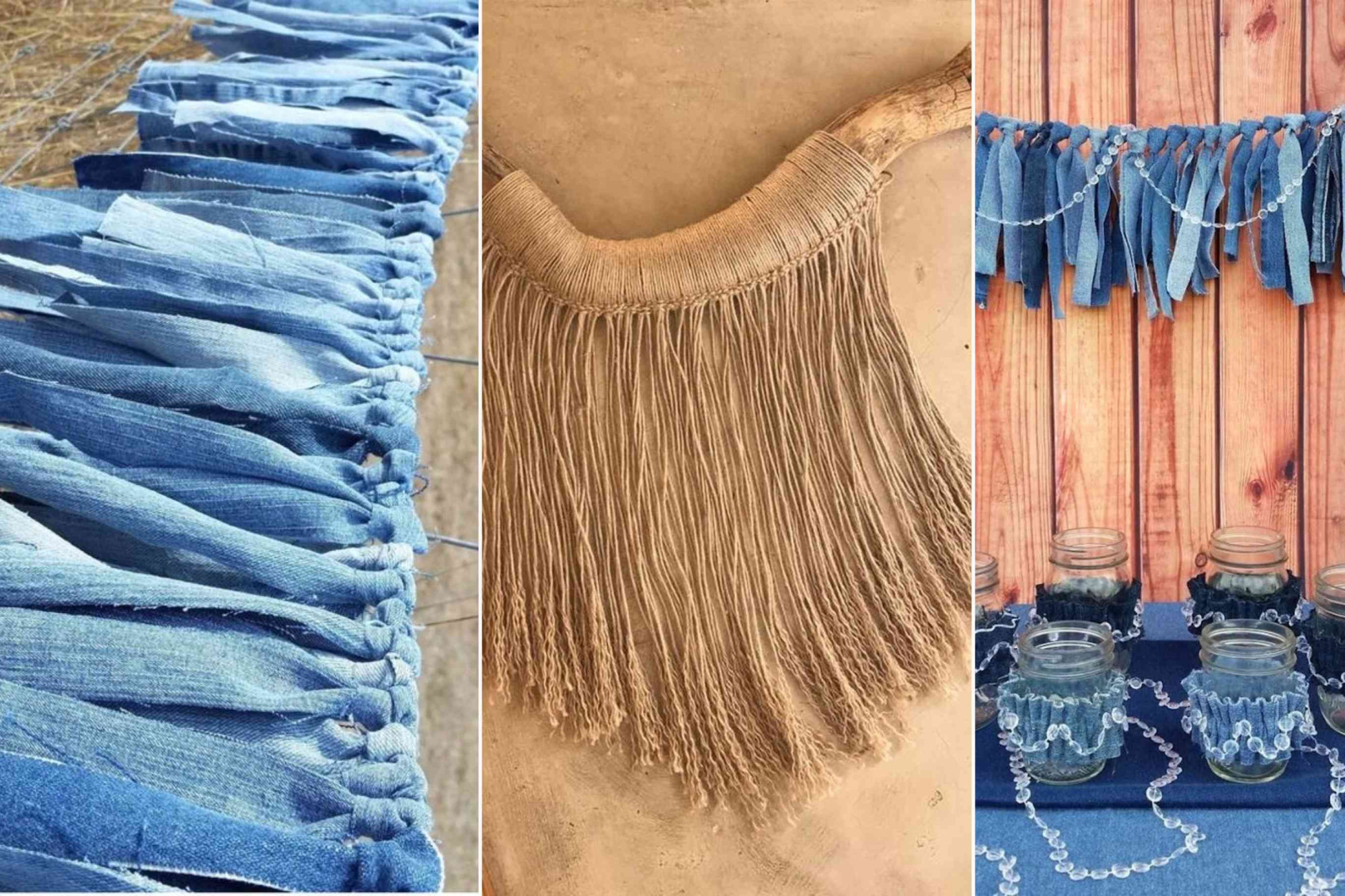
Old denim is particularly suitable for this type of textile work. Its woven structure allows strips to be cut or torn along the grain, producing slightly frayed edges without requiring additional finishing.
Linen, cotton and jute offer different results. Lightweight cotton creates softer hanging decorations, while jute twine is better suited to structured fringes and rustic wall pieces.
Working with Fabric Strips
A fabric garland can be made by cutting old textiles into strips of approximately 3 to 5 centimetres wide. Each strip is folded over a length of cord and secured with a simple loop knot.
Alternating different shades of denim or combining cotton with natural linen introduces variation without additional materials.
For a more structured wall hanging, lengths of jute can be wrapped tightly around a wooden branch or metal ring. Loose strands can then be trimmed into a curved or straight fringe.
Textile Art by Elodie Blanchard
French-born textile artist Elodie Blanchard, based in Brooklyn, New York, explores the creative possibilities of discarded clothing and fabric remnants.
Her work includes sculptural textile installations and decorative pieces made by cutting, stitching and assembling reused materials. Through her practice, everyday textiles become expressive objects for interior spaces.
Her approach demonstrates how techniques associated with simple fabric decorations can also be developed into contemporary textile art.
Artist: Elodie Blanchard
#AtelierDuMonde #TextileReuse #FabricFringes #ElodieBlanchard #CreativeRecycling #DenimCraft #TextileArt