Home & Design @coastalliving
A lampshade does more than cover a light source. When it is made from woven natural fibres, its material and construction influence both the appearance of the object and the way light enters a room.
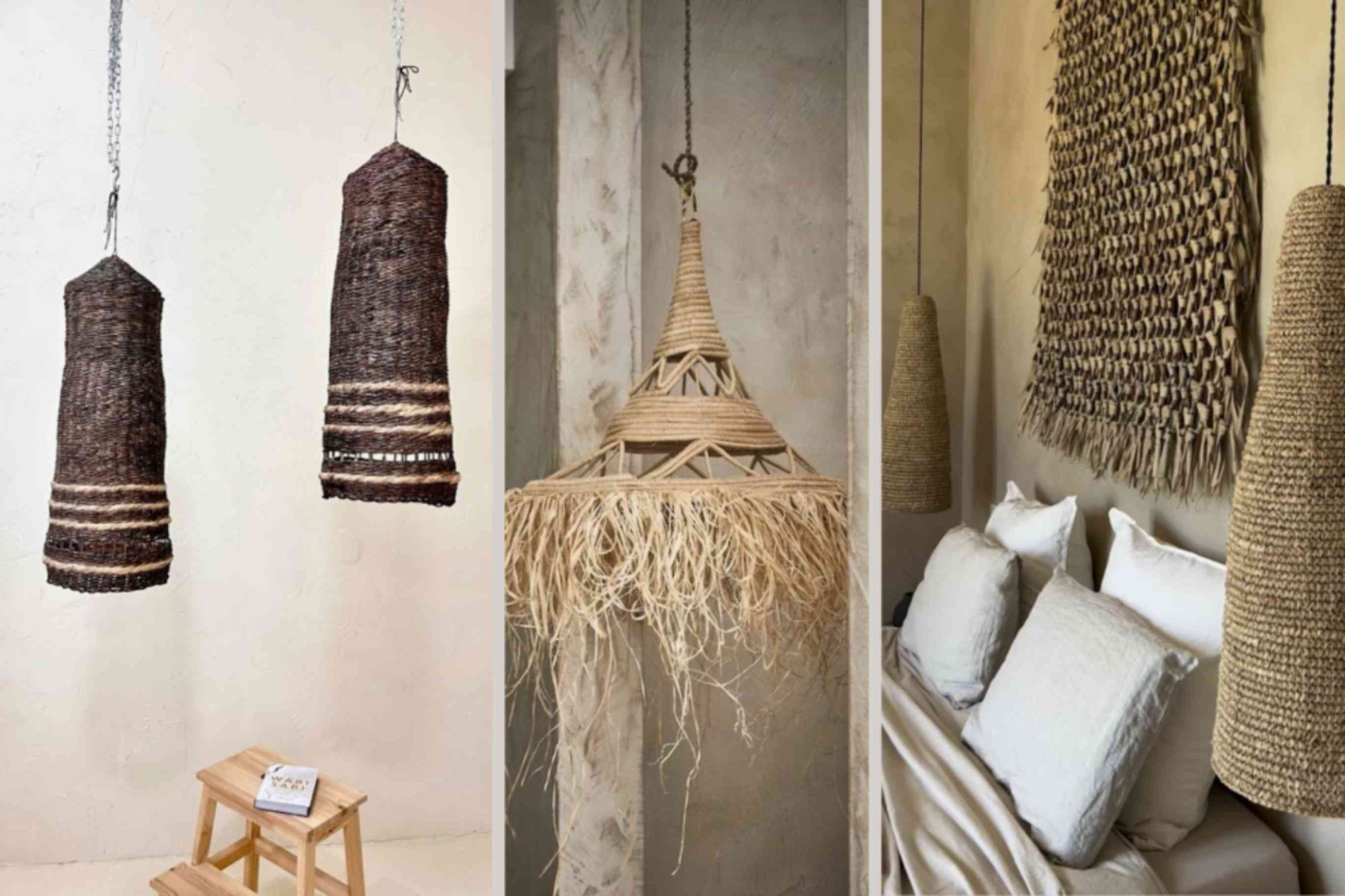
Rattan, raffia, seagrass, palm fibre and other plant-based materials can be woven tightly or loosely depending on the effect required. A dense weave directs more light downwards, while an open structure allows light to escape through the sides and creates patterns on nearby walls.
The technique also determines the shape. Some shades are built around a frame, while others rely largely on the strength of the woven fibres themselves. This makes it possible to create elongated pendants, wide ceiling shades and irregular forms that would be difficult to achieve with rigid materials.
Because much of the visual interest comes from the weave, these lights work particularly well in interiors with relatively simple finishes. Plaster walls, timber, stone and neutral textiles allow the structure of the fibres to remain visible without requiring additional decorative elements.
Scale is another consideration. A single oversized woven pendant can define a dining table or seating area, while several smaller lights can create rhythm along a corridor or above a kitchen counter.
Natural-fibre lighting is often associated with coastal or tropical interiors, but the material does not need to determine the entire style of a room. Combined with contemporary furniture and restrained colours, woven lighting can function simply as a practical source of light with a strong material presence.
Looking for more inspiration with woven lighting?
Discover Lighting in Bali →
#WovenLighting #NaturalMaterials #LightingDesign #InteriorDesign #RivieraDuMonde