Côte D'Azur @lescouleursdecotedazur
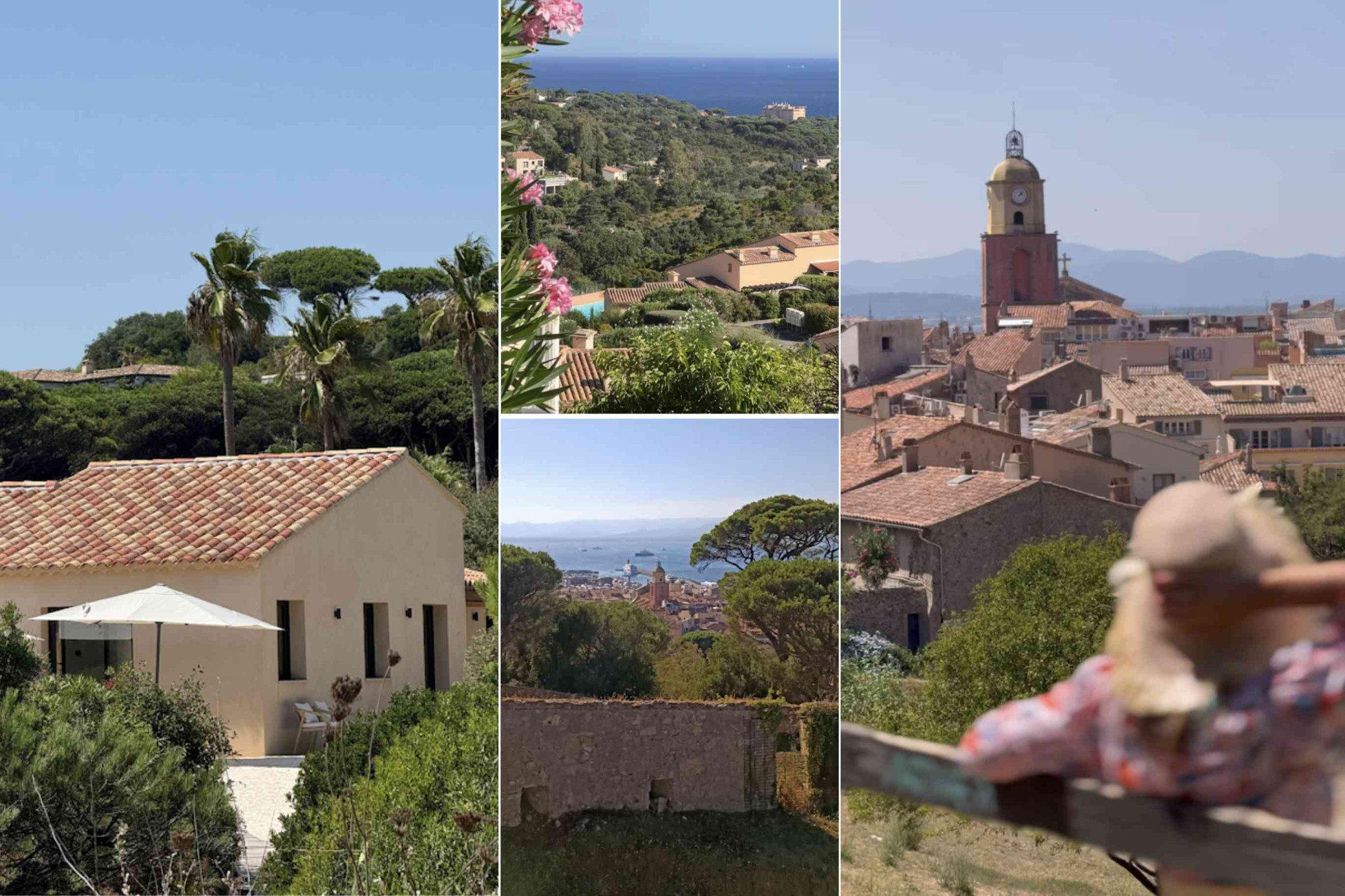
Saint-Tropez is much greener than its busy waterfront first suggests. The historic centre occupies a relatively compact area, and beyond its narrow streets the landscape soon opens into gardens, villas and wooded hills overlooking the Mediterranean.
Umbrella pines are among the most recognisable features. Their broad canopies appear above rooftops and garden walls throughout the peninsula, alongside palms, olive trees, oleander and other plants adapted to the dry Mediterranean climate.
Many houses around Saint-Tropez are deliberately integrated into this landscape. Low buildings in pale stone or render are surrounded by planting, while terraces and gardens are positioned to take advantage of views towards the sea.
This relationship between architecture and vegetation becomes particularly visible from the higher parts of the village. The terracotta rooftops and bell tower of Notre-Dame-de-l'Assomption remain visible, but they are surrounded by a surprisingly dense layer of trees.
Continue towards the outskirts and the change becomes even clearer. Residential streets gradually give way to larger gardens, vineyards and the natural landscape of the Saint-Tropez peninsula.
For visitors who mainly know the images of Pampelonne, superyachts and crowded summer streets, this is another side of the destination worth noticing. Saint-Tropez is not only a village beside the Mediterranean, but also one set within a distinctly Provençal landscape.
What defines the landscape
Umbrella pines · one of the characteristic trees of the peninsula
Mediterranean gardens · olives, palms, oleander and drought-tolerant planting
Low architecture · villas integrated into gardens and hillsides
Sea views · appearing between trees and rooftops
Old Saint-Tropez · a compact historic centre surrounded by much greener areas
Want to experience more of local life on the Côte d’Azur?
Discover A Simple Côte d’Azur Morning →
#SaintTropez #CotedAzur #MediterraneanGardens #Provence #FrenchRiviera