Winter Moods & Escapes
Edition of Les Couleurs du Monde featuring inspiring destinations, refined stays and unique experiences Contact: info@lescouleursdumonde.com
Home & Design @atelierdumonde
Natural materials can turn a simple accessory into a statement piece through texture, repetition and scale. Shells, rope and plant fibres are particularly suited to this because they already have strong shapes and surfaces before anything is added to them.
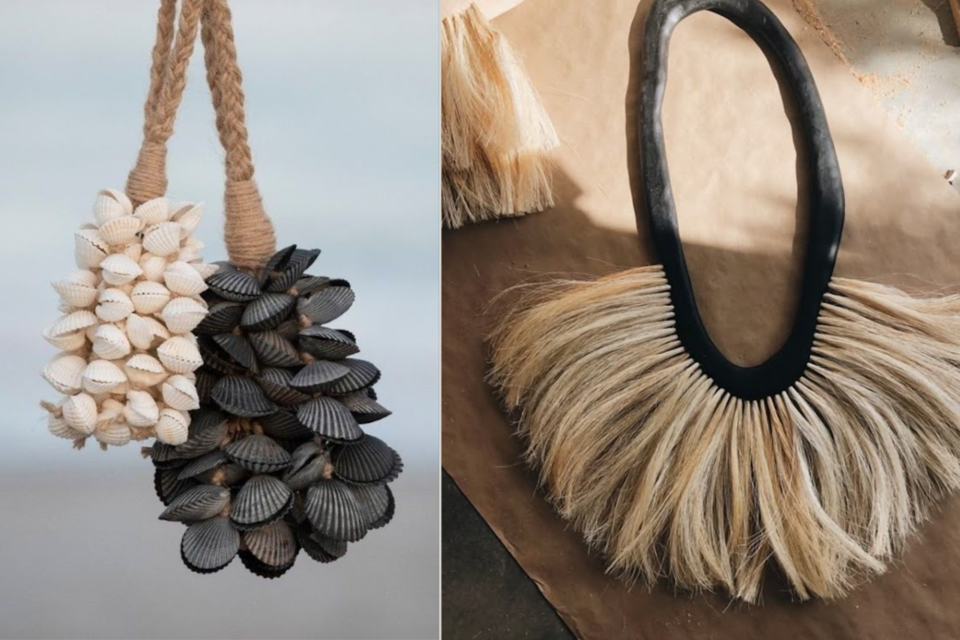
For a shell tassel, begin with a thick rope or braided cord that can support the weight of the shells. Smaller shells can then be attached closely together around the lower section. Working in overlapping rows creates volume and hides most of the construction underneath.
Different shells produce very different results. Pale shells create a lighter coastal look, while darker shells give the same technique more contrast. Keeping the rope natural allows the shells to remain the main feature.
Plant fibres can be used in a completely different way. Raffia, sisal or similar fibres can be gathered into bundles and attached around a wooden, leather or wrapped handle. Positioning the fibres closely together creates the full fringe visible on a statement bag.
The length of the fringe determines much of the final shape. Short fibres produce a compact edge, while longer strands create more movement. Once attached, the fibres can be trimmed to create an even curve or left slightly irregular.
These techniques can also be combined. A woven bag can be finished with shell details, a raffia accessory can include wooden beads or a shell-covered tassel can become a bag charm.
The result shows how materials often associated with interiors and traditional craft can move directly into fashion. The same shells, rope and fibres used for baskets, wall pieces and decorative objects can become bags, jewellery and accessories.
Want to take natural materials into Riviera style?
Discover Seashells in Riviera Fashion →
#NaturalAccessories #ShellAccessories #RaffiaBag #AccessoryDesign #AtelierDuMonde
Home & Design @atelierdumonde
Photographs do not always need traditional frames to become part of an interior. Simple ways of hanging and grouping images can turn personal photographs into a feature that feels integrated into the room.
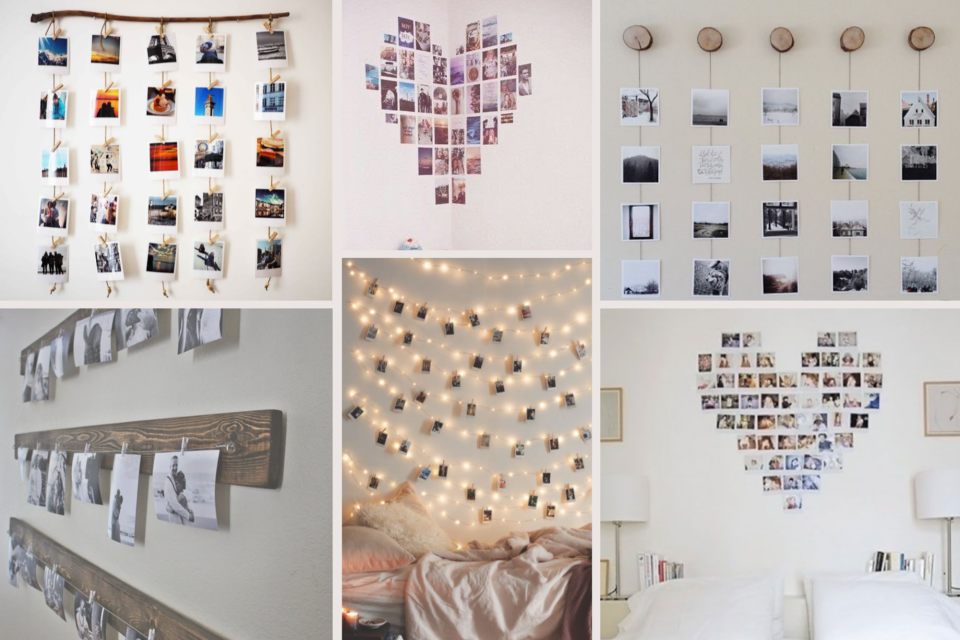
One option is to suspend photographs from a wooden branch, rail or narrow strip of timber. Clips and string make it easy to add new images or change the arrangement without redesigning the entire wall.
A collection can also become a composition in itself. Photographs arranged in a heart, grid or loose geometric shape create a larger visual element while allowing every image to remain individual. Keeping similar spacing between photographs helps give larger collections some structure.
String displays provide a more informal alternative. Several rows can fill a wall above a bed, desk or console, while small clips make photographs easy to replace. Adding subtle lights can make the display more noticeable in the evening without requiring additional wall decoration.
Another approach is to combine photographs with small objects. Hooks, wooden elements and simple natural materials can give the display more depth while still keeping the images central.
The photographs do not have to follow the same format either. Polaroids, printed travel photographs, black-and-white images and smaller snapshots can work together when there is one element connecting them, such as the hanging method or overall arrangement.
This makes a photo wall particularly suitable for collections that continue to grow. New travels, places and everyday moments can gradually become part of the interior instead of remaining stored on a phone or computer.
Looking for another way to display your photographs?
Discover Displaying Photographs with Wood →
#PhotoDisplay #WallDecor #InteriorIdeas #HomeStyling #AtelierDuMonde
Home & Design @atelierdumonde
A hanging rail can add useful storage without introducing a heavy piece of furniture. Made from a simple wooden branch or pole suspended with rope, it combines a practical function with a natural material that remains visible in the room.
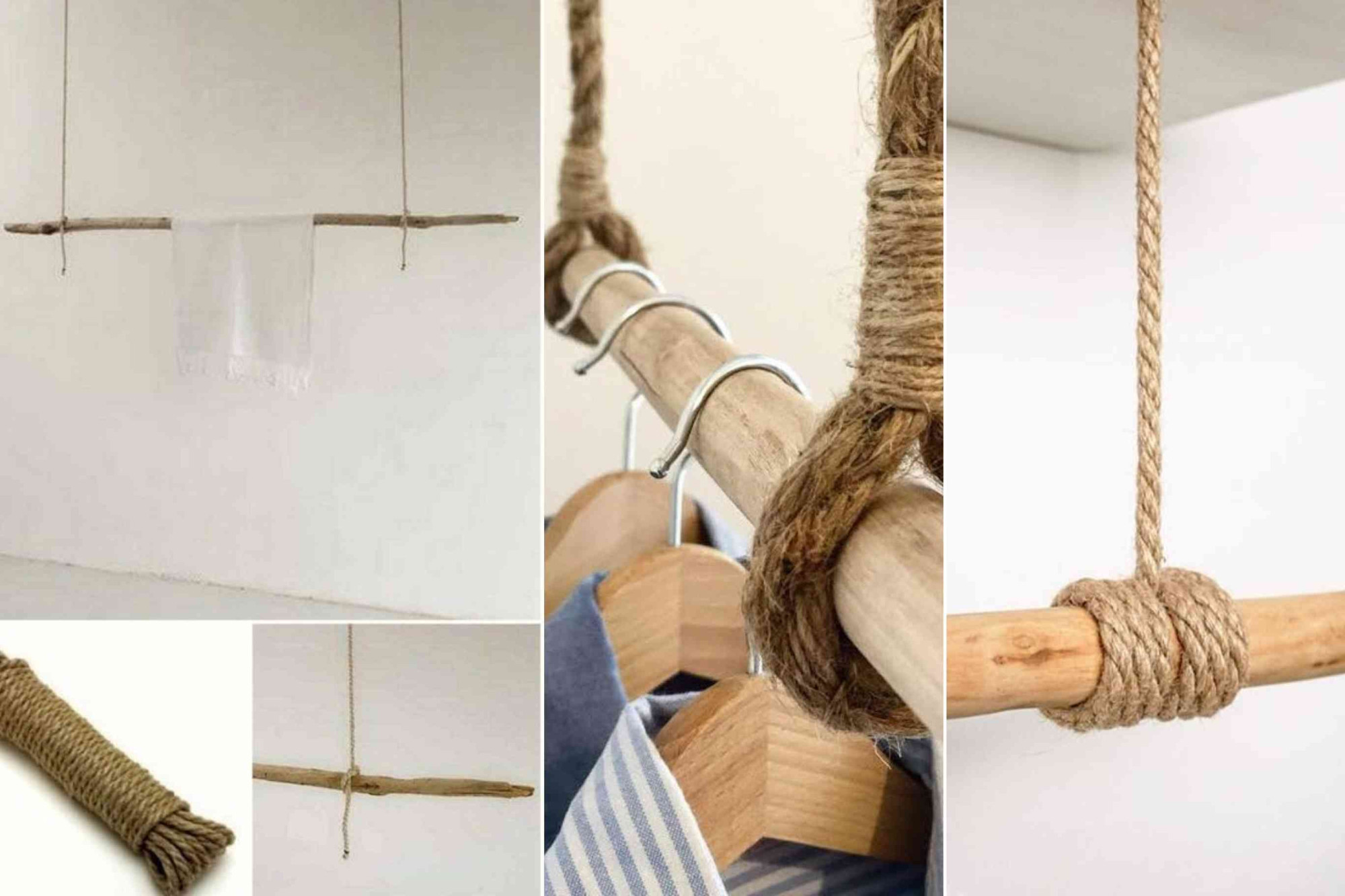
The construction itself can be very simple. A length of wood is suspended horizontally from two ropes fixed to the ceiling. Clothes can then be hung directly from the rail using ordinary hangers, creating an open alternative to a wardrobe or clothes rack.
The choice of wood changes the appearance considerably. A straight wooden pole creates a cleaner result, while an untreated branch introduces irregularities in shape, colour and texture. Rope adds another natural element and works particularly well with pale wood, linen and other woven materials.
A suspended rail can also be useful where floor space is limited. Because there are no legs or supporting frame, the area underneath remains free for baskets, shoes, storage boxes or simply additional open space.
It does not have to be limited to clothing either. The same principle can be used in a bathroom for towels, in an entrance for lightweight garments or as a display rail for textiles.
The details matter. Rope can be wrapped around the ends of the wood, tied with visible knots or kept relatively minimal depending on the interior. Even the hangers become part of the overall look when everything remains on display.
It is a straightforward example of how a basic material and a practical idea can become part of the design of a room.
Want to take open storage a step further?
Discover Open Wardrobe →
#HangingRail #InteriorIdeas #NaturalMaterials #OpenStorage #AtelierDuMonde
Home & Design @atelierdumonde
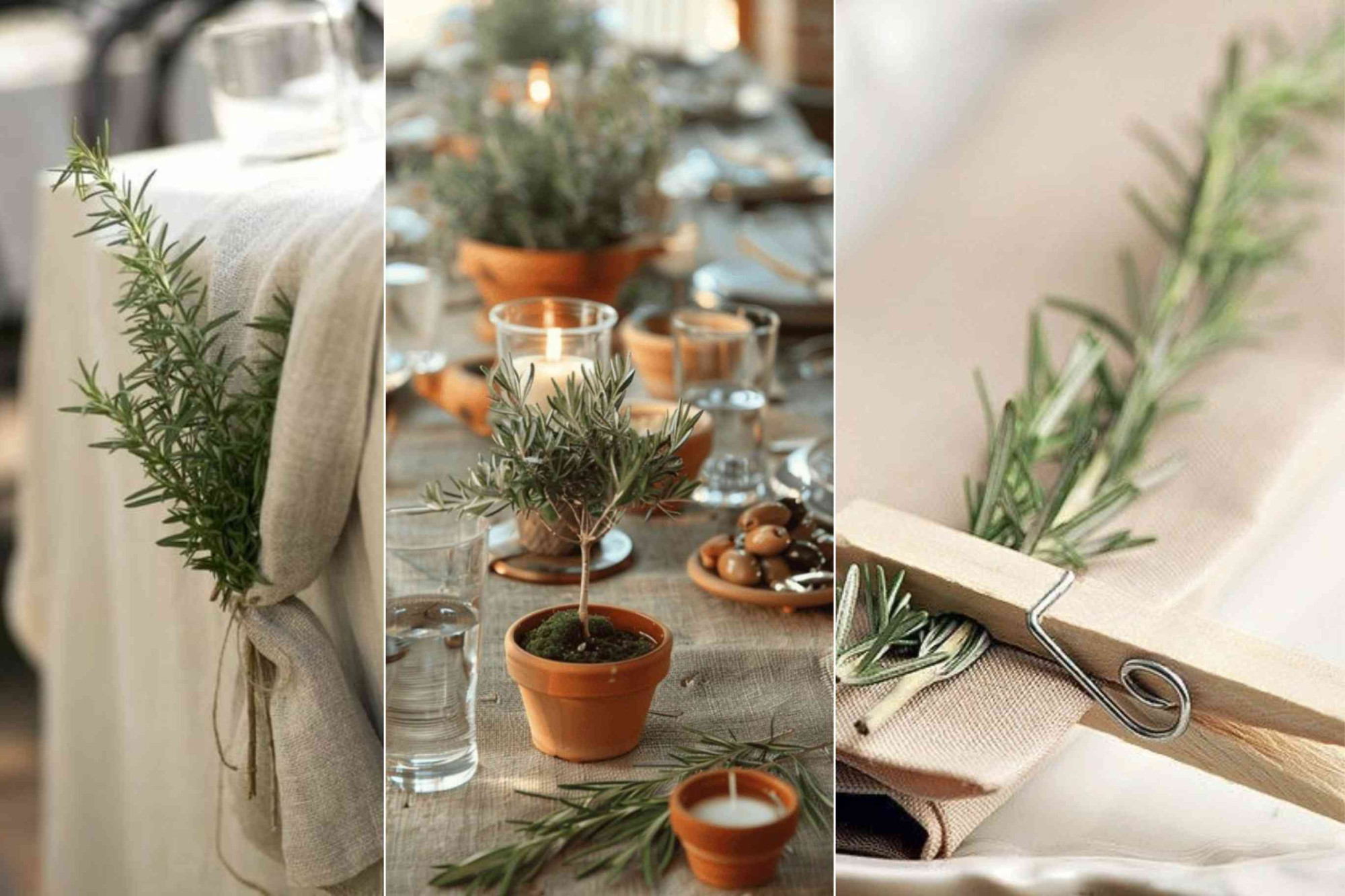
Fresh herbs can be used for more than cooking. Their colour, scent and natural shape make them an easy addition to a table setting without the need for elaborate decoration.
Rosemary works particularly well because its branches keep their shape and can be used in several ways. A small sprig can be tucked into a folded napkin, attached with a simple wooden peg or tied around linen with string.
Small potted herbs can take the place of traditional floral arrangements. Placed between candles, glasses and serving dishes, they add greenery without blocking the view across the table. Terracotta pots also introduce a warm natural material that works easily with linen, wood and simple ceramics.
Herbs are particularly useful when decorating a long table. Instead of one large centrepiece, several small plants and loose branches can be distributed along its length. This keeps the arrangement low and leaves enough space for food and tableware.
The idea can also continue beyond the tabletop. A rosemary branch tied around the back of a chair creates a small detail that connects the seating with the rest of the setting.
Different herbs can change the character of the table. Rosemary and thyme have a more structured appearance, while sage and olive branches introduce softer shades of green. Using what is locally available can make the setting feel more connected to its surroundings.
After the meal, potted herbs can return to the kitchen, terrace or garden. It is table decoration that remains useful long after the table has been cleared.
Want to take the garden-to-table idea a little further?
Discover Eating Straight from the Garden →
#TableStyling #FreshHerbs #NaturalDecor #TableSetting #AtelierDuMonde
Home & Design @atelierdumonde
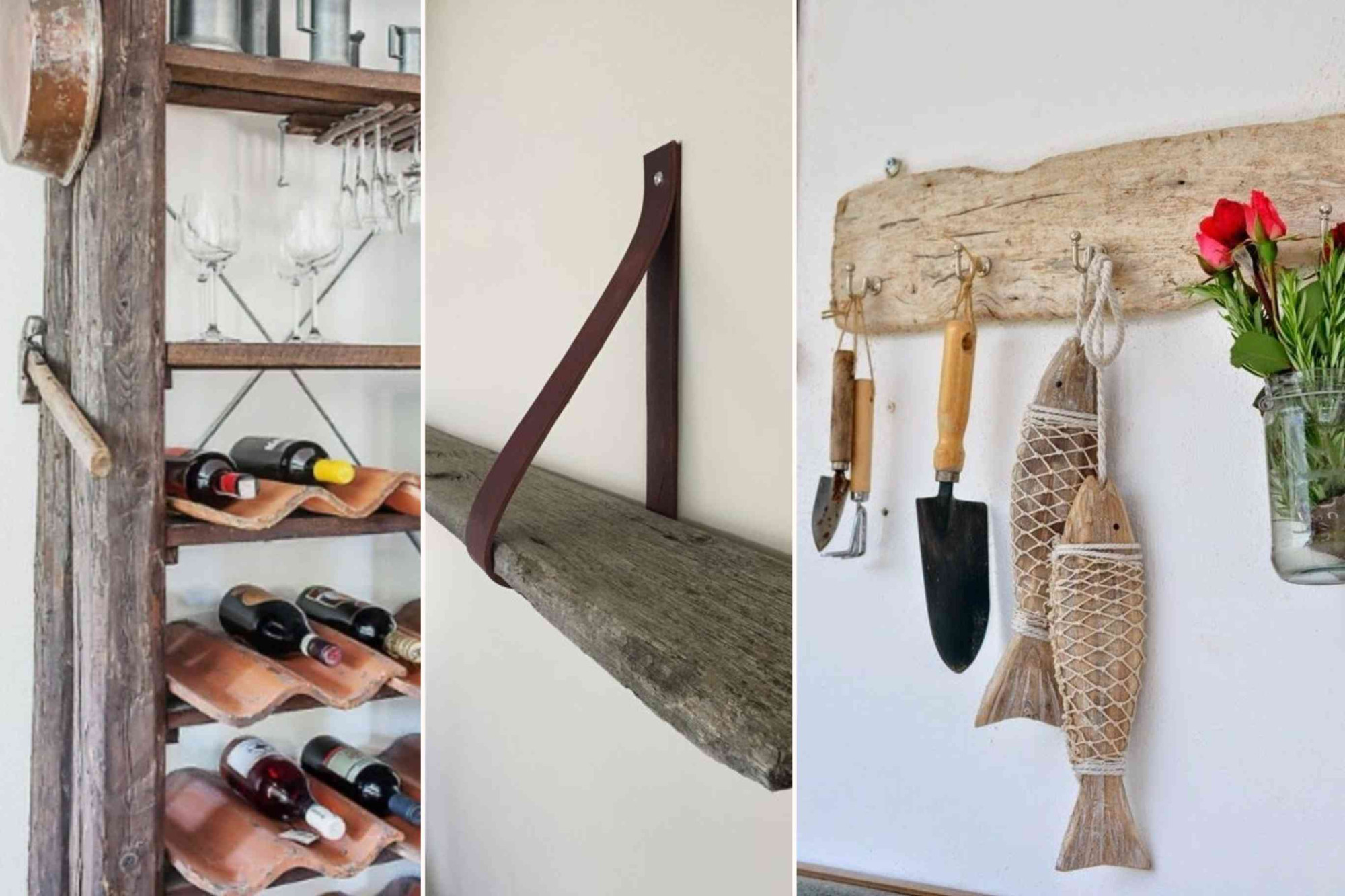
Reclaimed wood does not have to become a major piece of furniture to have a useful place in an interior. Old beams, boards and pieces of timber can be turned into shelves, racks and storage with relatively little intervention.
One of the simplest applications is an open shelf. A substantial piece of aged wood can be fixed to the wall with leather straps or simple brackets. The marks, uneven edges and variations in the timber remain visible and become part of the design.
In kitchens and dining spaces, reclaimed wood can also be used to create open storage. Shelves can hold bottles, glassware, ceramics and everyday kitchen objects, making practical items part of the room rather than hiding everything behind cupboard doors.
Smaller pieces of timber work well as wall racks. Adding hooks creates storage for utensils, textiles, gardening tools or other objects that need to remain within easy reach. The same principle can be adapted for an entrance, bathroom, kitchen or workspace.
Reclaimed wood is particularly interesting when combined with contrasting materials. Leather straps, metal hooks, glass and ceramics provide cleaner details against the irregular surface of older timber.
There is no need to remove every sign of previous use. Scratches, faded colour, old fixing holes and differences in texture can remain visible as long as the wood is suitable for its new purpose.
Instead of treating reclaimed timber purely as decoration, using it for functional pieces gives the material a new role in the home while retaining much of its original character.
Looking for another way to give old timber a new purpose?
Discover Using Wooden Shutters Indoors →
#ReclaimedWood #InteriorDesign #StorageIdeas #NaturalMaterials #AtelierDuMonde
Home & Design @atelierdumonde
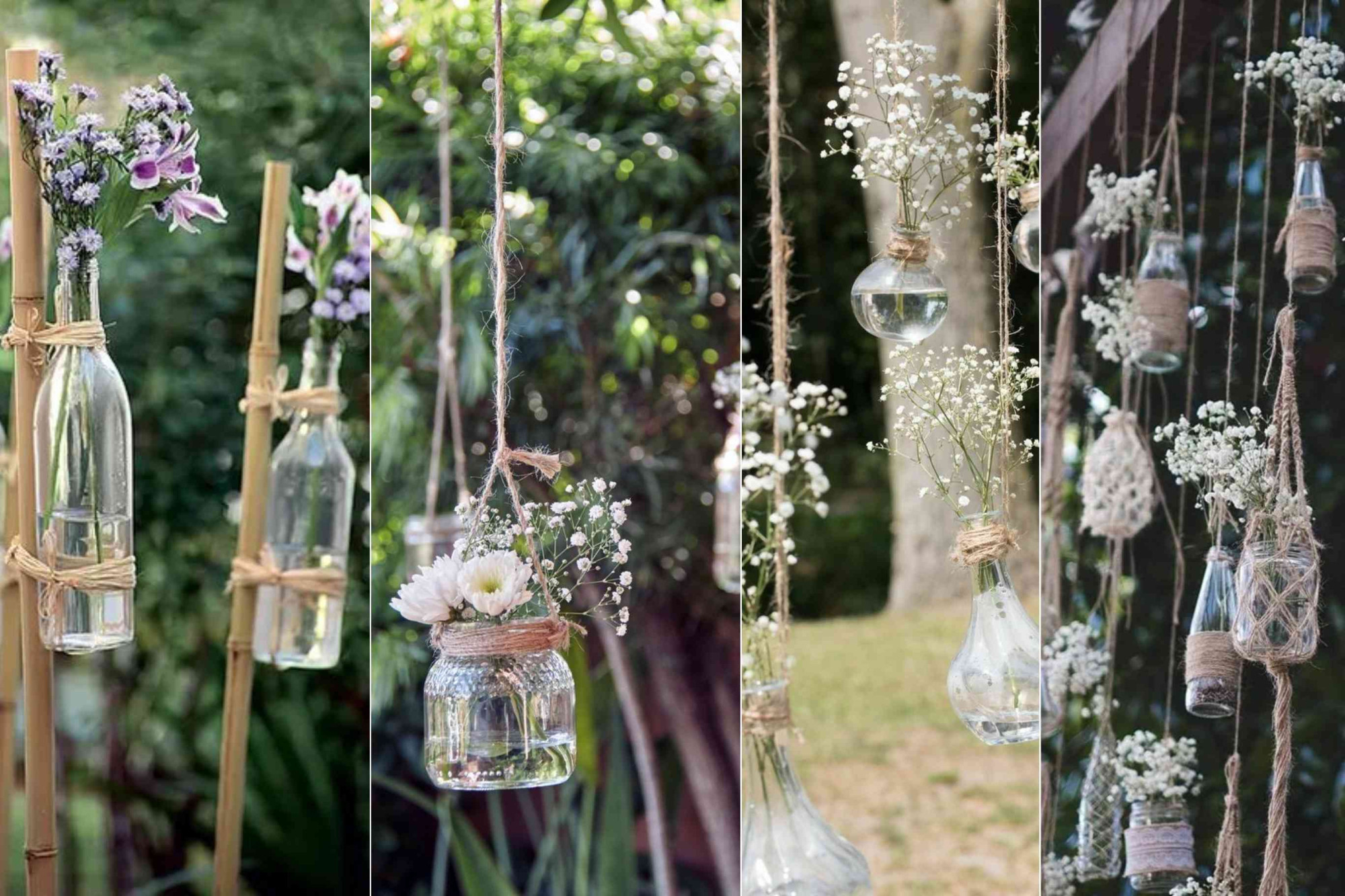
Flowers do not always need to be arranged on a table. Suspending small bottles and glass jars from branches, pergolas or simple garden structures can bring flowers into an outdoor setting while keeping tables and other surfaces free.
Clear glass works particularly well because the containers remain visually light. Old bottles, small jars and narrow vases can all be reused, so the individual pieces do not need to match.
Rope, twine and natural cord provide simple ways to suspend the containers. They can be wrapped around the neck of a bottle, tied around a jar or combined with macramé-style holders for heavier pieces.
The flowers themselves can remain uncomplicated. A few stems, small wildflowers or greenery are enough for each container. Spreading them across several hanging vessels creates more impact than filling every bottle with a large arrangement.
Height also makes a difference. Hanging the containers at different levels creates a looser composition and allows flowers to appear throughout the space rather than along one horizontal line.
The idea can be adapted to different outdoor settings. A few bottles attached to bamboo poles can mark the edge of a dining area, while multiple suspended jars can decorate a pergola, tree or covered terrace.
It is also an accessible way to reuse glass that might otherwise be discarded. Bottles and jars become small vases and can be rearranged whenever the outdoor setting changes.
Want to make flowers and nature part of time spent outdoors with children?
Discover Introducing Children to Nature →
#GardenDecor #OutdoorLiving #FloralDecor #GardenIdeas #AtelierDuMonde
Home & Design @atelierdumonde
Spring decorating can begin with a few seasonal details rather than a complete change of interior. Flowers, natural materials and small handmade elements can introduce the colours and character of the season without requiring permanent decoration.
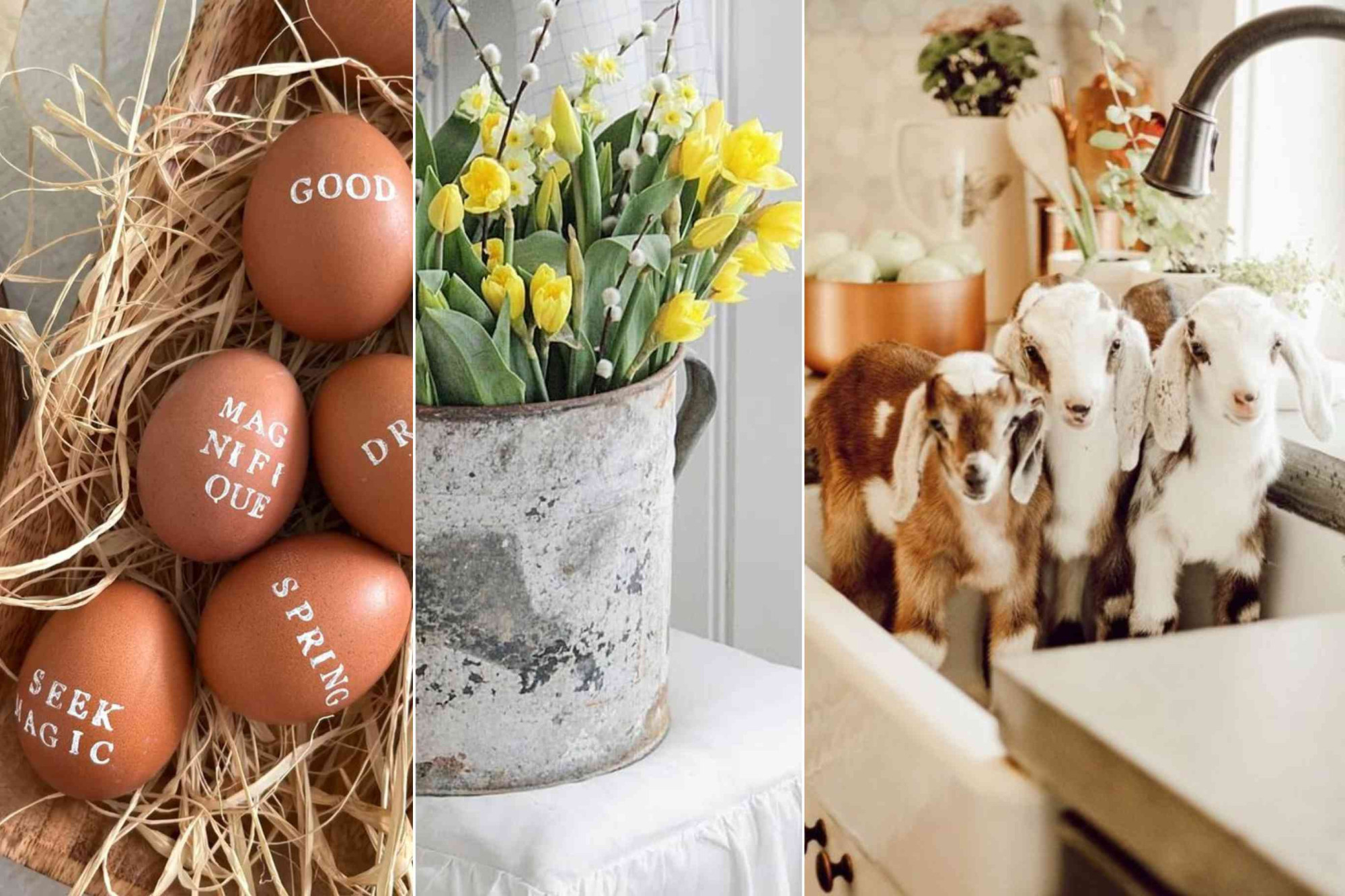
Spring flowers are one of the simplest additions. Tulips, daffodils and flowering branches bring fresh yellow, white and green tones into a room. Instead of a traditional vase, they can be placed in an aged metal container, ceramic pot or simple glass vessel to suit the materials already present in the interior.
Natural materials work particularly well alongside flowers. Straw, wood, linen and terracotta introduce texture and can be used for baskets, table settings and smaller decorative arrangements.
Eggs can also become part of seasonal styling without relying on brightly coloured Easter decorations. Natural brown or white eggs can be left plain, decorated with small words or combined with straw and branches for a more understated arrangement.
Spring details do not have to remain on the dining table. A container of flowers can sit on a kitchen counter, branches can be placed in an entrance and smaller arrangements can be used throughout the home.
Existing objects can often be reused for the season. An old bucket becomes a flower container, a basket can hold eggs or plants and everyday ceramics can be combined with fresh greenery.
The result does not need to look perfectly coordinated. Spring naturally brings together flowers, new growth and different textures, making simple seasonal additions enough to change the atmosphere of a room.
Want to make more of your spring flowers after they bloom?
Discover Spring Bulbs After Flowering →
#SpringInteriors #SeasonalDecor #SpringFlowers #HomeStyling #AtelierDuMonde
Home & Design @atelierdumonde
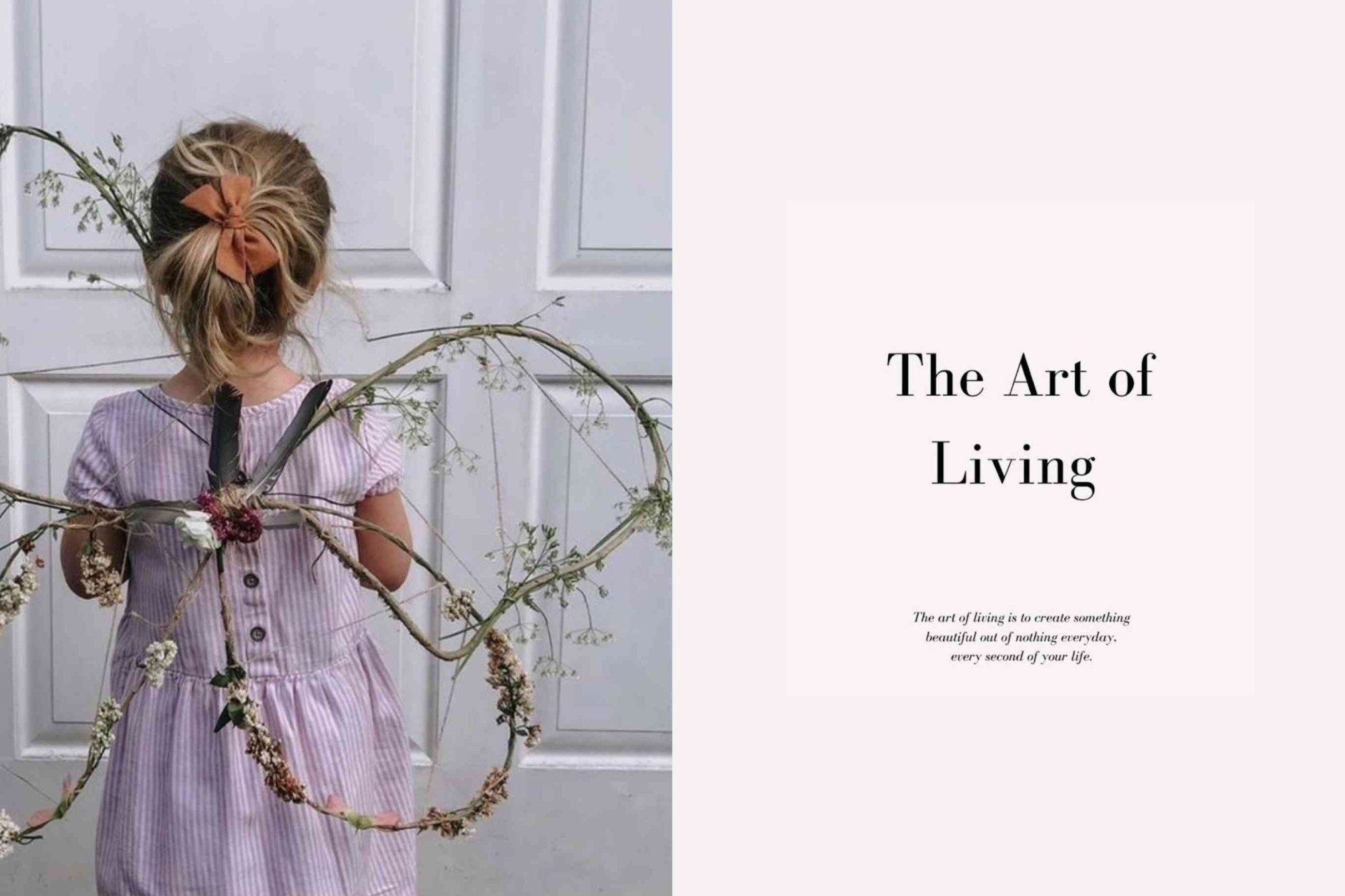
A few flexible branches can be turned into a large decorative butterfly with very little material. The shape is simple enough to make by hand and can be decorated differently depending on the season.
Start with several long, thin branches that can bend without breaking. Willow and other flexible garden branches are particularly suitable. Curve the first branch into one wing and bring the ends together at the centre. Repeat the shape on the opposite side to create the second wing.
The two sides can be secured in the middle with thin wire, natural twine or floral wire. At this stage, the butterfly does not need to be perfectly symmetrical. Slight differences between the branches give the finished piece a more natural appearance.
Smaller branches can then be added inside or around the main outline to strengthen the shape. Leaving most of the structure open keeps the butterfly light and makes the individual branches more visible.
Fresh or dried flowers can be attached once the basic form is complete. Small flowers work particularly well because they can be distributed along the branches without hiding their shape. A few larger flowers around the centre can help define the body of the butterfly.
Greenery, seed heads and dried grasses can also be mixed with the flowers. The arrangement can be kept very minimal or made fuller depending on where it will be displayed.
A ribbon, strip of fabric or longer branch can be added at the centre as a final detail. The finished butterfly can then be carried as a decorative object, suspended from a wall or used as part of a seasonal display.
Because the basic structure is made from branches, it can also be reused. Fresh flowers can be replaced as they fade, while dried flowers can remain in place for much longer.
Want to grow some of the flowers for your next creative project?
Discover Gardening with Children →
#FloralButterfly #CreativeIdeas #FlowerDesign #NaturalDecor #AtelierDuMonde
Home & Design @atelierdumonde
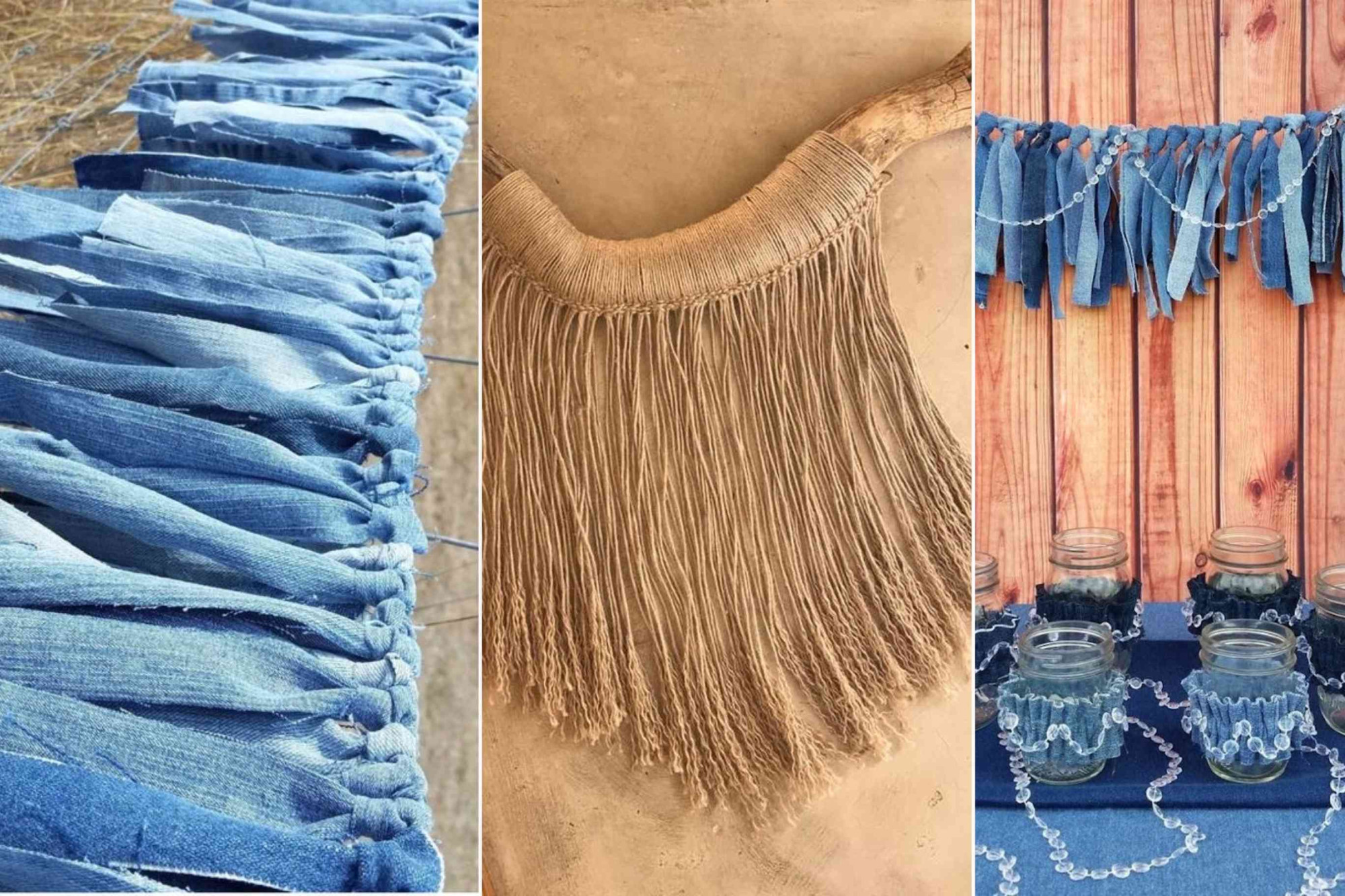
Old jeans can be reused long after they are no longer suitable to wear. Denim is strong, easy to cut and available in different shades of blue, making it particularly useful for simple decorative projects.
One of the easiest ideas is a fabric garland. Start by cutting unwanted denim into long strips. The pieces do not need to be identical. Slight differences in width, length and colour give the finished garland more variation.
Tie each strip around a length of rope or sturdy cord, placing the pieces closely together. Mixing pale, medium and dark denim creates a natural colour gradient without needing additional fabric.
The edges can be left unfinished. Denim gradually frays after cutting, which adds texture and removes the need for sewing or hemming. Longer threads can simply be trimmed when necessary.
The same method can be used with other materials. Jute, linen or cotton strips can be added between the denim to introduce another colour or texture. Small beads, shells or wooden details can also be attached to the cord.
For a softer alternative, jute can be wrapped around a curved branch or piece of wood and finished with a long fringe. This creates a decorative wall piece using the same basic principle of knotting fibres around a support.
Denim garlands work particularly well for outdoor tables, garden gatherings and informal celebrations, but they can also be used in children's rooms, creative spaces or as temporary wall decoration.
Instead of discarding worn jeans, even relatively small sections of fabric can therefore become useful material for a new decorative piece.
Want to take the idea of reusing denim into fashion?
Discover Reworked Denim →
#DenimDIY #UpcycledDenim #CreativeLiving #TextileIdeas #AtelierDuMonde
Home & Design @atelierdumonde
Shells collected by the sea can become materials for small decorative objects rather than simply being displayed in a bowl. Their different shapes, colours and textures make them suitable for projects ranging from simple table decorations to larger handmade pieces.
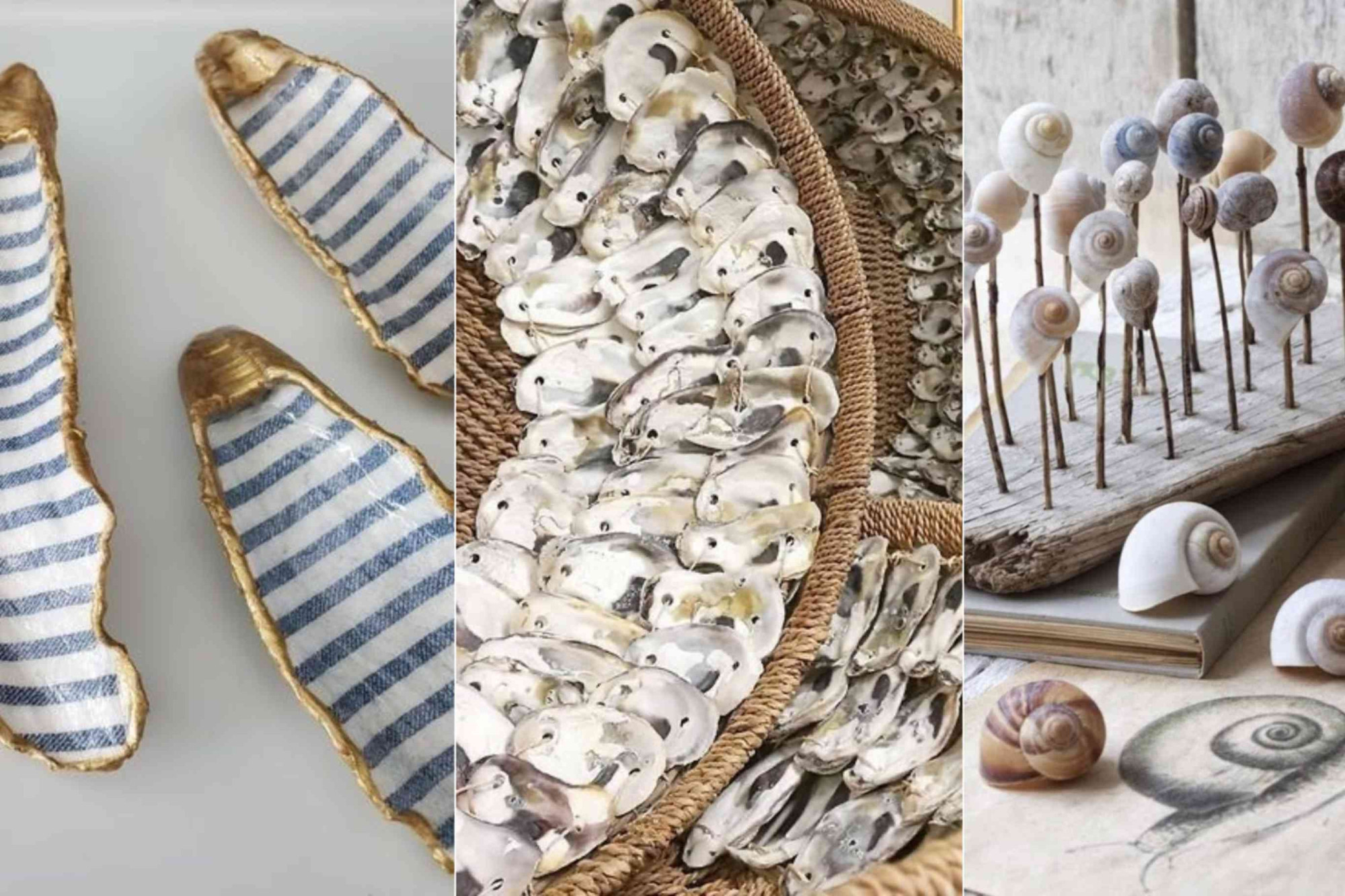
One of the easiest ideas is to combine small shells with pieces of driftwood. Thin holes can be made in the wood and small stems or pins inserted vertically. Placing a shell on each one creates a simple sculptural display that works particularly well with shells of different heights and shapes.
Larger shells can be used in a completely different way. Oyster shells, for example, can be layered closely together over a base to create a textured surface. Combined with rope or natural fibres, they can become part of a mirror frame, decorative panel or wall object.
Shells can also be combined with textiles. A simple striped fabric can be cut to fit inside a larger shell shape or used as a backing, while a painted edge adds definition. Blue and white stripes create a clear coastal reference, but linen and neutral fabrics can produce a more understated result.
Not every shell needs to be altered. Their natural markings are often interesting enough on their own. Grouping several varieties together allows differences in spiral, surface and colour to become part of the design.
Before using collected shells indoors, they should be cleaned thoroughly and allowed to dry completely. More fragile pieces are better kept for displays, while thicker shells can be used for projects that involve attaching or drilling.
These ideas make it possible to keep small finds from the coast and give them a practical or decorative place in the home instead of leaving them stored away.
Inspired by shells beyond the interior?
Discover Layering Jewellery →
#ShellDecor #CoastalDesign #CreativeLiving #NaturalMaterials #AtelierDuMonde
Home & Design @atelierdumonde
Oyster shells have a shape and surface that make them particularly suitable for small handmade objects. Instead of discarding the shells after a meal, clean examples can be reused for candles, decorative dishes and other details for the home.
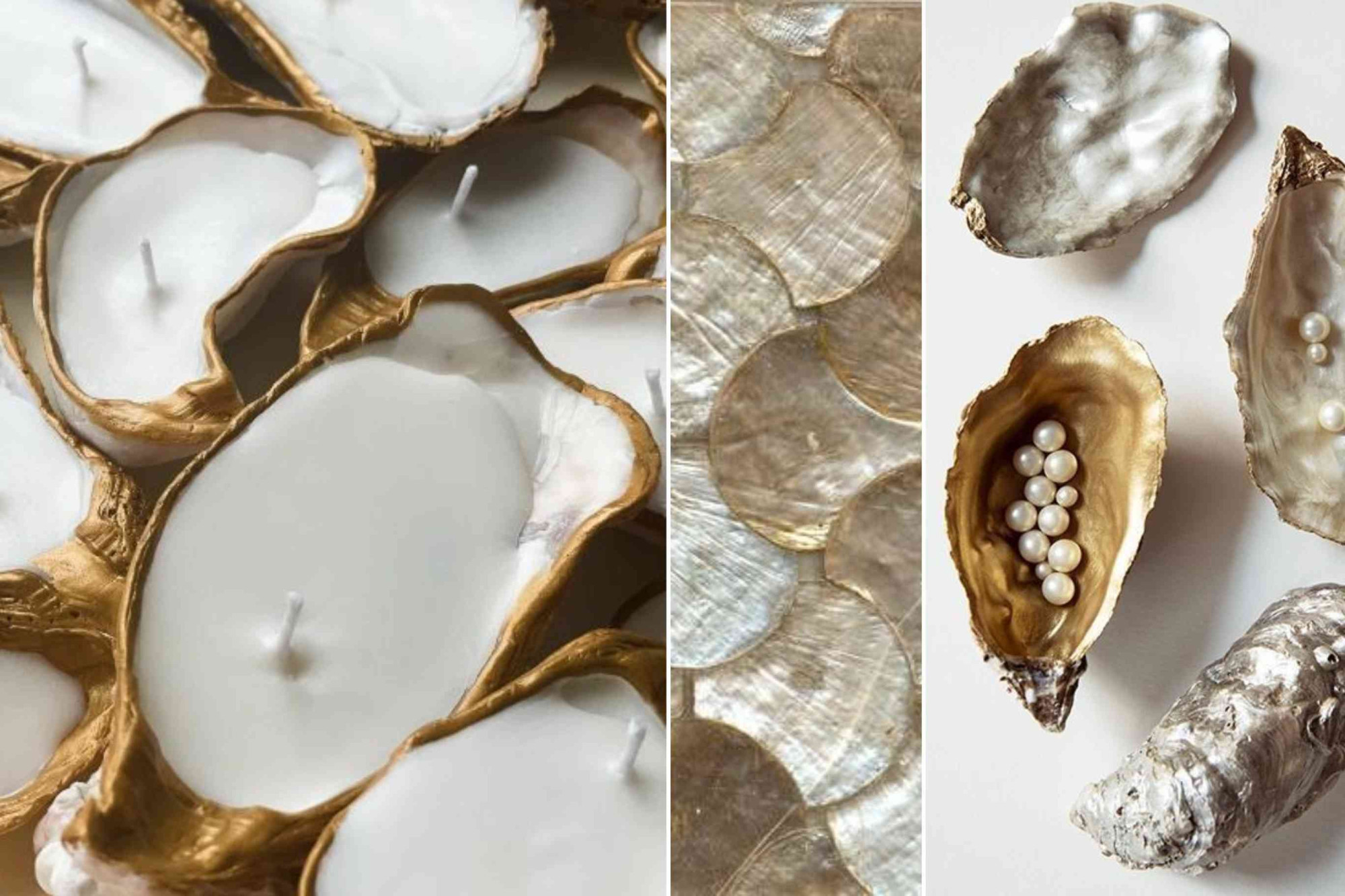
Small candles are one of the simplest possibilities. Once the shell has been thoroughly cleaned and dried, melted candle wax can be poured directly into the deeper half of the shell with a wick positioned in the centre. Because every oyster is different, each finished candle has its own shape.
The irregular edge can also be highlighted. A small amount of metallic paint applied around the rim brings attention to the natural outline without covering the pearly interior. Gold works particularly well with the warm tones already present in many oyster shells.
The shells can also become small decorative dishes. A painted interior can hold beads, jewellery or other tiny objects, while an untreated shell can simply be placed among books, ceramics and collected objects.
Mother-of-pearl shells can be used on a larger scale. Overlapping flat pieces creates a surface with subtle differences in colour and reflection, suitable for decorative panels, frames or smaller furniture details.
The key is not to cover every natural characteristic. The uneven surface, variations in colour and irregular edges are precisely what make the material interesting.
Reusing shells in this way also turns something associated with a particular meal or place into an object that can remain in the home afterwards.
Want to use shells beyond the interior?
Discover Seashells on the Summer Table →
#OysterShells #ShellDecor #HandmadeObjects #CoastalDesign #AtelierDuMonde
Home & Design @atelierdumonde
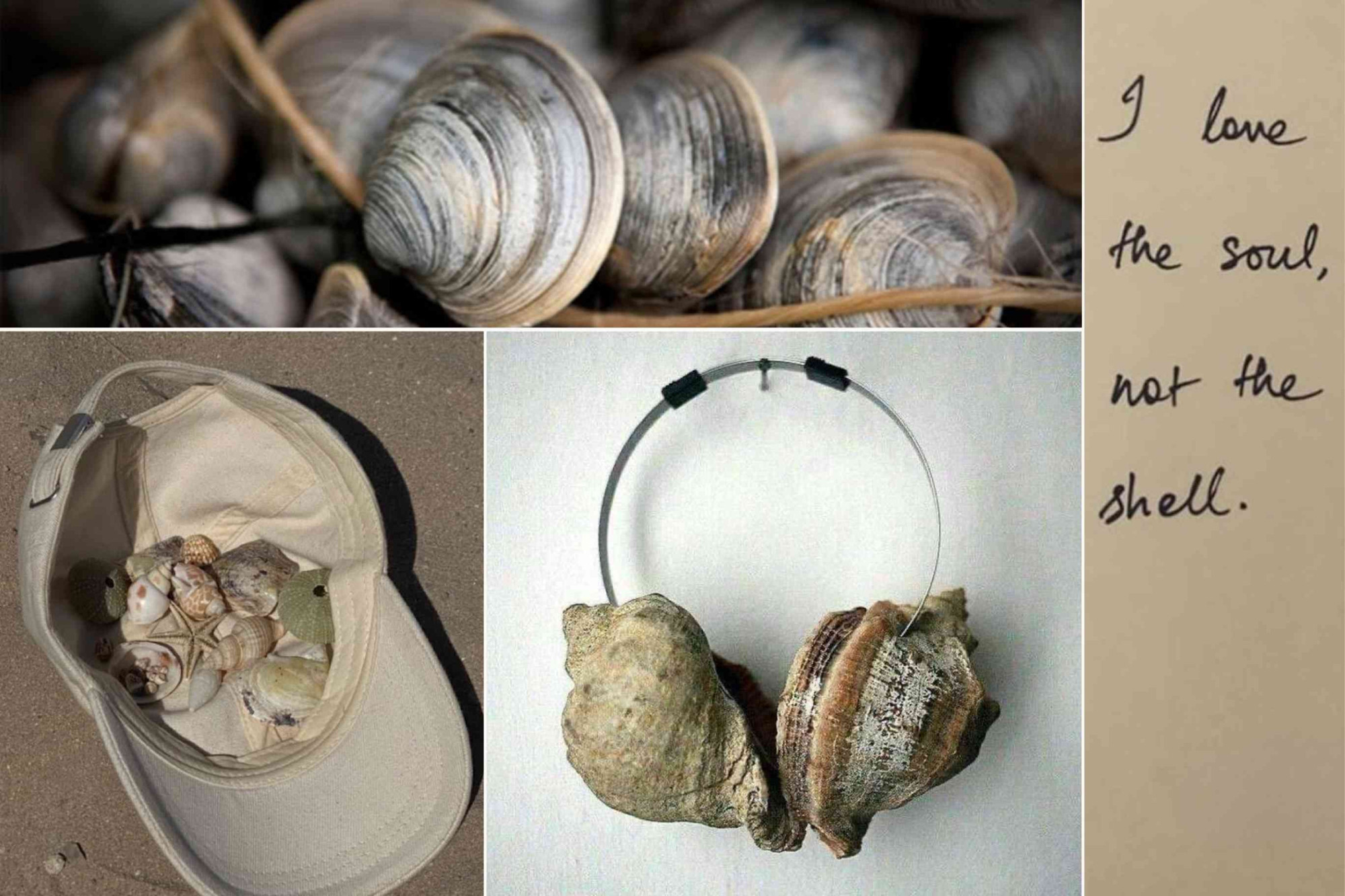
Shells do not have to remain decorative objects in the home. With a few simple additions, collected shells can also become accessories and details that can be worn.
A cap is an easy place to start. Small shells can be attached individually or grouped together on the front or side. Mixing different shapes with pieces of sea glass creates a less uniform result and makes use of smaller beach finds that might otherwise remain unused.
Larger shells can become statement pieces. Two shells attached to a simple headband create an unusual accessory with very little additional material. Their natural colour and texture already provide most of the visual effect, so the rest of the design can remain minimal.
Shells can also be used for smaller accessories. A single shell can become a pendant, while tiny shells can be added to bracelets, hair accessories or bag charms. Existing holes can sometimes be used for attaching them, avoiding unnecessary drilling.
Not every shell collected on the beach will be suitable. Stronger, intact pieces are better for wearable objects, while fragile shells can be kept for displays or other decorative projects.
There is also no need to make every piece permanent. Shells can be attached to ribbons, cords or removable elements so that accessories can be adapted or reused later.
Using shells in fashion is a simple way to bring natural materials into personal style and gives small coastal finds a purpose beyond traditional home decoration.
Want to bring shell accessories into your summer wardrobe?
Discover Shell Jewellery →
#ShellAccessories #CoastalStyle #FashionDetails #CreativeFashion #AtelierDuMonde
Home & Design @atelierdumonde
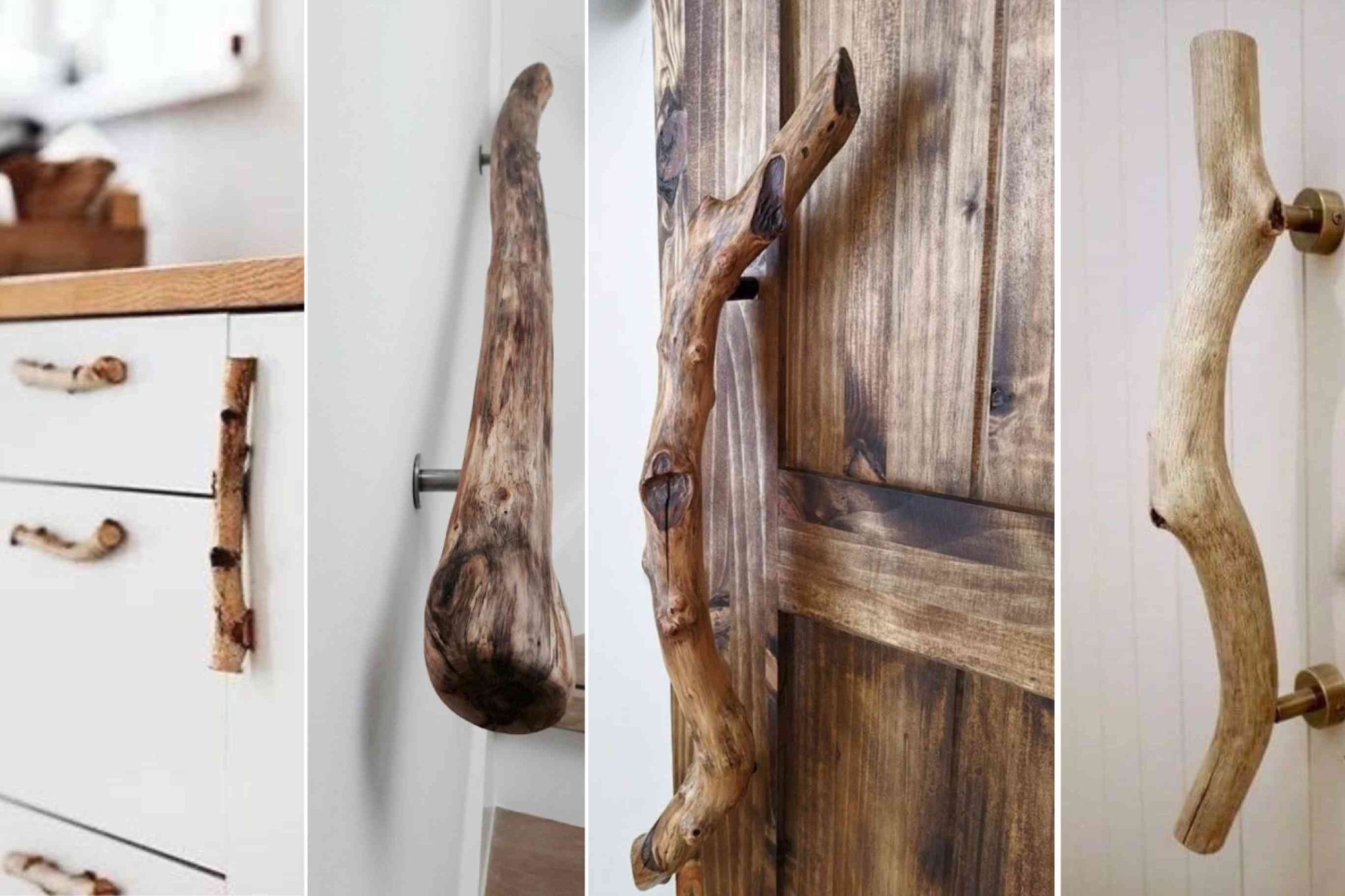
A simple branch can become a functional part of a piece of furniture. Its natural shape makes it particularly suitable for handles, pulls and larger grips, adding an individual detail without changing the entire piece.
Small sections of branch can replace conventional drawer handles. Straight pieces work well for longer pulls, while smaller curved sections can be mounted horizontally as individual handles. Removing loose bark and smoothing the areas that will be touched makes them more practical for everyday use.
Larger branches can be used on cupboards and doors. Their irregular form creates a handle that is noticeably different from a standard manufactured fitting. Keeping knots, bends and changes in thickness visible is part of the appeal.
The wood does not necessarily need to match the furniture. A natural branch can create contrast against a painted white cabinet, while darker or weathered wood works well with timber doors and more rustic surfaces.
Fixing also influences the finished result. Simple metal supports create a cleaner contemporary look and leave a small distance between the branch and the surface, making the handle easier to grip.
Before using found wood, it should be completely dry, cleaned and checked for loose or damaged sections. A light sanding is usually enough to smooth rough areas while retaining the original shape.
It is a small intervention, but one that can give an existing cabinet, drawer or door a completely different character without replacing the furniture itself.
Looking for another way to use branches in the home?
Discover Natural Wreaths →
#BranchHandles #FurnitureIdeas #NaturalMaterials #FurnitureDetails #AtelierDuMonde
Home & Design @atelierdumonde
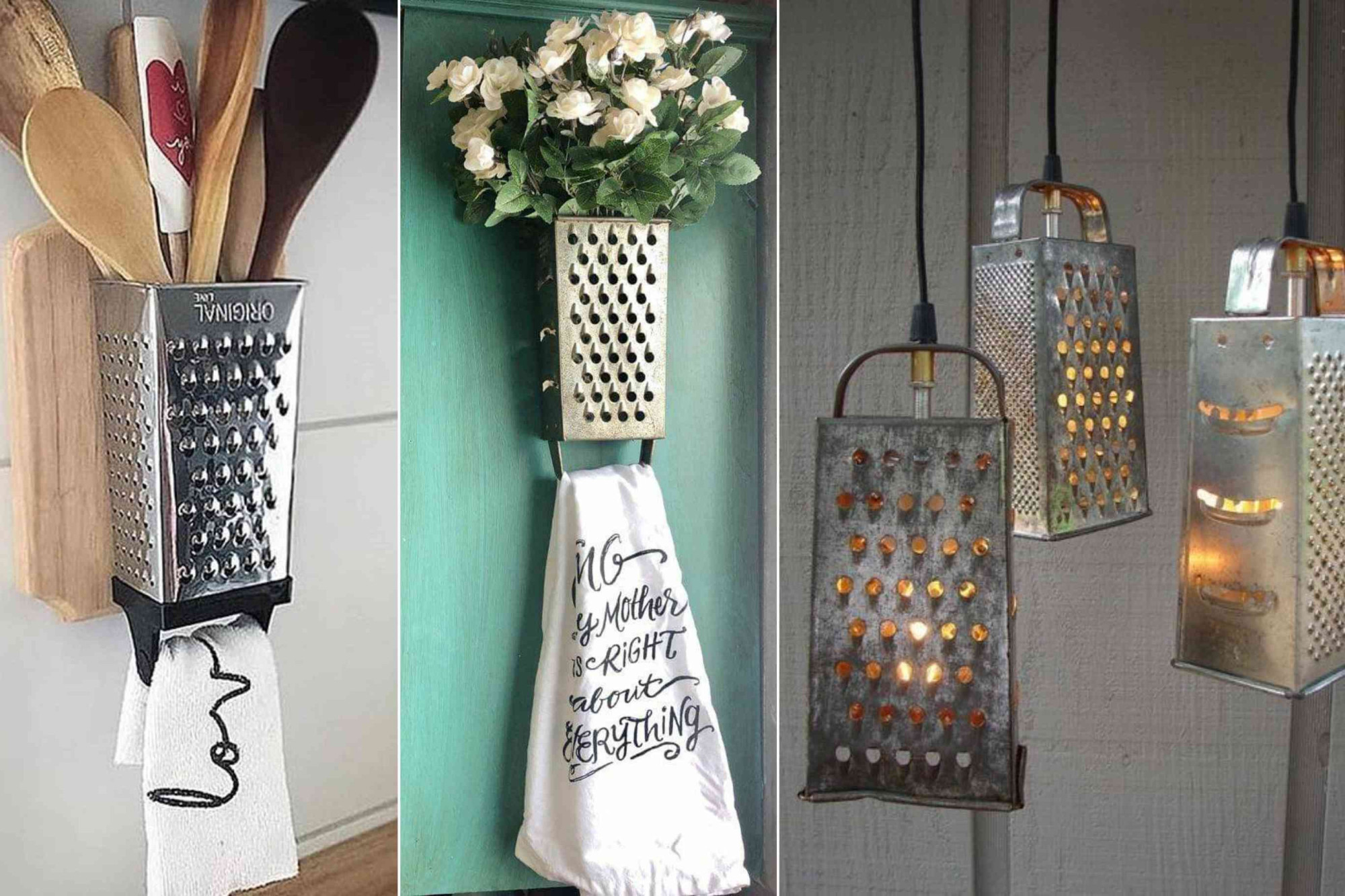
An everyday kitchen object can become surprisingly useful once it is taken out of its original context. An old box grater is a good example. Its shape, handle and perforated metal surface make it suitable for several simple projects around the home.
In the kitchen, a grater can become a compact utensil holder. Wooden spoons and other cooking tools fit inside the open top, while a small wooden box or base can provide extra support. The handle can remain accessible for hanging a tea towel or other lightweight textile.
Turned vertically against a wall, the same object can become a small holder for flowers. A glass or narrow container placed inside can hold water, allowing fresh stems to be arranged above the grater. The handle underneath provides a natural place for a towel.
The perforated metal also makes old graters interesting for lighting. When a light source is placed inside, the holes allow points of light to pass through the surface. Several graters with different patterns can be suspended together to create a group of simple pendant lights.
Older graters are particularly suited to this kind of reuse because signs of age can remain visible. Scratches, darker metal and small differences in finish give each piece its own appearance.
The object does not need much alteration either. Its original construction already provides a container, a handle and a patterned surface. The new function comes mainly from changing how and where it is used.
It is a practical example of how familiar household objects can be reconsidered instead of immediately being replaced or discarded.
Want to find more new uses for old objects?
Discover Giving Old Objects a New Purpose →
#CreativeReuse #UpcycledDesign #HomeIdeas #ObjectDesign #AtelierDuMonde
Home & Design @atelierdumonde
Wire can be shaped into practical storage without becoming visually heavy. Its open structure makes it particularly useful for small spaces where solid boxes, shelves or cabinets can quickly feel bulky.
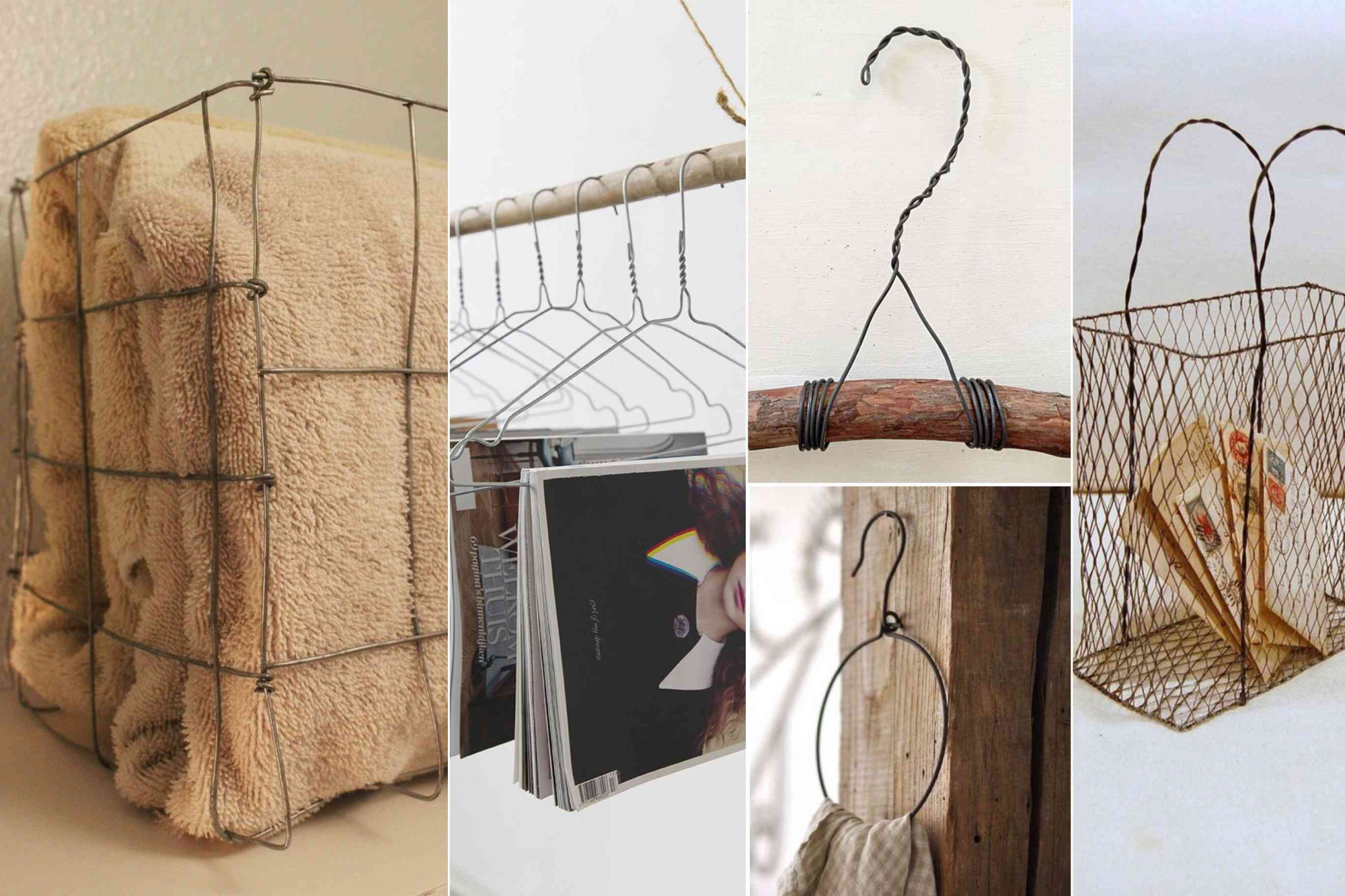
A simple wire basket can be made around the dimensions of what it needs to hold. Towels, magazines, textiles and everyday objects can remain visible while still having a designated place. Leaving the metal unfinished gives the basket a more utilitarian appearance, while painted wire can create a cleaner result.
Wire can also be combined with wood. A small handmade hook attached to a branch turns it into a clothes hanger, bringing together two very basic materials. The wire only needs to form the hook and secure the branch firmly enough to support lightweight clothing.
For magazines and papers, a deeper wire basket with handles can work as portable storage. It can sit beside a sofa or desk and be moved when necessary, rather than becoming a permanent piece of furniture.
Smaller wire forms can be mounted directly onto a wall. A loop or basket can hold towels, textiles or other lightweight objects while taking up very little space.
The material is particularly useful because it can be adapted. Height, width and shape can change according to the object or space, so storage does not always have to begin with buying a standard container.
These simple constructions also show that functional design can come from very little: a length of wire, a basic shape and a clear purpose.
Looking for more storage ideas made from simple materials?
Discover Handmade Bathroom Accessories →
#WireDesign #StorageIdeas #CreativeLiving #HomeOrganisation #AtelierDuMonde
Home & Design @atelierdumonde
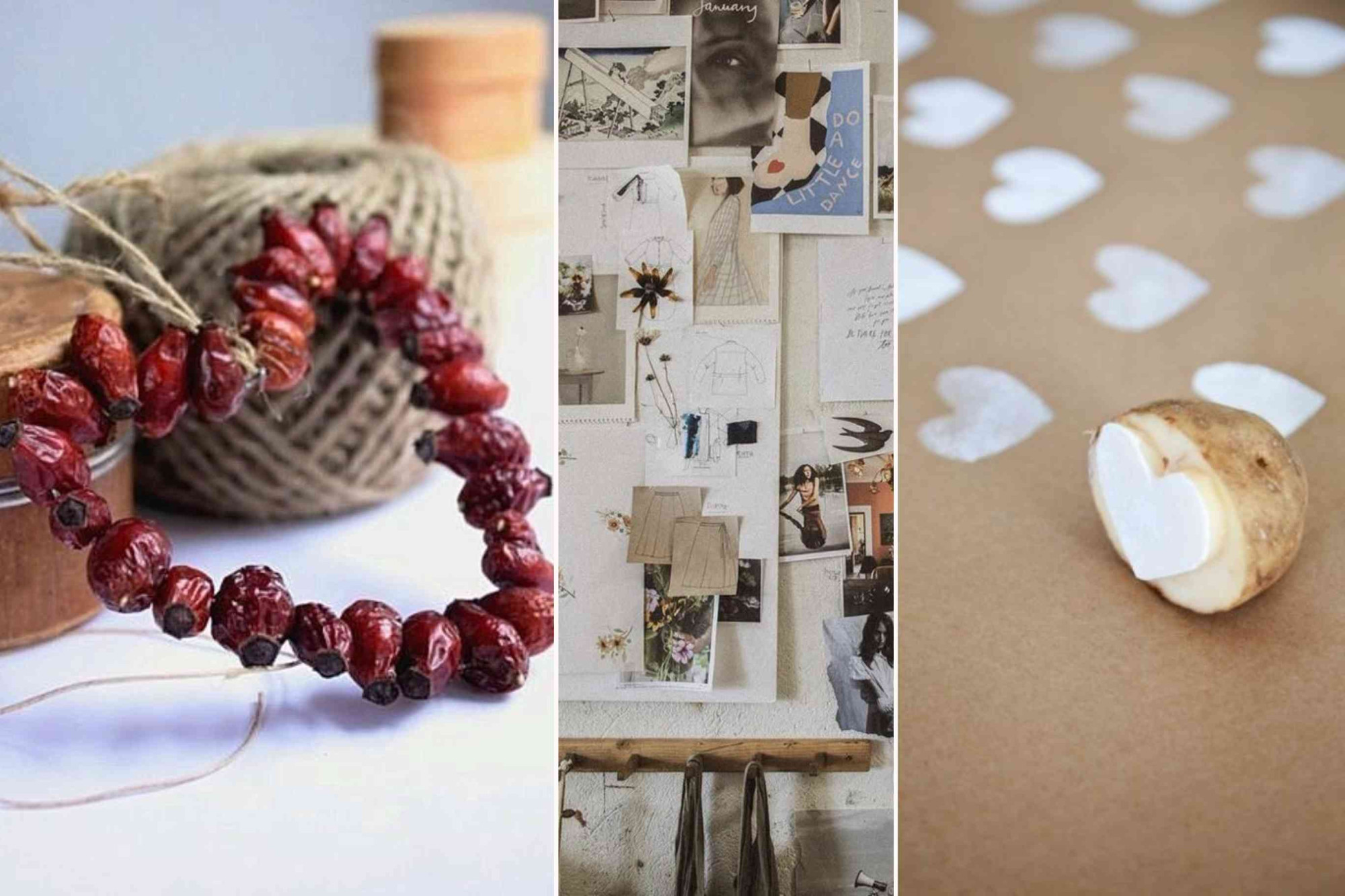
Printing a pattern does not always require specialist tools. Vegetables, leaves and other natural materials can be used as simple stamps to create repeating shapes on paper, cards, wrapping or fabric.
A potato is one of the easiest materials to work with. Cut it in half to create a flat surface, then carve a simple shape into the cut side. Hearts, circles, leaves and geometric forms work particularly well because they remain recognisable when repeated.
Apply a thin, even layer of paint to the raised shape and press it firmly onto the chosen surface. Testing the stamp on scrap paper first helps determine how much paint is needed and how much pressure produces the clearest print.
The placement of the stamps can completely change the result. Regular spacing creates a more structured pattern, while turning the stamp or varying the distance between impressions gives the design a less uniform appearance.
Other natural materials can be used in the same way. Leaves create detailed botanical prints, citrus fruits produce circular patterns and textured vegetables can leave less predictable marks.
The technique is useful for creating personalised wrapping paper, gift tags, cards, notebooks and simple textile projects. Several handmade stamps can also be combined to develop a larger pattern or colour palette.
Small experiments like these can become part of the design process itself. Samples, colour tests, photographs and material references can be collected on a mood board before deciding which patterns to develop further.
Want to use handmade prints for a celebration?
Discover Wedding & Party Favours →
#NaturalPrinting #PatternDesign #CreativeLiving #HandmadeDesign #AtelierDuMonde
Home & Design @atelierdumonde
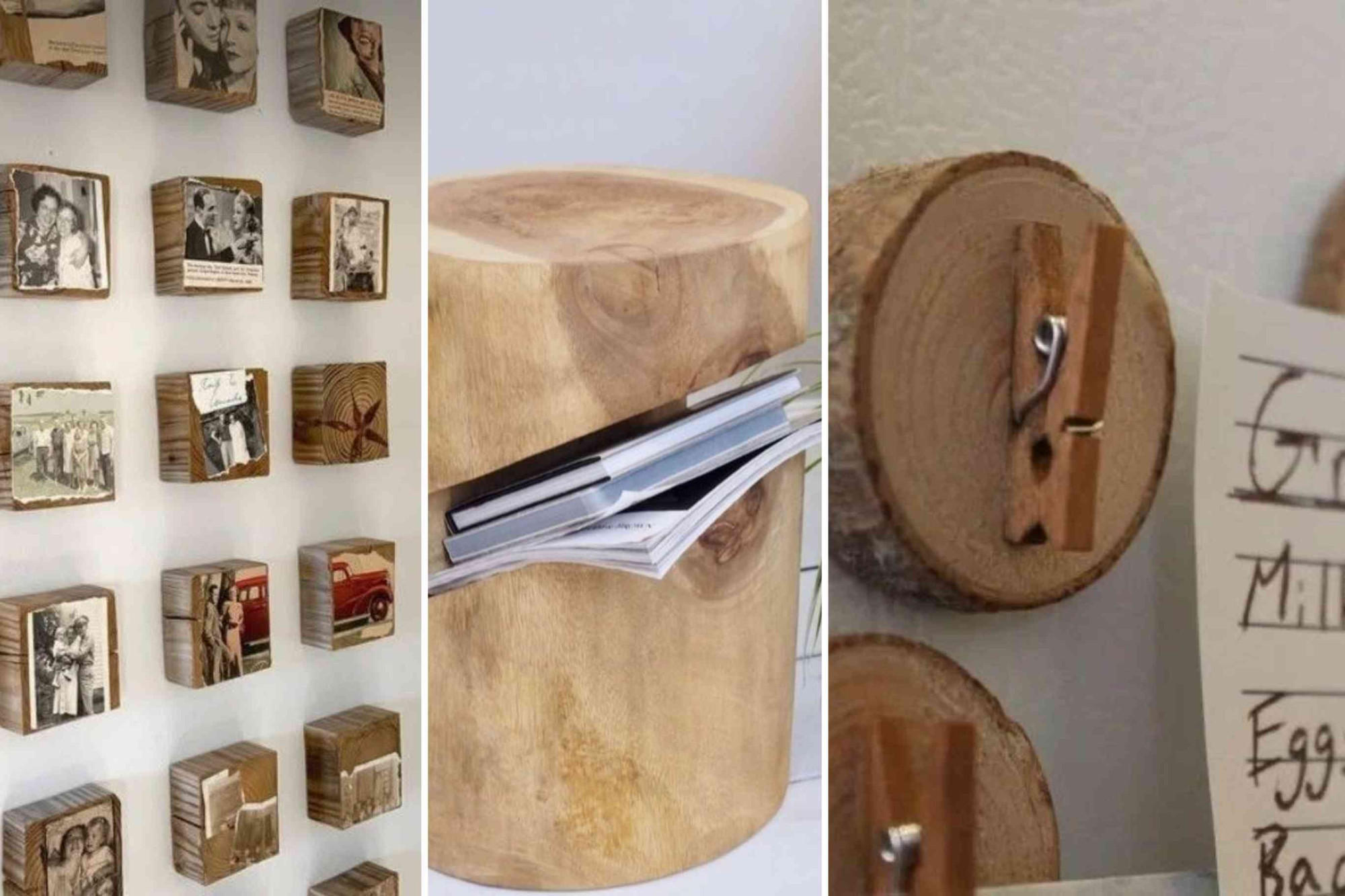
Small pieces of wood can provide an alternative to conventional photo frames. Their natural grain, irregular edges and different shapes make each display slightly different, while the photographs remain the main focus.
One option is to cut a branch into small blocks or thick slices. A photograph can be attached directly to the front, creating an individual piece that can be grouped with others on a wall. Using photographs in similar tones can bring some consistency to a larger collection.
Thicker sections of wood can also become freestanding photo holders. A narrow cut across the top is enough to hold a photograph, postcard or small print upright. These can be placed on a desk, shelf or bedside table and the image can easily be changed.
For an even simpler version, a small wooden slice can be fitted with a miniature peg. Photographs, notes, postcards or place cards can then be clipped into position instead of permanently attached.
The type of wood influences the finished object. Smooth pale timber creates a cleaner appearance, while bark, knots and visible growth rings introduce more texture. The surface can be sanded while leaving the outer edge relatively natural.
Different formats can also be combined. Wall-mounted blocks, freestanding holders and smaller clips can all use the same material while serving different purposes around the home.
It is a straightforward way to turn leftover branches and timber into useful objects while giving photographs and small memories a more individual presentation.
Like the character of natural materials beyond the interior?
Discover Natural Materials in Jewellery →
#PhotoDisplay #WoodIdeas #CreativeLiving #NaturalMaterials #AtelierDuMonde
Home & Design @atelierdumonde
Natural references in an interior do not have to come from plants alone. Wood, feathers, animal motifs and organic materials can introduce shapes and textures taken directly from the natural world.
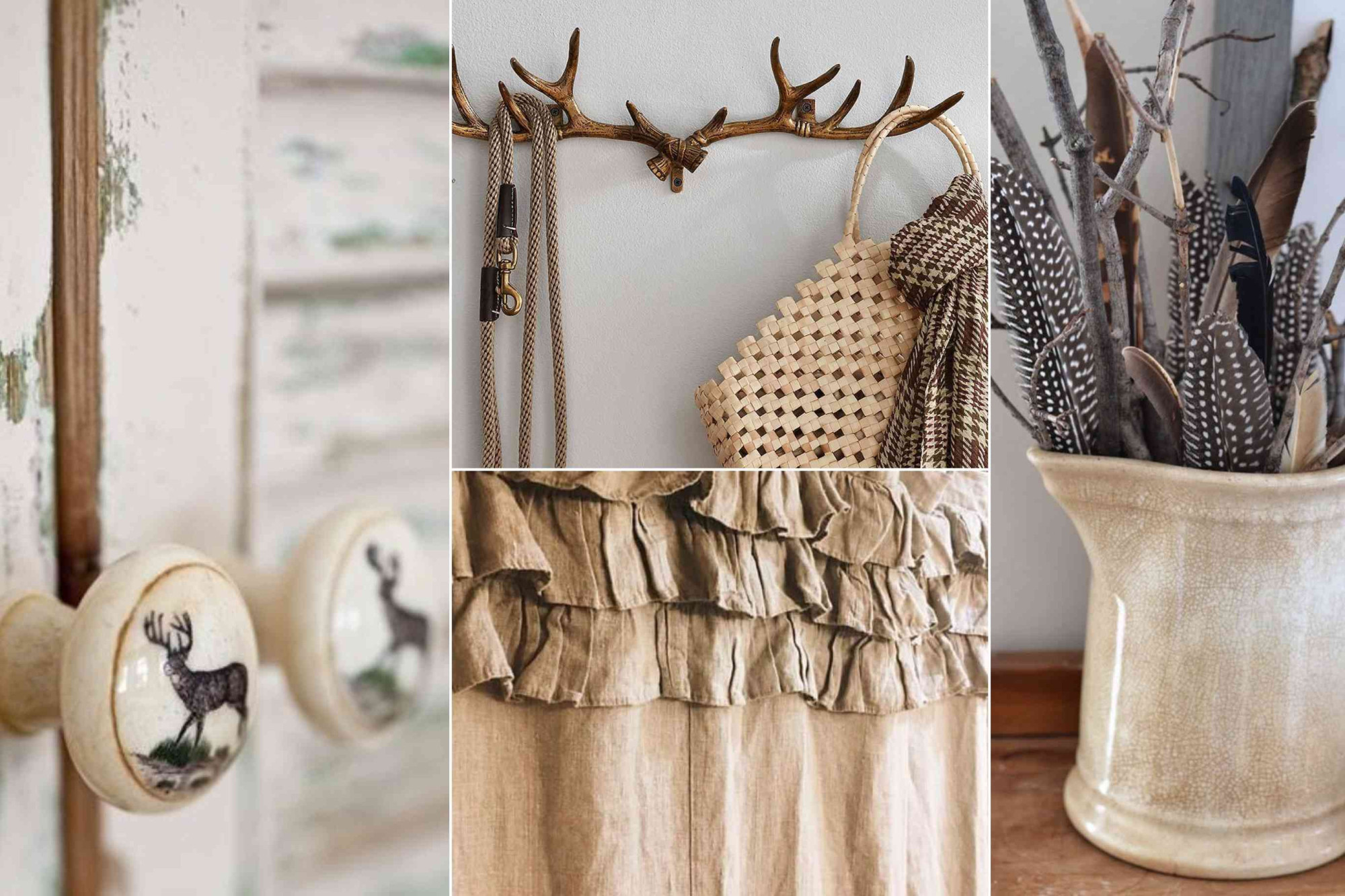
Furniture hardware is an easy place to add a small detail. Wooden knobs decorated with botanical or animal illustrations can change the appearance of a cupboard or drawer without replacing the furniture itself. Because the motif is contained within a small object, it remains subtle.
Antler-shaped hooks provide another functional example. Used in an entrance, bedroom or dressing area, they can hold bags, scarves, jewellery and accessories while also becoming part of the wall design. Similar forms can be found in carved wood, cast metal and other materials, so real antlers are not necessary to achieve the effect.
Textiles bring a softer interpretation. Linen, cotton and other natural fabrics introduce visible texture, particularly when details such as pleats, gathers and ruffles are left prominent. Neutral colours allow the structure of the fabric to become more noticeable.
Found natural objects can also be displayed rather than altered. Feathers collected responsibly can be grouped in a ceramic vessel, while branches, seed heads and dried grasses can be arranged in the same way.
The different elements do not need to follow a literal woodland theme. A single illustrated handle, textured textile or sculptural hook can be enough to establish the reference.
Used selectively, nature-inspired details can sit comfortably alongside contemporary furniture and simpler interiors, adding material variation without determining the style of the entire room.
Want to see how antler-inspired details work in alpine interiors?
Discover Antlers in Alpine Interiors →
#NatureInspired #InteriorDetails #NaturalMaterials #HomeDesign #AtelierDuMonde
Home & Design @atelierdumonde
Making Christmas More Personal
Christmas decoration becomes more individual when familiar objects and personal memories are included alongside traditional seasonal pieces. Photographs, ribbons, candles and decorations collected over time can make the festive setting feel connected to the people who live there.
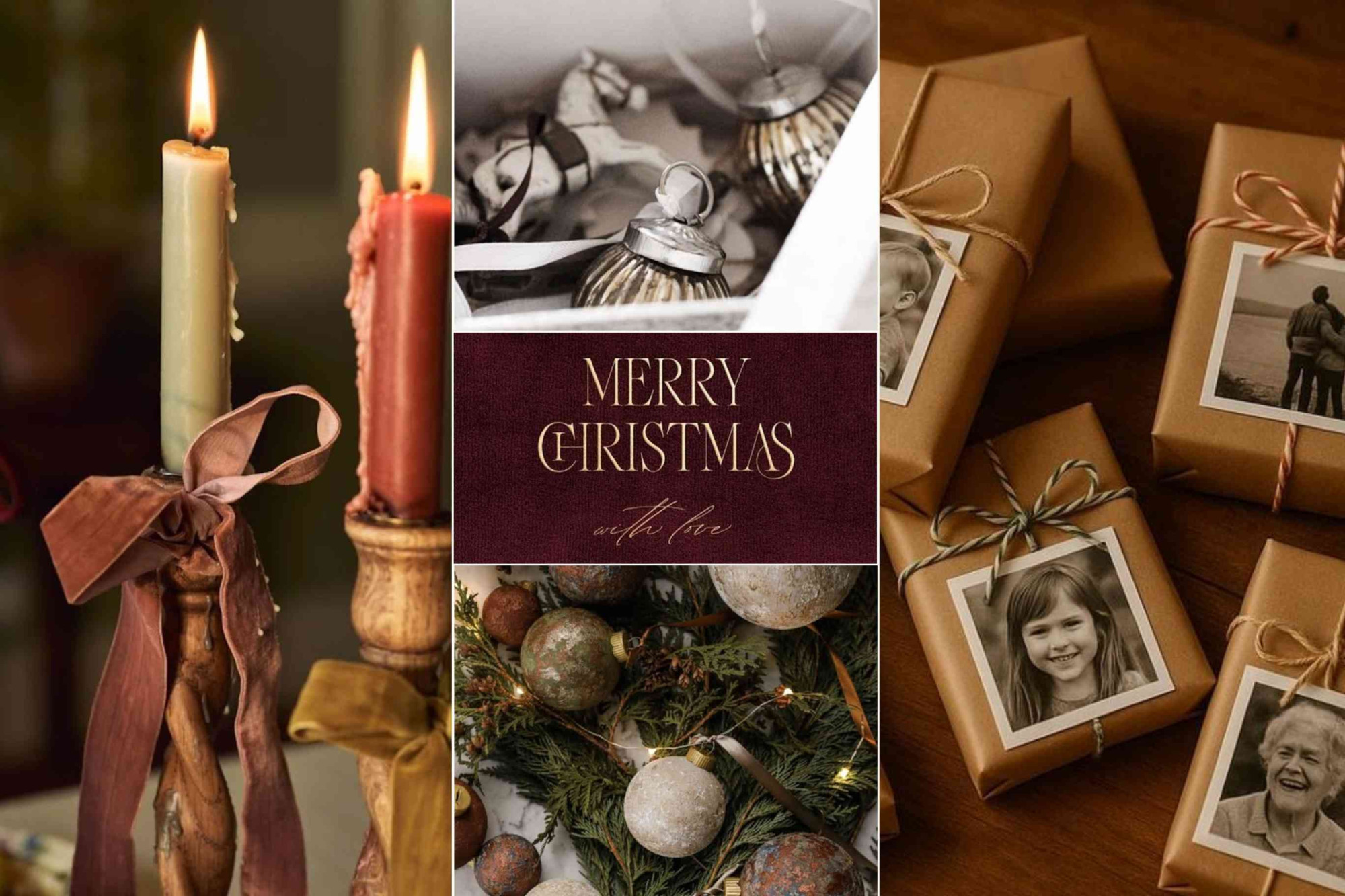
Gift wrapping is an easy place to introduce something personal. Instead of a standard name tag, a small printed photograph can identify the recipient. Black-and-white portraits work particularly well with simple brown paper and string, but recent colour photographs can be used just as easily.
The photograph then becomes part of the gift itself. Family portraits, childhood pictures, travel photographs or shared memories can all be selected according to the person receiving the present.
Ribbons can also change everyday Christmas decorations. A velvet or fabric bow tied around a candlestick adds colour and texture without requiring a new seasonal object. Deep red, faded pink, forest green and warm brown work particularly well with brass, wood and candlelight.
The Christmas tree can follow the same approach. Rather than replacing decorations every year, ornaments can be collected gradually. Vintage baubles, handmade pieces and decorations brought back from travels create a collection that becomes more personal over time.
Old decorations do not need to match. Differences in colour, finish and age can make the tree more interesting, particularly when they are balanced with simple greenery and warm lights.
Even photographs themselves can become Christmas decorations. Small prints can be attached to gifts, hung from branches or incorporated into place settings, connecting seasonal styling with memories from throughout the year.
A personal Christmas interior is therefore less about following one decorative theme and more about combining objects, materials and memories that have meaning within the home.
Want to make some of the decorations yourself?
Discover Natural Christmas Decorations →
#ChristmasStyling #ChristmasDecor #GiftWrapping #SeasonalDecor #AtelierDuMonde
Home & Design @atelierdumonde
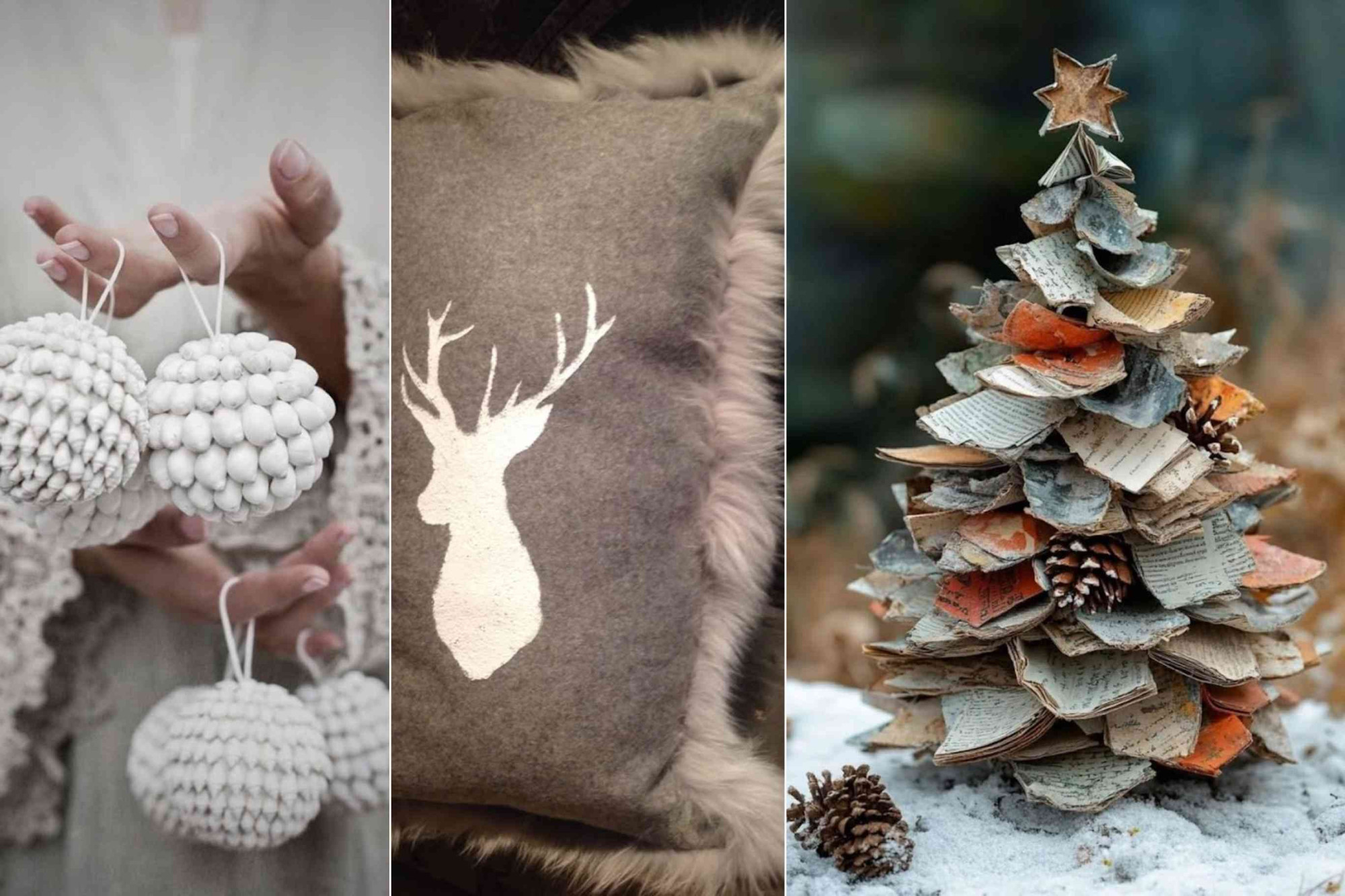
Christmas decorations can be made from materials already found around the home. Wool, fabric, old paper and natural finds provide simple alternatives to buying a completely new collection of decorations each year.
Wool is particularly suitable for tree ornaments. Small knitted or crocheted covers can be worked around lightweight balls to create textured decorations in white, cream or other colours. A simple loop of thread is enough to hang them from the tree.
Textiles can also be used to update existing pieces. A plain cushion becomes seasonal with a simple deer, tree or star motif. The shape can be added with fabric, felt or textile paint, so the cushion itself can continue to be used after winter by changing or removing the cover.
Old paper provides another useful material. Pages from damaged books, newspapers, sheet music or leftover craft paper can be cut into progressively smaller shapes and layered around a central stick to form a miniature Christmas tree.
The paper does not need to be perfectly cut or aligned. Slightly uneven edges give the tree more texture, while alternating different papers introduces subtle variations in colour and print.
Natural materials can be added at the end. Pine cones make useful bases and decorations, small branches can form the central structure and a wooden or cardboard star can finish the top.
These projects can also be adapted to what is already available. Leftover yarn can replace new wool, fabric remnants can become appliqués and paper that would otherwise be discarded can become part of a table or mantel display.
Making a few decorations rather than an entire coordinated collection allows handmade pieces to sit alongside existing ornaments and gradually become part of the family's Christmas collection.
What else can you make part of Christmas each year?
Discover Christmas Recipes We Return to Every Year →
#HandmadeChristmas #ChristmasDecor #CreativeLiving #ChristmasIdeas #AtelierDuMonde
Home & Design @atelierdumonde
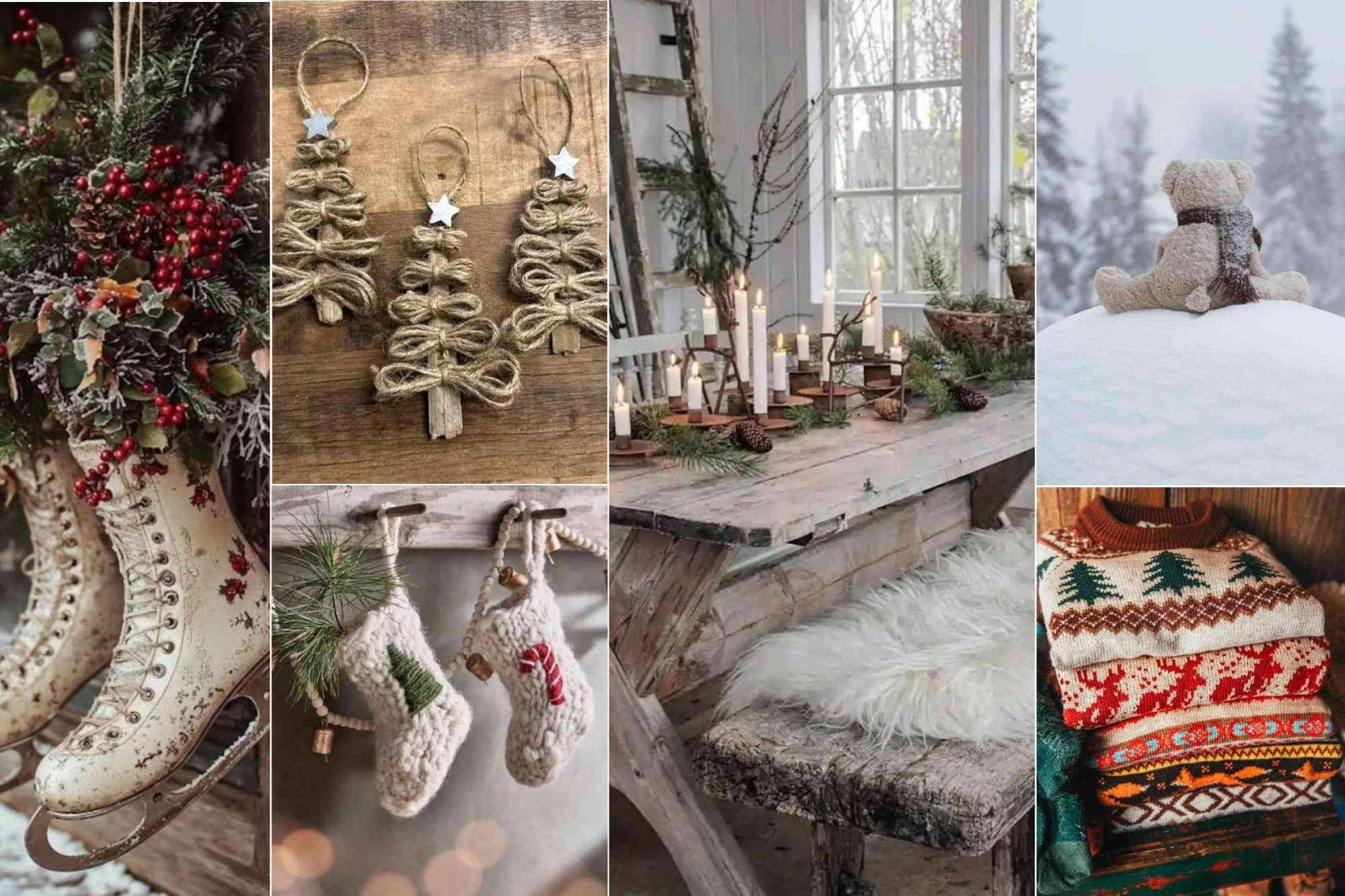
Winter interiors can feel seasonal without relying entirely on traditional Christmas decorations. Wood, wool, greenery and handmade details can create a setting that works throughout the colder months.
Natural greenery is an easy starting point. Pine branches, eucalyptus, berries and small twigs can be arranged on tables, shelves and around existing objects. Combined with candles and pine cones, they introduce winter colour without requiring a large centrepiece.
Wood can be used for simple handmade decorations. Small branches wrapped with jute or thick string can become miniature trees, while stars or other small ornaments provide a finishing detail. Because the construction is simple, several can be made in different sizes and grouped together.
Knitted pieces bring another texture into the interior. Small stockings and ornaments can be made from leftover wool, while cushions, blankets and sheepskin add the same material quality on a larger scale.
Existing winter objects can also become part of the decoration. Vintage ice skates filled with greenery and berries create an unusual seasonal display, while old baskets, wooden boxes and ceramic pots can hold branches or firewood.
The same approach can continue beyond Christmas. Removing the more festive details while keeping wool, wood, greenery and candles allows the interior to move naturally into January and February.
Winter styling does not therefore have to be limited to a few weeks in December. Choosing materials associated with warmth and the outdoors creates a seasonal interior that can remain in place throughout winter.
Looking for winter inspiration beyond interiors?
Discover Oversized Hoods in Winter Fashion →
#WinterInteriors #WinterDecor #NaturalMaterials #SeasonalStyling #AtelierDuMonde
Home & Design @atelierdumonde
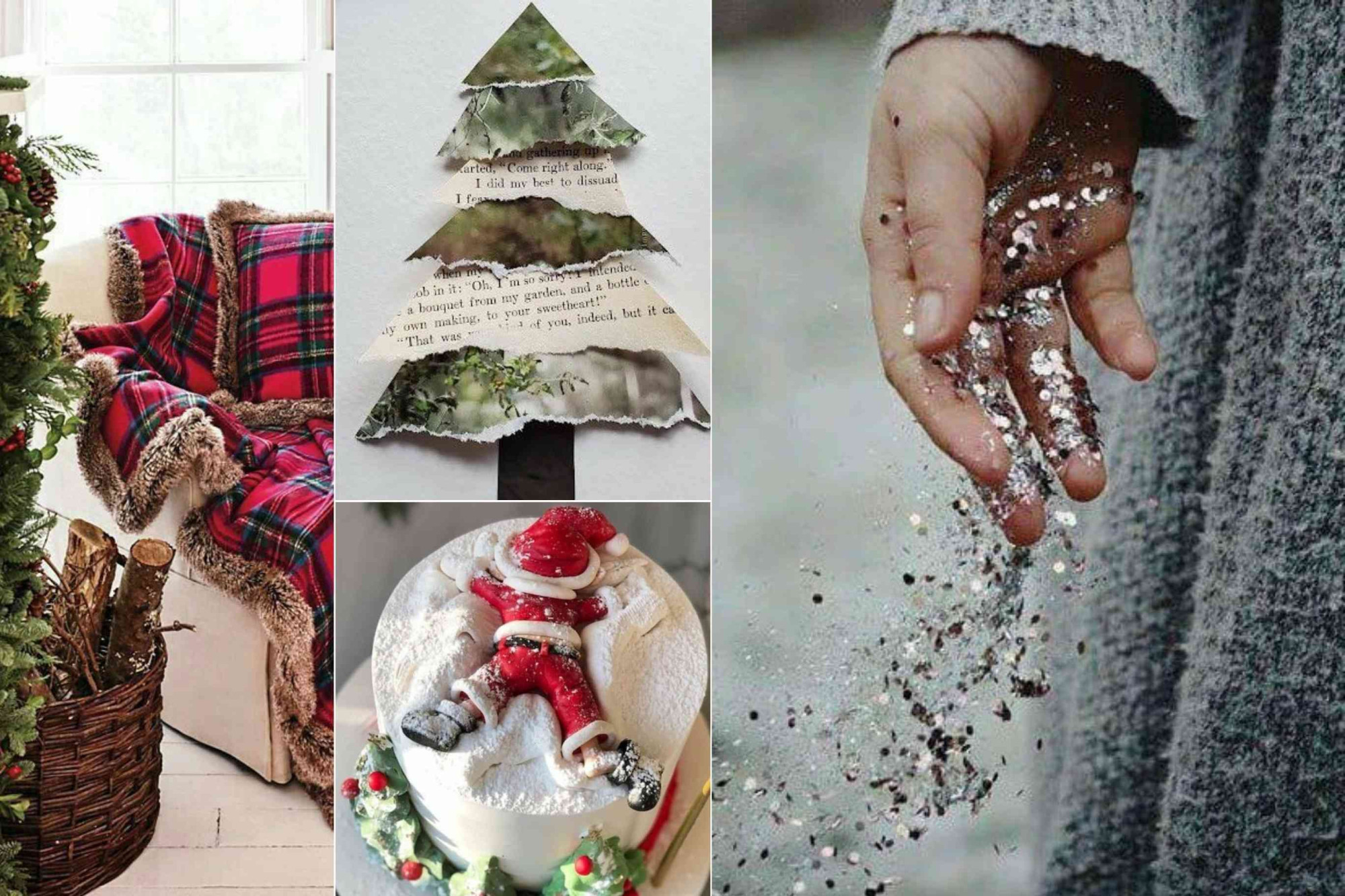
Tartan is strongly associated with Christmas, but it does not have to disappear when the decorations come down. Used through textiles rather than permanent furnishings, the pattern can bring colour and warmth to an interior throughout winter.
A blanket is one of the easiest ways to introduce it. Red and green tartans immediately create a festive atmosphere in December, while darker checks in brown, navy, forest green or burgundy can remain in the room well into January and February.
Tartan also works particularly well with natural materials. Wool blankets can be combined with wood, wicker baskets, greenery and neutral upholstery. The contrast between the strong pattern and simpler materials prevents the room from becoming overly themed.
Different scales of pattern can be used selectively. A large checked blanket may be enough for a sofa, while a smaller tartan cushion or fabric detail can introduce the same colours elsewhere in the room.
There is also no need for everything to match. Vintage tartans, different checks and plain wool textiles can sit together, particularly when they share one or two colours.
During Christmas, greenery, berries and festive decorations can strengthen the seasonal character. Afterwards, removing those elements leaves the textiles themselves, creating a warmer winter interior without an obvious Christmas theme.
This makes tartan useful as a transition between festive decorating and everyday winter living rather than something reserved only for December.
Looking for another way to adapt Christmas decoration?
Discover Alternative Christmas Trees →
#Tartan #WinterInteriors #TextileDesign #WinterStyle #AtelierDuMonde
Home & Design @atelierdumonde
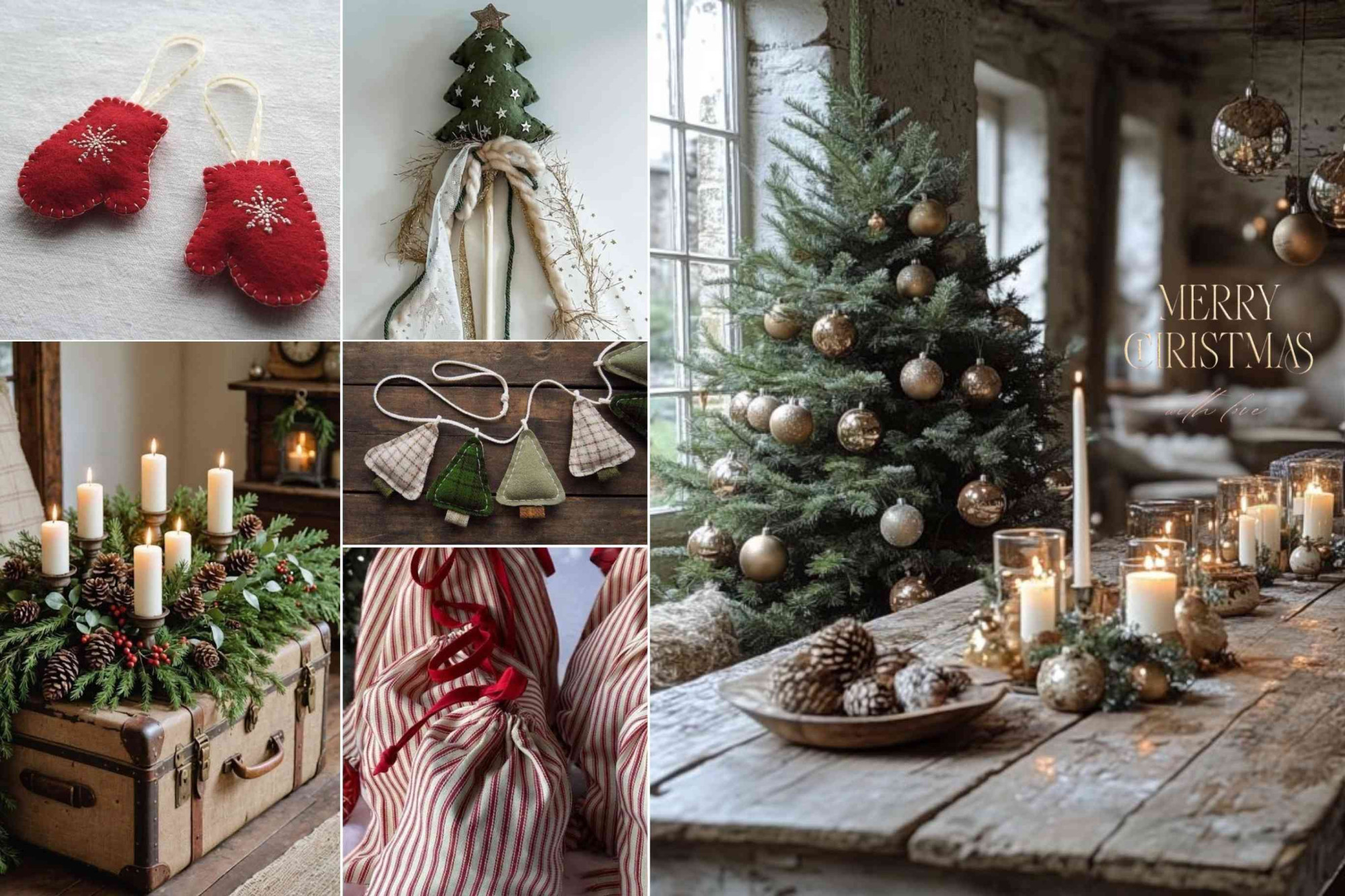
Christmas decorations do not have to begin with a new collection of ornaments. Fabric remnants, greenery, candles and objects already in the home can be combined to create decorations that feel personal and can return year after year.
Small textile ornaments are an easy place to start. Mittens, trees, stars and other simple shapes can be cut from felt, wool or leftover fabric. Two matching pieces can be stitched together, lightly filled and finished with a loop for hanging. Contrasting thread or a small embroidered detail is enough to make each piece individual.
Fabric can also be used for miniature Christmas trees. Different colours and patterns work well together, particularly when using remnants from previous sewing projects. Small padded trees can become ornaments, gift decorations or part of a table setting.
For a larger wall decoration, a tree shape can be cut from fabric or felt and combined with ribbons, dried grasses or branches. This works particularly well where there is not enough space for another freestanding decoration.
Existing objects can become part of the Christmas setting too. An old suitcase or wooden chest can provide a base for candles, pine branches, berries and pine cones. It creates height while giving an object already in the room a temporary seasonal function.
The dining table can follow the same principle. Greenery laid loosely along the centre, combined with candles, pine cones and a limited number of ornaments, is enough to create a festive setting without covering the entire table.
Even gift wrapping can use materials already available. Fabric strips can replace ribbon and small handmade ornaments can be attached to presents, becoming an additional gift rather than disposable decoration.
The result is a Christmas interior built gradually from textiles, natural materials and familiar objects, with handmade pieces that can be kept and used again the following winter.
Want to use more natural greenery throughout winter?
Discover Seasonal Greenery →
#HandmadeChristmas #ChristmasDecor #ChristmasCrafts #SeasonalStyling #AtelierDuMonde
Home & Design @atelierdumonde
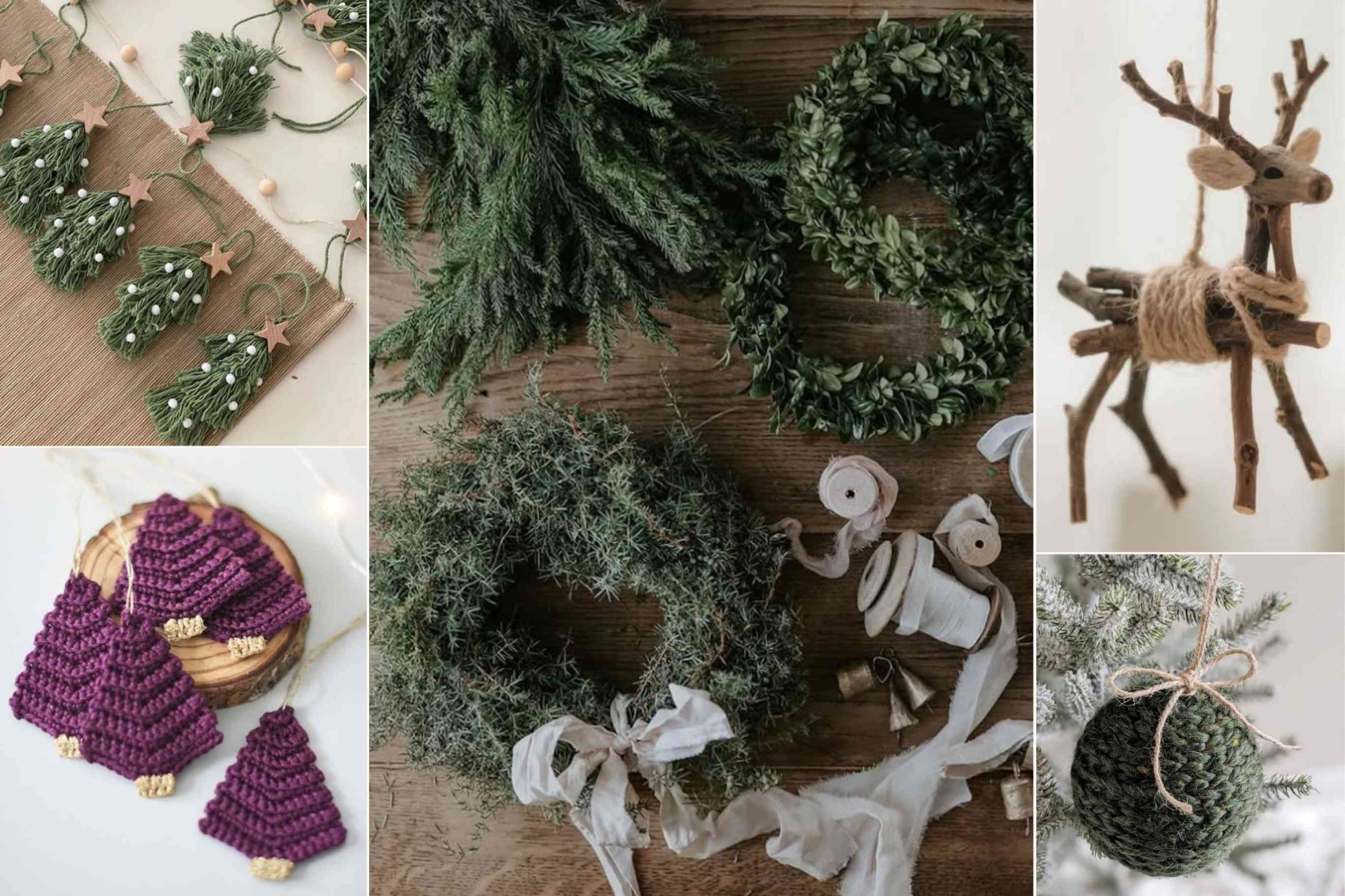
Branches, evergreen cuttings and a few basic craft materials are enough to make many Christmas decorations at home. The same materials can be used in different ways, from small tree ornaments to larger wreaths for doors and walls.
Evergreen branches are particularly versatile. Small pieces can be tied together to form miniature Christmas trees. A few wooden beads, small stars or simple white decorations can be added, while a loop of string turns them into ornaments for the tree or gift tags.
For larger decorations, fresh greenery can be formed into wreaths. Fir, pine, eucalyptus, boxwood and other winter foliage can be attached to a circular base with thin wire. Using one type of greenery creates a more uniform wreath, while combining several varieties introduces differences in colour and texture.
There is no need to fill every wreath with additional decoration. A ribbon tied loosely at the bottom can be enough. Natural linen, cotton and velvet work particularly well against the greenery and can easily be changed from year to year.
Small branches can also be used to make figures. Short twigs tied together with jute or string can form a simple reindeer, while tiny pieces of wood or felt can be added for ears and antlers. Because the branches are naturally irregular, each figure will look slightly different.
Yarn provides another option for smaller ornaments. Crocheted or knitted trees and baubles can be made from leftover wool, allowing colours from existing textiles or Christmas decorations to be repeated elsewhere in the room.
Even a plain Christmas bauble can be given a different appearance by covering it with crochet, wool or textured yarn and finishing it with a simple piece of string.
Using a limited selection of materials across several projects helps connect the decorations without making everything identical. Greenery, branches, wool, wood and natural string can appear in different forms throughout the home.
Looking for another way to decorate with branches and greenery?
Discover Alternative Christmas Trees →
#NaturalChristmas #HandmadeChristmas #ChristmasCrafts #NaturalDecor #AtelierDuMonde
Home & Design @atelierdumonde
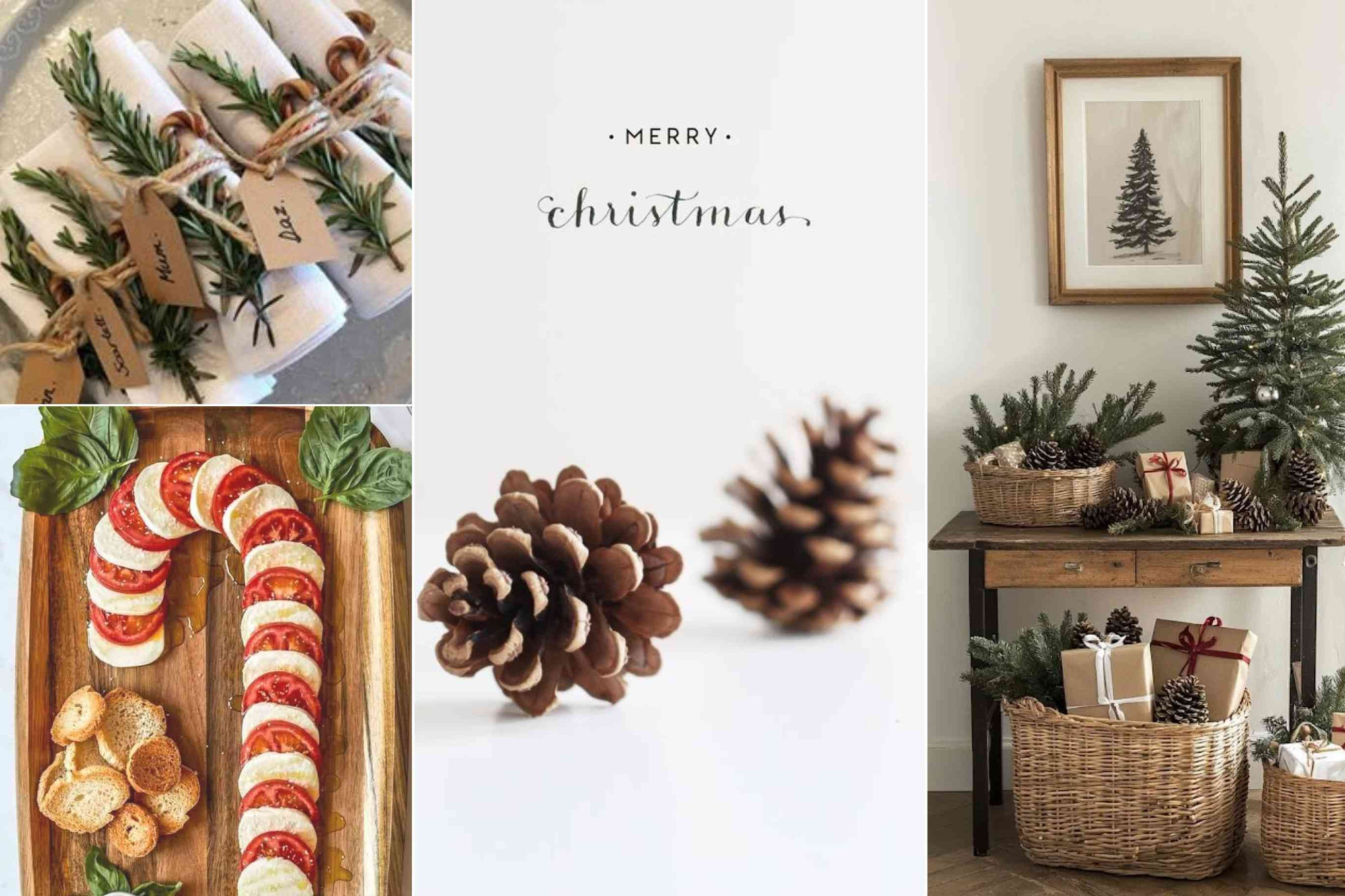
A Christmas table does not need elaborate decorations to feel festive. Greenery, natural materials and a few seasonal details can turn everyday tableware into a setting that works for lunch, dinner or Christmas morning.
Napkins are an easy place to start. Roll or fold each one and tie it with natural string, then add a small sprig of rosemary, fir or another evergreen. A handwritten kraft-paper name tag can turn the same detail into a simple place card.
Greenery can be repeated elsewhere on the table. Small branches laid between plates and serving dishes create a connection between the individual settings without requiring a large floral centrepiece.
Pine cones are useful for filling the spaces between candles, serving plates and tableware. They can be left completely natural and collected in different sizes. A few placed together are usually enough.
Food can also become part of the presentation. A simple candy-cane shape made from alternating slices of tomato and mozzarella, finished with fresh basil, turns a familiar combination into something suited to the occasion without requiring a complicated recipe.
Away from the dining table, the same materials can continue through the room. Baskets filled with pine branches and pine cones can sit beside a console or entrance table, while a small tree and wrapped presents complete the setting.
Keeping the palette limited to green, natural brown, white and a small amount of red makes it easy to combine decorations with tableware and objects already in the home.
The advantage of this approach is that most elements have another use. Rosemary can return to the kitchen, baskets remain part of the interior and natural greenery can be replaced or removed after the festive period.
Want to take your winter table outdoors?
Discover Winter Dining Outdoors →
#ChristmasTable #ChristmasStyling #TableSetting #NaturalChristmas #AtelierDuMonde
Home & Design @atelierdumonde
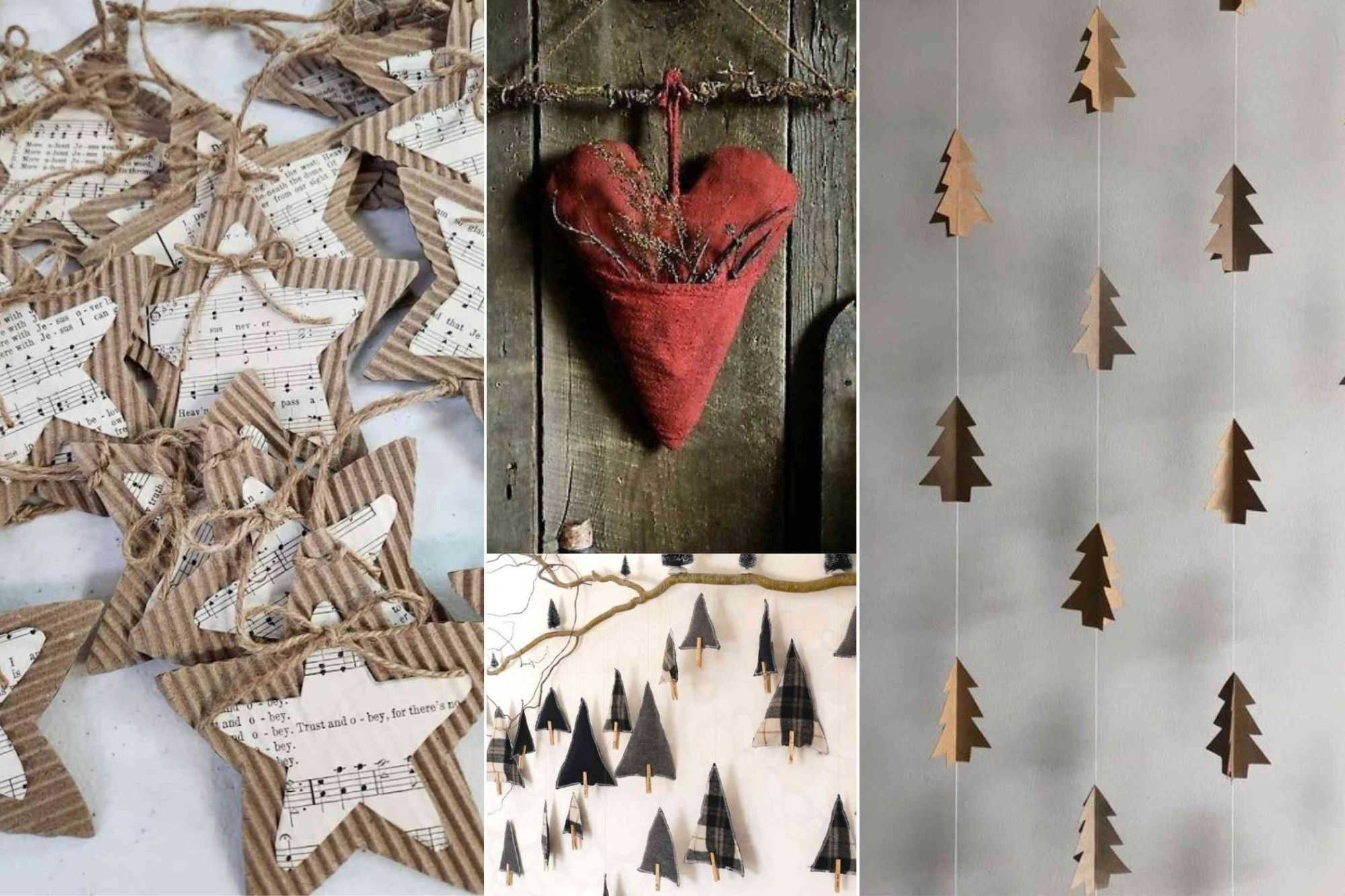
Paper is one of the simplest materials for making Christmas decorations at home. Old book pages, sheet music, kraft paper and leftover cardboard can all be turned into ornaments, garlands and small decorations without requiring specialist materials.
Stars are a good place to start. Cut the same star shape from two different papers, such as corrugated cardboard and an old book page, then layer the smaller piece over the larger one. A button, wooden bead or knot of string can be added in the centre before attaching a loop for hanging.
Old sheet music works particularly well because the printed notes become part of the pattern. Book pages, maps and other printed papers can be used in exactly the same way, giving each ornament a slightly different appearance.
Christmas trees are even simpler to make. Fold a piece of paper in half, draw half a tree along the fold and cut it out. Several trees can then be attached vertically to a length of thread to create a hanging garland.
Different papers can be mixed within the same decoration. Kraft paper, black paper, book pages and patterned scraps create variation while keeping the shapes consistent. This works particularly well for a group of small trees displayed against a wall or window.
Paper ornaments are also useful for gift wrapping. A small star or tree can be tied onto a parcel instead of a conventional gift tag and later hung on the Christmas tree.
For a softer handmade element, paper can be combined with fabric. A simple stuffed heart made from leftover textile can sit alongside paper stars and trees, connecting different materials without requiring every decoration to match.
Because these pieces are lightweight, they can be hung from branches, windows, doors, gifts and Christmas trees, making a small amount of paper useful throughout the home.
Looking for more ways to add small seasonal details to your interior?
Discover Decorative Details →
#PaperChristmas #HandmadeChristmas #PaperCrafts #ChristmasDecor #AtelierDuMonde
Home & Design @atelierdumonde
Old sheet music can become a decorative material in its own right. The printed notes create an instant pattern, making the paper suitable for Christmas trees, candle holders, ornaments and gift details.
Small standing trees are relatively easy to make. Cut several increasingly smaller layers from sheet music and place them around a thin wooden stick. A small wood slice can be used as the base, while a paper or wooden star finishes the top. Several trees at different heights can create a simple table or window display.
Glass jars provide another option. Wrap a strip of sheet music around the outside and secure it with glue or string. Small cut-out shapes, such as hearts or stars, allow candlelight to show through the paper when a tealight is placed inside.
For tree ornaments, sheet music can be cut into circles and placed inside simple metal or cardboard rings. A piece of twine or ribbon at the top is enough to turn them into lightweight decorations for branches or the Christmas tree.
The paper can also be used for wrapping. Books or small gifts wrapped in plain paper can be finished with strips of sheet music, natural string, greenery or dried berries.
There is no need to use valuable or complete music books. Damaged pages, photocopies of music in the public domain or sheets that would otherwise be discarded are better choices for cutting and crafting.
Using the same paper for several different objects also creates continuity. A few sheet-music trees, candle holders and ornaments can appear throughout a room without requiring a complete matching Christmas collection.
Christmas Stay Inspiration | The Bath Priory, England
Spend Christmas in the historic city of Bath with a stay at The Bath Priory. Traditional festive dining, live music and elegant country-house surroundings make it an appealing choice for a classic English Christmas. The city’s historic streets and seasonal celebrations add to the experience.
→ Explore The Bath Priory with Les Couleurs du Monde Travel
#SheetMusicDecor #ChristmasIdeas #HandmadeChristmas #PaperCrafts #AtelierDuMonde
![<p class="PDq2pG_selectionAnchorContainer" data-start="64" data-end="270"><strong data-start="64" data-end="134">Old sheet music can become a decorative material in its own right.</strong> The printed notes create an instant pattern, making the paper suitable for Christmas trees, candle holders, ornaments and gift details.</p>
<p data-start="272" data-end="592">Small standing trees are relatively easy to make. Cut several increasingly smaller layers from sheet music and place them around a thin wooden stick. A small wood slice can be used as the base, while a paper or wooden star finishes the top. Several trees at different heights can create a simple table or window display.</p>
<p data-start="594" data-end="835">Glass jars provide another option. Wrap a strip of sheet music around the outside and secure it with glue or string. Small cut-out shapes, such as hearts or stars, allow candlelight to show through the paper when a tealight is placed inside.</p>
<p data-start="837" data-end="1069">For tree ornaments, sheet music can be cut into circles and placed inside simple metal or cardboard rings. A piece of twine or ribbon at the top is enough to turn them into lightweight decorations for branches or the Christmas tree.</p>
<p data-start="1071" data-end="1242">The paper can also be used for wrapping. Books or small gifts wrapped in plain paper can be finished with strips of sheet music, natural string, greenery or dried berries.</p>
<p data-start="1244" data-end="1447">There is no need to use valuable or complete music books. Damaged pages, photocopies of music in the public domain or sheets that would otherwise be discarded are better choices for cutting and crafting.</p>
<p data-start="1449" data-end="1667">Using the same paper for several different objects also creates continuity. A few sheet-music trees, candle holders and ornaments can appear throughout a room without requiring a complete matching Christmas collection.</p>
<p data-pm-slice="1 1 []"><strong>Christmas Stay Inspiration | The Bath Priory, England</strong></p>
<p>Spend Christmas in the historic city of Bath with a stay at The Bath Priory. Traditional festive dining, live music and elegant country-house surroundings make it an appealing choice for a classic English Christmas. The city’s historic streets and seasonal celebrations add to the experience.</p>
<p>→ <a href="https://travel.lescouleursdumonde.com/hotels/lp656fb41c?source=hotels&amp;placeId=ChIJxSy0uEiBcUgRBWDUuWOJVsE">Explore The Bath Priory with Les Couleurs du Monde Travel</a></p>
<p data-start="1449" data-end="1667">#SheetMusicDecor #ChristmasIdeas #HandmadeChristmas #PaperCrafts #AtelierDuMonde</p>](https://lescouleursdumonde.com/files/storage/1514/773692c617ae56141764516218kb04r1akibltfgudkg5t.jpg)
Home & Design @atelierdumonde
Cinnamon sticks can be used for much more than seasonal cooking. Their warm colour, natural texture and familiar scent make them a useful material for simple Christmas decorations that can be made without complicated techniques.
A small bundle is the easiest place to start. Group several cinnamon sticks together and tie them with jute or natural string. Add a loop at the top and the bundle can be hung from a Christmas tree, branch or garland. A small sprig of greenery can be tucked underneath the string for extra colour.
Cinnamon sticks can also be arranged into stars. Five or six sticks can be crossed into a simple star shape and secured where they meet with string or thin wire. Leaving the construction visible suits the natural character of the material.
For candles, shorter cinnamon sticks can be placed vertically around a glass candle holder. Wrap string several times around the outside to keep everything together and finish with a simple knot or bow. Using a glass container between the flame and cinnamon keeps the natural material away from direct contact with the flame.
Small figures are another possibility. Cinnamon sticks can form the body of a reindeer, with twigs for legs and antlers, string for details and a small bead or other lightweight element for the nose. Because the materials are irregular, the finished figures do not need to look identical.
Cinnamon also combines easily with other winter materials. Pine branches, dried orange, pine cones, wooden beads and natural twine all work with its brown tones and can be repeated across different decorations.
The same material can therefore appear in several places throughout the home, from tree ornaments and table decorations to candle holders and handmade figures, creating a connection without making every piece the same.
Inspired to bring cinnamon into the kitchen too?
Discover Winter Baking →
#CinnamonDecor #HandmadeChristmas #NaturalChristmas #ChristmasCrafts #AtelierDuMonde

Home & Design @atelierdumonde
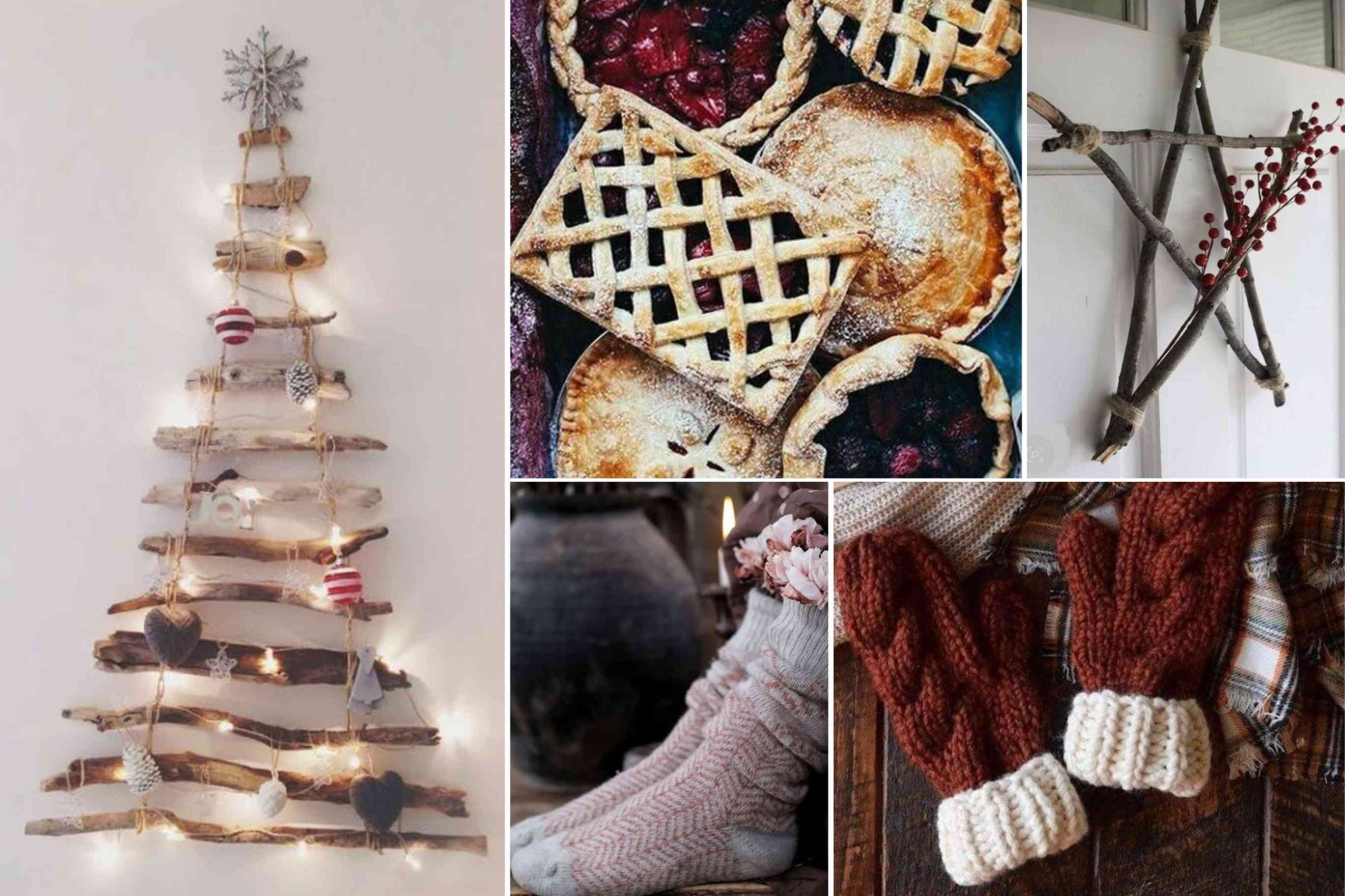
A Christmas tree does not always need to be a traditional fir tree. A collection of branches can be turned into a simple wall-mounted version that uses very little space and can be decorated with ornaments already in the home.
Start by collecting straight branches in different lengths. Arrange them from longest at the bottom to shortest at the top so that together they form the outline of a Christmas tree.
The branches can then be connected with two long pieces of natural rope or twine. Tie each branch securely at both ends, keeping enough space between the different levels for decorations. A loop at the top allows the complete tree to be hung from a wall hook.
Small ornaments can be added directly to the branches. Baubles, hearts, pine cones and handmade decorations work well because the open construction leaves every piece clearly visible.
A string of warm lights can be wrapped loosely around the branches. Battery-operated lights are particularly practical when the tree is displayed somewhere without a nearby socket.
The same idea works on a smaller scale for other decorations. A few thin twigs tied together can form a star for a door, wall or Christmas tree. The branches can be left natural or combined with berries, greenery and string.
A branch tree is also easy to store. Once the ornaments and lights are removed, the flat structure takes up considerably less room than many other seasonal decorations.
It can be brought out again each winter and changed simply by using different ornaments, ribbons or colours.
Looking for more ways to decorate naturally throughout winter?
Discover Natural Winter Decoration →
#BranchChristmasTree #NaturalChristmas #ChristmasIdeas #HandmadeChristmas #AtelierDuMonde
Home & Design @atelierdumonde
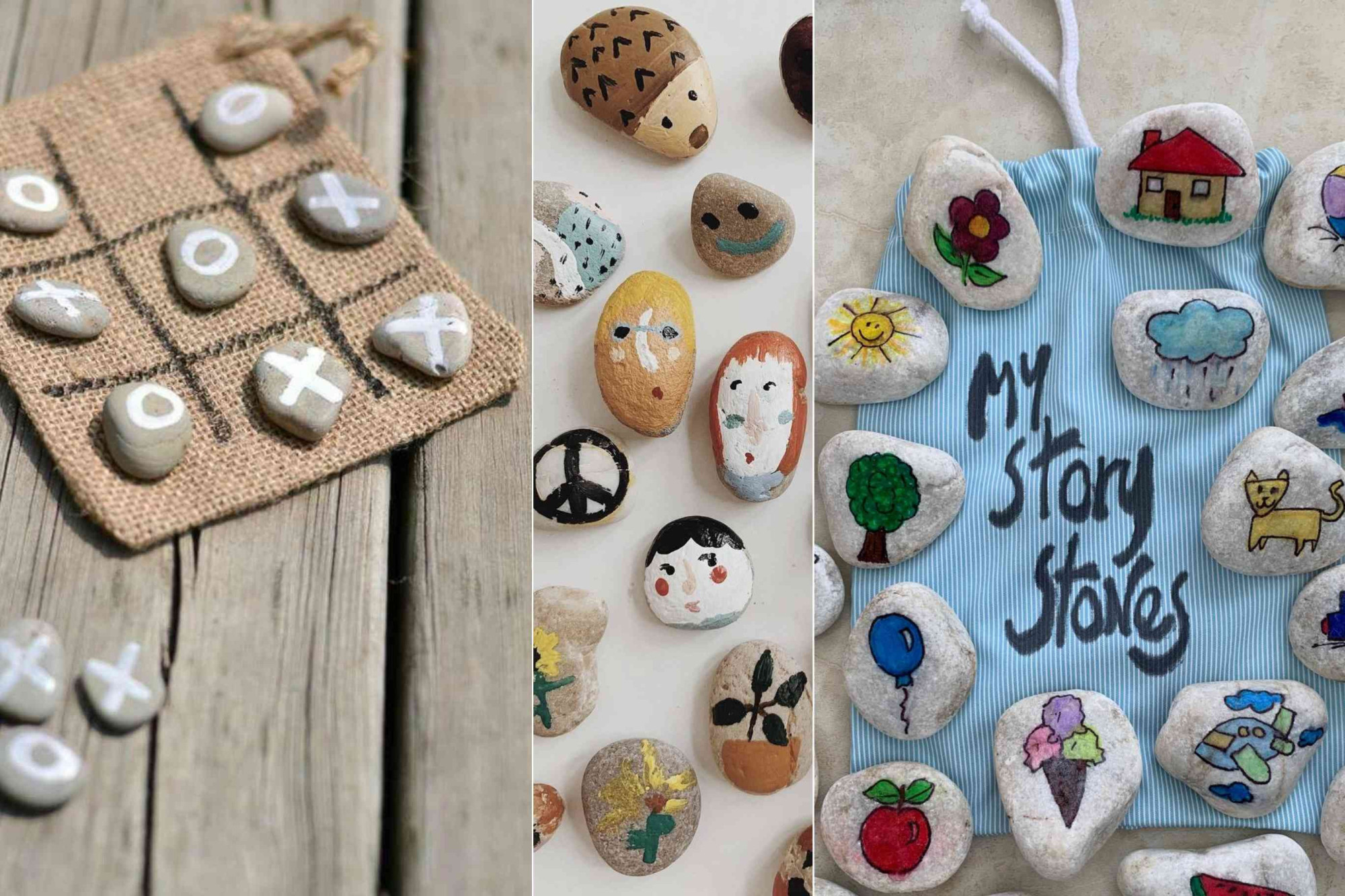
A handful of smooth stones can become a game, a storytelling tool or a small handmade gift. By painting each stone with a simple image, ordinary pebbles can be turned into pieces that children can combine in different ways.
Start with smooth, relatively flat stones that are large enough to hold a recognisable drawing. Wash them thoroughly and allow them to dry before painting.
The images should remain simple. A house, tree, sun, cloud, animal, flower, person or piece of food is enough. Each stone represents one element that can later become part of a story.
Acrylic paint or paint markers are useful for adding colour and smaller details. There is no need for every illustration to follow exactly the same style. The handmade differences are part of the character of the set.
Once several stones are finished, place them in a fabric bag or small basket. A child can select a few stones at random and use the pictures as the starting point for a story. Adding new stones over time allows the collection and the possible stories to grow.
Painted stones can also become simple games. A set marked with crosses and circles can be used for noughts and crosses, while matching images can form the basis of a memory or sorting game.
Themes can be created too. One collection might contain animals, another holidays, nature, food or places visited during a trip. Children can even paint their own memories and add them to the set.
When the paint is completely dry, a clear non-toxic protective finish can help the drawings last longer, particularly when the stones will be handled regularly.
Looking for more ideas for handmade play?
Discover Handmade Toys →
#StoryStones #CreativeIdeas #KidsCrafts #PaintedStones #AtelierDuMonde