Home & Design @interiorsanddesign
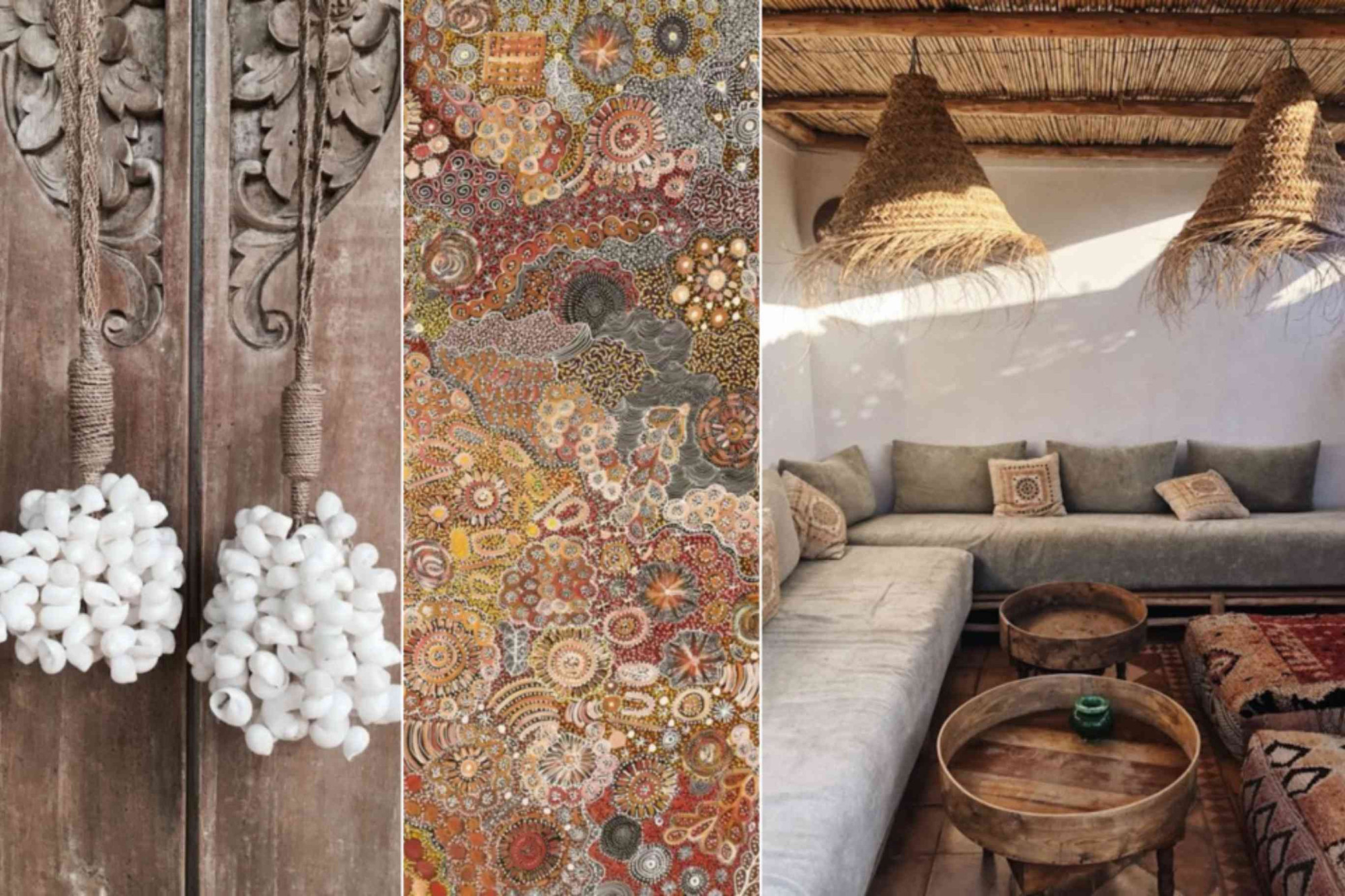
A single shell, bead or stitched detail is small. Repeated dozens or hundreds of times, it can become an entirely new surface. This principle appears across craft, textile design and decorative objects.
Shells grouped closely together create volume and texture. Beads and embroidery can build intricate patterns from tiny individual elements, while repeated fibres turn simple plant material into structured lighting and woven surfaces.
Repetition does not require perfect uniformity. Differences in size, shape and colour can make the finished piece more interesting, especially when natural materials are involved. The individual elements remain visible even when they form part of a larger composition.
This approach works at very different scales. It can appear in a small decorative object, an embroidered textile, a lampshade or a large piece of wall art. What connects them is the process: simple components gain impact through accumulation.
For interiors, these pieces provide detail without relying on elaborate forms. From a distance, the overall shape or pattern is visible. Up close, the individual materials and the work behind the object become apparent.
Want to see how repetition works with natural materials?
Discover Cowrie Shells →
#CraftDesign #SurfaceDesign #TextileDesign #InteriorObjects #NomadesDuMonde